



This is a sample of rutile, one of the primary mineral sources of titanium. While as a metal, titanium is well known for corrosion resistance and for its high strength-to-weight ratio, approximately 95% of titanium is consumed in the form of titanium dioxide (TiO2), a white pigment used in paints, paper, and plastics.
Images
Mineral Resources Program images.
Filter Total Items: 272

Rutile
This is a sample of rutile, one of the primary mineral sources of titanium. While as a metal, titanium is well known for corrosion resistance and for its high strength-to-weight ratio, approximately 95% of titanium is consumed in the form of titanium dioxide (TiO2), a white pigment used in paints, paper, and plastics.

Azurite and Malachite
A sample of azurite, the blue mineral, and malachite, the green mineral. Both azurite and malachite are copper minerals that were once used as pigments but are now mostly valued as collectors minerals. They do serve as good indicators of copper deposits that can be developed.
A sample of azurite, the blue mineral, and malachite, the green mineral. Both azurite and malachite are copper minerals that were once used as pigments but are now mostly valued as collectors minerals. They do serve as good indicators of copper deposits that can be developed.

Clinozoisite
This sample is clinozoisite, a calcium aluminum silicate mineral. It is mostly prized as a collectors mineral rather than a source of its industrial mineral commodities.
Sample provided by Carlin Green, USGS. Sample originated from Hachupa, Pakistan, and is 6.0cm in size.
This sample is clinozoisite, a calcium aluminum silicate mineral. It is mostly prized as a collectors mineral rather than a source of its industrial mineral commodities.
Sample provided by Carlin Green, USGS. Sample originated from Hachupa, Pakistan, and is 6.0cm in size.

Pyrrohtite
Pyrrhotite is an iron sulfide mineral related to iron pyrite, which is one of the minerals known as Fool's Gold. Pyrrhotite, although not one of the Fool's Gold minerals, is sometimes called magnetic pyrite as it is weakly magnetic. It is most valued as a collectors mineral.
Pyrrhotite is an iron sulfide mineral related to iron pyrite, which is one of the minerals known as Fool's Gold. Pyrrhotite, although not one of the Fool's Gold minerals, is sometimes called magnetic pyrite as it is weakly magnetic. It is most valued as a collectors mineral.

Sample of Apophyllite and Prehnite
These two minerals are apophyllite and prehnite. Both apophyllite, the clear crystals, and prehnite, the green mineral, are primarily prized as collectors minerals.
Sample provided by Carlin Green, USGS. Sample originated from Virginia Crushed Stone Quarry, Virginia, and is 4.6cm in size.
These two minerals are apophyllite and prehnite. Both apophyllite, the clear crystals, and prehnite, the green mineral, are primarily prized as collectors minerals.
Sample provided by Carlin Green, USGS. Sample originated from Virginia Crushed Stone Quarry, Virginia, and is 4.6cm in size.

Bastnaesite Sample
A sample of bastnaesite, one of the principal mineral sources of rare-earth elements. Rare-earth elements are essential components in most modern electronics.
A sample of bastnaesite, one of the principal mineral sources of rare-earth elements. Rare-earth elements are essential components in most modern electronics.

Beryllium Tuff, Spor Mountain
Closeup of the Beryllium Tuff member, Spor Mountain, Utah.
Closeup of the Beryllium Tuff member, Spor Mountain, Utah.

Sampling at Spor Mountain
USGS scientists Brian Jaskula and Robert Ayuso collecting samples at Spor Mountain, Utah.
USGS scientists Brian Jaskula and Robert Ayuso collecting samples at Spor Mountain, Utah.

Spor Mountain Open Pit
Spor Mountain open pit; mineralized tuff in foreground; mine staff and USGS scientists collecting samples.
Spor Mountain open pit; mineralized tuff in foreground; mine staff and USGS scientists collecting samples.

Local Boy Drill Core - 10089 (microscope image)
Cross-polarized light photomicrograph of minerals in drill core samples from the Local Boy deposit, Duluth Complex, Minnesota. The number in the upper right hand corner is the drill core number.
Cross-polarized light photomicrograph of minerals in drill core samples from the Local Boy deposit, Duluth Complex, Minnesota. The number in the upper right hand corner is the drill core number.

Mesaba Deposit Drill Core (microscope image)
Cross-polarized light photomicrograph of minerals in drill core samples from the Mesaba copper-nickel deposit, Duluth Complex, Minnesota. The number in the upper right hand corner is the drill core number.
Cross-polarized light photomicrograph of minerals in drill core samples from the Mesaba copper-nickel deposit, Duluth Complex, Minnesota. The number in the upper right hand corner is the drill core number.

Global Copper Map_0_0.jpg
Map showing sediment-hosted copper and porphyry copper deposits across the world.
Map showing sediment-hosted copper and porphyry copper deposits across the world.

Eureka Graben, Silverton caldera complex, CO
USGS scientist David Fey walking through the Eureka Graben in the Silverton caldera complex.
USGS scientist David Fey walking through the Eureka Graben in the Silverton caldera complex.
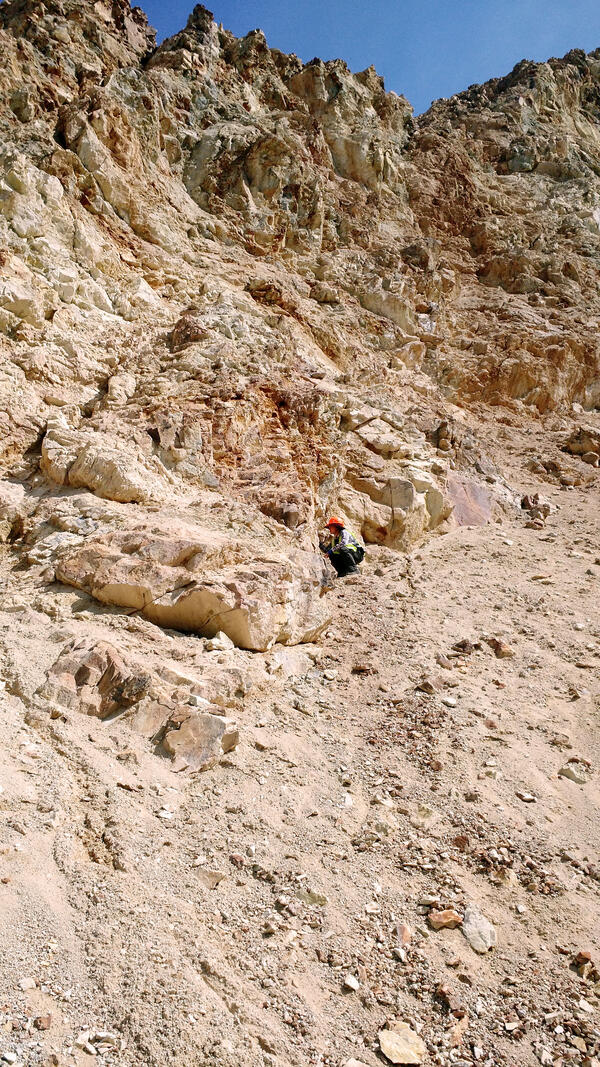
Geologist conducting field work at the gold-antimony-tungsten mining area
Geologist conducting field work at the gold-antimony-tungsten mining areaUSGS geologist Niki Wintzer conducting field work at Yellow Pine/Stibnite gold-antimony-tungsten mining area in central Idaho.
Geologist conducting field work at the gold-antimony-tungsten mining area
Geologist conducting field work at the gold-antimony-tungsten mining areaUSGS geologist Niki Wintzer conducting field work at Yellow Pine/Stibnite gold-antimony-tungsten mining area in central Idaho.
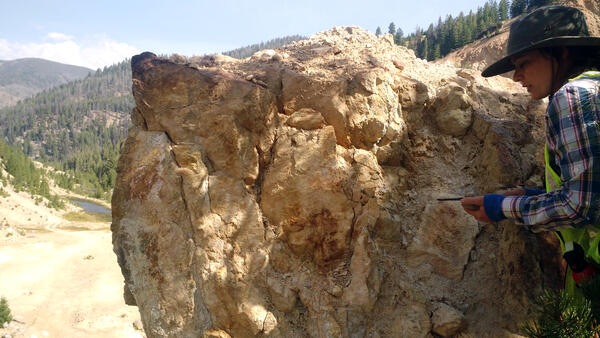
Geologist conducting field work at Yellow Pine/Stibnite mining area
Geologist conducting field work at Yellow Pine/Stibnite mining areaUSGS geologist Niki Wintzer conducting field work at Yellow Pine/Stibnite gold-antimony-tungsten mining area in central Idaho.
Geologist conducting field work at Yellow Pine/Stibnite mining area
Geologist conducting field work at Yellow Pine/Stibnite mining areaUSGS geologist Niki Wintzer conducting field work at Yellow Pine/Stibnite gold-antimony-tungsten mining area in central Idaho.
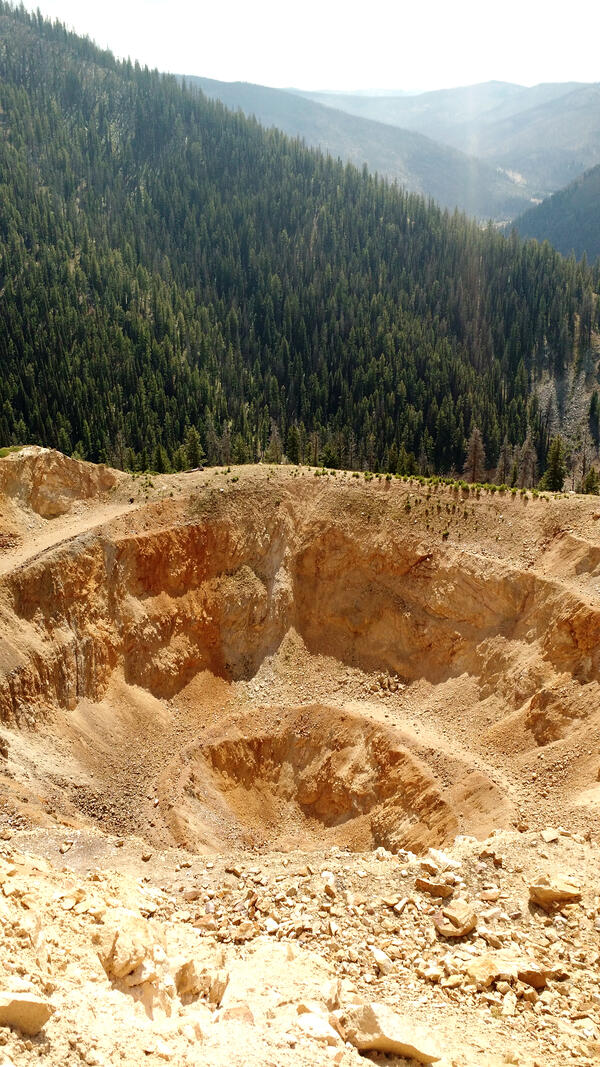
An open pit within the gold-antimony-tungsten mining area
An open pit within the gold-antimony-tungsten mining areaAn open pit within the Yellow Pine/Stibnite gold-antimony-tungsten mining area in central Idaho.
An open pit within the gold-antimony-tungsten mining area
An open pit within the gold-antimony-tungsten mining areaAn open pit within the Yellow Pine/Stibnite gold-antimony-tungsten mining area in central Idaho.

Red Mountain near Silverton, Colorado
Intensely altered propylitic rocks (red and yellow) in the Red Mountain mining district, overprinting the regional, propylitically altered igneous rocks (grayish-green), peaks at top of image. View to west.
Intensely altered propylitic rocks (red and yellow) in the Red Mountain mining district, overprinting the regional, propylitically altered igneous rocks (grayish-green), peaks at top of image. View to west.

Heavy mineral sands, Folly Beach, South Carolina
Layered deposit of unconsolidated heavy mineral sands along the shores of Folly Beach, South Carolina.
Layered deposit of unconsolidated heavy mineral sands along the shores of Folly Beach, South Carolina.

Geologist and Helicopter
Geologist doing field work in Alaska
Geologist doing field work in Alaska

Eudialyte and Bastnäsite Samples
Sample of eudialyte (pink) within layered vein consisting of quartz, albite, and sodic amphibole, Dora Bay, Alaska. Size of sample is 11 by 9 cm. Sample of coarse-grained, tabular bastnäsite within matrix of ferruginous dolomite, Birthday Claim, Mountain Pass, California. Photographs by Philip Verplanck, U.S. Geological Survey. SIR 2010-5070-J
Sample of eudialyte (pink) within layered vein consisting of quartz, albite, and sodic amphibole, Dora Bay, Alaska. Size of sample is 11 by 9 cm. Sample of coarse-grained, tabular bastnäsite within matrix of ferruginous dolomite, Birthday Claim, Mountain Pass, California. Photographs by Philip Verplanck, U.S. Geological Survey. SIR 2010-5070-J

Ahankashan Copper Gold
Aerial view looking into the center of the dome-shaped pluton.
Aerial view looking into the center of the dome-shaped pluton.