



Exposure Pathways
Exposure Pathways
Filter Total Items: 121

Nutrients in Dust from the Sahara Desert cause Microbial Blooms on the East Coast of the United States
Saharan dust nutrients, particularly iron, deposited episodically in tropical marine waters stimulate marine microbial bloom growth and change microbial community structure.

USGS Scientists Measure New Bacterial Nitrogen Removal Process in Groundwater
For the first time, U.S. Geological Survey (USGS), Virginia Institute of Marine Science, and the University of Connecticut scientists have detected active anammox bacteria in groundwater.

Bacterial Pathogen Genes in Streams related to Animal Type and Hydrologic Conditions
A U.S. Geological Survey (USGS) study elucidates the influence of animal type and environmental variables on bacterial pathogen occurrence in streams under typical watershed conditions.

Persistent Contaminant Threats Following Hurricane Sandy—Establishing Baselines and Assessing Impacts
Potential long-term contaminant threats resulting from compromised infrastructure, beach erosion, and sediment disturbance were evaluated in the coastal environments of New Jersey and New York in the aftermath of Hurricane Sandy.

Synthetic Progestin Affects Fish Reproductive Development and Behavior in Laboratory Exposure Study
Scientists conducted laboratory experiments on levonorgestrel (a synthetic progestin) and observed differential effects to males (reproductive behavior) and females (masculinization) of eastern mosquitofish ( Gambusia holbrooki).
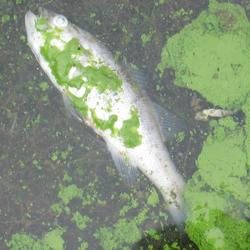
New Study on Cyanotoxins in Lakes and Reservoirs Provides Insights into Assessing Health Risks
Newly published study provides new evidence of the widespread occurrence of cyanotoxins in lakes and reservoirs of the United States and offers new insights into measures used for assessing potential recreational health risks.

Iodinated Disinfection Byproducts found in Dairy-Impacted Wastewaters and Streams
Iodinated disinfection byproducts were found at stream locations downstream from treated discharge from wastewater treatment plants that receive dairy waste and in the wastewaters directly from dairy facilities.

Indication of Unconventional Oil and Gas Wastewaters Found in Local Surface Waters
Evidence indicating the presence of wastewaters from unconventional oil and gas (UOG) production was found in surface waters and surficial sediments near an UOG disposal facility in West Virginia.

Importance of Lake Sediments in Removal of Cyanobacteria, Viruses, and Dissolved Organic Carbon
U.S. Geological Survey (USGS) scientists determined that the colmation layer (top 25 centimeters of lake sediments) was highly effective in removing cyanobacteria, viruses, and dissolved organic carbon during water passage through the lake bottom to aquifer sediments.

U.S. Geological Survey Identifies Crude-Oil Metabolites in Subsurface Plumes
U.S. Geological Survey (USGS) scientists studying two subsurface crude-oil spill sites in Minnesota measured concentrations of oil breakdown products (metabolites) at greater concentrations than parent compound concentrations.
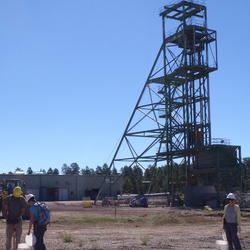
U.S. Geological Survey Develops Approach to Assess Baseline Chemical and Radiological Conditions Prior to Uranium Mining near Grand Canyon National Park
U.S. Geological Survey (USGS) scientists developed an approach and collected baseline data to quantitatively assess offsite migration of mine-related contaminants and to identify critical contaminant exposure pathways that could result from uranium mining activities in the Grand Canyon region.

North American and European Atmospheric Mercury Declines Explained by Local and Regional Emission Reductions
Recent findings from a consortium of university, State, and U.S. Geological Survey (USGS) scientists indicate that declining atmospheric concentrations of mercury (Hg) can be explained by the phaseout of mercury in many commercial products and by reduced emissions from utilities over the past two decades.