
U.S. flag

An official website of the United States government

Organic Chemistry Research

Filter Total Items: 41

Bioactive Chemicals Research Laboratory

The Bioactive Chemicals Research Laboratory applies a collaborative transdisciplinary approach to conduct research to minimize the risk to human and aquatic organism health from exposure to contaminants in water supplies.
Bioactive Chemicals Research Laboratory

Bioactive Chemicals Research Laboratory

The Bioactive Chemicals Research Laboratory applies a collaborative transdisciplinary approach to conduct research to minimize the risk to human and aquatic organism health from exposure to contaminants in water supplies.
Learn More

Environmental Chemistry Core Technology Team

About the Research The Environmental Chemistry Laboratory Core Technology Team (CTT) as part of the Environmental Health Program develops and applies innovative methods of sampling and analysis to answer critical questions about the occurrence, distribution, fate and transport, and biological exposure of chemical in all environmental matrices (water, air, tissues, sediments, and others).
Environmental Chemistry Core Technology Team

Environmental Chemistry Core Technology Team

About the Research The Environmental Chemistry Laboratory Core Technology Team (CTT) as part of the Environmental Health Program develops and applies innovative methods of sampling and analysis to answer critical questions about the occurrence, distribution, fate and transport, and biological exposure of chemical in all environmental matrices (water, air, tissues, sediments, and others).
Learn More

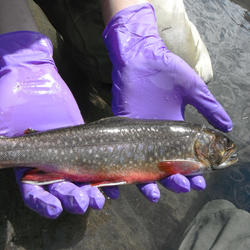
Fishing, Hunting and Subsistence Living Integrated Science Team

The Fishing, Hunting, and Subsistence Living Integrated Science Team focuses on contaminant and pathogen exposures in the environment that could impact the presence and vitality of fish and wildlife populations that drive commercial, recreational and subsistence activities such as hunting and fishing. If actual risks are identified this project will inform how to economically and effectively...
Fishing, Hunting and Subsistence Living Integrated Science Team

Fishing, Hunting and Subsistence Living Integrated Science Team

The Fishing, Hunting, and Subsistence Living Integrated Science Team focuses on contaminant and pathogen exposures in the environment that could impact the presence and vitality of fish and wildlife populations that drive commercial, recreational and subsistence activities such as hunting and fishing. If actual risks are identified this project will inform how to economically and effectively...
Learn More

Endocrine Disrupting Compounds in the Chesapeake Bay Watershed Science Team

The Chesapeake Bay is the largest estuary in the United States and provides critical resources to fish, wildlife and people. For more than a decade, recreational fish species have been plagued with skin lesions and intersex conditions (the presence of male and female sex characteristics in the same fish) that biologists attributed to exposures to endocrine disrupting chemicals (EDCs)...
Endocrine Disrupting Compounds in the Chesapeake Bay Watershed Science Team

Endocrine Disrupting Compounds in the Chesapeake Bay Watershed Science Team

The Chesapeake Bay is the largest estuary in the United States and provides critical resources to fish, wildlife and people. For more than a decade, recreational fish species have been plagued with skin lesions and intersex conditions (the presence of male and female sex characteristics in the same fish) that biologists attributed to exposures to endocrine disrupting chemicals (EDCs)...
Learn More

Study Highlights the Complexity of Chemical Mixtures in United States Streams

A new study highlights the complexity of chemical mixtures in streams and advances the understanding of wildlife and human exposure to complex chemical mixtures.
Study Highlights the Complexity of Chemical Mixtures in United States Streams

Study Highlights the Complexity of Chemical Mixtures in United States Streams

A new study highlights the complexity of chemical mixtures in streams and advances the understanding of wildlife and human exposure to complex chemical mixtures.
Learn More

Understanding Chemical and Microbial Contaminants in Public Drinking Water

Collaborative joint agency study provides nationally consistent and rigorously quality-assured datasets on a wide range of chemical and microbial contaminants present in source and treated public drinking water supplies. Tap water was not analyzed in this study.
Understanding Chemical and Microbial Contaminants in Public Drinking Water

Understanding Chemical and Microbial Contaminants in Public Drinking Water

Collaborative joint agency study provides nationally consistent and rigorously quality-assured datasets on a wide range of chemical and microbial contaminants present in source and treated public drinking water supplies. Tap water was not analyzed in this study.
Learn More

Recovery of Stream and Adjacent Groundwater After Wastewater Treatment Facility Closure

The hydrology and chemistry of a wastewater-impacted stream and adjacent groundwater responded rapidly (had fewer chemicals at lower concentrations) following wastewater treatment facility shutdown. However, the adjacent shallow groundwater remained a continuing source of some wastewater-derived contaminants to the stream at least 1 year post-shutdown.
Recovery of Stream and Adjacent Groundwater After Wastewater Treatment Facility Closure

Recovery of Stream and Adjacent Groundwater After Wastewater Treatment Facility Closure

The hydrology and chemistry of a wastewater-impacted stream and adjacent groundwater responded rapidly (had fewer chemicals at lower concentrations) following wastewater treatment facility shutdown. However, the adjacent shallow groundwater remained a continuing source of some wastewater-derived contaminants to the stream at least 1 year post-shutdown.
Learn More

Assessing Environmental Chemical Mixtures in United States Streams

The U.S. Geological Survey (USGS) and the U.S. Environmental Protection Agency (EPA) are collaborating on a field-based study of chemical mixture composition and environmental effects in stream waters affected by a wide range of human activities and contaminant sources.
Assessing Environmental Chemical Mixtures in United States Streams

Assessing Environmental Chemical Mixtures in United States Streams

The U.S. Geological Survey (USGS) and the U.S. Environmental Protection Agency (EPA) are collaborating on a field-based study of chemical mixture composition and environmental effects in stream waters affected by a wide range of human activities and contaminant sources.
Learn More

Microbiology and Chemistry of Waters Produced from Hydraulic Fracking—A Case Study

A new U.S. Geological Survey (USGS) study determined that the microbiology and organic chemistry of produced waters varied widely among hydraulically fractured shale gas wells in north-central Pennsylvania.
Microbiology and Chemistry of Waters Produced from Hydraulic Fracking—A Case Study

Microbiology and Chemistry of Waters Produced from Hydraulic Fracking—A Case Study

A new U.S. Geological Survey (USGS) study determined that the microbiology and organic chemistry of produced waters varied widely among hydraulically fractured shale gas wells in north-central Pennsylvania.
Learn More

Personal Care Products, Pharmaceuticals, and Hormones Move from Septic Systems to Local Groundwater

Pharmaceuticals, hormones, personal care products, and other contaminants of concern associated with everyday household activities were found in adjacent shallow groundwater near two septic system networks in New York (NY) and New England (NE). Factors influencing movement to shallow groundwater and the types of chemicals found include population served by a septic system, site conditions such as...
Personal Care Products, Pharmaceuticals, and Hormones Move from Septic Systems to Local Groundwater

Personal Care Products, Pharmaceuticals, and Hormones Move from Septic Systems to Local Groundwater

Pharmaceuticals, hormones, personal care products, and other contaminants of concern associated with everyday household activities were found in adjacent shallow groundwater near two septic system networks in New York (NY) and New England (NE). Factors influencing movement to shallow groundwater and the types of chemicals found include population served by a septic system, site conditions such as...
Learn More

Contaminant Transport Models Aid in Understanding Trends of Chlorinated Ethenes in Public Supply Wells

U.S. Geological Survey (USGS) scientists used a mass–balance solute–transport model to enhance an understanding of factors affecting chlorinated ethene (CE) concentrations in a public supply well. They found that long–term simulated and measured CEconcentrations were affected by dense nonaqueous phase liquid (DNAPL) volume, composition, and by the bioavailability of organic carbon that drives...
Contaminant Transport Models Aid in Understanding Trends of Chlorinated Ethenes in Public Supply Wells

Contaminant Transport Models Aid in Understanding Trends of Chlorinated Ethenes in Public Supply Wells

U.S. Geological Survey (USGS) scientists used a mass–balance solute–transport model to enhance an understanding of factors affecting chlorinated ethene (CE) concentrations in a public supply well. They found that long–term simulated and measured CEconcentrations were affected by dense nonaqueous phase liquid (DNAPL) volume, composition, and by the bioavailability of organic carbon that drives...
Learn More

Organic Geochemistry Research Laboratory Scored High on Proficiency Testing for Glyphosate

In a recent inter–laboratory comparison of 28 international laboratories, the U.S. Geological Survey (USGS) Organic Geochemistry Research Laboratory (OGRL) scored A's for the analysis of glyphosate and aminomethylphosphonic acid (AMPA) in this proficiency testing.
Organic Geochemistry Research Laboratory Scored High on Proficiency Testing for Glyphosate

Organic Geochemistry Research Laboratory Scored High on Proficiency Testing for Glyphosate

In a recent inter–laboratory comparison of 28 international laboratories, the U.S. Geological Survey (USGS) Organic Geochemistry Research Laboratory (OGRL) scored A's for the analysis of glyphosate and aminomethylphosphonic acid (AMPA) in this proficiency testing.
Learn More
Was this page helpful?