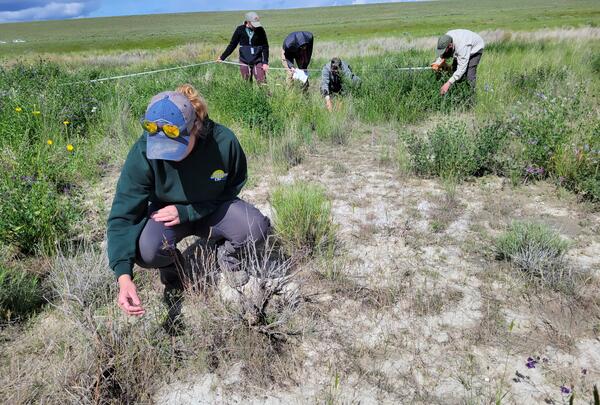
A storm rolls in during field work at the Charles M. Russell National Wildlife Refuge in Montana. Crews were measuring plant cover and other site characteristics. Sagebrush and yellow sweet clover are visible.
Images
Explore images.
A storm rolls in during field work at the Charles M. Russell National Wildlife Refuge in Montana. Crews were measuring plant cover and other site characteristics. Sagebrush and yellow sweet clover are visible.
Underwater Views of Common Fish Inhabiting Eelgrass Meadows in Skagit Bay, Washington
Underwater Views of Common Fish Inhabiting Eelgrass Meadows in Skagit Bay, WashingtonExplore the underwater world of Skagit Bay eelgrass meadows where a diverse group of fish are visible, including the elegant Pacific Herring school , the unusual Snake Prickleback, the striking Pacific Spiny Dogfish, the graceful Shiner Perch, and the majestic juvenile Chinook Salmon.
Underwater Views of Common Fish Inhabiting Eelgrass Meadows in Skagit Bay, Washington
Underwater Views of Common Fish Inhabiting Eelgrass Meadows in Skagit Bay, WashingtonExplore the underwater world of Skagit Bay eelgrass meadows where a diverse group of fish are visible, including the elegant Pacific Herring school , the unusual Snake Prickleback, the striking Pacific Spiny Dogfish, the graceful Shiner Perch, and the majestic juvenile Chinook Salmon.
Snails collected from Upper Klamath Lake are being used in experiments in the Western Fisheries Research Center’s Seattle Laboratory to study the impacts of eye flukes on the health of endangered suckers.
A five-person USGS crew collecting Rapid and Other Assessment and Monitoring (ROAM) density data in southwest Idaho. One person is inspecting a plant in the foreground, while the rest of the team are identifying and counting individual plants during a radial density belt.
A downward-facing photo taken on a Rapid and Other Methods for Assessment and Monitoring (ROAM) plot that is within a fuel break. The photo includes a lot of gravel and bare ground, with intermixed small grasses, forbs, and shrubs.
Lake Abert, Oregon is one of the 20 terminal lakes identified by USGS partners as priority ecosystems for study by the Saline Lakes Ecosystems IWAA.
Goose Lake, on the Oregon-California border, is one of the 20 terminal lakes identified by USGS partners as priority ecosystems for study by the Saline Lakes Ecosystems IWAA.
Many new big sagebrush (Artemisia tridentata) plants that have just sprouted from the ground in the Morley Nelson Snake River Birds of Prey National Conservation Area in Idaho.
A field crew member collecting stick-point intercept data at a Project ROAM (Rapid and Other Methods for Assessment and Monitoring) plot. A meter-long 'stick' is dropped and five recordings of vegetation are collected by dropping a pin flag along the stick. The vegetation it comes into contact with is recorded to estimate cover.
Director Applegate and Staff from Western Fisheries Research Center
Director Applegate and Staff from Western Fisheries Research CenterDirector Applegate and staff from Western Fisheries Research Center pose in front of the newly painted mural at the Western Fisheries Research Center’s headquarters. The mural features three swimming salmon, a DNA helix, a microscope, and the USGS logo.
Director Applegate and Staff from Western Fisheries Research Center
Director Applegate and Staff from Western Fisheries Research CenterDirector Applegate and staff from Western Fisheries Research Center pose in front of the newly painted mural at the Western Fisheries Research Center’s headquarters. The mural features three swimming salmon, a DNA helix, a microscope, and the USGS logo.
Director Visits Western Fisheries Research Center, 2024
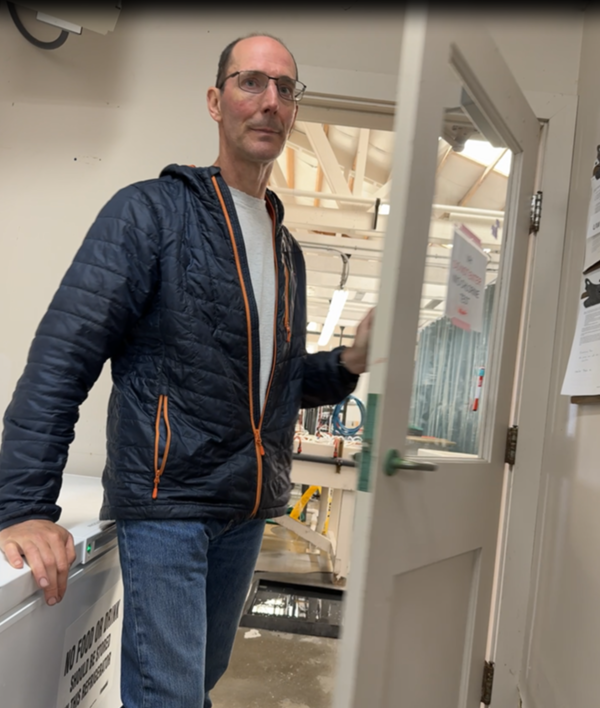
Director Visits Western Fisheries Research Center, 2024Director Applegate visited Western Fisheries Research Center Headquarters in Seattle, WA.
Director Visits Western Fisheries Research Center, 2024
Director Visits Western Fisheries Research Center, 2024Director Applegate visited Western Fisheries Research Center Headquarters in Seattle, WA.
Director Visits Western Fisheries Research Center Wet Lab, 2024
Director Visits Western Fisheries Research Center Wet Lab, 2024Director Applegate visited Western Fisheries Research Center Headquarters in Seattle, WA.
Director Visits Western Fisheries Research Center Wet Lab, 2024
Director Visits Western Fisheries Research Center Wet Lab, 2024Director Applegate visited Western Fisheries Research Center Headquarters in Seattle, WA.
Director Applegate Visits Western Fisheries Research Center Wet Lab, 2024
Director Applegate Visits Western Fisheries Research Center Wet Lab, 2024Director Applegate visited Western Fisheries Research Center Headquarters in Seattle, WA.
Director Applegate Visits Western Fisheries Research Center Wet Lab, 2024
Director Applegate Visits Western Fisheries Research Center Wet Lab, 2024Director Applegate visited Western Fisheries Research Center Headquarters in Seattle, WA.
An Orchestra of Conservation for the Melodies of Hakalau Forest.PNG
An Orchestra of Conservation for the Melodies of Hakalau Forest.PNGUSGS and USFWS logos with title "An Orchestra of Conservation for the Melodies of Hakalau Forest" featured on an image of a red apapane bird against a blue sky background
An Orchestra of Conservation for the Melodies of Hakalau Forest.PNG
An Orchestra of Conservation for the Melodies of Hakalau Forest.PNGUSGS and USFWS logos with title "An Orchestra of Conservation for the Melodies of Hakalau Forest" featured on an image of a red apapane bird against a blue sky background
A hovercraft glides over the surface of Summer Lake, Oregon
A hovercraft glides over the surface of Summer Lake, OregonSummer Lake, Oregon is one of the 20 terminal lakes identified by USGS partners as priority ecosystems for study by the Saline Lakes Ecosystems IWAA.
A hovercraft glides over the surface of Summer Lake, Oregon
A hovercraft glides over the surface of Summer Lake, OregonSummer Lake, Oregon is one of the 20 terminal lakes identified by USGS partners as priority ecosystems for study by the Saline Lakes Ecosystems IWAA.
Bright orange native Hawai‘i ‘ākepa sits in lush green tropical forested area in Hawai'i.
A red, native 'apanane bird sits on pink and white shrubbery against a bright blue sky in Hawaii.
Photo of people birding in the Big Island National Wildlife Refuge
Photo of people birding in the Big Island National Wildlife RefugePhoto of people birding in the Big Island National Wildlife Refuge in Hawai'i. Individuals hold binoculars and look out into the forested area.
Photo of people birding in the Big Island National Wildlife Refuge
Photo of people birding in the Big Island National Wildlife RefugePhoto of people birding in the Big Island National Wildlife Refuge in Hawai'i. Individuals hold binoculars and look out into the forested area.
Volunteers lean over to plant trees in grassy area of a forest in Hawai'i
Volunteers lean over to plant trees in grassy area of a forest in Hawai'iVolunteers lean over to plant trees in grassy area of a forest in Hawai'i. These trees provide crucial habitat for native birds within the refuge.
Volunteers lean over to plant trees in grassy area of a forest in Hawai'i
Volunteers lean over to plant trees in grassy area of a forest in Hawai'iVolunteers lean over to plant trees in grassy area of a forest in Hawai'i. These trees provide crucial habitat for native birds within the refuge.
Volunteers and scientists stand amidst tall trees in a Hawaiian forest
Volunteers and scientists stand amidst tall trees in a Hawaiian forestVolunteers and scientists stand amidst tall trees in a Hawaiian forest where habitat restoration is taking place for native birds.
Volunteers and scientists stand amidst tall trees in a Hawaiian forest
Volunteers and scientists stand amidst tall trees in a Hawaiian forestVolunteers and scientists stand amidst tall trees in a Hawaiian forest where habitat restoration is taking place for native birds.
During the March 21, 2024 lahar evacuation drills, thousands of students walked to the Washington State Fairgrounds in Puyallup, Washington to practice evacuating from a lahar generated by Mount Rainier. A lahar, or volcanic mudflow, could reach this area in about 3 hours.