



Hydrologist Kurt Carpenter demonstrated gathering a water sample from the Willamette on the docks at OMSI. The netting gets pulled through the water and is then funneled into a sample bottle.
Kurt D Carpenter (Former Employee)
Science and Products

Harmful Algal Blooms and Drinking Water in Oregon
Harmful algal blooms are a major environmental problem in all 50 states.
Willamette River plankton & water-quality updates
Plankton sampling results from the Willamette River in Portland, Oregon.

Post-wildfire water-quality
In response to the catastrophic fires of 2020 in Oregon, the ORWSC teamed up with the Water Mission Area’s Water Availability - Impacts of Extreme Events to quantify and understand the water quality effects in severely burned watersheds. In Oregon, four basins were selected to monitor the quality of the water in streams with continuous sensors and discrete water quality sampling.

Multiscale comparison of hyperspectral reflectance from periphyton in three Oregon rivers used for municipal supply
In this study, USGS scientists from multiple centers used advanced hyperspectral imaging techniques to advance monitoring of attached benthic algae (periphyton) in Cascade Range rivers used for municipal water supply. Periphyton are naturally occurring, but excess growth can harm ecosystems and degrade raw and treated drinking water quality. In these rivers, periphyton contain cyanobacteria that...

North Santiam River Basin Study
The streamflow and water-quality conditions monitored by the USGS in the North Santiam River basin provide valuable information to water resource managers

Clackamas River Basin Water-Quality Assessment
Starting in 1997, the USGS began routinely studying water resources in the Clackamas River Basin. Whether it be assessing harmful algal blooms, runoff issues, streamflow, or watershed health, the USGS has worked with its partners to maintain one of Oregon's most beloved rivers.

Water Sampling on the Willamette River
Hydrologist Kurt Carpenter demonstrated gathering a water sample from the Willamette on the docks at OMSI. The netting gets pulled through the water and is then funneled into a sample bottle.

Microcystis aeruginosa under the microscope
Microcyctis aeruginosa is a freshwater cyanobacteria that produce cyanotoxins such as Microcystin. Cyanotoxins are harmful to humans and pets.
Microcyctis aeruginosa is a freshwater cyanobacteria that produce cyanotoxins such as Microcystin. Cyanotoxins are harmful to humans and pets.

The Diatom Synedra under the Microscope
Diatom, Synedra, from the Greek word synedria meaning "a sitting together". The genus Synedra has long, needle like cells that can exist singly or radiate in colonies.
Diatom, Synedra, from the Greek word synedria meaning "a sitting together". The genus Synedra has long, needle like cells that can exist singly or radiate in colonies.

Asterionella and Fragilaria under the microscope
The star-shaped Asterionella is a genus of freshwater diatoms often found in star-shaped colonies of individuals. The thread like shape is Fragilaria a genus of fresh and saltwater diatom.
The star-shaped Asterionella is a genus of freshwater diatoms often found in star-shaped colonies of individuals. The thread like shape is Fragilaria a genus of fresh and saltwater diatom.

Algal Bloom in Willamette River
Algal bloom in the Ross Island Lagoon, Willamette River, Oregon.
Algal bloom in the Ross Island Lagoon, Willamette River, Oregon.

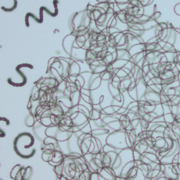
Cyanobacteria - Phormidium (blue green algae)
Microscopic view of blue green algae sample. Some algae produce toxins that threaten the health and safety of living things that come in direct contact. Cyanobacteria - Phormidium (blue green algae)
Microscopic view of blue green algae sample. Some algae produce toxins that threaten the health and safety of living things that come in direct contact. Cyanobacteria - Phormidium (blue green algae)

Cyanobacteria - Scytonema (blue green algae)
Microscopic view of blue green algae sample. Some algae produce toxins that threaten the health and safety of living things that come in direct contact. Cyanobacteria - Scytonema (blue green algae)
Microscopic view of blue green algae sample. Some algae produce toxins that threaten the health and safety of living things that come in direct contact. Cyanobacteria - Scytonema (blue green algae)

Cyanobacteria - Phormidium (blue green algae)
Microscopic view of blue green algae sample. Some algae produce toxins that threaten the health and safety of living things that come in direct contact. Cyanobacteria - Phormidium (blue green algae)
Microscopic view of blue green algae sample. Some algae produce toxins that threaten the health and safety of living things that come in direct contact. Cyanobacteria - Phormidium (blue green algae)

Cyanobacteria - Nostoc (blue green algae)
Microscopic view of blue green algae sample. Some algae produce toxins that threaten the health and safety of living things that come in direct contact. Cyanobacteria - Nostoc (blue green algae)
Microscopic view of blue green algae sample. Some algae produce toxins that threaten the health and safety of living things that come in direct contact. Cyanobacteria - Nostoc (blue green algae)

Cyanobacteria - Nostoc spongiiforme (blue green algae)
Cyanobacteria - Nostoc spongiiforme (blue green algae)Microscopic view of blue green algae sample. Some algae produce toxins that threaten the health and safety of living things that come in direct contact. Cyanobacteria - Nostoc spongiiforme (blue green algae)
Cyanobacteria - Nostoc spongiiforme (blue green algae)
Cyanobacteria - Nostoc spongiiforme (blue green algae)Microscopic view of blue green algae sample. Some algae produce toxins that threaten the health and safety of living things that come in direct contact. Cyanobacteria - Nostoc spongiiforme (blue green algae)

Algae on a Rock
Microcoelus algae on a rock from Clackamas River at Barton Park, Oregon
Microcoelus algae on a rock from Clackamas River at Barton Park, Oregon

Cyanobacteria - Dolichospermum (blue green algae)
Microscopic view of blue green algae sample. Some algae produce toxins that threaten the health and safety of living things that come in direct contact. Cyanobacteria - Dolichospermum (blue green algae)
Microscopic view of blue green algae sample. Some algae produce toxins that threaten the health and safety of living things that come in direct contact. Cyanobacteria - Dolichospermum (blue green algae)

Algal Bloom in Cougar Reservoir, Oregon
Algal Bloom in Cougar Reservoir, Oregon
Algal Bloom in Cougar Reservoir, Oregon

Stargrass
Water stargrass beds in the Yakima River near Kiona, Washington, when the water was clear, and turbidity values were about zero.
Water stargrass beds in the Yakima River near Kiona, Washington, when the water was clear, and turbidity values were about zero.

Timothy Lake Algal Bloom
Anabena algal bloom in Timothy Lake, Oregon, 2004
Anabena algal bloom in Timothy Lake, Oregon, 2004
Science and Products
Harmful Algal Blooms and Drinking Water in Oregon
Harmful algal blooms are a major environmental problem in all 50 states.
Willamette River plankton & water-quality updates
Plankton sampling results from the Willamette River in Portland, Oregon.
Post-wildfire water-quality
In response to the catastrophic fires of 2020 in Oregon, the ORWSC teamed up with the Water Mission Area’s Water Availability - Impacts of Extreme Events to quantify and understand the water quality effects in severely burned watersheds. In Oregon, four basins were selected to monitor the quality of the water in streams with continuous sensors and discrete water quality sampling.
Multiscale comparison of hyperspectral reflectance from periphyton in three Oregon rivers used for municipal supply
In this study, USGS scientists from multiple centers used advanced hyperspectral imaging techniques to advance monitoring of attached benthic algae (periphyton) in Cascade Range rivers used for municipal water supply. Periphyton are naturally occurring, but excess growth can harm ecosystems and degrade raw and treated drinking water quality. In these rivers, periphyton contain cyanobacteria that...
North Santiam River Basin Study
The streamflow and water-quality conditions monitored by the USGS in the North Santiam River basin provide valuable information to water resource managers
Clackamas River Basin Water-Quality Assessment
Starting in 1997, the USGS began routinely studying water resources in the Clackamas River Basin. Whether it be assessing harmful algal blooms, runoff issues, streamflow, or watershed health, the USGS has worked with its partners to maintain one of Oregon's most beloved rivers.
Water Sampling on the Willamette River
Hydrologist Kurt Carpenter demonstrated gathering a water sample from the Willamette on the docks at OMSI. The netting gets pulled through the water and is then funneled into a sample bottle.
Hydrologist Kurt Carpenter demonstrated gathering a water sample from the Willamette on the docks at OMSI. The netting gets pulled through the water and is then funneled into a sample bottle.
Microcystis aeruginosa under the microscope
Microcyctis aeruginosa is a freshwater cyanobacteria that produce cyanotoxins such as Microcystin. Cyanotoxins are harmful to humans and pets.
Microcyctis aeruginosa is a freshwater cyanobacteria that produce cyanotoxins such as Microcystin. Cyanotoxins are harmful to humans and pets.
The Diatom Synedra under the Microscope
Diatom, Synedra, from the Greek word synedria meaning "a sitting together". The genus Synedra has long, needle like cells that can exist singly or radiate in colonies.
Diatom, Synedra, from the Greek word synedria meaning "a sitting together". The genus Synedra has long, needle like cells that can exist singly or radiate in colonies.
Asterionella and Fragilaria under the microscope
The star-shaped Asterionella is a genus of freshwater diatoms often found in star-shaped colonies of individuals. The thread like shape is Fragilaria a genus of fresh and saltwater diatom.
The star-shaped Asterionella is a genus of freshwater diatoms often found in star-shaped colonies of individuals. The thread like shape is Fragilaria a genus of fresh and saltwater diatom.
Algal Bloom in Willamette River
Algal bloom in the Ross Island Lagoon, Willamette River, Oregon.
Algal bloom in the Ross Island Lagoon, Willamette River, Oregon.
Cyanobacteria - Phormidium (blue green algae)
Microscopic view of blue green algae sample. Some algae produce toxins that threaten the health and safety of living things that come in direct contact. Cyanobacteria - Phormidium (blue green algae)
Microscopic view of blue green algae sample. Some algae produce toxins that threaten the health and safety of living things that come in direct contact. Cyanobacteria - Phormidium (blue green algae)
Cyanobacteria - Scytonema (blue green algae)
Microscopic view of blue green algae sample. Some algae produce toxins that threaten the health and safety of living things that come in direct contact. Cyanobacteria - Scytonema (blue green algae)
Microscopic view of blue green algae sample. Some algae produce toxins that threaten the health and safety of living things that come in direct contact. Cyanobacteria - Scytonema (blue green algae)
Cyanobacteria - Phormidium (blue green algae)
Microscopic view of blue green algae sample. Some algae produce toxins that threaten the health and safety of living things that come in direct contact. Cyanobacteria - Phormidium (blue green algae)
Microscopic view of blue green algae sample. Some algae produce toxins that threaten the health and safety of living things that come in direct contact. Cyanobacteria - Phormidium (blue green algae)
Cyanobacteria - Nostoc (blue green algae)
Microscopic view of blue green algae sample. Some algae produce toxins that threaten the health and safety of living things that come in direct contact. Cyanobacteria - Nostoc (blue green algae)
Microscopic view of blue green algae sample. Some algae produce toxins that threaten the health and safety of living things that come in direct contact. Cyanobacteria - Nostoc (blue green algae)
Cyanobacteria - Nostoc spongiiforme (blue green algae)
Cyanobacteria - Nostoc spongiiforme (blue green algae)Microscopic view of blue green algae sample. Some algae produce toxins that threaten the health and safety of living things that come in direct contact. Cyanobacteria - Nostoc spongiiforme (blue green algae)
Cyanobacteria - Nostoc spongiiforme (blue green algae)
Cyanobacteria - Nostoc spongiiforme (blue green algae)Microscopic view of blue green algae sample. Some algae produce toxins that threaten the health and safety of living things that come in direct contact. Cyanobacteria - Nostoc spongiiforme (blue green algae)
Algae on a Rock
Microcoelus algae on a rock from Clackamas River at Barton Park, Oregon
Microcoelus algae on a rock from Clackamas River at Barton Park, Oregon
Cyanobacteria - Dolichospermum (blue green algae)
Microscopic view of blue green algae sample. Some algae produce toxins that threaten the health and safety of living things that come in direct contact. Cyanobacteria - Dolichospermum (blue green algae)
Microscopic view of blue green algae sample. Some algae produce toxins that threaten the health and safety of living things that come in direct contact. Cyanobacteria - Dolichospermum (blue green algae)
Algal Bloom in Cougar Reservoir, Oregon
Algal Bloom in Cougar Reservoir, Oregon
Algal Bloom in Cougar Reservoir, Oregon
Stargrass
Water stargrass beds in the Yakima River near Kiona, Washington, when the water was clear, and turbidity values were about zero.
Water stargrass beds in the Yakima River near Kiona, Washington, when the water was clear, and turbidity values were about zero.
Timothy Lake Algal Bloom
Anabena algal bloom in Timothy Lake, Oregon, 2004
Anabena algal bloom in Timothy Lake, Oregon, 2004