
Tonie Rocke
Tonie Rocke is a Research Epidemiologist at the National Wildlife Health Center.
Science and Products
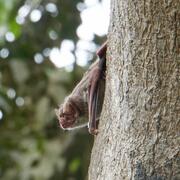
Dynamics of Rabies Transmission in Vampire Bats and Potential for Control Through Vaccination
Vampire bats are the primary spreader of rabies, a lethal disease that harms livestock and people across Latin America. Growth of the livestock industry and environmental changes in this region are leading to the expansion of vampire bats’ habitat range, and it is considered likely this species will move into the southern United States.
White-nose Syndrome Vaccine Updates
Since its emergence in 2006, white-nose syndrome (WNS) continues to spread in North America and has substantially impacted hibernating bat populations, contributing to declines of over 90% in northern long-eared ( Myotis septentrionalis), little brown ( Myotis lucifugus), and tri-colored bat ( Perimyotis subflavus) populations. We are developing tools and management strategies to protect bat...
Field trials for testing of white-nose syndrome vaccine candidates
White-nose syndrome (WNS), caused by the fungus Pseudogymnoascus destructans (Pd), continues to decimate bat populations in North America, and efforts to develop treatment options have intensified. One potential method for controlling WNS is vaccination of bats with specific antigens to elicit a protective immune response.
Development of SARS-CoV-2 vaccine to support black-footed ferret conservation
The SARS-CoV-2 virus is known to infect and cause severe disease, such as respiratory distress and death, in mustelids, including farm-raised mink ( Mustela lutreola and Neovison vison) and domestic ferrets ( M. putorius). This raised concern that the virus may also pose a threat to endangered black-footed ferrets ( Mustela nigripes) managed in captivity for breeding and recovery purposes.
Modeling the response of cave hibernating Myotis species to white-nose syndrome mitigation tactics
Bat Research Research collaboration: Robin Russell (NWHC), Tonie Rocke (NWHC), Wayne Thogmartin (UMESC), Evan Grant (EESC) White-nose syndrome is a fungal disease devastating cave-hibernating bat species ( Myotis spp.) in the eastern United States. Several mitigation tactics have been proposed to alleviate the effects of white-nose syndrome on bats including probiotics and vaccination. Questions...
Vaccines
The USGS National Wildlife Health Center (NWHC) works on developing various disease management tools, including the development of vaccines. Our current work focuses on vaccines for sylvatic plague, white-nose syndrome, and rabies as disease control strategies.
Sylvatic Plague
Sylvatic plague, caused by Yersinia pestis, is a bacterial disease transmitted by fleas that afflicts many mammalian species, including humans.
White-Nose Syndrome
White-nose syndrome (WNS) is an emergent disease of hibernating bats that has spread from the northeastern across United States at an alarming rate.
Vector-Borne Diseases
Vector-borne diseases are transmitted from one animal to another by vectors, including insects, such as mosquitoes or fleas, and arachnids, such as ticks. The USGS National Wildlife Health Center investigates wildlife diseases, including vector-borne diseases, such as West Nile virus and sylvatic plague.
Filter Total Items: 16
No Result Found
Filter Total Items: 139
Environmental characteristics associated with the occurrence of avian botulism in wetlands of a northern California refuge Environmental characteristics associated with the occurrence of avian botulism in wetlands of a northern California refuge
Avian botulism is an important disease affecting many species of waterbirds in North America, but the environmental conditions that initiate outbreaks are poorly understood. To determine wetland attributes associated with outbreaks of avian botulism in waterbirds at the Sacramento National Wildlife Refuge (SNWR), California, we compared environmental characteristics between wetlands...
Authors
Tonie E. Rocke, Ned H. Euliss, Michael D. Samuel
Science support for restoration of the Salton Sea. Recommendations of the USGS Tiger Team to the Salton Sea Science Subcommittee Science support for restoration of the Salton Sea. Recommendations of the USGS Tiger Team to the Salton Sea Science Subcommittee
No abstract available at this time
Authors
Frank S. Shipley, Douglas A. Barnum, G.F. Black, William I. Boarman, Walter G. Duffy, Michael J. Mac, David M. Miller, Tonie E. Rocke, Roy A. Schroeder, R.G. Thiery
Water and sediment characteristics associated with avian botulism outbreaks in wetlands Water and sediment characteristics associated with avian botulism outbreaks in wetlands
Avian botulism kills thousands of waterbirds annually throughout North America, but management efforts to reduce its effects have been hindered because environmental conditions that promote outbreaks are poorly understood. We measured sediment and water variables in 32 pairs of wetlands with and without a current outbreak of avian botulism. Wetlands with botulism outbreaks had greater...
Authors
Tonie E. Rocke, Michael D. Samuel
Avian botulism Avian botulism
Avian botulism is a paralytic, often fatal, disease of birds that results when they ingest toxin produced by the bacterium, Clostridium botulinum. Seven distinct types of toxin designated by the letters A to G have been identified (Table 38.1). Waterfowl die-offs due to botulism are usually caused by type C toxin; sporadic die-offs among fish-eating birds, such as common loons and gulls...
Authors
Tonie E. Rocke, M. Friend
Oil Oil
Each year, an average of 14 million gallons of oil from more than 10,000 accidental spills flow into fresh and saltwater environments in and around the United States. Most accidental oil spills occur when oil is transported by tankers or barges, but oil is also spilled during highway, rail, and pipeline transport, and by nontransportation-related facilities, such as refinery, bulk...
Authors
Tonie E. Rocke
Preliminary evaluation of a simple in vitro test for the diagnosis of type C botulism in wild birds Preliminary evaluation of a simple in vitro test for the diagnosis of type C botulism in wild birds
An enzyme-linked immunosorbent assay (ELISA) was developed for the detection of type C botulinum toxin (Clostridium botulinum) in wild birds. This simple, antigen-capture ELISA utilizes polystyrene immunosticks as the solid substrate, chicken antitoxin (IgY) as the coating antibody, rabbit antitoxin as the primary antibody, and peroxidase-labeled goat-anti-rabbit as the secondary...
Authors
Tonie E. Rocke, Susan Smith, Sean Nashold
The inhibition of Clostridium botulinum type C by other bacteria in wetland sediments The inhibition of Clostridium botulinum type C by other bacteria in wetland sediments
Bacteria with inhibitory activity against Clostridium botulinum type C were isolated from 32% of sediment samples (n = 1600) collected from 10 marshes in a northern California wetland over a 12 mo period. Aerobic and anaerobic bacteria with inhibitory activity were isolated from 12% and 23% of the samples, respectively. Bacteria with inhibitory activity were isolated from all 10 study...
Authors
Renee J. Sandler, Tonie E. Rocke, Thomas M. Yuill
Site-specific lead exposure from lead pellet ingestion in sentinel mallards Site-specific lead exposure from lead pellet ingestion in sentinel mallards
We monitored lead poisoning from the ingestion of spent lead pellets in sentinel mallards (Anas platyhrynchos) at the Sacramento National Wildlife Refuge (SNWR), Willows, California for 4 years (1986-89) after the conversion to steel shot for waterfowl hunting on refuges in 1986. Sentinel mallards were held in 1.6-ha enclosures in 1 hunted (P8) and 2 non-hunted (T19 and TF) wetlands. We...
Authors
Tonie E. Rocke, C. J. Brand, John G. Mensik
Use of sentinel mallards for epizootiologic studies of avian botulism Use of sentinel mallards for epizootiologic studies of avian botulism
Captive-reared mallards (Anas platyrhynchos) were used as sentinels to study the epizootiology of avian botulism at the Sacramento National Wildlife Refuge, Willows, California (USA) from 1986 to 1989. Sentinel mallards were wing-clipped, and 40 to 50 birds were confined in 1.6-ha enclosures in 11 selected wetlands (pools). Enclosures were searched intensively three to four times weekly...
Authors
Tonie E. Rocke, C. J. Brand
Seasonal prevalence of Clostridium botulinum type C in the sediments of the northern California wetland Seasonal prevalence of Clostridium botulinum type C in the sediments of the northern California wetland
The prevalence of Clostridium botulinum type C (% of positive sediment samples) was determined in 10 marshes at Sacramento National Wildlife Refuge (SNWR), located in the Central Valley of California (USA), where avian botulism epizootics occur regularly. Fifty-two percent of 2,200 sediment samples collected over an 18-mo period contained C. botulinum type C (both neurotoxic and...
Authors
Renee J. Sandler, Tonie E. Rocke, M.D. Samuel, Thomas M. Yuill
The role of avian carcasses in botulism epizootics The role of avian carcasses in botulism epizootics
No abstract available.
Authors
T.M. Reed, Tonie E. Rocke
Science and Products
Dynamics of Rabies Transmission in Vampire Bats and Potential for Control Through Vaccination
Vampire bats are the primary spreader of rabies, a lethal disease that harms livestock and people across Latin America. Growth of the livestock industry and environmental changes in this region are leading to the expansion of vampire bats’ habitat range, and it is considered likely this species will move into the southern United States.
White-nose Syndrome Vaccine Updates
Since its emergence in 2006, white-nose syndrome (WNS) continues to spread in North America and has substantially impacted hibernating bat populations, contributing to declines of over 90% in northern long-eared ( Myotis septentrionalis), little brown ( Myotis lucifugus), and tri-colored bat ( Perimyotis subflavus) populations. We are developing tools and management strategies to protect bat...
Field trials for testing of white-nose syndrome vaccine candidates
White-nose syndrome (WNS), caused by the fungus Pseudogymnoascus destructans (Pd), continues to decimate bat populations in North America, and efforts to develop treatment options have intensified. One potential method for controlling WNS is vaccination of bats with specific antigens to elicit a protective immune response.
Development of SARS-CoV-2 vaccine to support black-footed ferret conservation
The SARS-CoV-2 virus is known to infect and cause severe disease, such as respiratory distress and death, in mustelids, including farm-raised mink ( Mustela lutreola and Neovison vison) and domestic ferrets ( M. putorius). This raised concern that the virus may also pose a threat to endangered black-footed ferrets ( Mustela nigripes) managed in captivity for breeding and recovery purposes.
Modeling the response of cave hibernating Myotis species to white-nose syndrome mitigation tactics
Bat Research Research collaboration: Robin Russell (NWHC), Tonie Rocke (NWHC), Wayne Thogmartin (UMESC), Evan Grant (EESC) White-nose syndrome is a fungal disease devastating cave-hibernating bat species ( Myotis spp.) in the eastern United States. Several mitigation tactics have been proposed to alleviate the effects of white-nose syndrome on bats including probiotics and vaccination. Questions...
Vaccines
The USGS National Wildlife Health Center (NWHC) works on developing various disease management tools, including the development of vaccines. Our current work focuses on vaccines for sylvatic plague, white-nose syndrome, and rabies as disease control strategies.
Sylvatic Plague
Sylvatic plague, caused by Yersinia pestis, is a bacterial disease transmitted by fleas that afflicts many mammalian species, including humans.
White-Nose Syndrome
White-nose syndrome (WNS) is an emergent disease of hibernating bats that has spread from the northeastern across United States at an alarming rate.
Vector-Borne Diseases
Vector-borne diseases are transmitted from one animal to another by vectors, including insects, such as mosquitoes or fleas, and arachnids, such as ticks. The USGS National Wildlife Health Center investigates wildlife diseases, including vector-borne diseases, such as West Nile virus and sylvatic plague.
Filter Total Items: 16
No Result Found
Filter Total Items: 139
Environmental characteristics associated with the occurrence of avian botulism in wetlands of a northern California refuge Environmental characteristics associated with the occurrence of avian botulism in wetlands of a northern California refuge
Avian botulism is an important disease affecting many species of waterbirds in North America, but the environmental conditions that initiate outbreaks are poorly understood. To determine wetland attributes associated with outbreaks of avian botulism in waterbirds at the Sacramento National Wildlife Refuge (SNWR), California, we compared environmental characteristics between wetlands...
Authors
Tonie E. Rocke, Ned H. Euliss, Michael D. Samuel
Science support for restoration of the Salton Sea. Recommendations of the USGS Tiger Team to the Salton Sea Science Subcommittee Science support for restoration of the Salton Sea. Recommendations of the USGS Tiger Team to the Salton Sea Science Subcommittee
No abstract available at this time
Authors
Frank S. Shipley, Douglas A. Barnum, G.F. Black, William I. Boarman, Walter G. Duffy, Michael J. Mac, David M. Miller, Tonie E. Rocke, Roy A. Schroeder, R.G. Thiery
Water and sediment characteristics associated with avian botulism outbreaks in wetlands Water and sediment characteristics associated with avian botulism outbreaks in wetlands
Avian botulism kills thousands of waterbirds annually throughout North America, but management efforts to reduce its effects have been hindered because environmental conditions that promote outbreaks are poorly understood. We measured sediment and water variables in 32 pairs of wetlands with and without a current outbreak of avian botulism. Wetlands with botulism outbreaks had greater...
Authors
Tonie E. Rocke, Michael D. Samuel
Avian botulism Avian botulism
Avian botulism is a paralytic, often fatal, disease of birds that results when they ingest toxin produced by the bacterium, Clostridium botulinum. Seven distinct types of toxin designated by the letters A to G have been identified (Table 38.1). Waterfowl die-offs due to botulism are usually caused by type C toxin; sporadic die-offs among fish-eating birds, such as common loons and gulls...
Authors
Tonie E. Rocke, M. Friend
Oil Oil
Each year, an average of 14 million gallons of oil from more than 10,000 accidental spills flow into fresh and saltwater environments in and around the United States. Most accidental oil spills occur when oil is transported by tankers or barges, but oil is also spilled during highway, rail, and pipeline transport, and by nontransportation-related facilities, such as refinery, bulk...
Authors
Tonie E. Rocke
Preliminary evaluation of a simple in vitro test for the diagnosis of type C botulism in wild birds Preliminary evaluation of a simple in vitro test for the diagnosis of type C botulism in wild birds
An enzyme-linked immunosorbent assay (ELISA) was developed for the detection of type C botulinum toxin (Clostridium botulinum) in wild birds. This simple, antigen-capture ELISA utilizes polystyrene immunosticks as the solid substrate, chicken antitoxin (IgY) as the coating antibody, rabbit antitoxin as the primary antibody, and peroxidase-labeled goat-anti-rabbit as the secondary...
Authors
Tonie E. Rocke, Susan Smith, Sean Nashold
The inhibition of Clostridium botulinum type C by other bacteria in wetland sediments The inhibition of Clostridium botulinum type C by other bacteria in wetland sediments
Bacteria with inhibitory activity against Clostridium botulinum type C were isolated from 32% of sediment samples (n = 1600) collected from 10 marshes in a northern California wetland over a 12 mo period. Aerobic and anaerobic bacteria with inhibitory activity were isolated from 12% and 23% of the samples, respectively. Bacteria with inhibitory activity were isolated from all 10 study...
Authors
Renee J. Sandler, Tonie E. Rocke, Thomas M. Yuill
Site-specific lead exposure from lead pellet ingestion in sentinel mallards Site-specific lead exposure from lead pellet ingestion in sentinel mallards
We monitored lead poisoning from the ingestion of spent lead pellets in sentinel mallards (Anas platyhrynchos) at the Sacramento National Wildlife Refuge (SNWR), Willows, California for 4 years (1986-89) after the conversion to steel shot for waterfowl hunting on refuges in 1986. Sentinel mallards were held in 1.6-ha enclosures in 1 hunted (P8) and 2 non-hunted (T19 and TF) wetlands. We...
Authors
Tonie E. Rocke, C. J. Brand, John G. Mensik
Use of sentinel mallards for epizootiologic studies of avian botulism Use of sentinel mallards for epizootiologic studies of avian botulism
Captive-reared mallards (Anas platyrhynchos) were used as sentinels to study the epizootiology of avian botulism at the Sacramento National Wildlife Refuge, Willows, California (USA) from 1986 to 1989. Sentinel mallards were wing-clipped, and 40 to 50 birds were confined in 1.6-ha enclosures in 11 selected wetlands (pools). Enclosures were searched intensively three to four times weekly...
Authors
Tonie E. Rocke, C. J. Brand
Seasonal prevalence of Clostridium botulinum type C in the sediments of the northern California wetland Seasonal prevalence of Clostridium botulinum type C in the sediments of the northern California wetland
The prevalence of Clostridium botulinum type C (% of positive sediment samples) was determined in 10 marshes at Sacramento National Wildlife Refuge (SNWR), located in the Central Valley of California (USA), where avian botulism epizootics occur regularly. Fifty-two percent of 2,200 sediment samples collected over an 18-mo period contained C. botulinum type C (both neurotoxic and...
Authors
Renee J. Sandler, Tonie E. Rocke, M.D. Samuel, Thomas M. Yuill
The role of avian carcasses in botulism epizootics The role of avian carcasses in botulism epizootics
No abstract available.
Authors
T.M. Reed, Tonie E. Rocke