
Tonie Rocke
Tonie Rocke is a Research Epidemiologist at the National Wildlife Health Center.
Science and Products
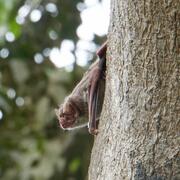
Dynamics of Rabies Transmission in Vampire Bats and Potential for Control Through Vaccination
Vampire bats are the primary spreader of rabies, a lethal disease that harms livestock and people across Latin America. Growth of the livestock industry and environmental changes in this region are leading to the expansion of vampire bats’ habitat range, and it is considered likely this species will move into the southern United States.
White-nose Syndrome Vaccine Updates
Since its emergence in 2006, white-nose syndrome (WNS) continues to spread in North America and has substantially impacted hibernating bat populations, contributing to declines of over 90% in northern long-eared ( Myotis septentrionalis), little brown ( Myotis lucifugus), and tri-colored bat ( Perimyotis subflavus) populations. We are developing tools and management strategies to protect bat...
Field trials for testing of white-nose syndrome vaccine candidates
White-nose syndrome (WNS), caused by the fungus Pseudogymnoascus destructans (Pd), continues to decimate bat populations in North America, and efforts to develop treatment options have intensified. One potential method for controlling WNS is vaccination of bats with specific antigens to elicit a protective immune response.
Development of SARS-CoV-2 vaccine to support black-footed ferret conservation
The SARS-CoV-2 virus is known to infect and cause severe disease, such as respiratory distress and death, in mustelids, including farm-raised mink ( Mustela lutreola and Neovison vison) and domestic ferrets ( M. putorius). This raised concern that the virus may also pose a threat to endangered black-footed ferrets ( Mustela nigripes) managed in captivity for breeding and recovery purposes.
Modeling the response of cave hibernating Myotis species to white-nose syndrome mitigation tactics
Bat Research Research collaboration: Robin Russell (NWHC), Tonie Rocke (NWHC), Wayne Thogmartin (UMESC), Evan Grant (EESC) White-nose syndrome is a fungal disease devastating cave-hibernating bat species ( Myotis spp.) in the eastern United States. Several mitigation tactics have been proposed to alleviate the effects of white-nose syndrome on bats including probiotics and vaccination. Questions...
Vaccines
The USGS National Wildlife Health Center (NWHC) works on developing various disease management tools, including the development of vaccines. Our current work focuses on vaccines for sylvatic plague, white-nose syndrome, and rabies as disease control strategies.
Sylvatic Plague
Sylvatic plague, caused by Yersinia pestis, is a bacterial disease transmitted by fleas that afflicts many mammalian species, including humans.
White-Nose Syndrome
White-nose syndrome (WNS) is an emergent disease of hibernating bats that has spread from the northeastern across United States at an alarming rate.
Vector-Borne Diseases
Vector-borne diseases are transmitted from one animal to another by vectors, including insects, such as mosquitoes or fleas, and arachnids, such as ticks. The USGS National Wildlife Health Center investigates wildlife diseases, including vector-borne diseases, such as West Nile virus and sylvatic plague.
Filter Total Items: 16
No Result Found
Filter Total Items: 139
Vaccination with F1-V fusion protein protects black-footed ferrets (Mustela nigripes) against plague upon oral challenge with Yersinia pestis Vaccination with F1-V fusion protein protects black-footed ferrets (Mustela nigripes) against plague upon oral challenge with Yersinia pestis
Previous studies have established that vaccination of black-footed ferrets (Mustela nigripes) with F1-V fusion protein by subcutaneous (SC) injection protects the animals against plague upon injection of the bacterium Yersinia pestis. This study demonstrates that the F1-V antigen can also protect ferrets against plague contracted via ingestion of a Y. pestis-infected mouse, a probable...
Authors
Tonie E. Rocke, Susan Smith, Paul E. Marinari, J. Kreeger, J.T. Enama, B.S. Powell
Exposure of mallards (Anas platyrhynchos) to the hepatotoxic cyanobacterium Nodularia spumigena Exposure of mallards (Anas platyrhynchos) to the hepatotoxic cyanobacterium Nodularia spumigena
Nodularin (NODLN) is a cyclic pentapeptide hepatotoxin produced by the cyanobacterium Nodularia spumigena, which forms extensive blooms during the summer in the Baltic Sea. Nodularin was detected in liver, muscle and/or feather samples of several common eiders (Somateria mollissima) from the Gulf of Finland (northern Baltic Sea) in 2002-2005. Published information on the adverse effects...
Authors
V.O. Sipia, J. Christian Franson, O. Sjovall, S. Pflugmacher, Valerie Shearn-Bochsler, Tonie E. Rocke, J.A.O. Meriluoto
Prominent pancreatic endocrinopathy and altered control of food intake disrupt energy homeostasis in prion diseases Prominent pancreatic endocrinopathy and altered control of food intake disrupt energy homeostasis in prion diseases
Prion diseases are fatal neurodegenerative diseases that can induce endocrinopathies. The basis of altered endocrine function in prion diseases is not well understood, and the purpose of this study was to investigate the spatiotemporal relationship between energy homeostasis and prion infection in hamsters inoculated with either the 139H strain of scrapie agent, which induces preclinical...
Authors
J. D. Bailey, J.G. Berardinelli, Tonie E. Rocke, R. A. Bessen
An outbreak of type C botulism in Herring Gulls (Larus argentatus) in Southeastern Sweden An outbreak of type C botulism in Herring Gulls (Larus argentatus) in Southeastern Sweden
From 2000 to 2004, over 10,000 seabirds, primarily Herring Gulls (Larus argentatus), died from an undetermined cause in the Blekinge archipelago in southeastern Sweden. In June 2004, 24 affected Herring Gulls were examined clinically, killed humanely, and 23 were examined by necropsy. Seven and 10 unaffected Herring Gulls collected from a local landfill site and from Iceland...
Authors
A. Neimanis, D. Gavier-Widen, F. Leighton, T. Bollinger, Tonie E. Rocke, T. Morner
Avian botulism Avian botulism
This chapter contains section titled: Introduction Synonyms History Distribution Host Range Etiology Epizootiology Clinical Signs Pathogenesis Pathology Diagnosis Immunity Public Health Concerns Domestic Animal Health Concerns Wildlife Population Impacts Treatment and Control Literature Cited
Authors
Tonie E. Rocke, Trent K. Bollinger
Vaccination as a potential means to prevent plague in black-footed ferrets: Progress and continuing challenges Vaccination as a potential means to prevent plague in black-footed ferrets: Progress and continuing challenges
This study was conducted to further assess the feasibility of vaccinating black-footed ferrets (Mustela nigripes) against plague (caused by the bacterium Yersinia pestis). On days 0 and 28, 17 postreproductive ferrets were immunized by subcutaneous injection with a recombinant fusion protein containing F1 and V antigens from Y. pestis. Another 17 animals received a placebo by the same...
Authors
Tonie E. Rocke, Pauline Nol, Paul E. Marinari, J.S. Kreeger, Susan R. Smith, G.P. Andrews, A.W. Friedlander
Toxicoinfectious botulism in commercial caponized chickens Toxicoinfectious botulism in commercial caponized chickens
During the summer of 2003, two flocks of commercial broiler chickens experienced unusually high death losses following caponizing at 3 wk of age and again between 8 and 14 wk of age. In September, fifteen 11-wk-old live capons were submitted to the Iowa State University Veterinary Diagnostic Laboratory for assistance. In both flocks, the second episode of elevated mortality was...
Authors
D.W. Trampel, Susan Smith, Tonie E. Rocke
Attempts to identify the source of avian vacuolar myelinopathy for waterbirds Attempts to identify the source of avian vacuolar myelinopathy for waterbirds
Attempts were made to reproduce avian vacuolar myelinopathy (AVM) in a number of test animals in order to determine the source of the causative agent for birds and to find a suitable animal model for future studies. Submerged vegetation, plankton, invertebrates, forage fish, and sediments were collected from three lakes with ongoing outbreaks of AVM and fed to American coots (Fulica...
Authors
Tonie E. Rocke, Nancy J. Thomas, Carol U. Meteyer, Charlotte Quist, John R. Fischer, Tom Augspurger, S. E. Ward
The impact of disease in the American white pelican in North America The impact of disease in the American white pelican in North America
Records of reported die-offs of the American White Pelican (Pelicanus erythrorhynchos) held by the U.S. Geological Survey National Wildlife Health Center from 1978 through 2003 indicate that type C botulism (caused by Clostridium botulinum) was the major cause of mortality. In 1996, over 15,000 birds, including 8,500 American White Pelicans, were estimated to have died from type C...
Authors
Tonie E. Rocke, Kathryn A. Converse, Carol U. Meteyer, R. McLean
Investigations of a large scale eared grebe (Podiceps nigricollis) die-off at the Salton Sea, California in 1992 Investigations of a large scale eared grebe (Podiceps nigricollis) die-off at the Salton Sea, California in 1992
An estimated 150,000 Eared Grebes (Podiceps nigricollis) died at the Salton Sea between 16 December 1991 and 21 April 1992. This represented the largest documented mortality event of Eared Grebes at the time and approximately 6% of the North American population. During the die-off, grebes exhibited several uncharacteristic behaviors, such as congregating at freshwater tributaries...
Authors
C.U. Meteyer, D. J. Audet, Tonie E. Rocke, W. Radke, L. H. Creekmore, R. Duncan
Type C botulism in pelicans and other fish-eating birds at the Salton Sea Type C botulism in pelicans and other fish-eating birds at the Salton Sea
In 1996, type C avian botulism killed over 10,000 pelicans and nearly 10,000 other fish-eating birds at the Salton Sea in southern California. Although botulism had been previously documented in waterbirds at the Sea, this die-off was unusual in that it involved primarily fish-eating birds. The American White Pelican (Pelecanus erythrorynchos) was the species with the greatest mortality...
Authors
Tonie E. Rocke, Pauline Nol, C. Pelizza, K. K. Sturm
Protection of black-tailed prairie dogs (Cynomys ludovicianus) against plague after voluntary consumption of baits containing recombinant raccoon poxvirus vaccine Protection of black-tailed prairie dogs (Cynomys ludovicianus) against plague after voluntary consumption of baits containing recombinant raccoon poxvirus vaccine
Prairie dogs (Cynomys spp.) are highly susceptible to Yersinia pestis and significant reservoirs of plague for humans in the western United States. A recombinant raccoon poxvirus, expressing the F1 antigen of Y. pestis, was incorporated into a palatable bait and offered to 18 black-tailed prairie dogs (Cynomys ludovicianus) for voluntary consumption; 18 negative control animals received...
Authors
J.S. Mencher, S.R. Smith, T.D. Powell, D.T. Stinchcomb, J.E. Osorio, Tonie E. Rocke
Science and Products
Dynamics of Rabies Transmission in Vampire Bats and Potential for Control Through Vaccination
Vampire bats are the primary spreader of rabies, a lethal disease that harms livestock and people across Latin America. Growth of the livestock industry and environmental changes in this region are leading to the expansion of vampire bats’ habitat range, and it is considered likely this species will move into the southern United States.
White-nose Syndrome Vaccine Updates
Since its emergence in 2006, white-nose syndrome (WNS) continues to spread in North America and has substantially impacted hibernating bat populations, contributing to declines of over 90% in northern long-eared ( Myotis septentrionalis), little brown ( Myotis lucifugus), and tri-colored bat ( Perimyotis subflavus) populations. We are developing tools and management strategies to protect bat...
Field trials for testing of white-nose syndrome vaccine candidates
White-nose syndrome (WNS), caused by the fungus Pseudogymnoascus destructans (Pd), continues to decimate bat populations in North America, and efforts to develop treatment options have intensified. One potential method for controlling WNS is vaccination of bats with specific antigens to elicit a protective immune response.
Development of SARS-CoV-2 vaccine to support black-footed ferret conservation
The SARS-CoV-2 virus is known to infect and cause severe disease, such as respiratory distress and death, in mustelids, including farm-raised mink ( Mustela lutreola and Neovison vison) and domestic ferrets ( M. putorius). This raised concern that the virus may also pose a threat to endangered black-footed ferrets ( Mustela nigripes) managed in captivity for breeding and recovery purposes.
Modeling the response of cave hibernating Myotis species to white-nose syndrome mitigation tactics
Bat Research Research collaboration: Robin Russell (NWHC), Tonie Rocke (NWHC), Wayne Thogmartin (UMESC), Evan Grant (EESC) White-nose syndrome is a fungal disease devastating cave-hibernating bat species ( Myotis spp.) in the eastern United States. Several mitigation tactics have been proposed to alleviate the effects of white-nose syndrome on bats including probiotics and vaccination. Questions...
Vaccines
The USGS National Wildlife Health Center (NWHC) works on developing various disease management tools, including the development of vaccines. Our current work focuses on vaccines for sylvatic plague, white-nose syndrome, and rabies as disease control strategies.
Sylvatic Plague
Sylvatic plague, caused by Yersinia pestis, is a bacterial disease transmitted by fleas that afflicts many mammalian species, including humans.
White-Nose Syndrome
White-nose syndrome (WNS) is an emergent disease of hibernating bats that has spread from the northeastern across United States at an alarming rate.
Vector-Borne Diseases
Vector-borne diseases are transmitted from one animal to another by vectors, including insects, such as mosquitoes or fleas, and arachnids, such as ticks. The USGS National Wildlife Health Center investigates wildlife diseases, including vector-borne diseases, such as West Nile virus and sylvatic plague.
Filter Total Items: 16
No Result Found
Filter Total Items: 139
Vaccination with F1-V fusion protein protects black-footed ferrets (Mustela nigripes) against plague upon oral challenge with Yersinia pestis Vaccination with F1-V fusion protein protects black-footed ferrets (Mustela nigripes) against plague upon oral challenge with Yersinia pestis
Previous studies have established that vaccination of black-footed ferrets (Mustela nigripes) with F1-V fusion protein by subcutaneous (SC) injection protects the animals against plague upon injection of the bacterium Yersinia pestis. This study demonstrates that the F1-V antigen can also protect ferrets against plague contracted via ingestion of a Y. pestis-infected mouse, a probable...
Authors
Tonie E. Rocke, Susan Smith, Paul E. Marinari, J. Kreeger, J.T. Enama, B.S. Powell
Exposure of mallards (Anas platyrhynchos) to the hepatotoxic cyanobacterium Nodularia spumigena Exposure of mallards (Anas platyrhynchos) to the hepatotoxic cyanobacterium Nodularia spumigena
Nodularin (NODLN) is a cyclic pentapeptide hepatotoxin produced by the cyanobacterium Nodularia spumigena, which forms extensive blooms during the summer in the Baltic Sea. Nodularin was detected in liver, muscle and/or feather samples of several common eiders (Somateria mollissima) from the Gulf of Finland (northern Baltic Sea) in 2002-2005. Published information on the adverse effects...
Authors
V.O. Sipia, J. Christian Franson, O. Sjovall, S. Pflugmacher, Valerie Shearn-Bochsler, Tonie E. Rocke, J.A.O. Meriluoto
Prominent pancreatic endocrinopathy and altered control of food intake disrupt energy homeostasis in prion diseases Prominent pancreatic endocrinopathy and altered control of food intake disrupt energy homeostasis in prion diseases
Prion diseases are fatal neurodegenerative diseases that can induce endocrinopathies. The basis of altered endocrine function in prion diseases is not well understood, and the purpose of this study was to investigate the spatiotemporal relationship between energy homeostasis and prion infection in hamsters inoculated with either the 139H strain of scrapie agent, which induces preclinical...
Authors
J. D. Bailey, J.G. Berardinelli, Tonie E. Rocke, R. A. Bessen
An outbreak of type C botulism in Herring Gulls (Larus argentatus) in Southeastern Sweden An outbreak of type C botulism in Herring Gulls (Larus argentatus) in Southeastern Sweden
From 2000 to 2004, over 10,000 seabirds, primarily Herring Gulls (Larus argentatus), died from an undetermined cause in the Blekinge archipelago in southeastern Sweden. In June 2004, 24 affected Herring Gulls were examined clinically, killed humanely, and 23 were examined by necropsy. Seven and 10 unaffected Herring Gulls collected from a local landfill site and from Iceland...
Authors
A. Neimanis, D. Gavier-Widen, F. Leighton, T. Bollinger, Tonie E. Rocke, T. Morner
Avian botulism Avian botulism
This chapter contains section titled: Introduction Synonyms History Distribution Host Range Etiology Epizootiology Clinical Signs Pathogenesis Pathology Diagnosis Immunity Public Health Concerns Domestic Animal Health Concerns Wildlife Population Impacts Treatment and Control Literature Cited
Authors
Tonie E. Rocke, Trent K. Bollinger
Vaccination as a potential means to prevent plague in black-footed ferrets: Progress and continuing challenges Vaccination as a potential means to prevent plague in black-footed ferrets: Progress and continuing challenges
This study was conducted to further assess the feasibility of vaccinating black-footed ferrets (Mustela nigripes) against plague (caused by the bacterium Yersinia pestis). On days 0 and 28, 17 postreproductive ferrets were immunized by subcutaneous injection with a recombinant fusion protein containing F1 and V antigens from Y. pestis. Another 17 animals received a placebo by the same...
Authors
Tonie E. Rocke, Pauline Nol, Paul E. Marinari, J.S. Kreeger, Susan R. Smith, G.P. Andrews, A.W. Friedlander
Toxicoinfectious botulism in commercial caponized chickens Toxicoinfectious botulism in commercial caponized chickens
During the summer of 2003, two flocks of commercial broiler chickens experienced unusually high death losses following caponizing at 3 wk of age and again between 8 and 14 wk of age. In September, fifteen 11-wk-old live capons were submitted to the Iowa State University Veterinary Diagnostic Laboratory for assistance. In both flocks, the second episode of elevated mortality was...
Authors
D.W. Trampel, Susan Smith, Tonie E. Rocke
Attempts to identify the source of avian vacuolar myelinopathy for waterbirds Attempts to identify the source of avian vacuolar myelinopathy for waterbirds
Attempts were made to reproduce avian vacuolar myelinopathy (AVM) in a number of test animals in order to determine the source of the causative agent for birds and to find a suitable animal model for future studies. Submerged vegetation, plankton, invertebrates, forage fish, and sediments were collected from three lakes with ongoing outbreaks of AVM and fed to American coots (Fulica...
Authors
Tonie E. Rocke, Nancy J. Thomas, Carol U. Meteyer, Charlotte Quist, John R. Fischer, Tom Augspurger, S. E. Ward
The impact of disease in the American white pelican in North America The impact of disease in the American white pelican in North America
Records of reported die-offs of the American White Pelican (Pelicanus erythrorhynchos) held by the U.S. Geological Survey National Wildlife Health Center from 1978 through 2003 indicate that type C botulism (caused by Clostridium botulinum) was the major cause of mortality. In 1996, over 15,000 birds, including 8,500 American White Pelicans, were estimated to have died from type C...
Authors
Tonie E. Rocke, Kathryn A. Converse, Carol U. Meteyer, R. McLean
Investigations of a large scale eared grebe (Podiceps nigricollis) die-off at the Salton Sea, California in 1992 Investigations of a large scale eared grebe (Podiceps nigricollis) die-off at the Salton Sea, California in 1992
An estimated 150,000 Eared Grebes (Podiceps nigricollis) died at the Salton Sea between 16 December 1991 and 21 April 1992. This represented the largest documented mortality event of Eared Grebes at the time and approximately 6% of the North American population. During the die-off, grebes exhibited several uncharacteristic behaviors, such as congregating at freshwater tributaries...
Authors
C.U. Meteyer, D. J. Audet, Tonie E. Rocke, W. Radke, L. H. Creekmore, R. Duncan
Type C botulism in pelicans and other fish-eating birds at the Salton Sea Type C botulism in pelicans and other fish-eating birds at the Salton Sea
In 1996, type C avian botulism killed over 10,000 pelicans and nearly 10,000 other fish-eating birds at the Salton Sea in southern California. Although botulism had been previously documented in waterbirds at the Sea, this die-off was unusual in that it involved primarily fish-eating birds. The American White Pelican (Pelecanus erythrorynchos) was the species with the greatest mortality...
Authors
Tonie E. Rocke, Pauline Nol, C. Pelizza, K. K. Sturm
Protection of black-tailed prairie dogs (Cynomys ludovicianus) against plague after voluntary consumption of baits containing recombinant raccoon poxvirus vaccine Protection of black-tailed prairie dogs (Cynomys ludovicianus) against plague after voluntary consumption of baits containing recombinant raccoon poxvirus vaccine
Prairie dogs (Cynomys spp.) are highly susceptible to Yersinia pestis and significant reservoirs of plague for humans in the western United States. A recombinant raccoon poxvirus, expressing the F1 antigen of Y. pestis, was incorporated into a palatable bait and offered to 18 black-tailed prairie dogs (Cynomys ludovicianus) for voluntary consumption; 18 negative control animals received...
Authors
J.S. Mencher, S.R. Smith, T.D. Powell, D.T. Stinchcomb, J.E. Osorio, Tonie E. Rocke