
Tonie Rocke
Tonie Rocke is a Research Epidemiologist at the National Wildlife Health Center.
Science and Products
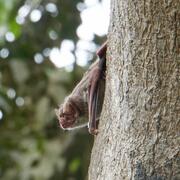
Dynamics of Rabies Transmission in Vampire Bats and Potential for Control Through Vaccination
Vampire bats are the primary spreader of rabies, a lethal disease that harms livestock and people across Latin America. Growth of the livestock industry and environmental changes in this region are leading to the expansion of vampire bats’ habitat range, and it is considered likely this species will move into the southern United States.
White-nose Syndrome Vaccine Updates
Since its emergence in 2006, white-nose syndrome (WNS) continues to spread in North America and has substantially impacted hibernating bat populations, contributing to declines of over 90% in northern long-eared ( Myotis septentrionalis), little brown ( Myotis lucifugus), and tri-colored bat ( Perimyotis subflavus) populations. We are developing tools and management strategies to protect bat...
Field trials for testing of white-nose syndrome vaccine candidates
White-nose syndrome (WNS), caused by the fungus Pseudogymnoascus destructans (Pd), continues to decimate bat populations in North America, and efforts to develop treatment options have intensified. One potential method for controlling WNS is vaccination of bats with specific antigens to elicit a protective immune response.
Development of SARS-CoV-2 vaccine to support black-footed ferret conservation
The SARS-CoV-2 virus is known to infect and cause severe disease, such as respiratory distress and death, in mustelids, including farm-raised mink ( Mustela lutreola and Neovison vison) and domestic ferrets ( M. putorius). This raised concern that the virus may also pose a threat to endangered black-footed ferrets ( Mustela nigripes) managed in captivity for breeding and recovery purposes.
Modeling the response of cave hibernating Myotis species to white-nose syndrome mitigation tactics
Bat Research Research collaboration: Robin Russell (NWHC), Tonie Rocke (NWHC), Wayne Thogmartin (UMESC), Evan Grant (EESC) White-nose syndrome is a fungal disease devastating cave-hibernating bat species ( Myotis spp.) in the eastern United States. Several mitigation tactics have been proposed to alleviate the effects of white-nose syndrome on bats including probiotics and vaccination. Questions...
Vaccines
The USGS National Wildlife Health Center (NWHC) works on developing various disease management tools, including the development of vaccines. Our current work focuses on vaccines for sylvatic plague, white-nose syndrome, and rabies as disease control strategies.
Sylvatic Plague
Sylvatic plague, caused by Yersinia pestis, is a bacterial disease transmitted by fleas that afflicts many mammalian species, including humans.
White-Nose Syndrome
White-nose syndrome (WNS) is an emergent disease of hibernating bats that has spread from the northeastern across United States at an alarming rate.
Vector-Borne Diseases
Vector-borne diseases are transmitted from one animal to another by vectors, including insects, such as mosquitoes or fleas, and arachnids, such as ticks. The USGS National Wildlife Health Center investigates wildlife diseases, including vector-borne diseases, such as West Nile virus and sylvatic plague.
Filter Total Items: 16
No Result Found
Filter Total Items: 139
Could blackbird mortality from avicide DRC-1339 contribute to avian botulism outbreaks in North Dakota? Could blackbird mortality from avicide DRC-1339 contribute to avian botulism outbreaks in North Dakota?
Blackbird (family lcteridae) depredation on sunflower (Helianthus annuus) crops in the prairie states of the United States has motivated the proposed use of an avicide, DRC-1339 (3-chloro-4-methylaniline), to decrease their numbers. The resulting mortality of blackbirds at wetland roosts could increase the potential of avian botulism occurring in affected marshes. To assess this...
Authors
Diana R. Goldberg, M.D. Samuel, Tonie E. Rocke, K. M. Johnson, G. Linz
Prevalence of neurotoxic Clostridium botulinum type C in the gastrointestinal tracts of tilapis (Oreochromis mossambicus) in the Salton Sea Prevalence of neurotoxic Clostridium botulinum type C in the gastrointestinal tracts of tilapis (Oreochromis mossambicus) in the Salton Sea
Tilapia (Oreochromis mossambicus) have been implicated as the source of type C toxin in avian botulism outbreaks in pelicans (Pelecanus erythrorhynchos, Pelecanus occidentalis californicus) at the Salton Sea in southern California (USA). We collected sick, dead, and healthy fish from various sites throughout the Sea during the summers of 1999 through 2001 and tested them for the presence...
Authors
P.J. Nol, Tonie E. Rocke, K. Gross, Thomas M. Yuill
Limited infection upon human exposure to a recombinant raccoon pox vaccine vector Limited infection upon human exposure to a recombinant raccoon pox vaccine vector
A laboratory accident resulted in human exposure to a recombinant raccoon poxvirus (RCN) developed as a vaccine vector for antigens of Yersinia pestis for protection of wild rodents (and other animals) against plague. Within 9 days, the patient developed a small blister that healed within 4 weeks. Raccoon poxvirus was cultured from the lesion, and the patient developed antibody to plague...
Authors
Tonie E. Rocke, F. J. Dein, M. Fuchsberger, B.C. Fox, D.T. Stinchcomb, J.G. Osorio
Recombinant F1-V fusion protein protects black-footed ferrets (Mustela nigripes) against virulent Yersinia pestis infection Recombinant F1-V fusion protein protects black-footed ferrets (Mustela nigripes) against virulent Yersinia pestis infection
Black-footed ferrets (Mustela nigripes) are highly susceptible to sylvatic plague, caused by the bacterium Yersinia pestis, and this disease has severely hampered efforts to restore ferrets to their historic range. A study was conducted to assess the efficacy of vaccination of black-footed ferrets against plague using a recombinant protein vaccine, designated F1-V, developed by personnel...
Authors
Tonie E. Rocke, J. Mencher, Susan Smith, A. M. Friedlander, G.P. Andrews, L. A. Baeten
Detection of Clostridium botulinum type C cells in the gastrointestinal tracts of Mozambique tilapia (Oreochromis mossambicus) by polymerase chain reaction Detection of Clostridium botulinum type C cells in the gastrointestinal tracts of Mozambique tilapia (Oreochromis mossambicus) by polymerase chain reaction
We established a method of directly detecting Clostridium botulinum type C cells, while minimizing spore detection, in the intestinal contents of Mozambique tilapia (Oreochromis mossambicus). This technique involved extraction of predominantly cellular DNA from tilapia intestinal tracts and used a polymerase chain reaction assay to detect presence of type C1 toxin gene. We consistently...
Authors
P. Nol, J.L. Williamson, Tonie E. Rocke, Thomas M. Yuill
Recombinant raccoon pox vaccine protects mice against lethal plague Recombinant raccoon pox vaccine protects mice against lethal plague
Using a raccoon poxvirus (RCN) expression system, we have developed new recombinant vaccines that can protect mice against lethal plague infection. We tested the effects of a translation enhancer (EMCV-IRES) in combination with a secretory (tPA) signal or secretory (tPA) and membrane anchoring (CHV-gG) signals on in vitro antigen expression of F1 antigen in tissue culture and the...
Authors
J.E. Osorio, T.D. Powell, R.S. Frank, K. Moss, E.J. Haanes, S.R. Smith, Tonie E. Rocke, D.T. Stinchcomb
Determination of the median toxic dose of type C botulism in lactating dairy cows Determination of the median toxic dose of type C botulism in lactating dairy cows
Because of the difficulty in identifying botulinum toxin in cattle, it is hypothesized that cattle are sensitive to levels of toxin below the detection limits of current diagnostic techniques (the mouse protection bioassay and the immunostick enzyme-linked immunosorbent assay [ELISA] for type C botulinum toxin). Using an up-down method for toxicologic testing, the median toxic dose...
Authors
R.B. Moeller, B. Puschner, R.L. Walker, Tonie E. Rocke, F.D. Galey, J.S. Cullor, A.A. Ardans
New host record of avian tuberculosis in an American white pelican, Pelecanus erythrorhynchos New host record of avian tuberculosis in an American white pelican, Pelecanus erythrorhynchos
An American white pelican (P. erythrorhyncos) was captured in August 1999 in California, USA. The bird was unable to fly away or evade the boat, and showed considerable aggression when captured. Numerous multifocal, 1 mm diameter, yellow masses were observed throughout the lungs and air sacs. The liver was yellow. A 6 cm diameter, firm spherical mass was present in the abdominal cavity...
Authors
P. Nol, R.E. Brannian, B.M. Berlowski, M. J. Wolcott, Tonie E. Rocke
Failure to transmit avian vacuolar myelinopathy to mallard ducks Failure to transmit avian vacuolar myelinopathy to mallard ducks
Avian vacuolar myelinopathy (AVM) is a neurologic disease that has been diagnosed in free-ranging birds in the southeastern United States. Bald eagles (Haliaeetus leuocephalus), American coots (Fulica americana), and mallards (Anas platyrhynchos) have been affected. Previous investigations have not determined the etiology of this disease. In November and December 2002, we attempted to...
Authors
R. S. Larsen, Felicia B. Nutter, Tom Augspurger, Tonie E. Rocke, Nancy J. Thomas, Michael K. Stoskopf
Vacuolar myelinopathy in waterfowl from a North Carolina impoundment Vacuolar myelinopathy in waterfowl from a North Carolina impoundment
Vacuolar myelinopathy was confirmed by light and electron microscopic examination of mallards (Anas platyrhynchos), ring-necked ducks (Aythya collaris), and buffleheads (Bucephala albeola) collected during an epizootic at Lake Surf in central North Carolina (USA) between November 1998 and February 1999. Clinical signs of affected birds were consistent with central nervous system...
Authors
T. Augspurger, John R. Fischer, Nancy Thomas, L. Sileo, Roger E. Brannian, Kimberli Miller, Tonie E. Rocke
Epizootiologic studies of avian vacuolar myelinopathy in waterbirds Epizootiologic studies of avian vacuolar myelinopathy in waterbirds
Epizootic avian vacuolar myelinopathy (AVM) was first recognized as a neurologic disease in bald eagles (Haliaeetus leucocephalus) and American coots (Fulica americana) in Arkansas, USA in 1994 and 1996, respectively, but attempts to identify the etiology of the disease have been unsuccessful to date. Between 1998 and 2001, wing clipped sentinel birds (wild American coots and game farm...
Authors
Tonie E. Rocke, N. J. Thomas, T. Augspurger, Kimberli Miller
Wildlife disease in the Colorado Delta as an indicator of ecosystem health Wildlife disease in the Colorado Delta as an indicator of ecosystem health
Ecosystem health and management are relatively new paradigms for environmental management (Costanza et al., 1992) and will be continually redefined and reevaluated relative to their purpose and utility in serving human society (Costanza et al., 1992; Sutter, 1993; Grumbine, 1994; Lackey, 1998, 1999). The stimulus for ecosystem management is often associated with sustaining or restoring...
Authors
Tonie E. Rocke, M. Friend
Science and Products
Dynamics of Rabies Transmission in Vampire Bats and Potential for Control Through Vaccination
Vampire bats are the primary spreader of rabies, a lethal disease that harms livestock and people across Latin America. Growth of the livestock industry and environmental changes in this region are leading to the expansion of vampire bats’ habitat range, and it is considered likely this species will move into the southern United States.
White-nose Syndrome Vaccine Updates
Since its emergence in 2006, white-nose syndrome (WNS) continues to spread in North America and has substantially impacted hibernating bat populations, contributing to declines of over 90% in northern long-eared ( Myotis septentrionalis), little brown ( Myotis lucifugus), and tri-colored bat ( Perimyotis subflavus) populations. We are developing tools and management strategies to protect bat...
Field trials for testing of white-nose syndrome vaccine candidates
White-nose syndrome (WNS), caused by the fungus Pseudogymnoascus destructans (Pd), continues to decimate bat populations in North America, and efforts to develop treatment options have intensified. One potential method for controlling WNS is vaccination of bats with specific antigens to elicit a protective immune response.
Development of SARS-CoV-2 vaccine to support black-footed ferret conservation
The SARS-CoV-2 virus is known to infect and cause severe disease, such as respiratory distress and death, in mustelids, including farm-raised mink ( Mustela lutreola and Neovison vison) and domestic ferrets ( M. putorius). This raised concern that the virus may also pose a threat to endangered black-footed ferrets ( Mustela nigripes) managed in captivity for breeding and recovery purposes.
Modeling the response of cave hibernating Myotis species to white-nose syndrome mitigation tactics
Bat Research Research collaboration: Robin Russell (NWHC), Tonie Rocke (NWHC), Wayne Thogmartin (UMESC), Evan Grant (EESC) White-nose syndrome is a fungal disease devastating cave-hibernating bat species ( Myotis spp.) in the eastern United States. Several mitigation tactics have been proposed to alleviate the effects of white-nose syndrome on bats including probiotics and vaccination. Questions...
Vaccines
The USGS National Wildlife Health Center (NWHC) works on developing various disease management tools, including the development of vaccines. Our current work focuses on vaccines for sylvatic plague, white-nose syndrome, and rabies as disease control strategies.
Sylvatic Plague
Sylvatic plague, caused by Yersinia pestis, is a bacterial disease transmitted by fleas that afflicts many mammalian species, including humans.
White-Nose Syndrome
White-nose syndrome (WNS) is an emergent disease of hibernating bats that has spread from the northeastern across United States at an alarming rate.
Vector-Borne Diseases
Vector-borne diseases are transmitted from one animal to another by vectors, including insects, such as mosquitoes or fleas, and arachnids, such as ticks. The USGS National Wildlife Health Center investigates wildlife diseases, including vector-borne diseases, such as West Nile virus and sylvatic plague.
Filter Total Items: 16
No Result Found
Filter Total Items: 139
Could blackbird mortality from avicide DRC-1339 contribute to avian botulism outbreaks in North Dakota? Could blackbird mortality from avicide DRC-1339 contribute to avian botulism outbreaks in North Dakota?
Blackbird (family lcteridae) depredation on sunflower (Helianthus annuus) crops in the prairie states of the United States has motivated the proposed use of an avicide, DRC-1339 (3-chloro-4-methylaniline), to decrease their numbers. The resulting mortality of blackbirds at wetland roosts could increase the potential of avian botulism occurring in affected marshes. To assess this...
Authors
Diana R. Goldberg, M.D. Samuel, Tonie E. Rocke, K. M. Johnson, G. Linz
Prevalence of neurotoxic Clostridium botulinum type C in the gastrointestinal tracts of tilapis (Oreochromis mossambicus) in the Salton Sea Prevalence of neurotoxic Clostridium botulinum type C in the gastrointestinal tracts of tilapis (Oreochromis mossambicus) in the Salton Sea
Tilapia (Oreochromis mossambicus) have been implicated as the source of type C toxin in avian botulism outbreaks in pelicans (Pelecanus erythrorhynchos, Pelecanus occidentalis californicus) at the Salton Sea in southern California (USA). We collected sick, dead, and healthy fish from various sites throughout the Sea during the summers of 1999 through 2001 and tested them for the presence...
Authors
P.J. Nol, Tonie E. Rocke, K. Gross, Thomas M. Yuill
Limited infection upon human exposure to a recombinant raccoon pox vaccine vector Limited infection upon human exposure to a recombinant raccoon pox vaccine vector
A laboratory accident resulted in human exposure to a recombinant raccoon poxvirus (RCN) developed as a vaccine vector for antigens of Yersinia pestis for protection of wild rodents (and other animals) against plague. Within 9 days, the patient developed a small blister that healed within 4 weeks. Raccoon poxvirus was cultured from the lesion, and the patient developed antibody to plague...
Authors
Tonie E. Rocke, F. J. Dein, M. Fuchsberger, B.C. Fox, D.T. Stinchcomb, J.G. Osorio
Recombinant F1-V fusion protein protects black-footed ferrets (Mustela nigripes) against virulent Yersinia pestis infection Recombinant F1-V fusion protein protects black-footed ferrets (Mustela nigripes) against virulent Yersinia pestis infection
Black-footed ferrets (Mustela nigripes) are highly susceptible to sylvatic plague, caused by the bacterium Yersinia pestis, and this disease has severely hampered efforts to restore ferrets to their historic range. A study was conducted to assess the efficacy of vaccination of black-footed ferrets against plague using a recombinant protein vaccine, designated F1-V, developed by personnel...
Authors
Tonie E. Rocke, J. Mencher, Susan Smith, A. M. Friedlander, G.P. Andrews, L. A. Baeten
Detection of Clostridium botulinum type C cells in the gastrointestinal tracts of Mozambique tilapia (Oreochromis mossambicus) by polymerase chain reaction Detection of Clostridium botulinum type C cells in the gastrointestinal tracts of Mozambique tilapia (Oreochromis mossambicus) by polymerase chain reaction
We established a method of directly detecting Clostridium botulinum type C cells, while minimizing spore detection, in the intestinal contents of Mozambique tilapia (Oreochromis mossambicus). This technique involved extraction of predominantly cellular DNA from tilapia intestinal tracts and used a polymerase chain reaction assay to detect presence of type C1 toxin gene. We consistently...
Authors
P. Nol, J.L. Williamson, Tonie E. Rocke, Thomas M. Yuill
Recombinant raccoon pox vaccine protects mice against lethal plague Recombinant raccoon pox vaccine protects mice against lethal plague
Using a raccoon poxvirus (RCN) expression system, we have developed new recombinant vaccines that can protect mice against lethal plague infection. We tested the effects of a translation enhancer (EMCV-IRES) in combination with a secretory (tPA) signal or secretory (tPA) and membrane anchoring (CHV-gG) signals on in vitro antigen expression of F1 antigen in tissue culture and the...
Authors
J.E. Osorio, T.D. Powell, R.S. Frank, K. Moss, E.J. Haanes, S.R. Smith, Tonie E. Rocke, D.T. Stinchcomb
Determination of the median toxic dose of type C botulism in lactating dairy cows Determination of the median toxic dose of type C botulism in lactating dairy cows
Because of the difficulty in identifying botulinum toxin in cattle, it is hypothesized that cattle are sensitive to levels of toxin below the detection limits of current diagnostic techniques (the mouse protection bioassay and the immunostick enzyme-linked immunosorbent assay [ELISA] for type C botulinum toxin). Using an up-down method for toxicologic testing, the median toxic dose...
Authors
R.B. Moeller, B. Puschner, R.L. Walker, Tonie E. Rocke, F.D. Galey, J.S. Cullor, A.A. Ardans
New host record of avian tuberculosis in an American white pelican, Pelecanus erythrorhynchos New host record of avian tuberculosis in an American white pelican, Pelecanus erythrorhynchos
An American white pelican (P. erythrorhyncos) was captured in August 1999 in California, USA. The bird was unable to fly away or evade the boat, and showed considerable aggression when captured. Numerous multifocal, 1 mm diameter, yellow masses were observed throughout the lungs and air sacs. The liver was yellow. A 6 cm diameter, firm spherical mass was present in the abdominal cavity...
Authors
P. Nol, R.E. Brannian, B.M. Berlowski, M. J. Wolcott, Tonie E. Rocke
Failure to transmit avian vacuolar myelinopathy to mallard ducks Failure to transmit avian vacuolar myelinopathy to mallard ducks
Avian vacuolar myelinopathy (AVM) is a neurologic disease that has been diagnosed in free-ranging birds in the southeastern United States. Bald eagles (Haliaeetus leuocephalus), American coots (Fulica americana), and mallards (Anas platyrhynchos) have been affected. Previous investigations have not determined the etiology of this disease. In November and December 2002, we attempted to...
Authors
R. S. Larsen, Felicia B. Nutter, Tom Augspurger, Tonie E. Rocke, Nancy J. Thomas, Michael K. Stoskopf
Vacuolar myelinopathy in waterfowl from a North Carolina impoundment Vacuolar myelinopathy in waterfowl from a North Carolina impoundment
Vacuolar myelinopathy was confirmed by light and electron microscopic examination of mallards (Anas platyrhynchos), ring-necked ducks (Aythya collaris), and buffleheads (Bucephala albeola) collected during an epizootic at Lake Surf in central North Carolina (USA) between November 1998 and February 1999. Clinical signs of affected birds were consistent with central nervous system...
Authors
T. Augspurger, John R. Fischer, Nancy Thomas, L. Sileo, Roger E. Brannian, Kimberli Miller, Tonie E. Rocke
Epizootiologic studies of avian vacuolar myelinopathy in waterbirds Epizootiologic studies of avian vacuolar myelinopathy in waterbirds
Epizootic avian vacuolar myelinopathy (AVM) was first recognized as a neurologic disease in bald eagles (Haliaeetus leucocephalus) and American coots (Fulica americana) in Arkansas, USA in 1994 and 1996, respectively, but attempts to identify the etiology of the disease have been unsuccessful to date. Between 1998 and 2001, wing clipped sentinel birds (wild American coots and game farm...
Authors
Tonie E. Rocke, N. J. Thomas, T. Augspurger, Kimberli Miller
Wildlife disease in the Colorado Delta as an indicator of ecosystem health Wildlife disease in the Colorado Delta as an indicator of ecosystem health
Ecosystem health and management are relatively new paradigms for environmental management (Costanza et al., 1992) and will be continually redefined and reevaluated relative to their purpose and utility in serving human society (Costanza et al., 1992; Sutter, 1993; Grumbine, 1994; Lackey, 1998, 1999). The stimulus for ecosystem management is often associated with sustaining or restoring...
Authors
Tonie E. Rocke, M. Friend