



This is a photo of a fish with gas bubble trauma. For decades, scientists at the USGS Western Fisheries Research Center (WFRC) have worked alongside dam operators to monitor a lesser-known threat to fish in the Columbia and Snake rivers: gas bubble trauma.
Images
Images intro.
Filter Total Items: 816

Gas Bubble Trauma
This is a photo of a fish with gas bubble trauma. For decades, scientists at the USGS Western Fisheries Research Center (WFRC) have worked alongside dam operators to monitor a lesser-known threat to fish in the Columbia and Snake rivers: gas bubble trauma.
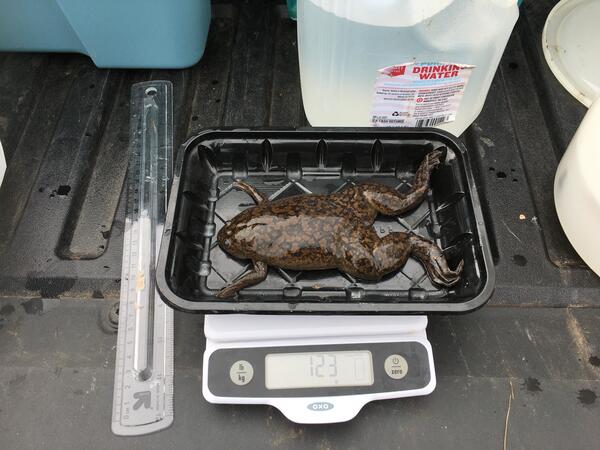
Weight of African Clawed Frog
Invasive species present a growing threat to ecosystems worldwide, and the African clawed frog (Xenopus laevis) is no exception. First detected in the U.S. in 1964, African clawed frogs have now made their way to Washington State where they pose a growing threat to local ecosystems.
Invasive species present a growing threat to ecosystems worldwide, and the African clawed frog (Xenopus laevis) is no exception. First detected in the U.S. in 1964, African clawed frogs have now made their way to Washington State where they pose a growing threat to local ecosystems.
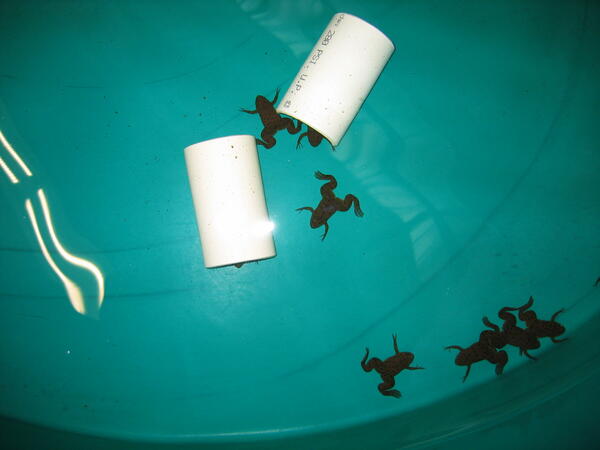
Invasive African Clawed Frogs
The Western Fisheries Research Center (WFRC) research helps uncover the spread and impact of invasive African Clawed Frogs (Xenopus laevis) in Washington. First detected in the U.S. in 1964, African clawed frogs have now made their way to Washington State where they pose a growing threat to local ecosystems.
The Western Fisheries Research Center (WFRC) research helps uncover the spread and impact of invasive African Clawed Frogs (Xenopus laevis) in Washington. First detected in the U.S. in 1964, African clawed frogs have now made their way to Washington State where they pose a growing threat to local ecosystems.
Chinook Salmon Egg Survival Fieldwork in the Sacramento River, CA
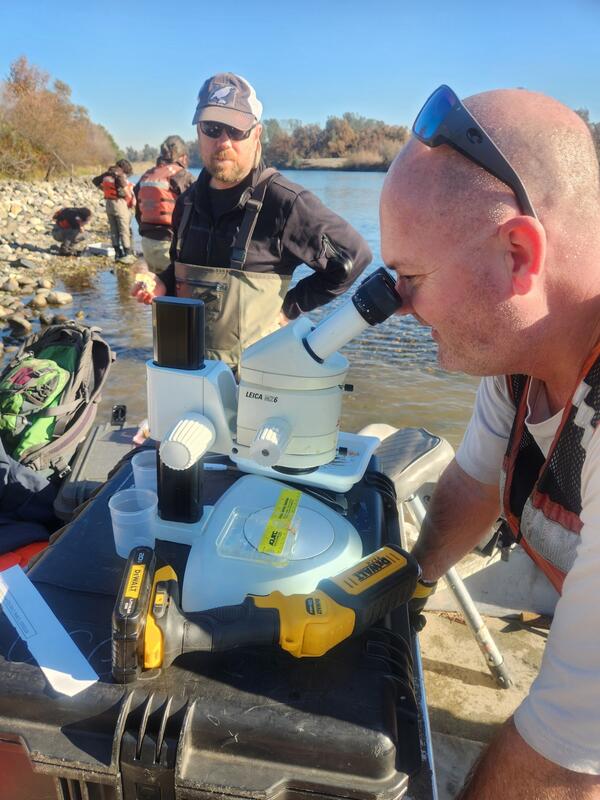
Chinook Salmon Egg Survival Fieldwork in the Sacramento River, CAThis is fieldwork from a Chinook salmon egg survival pilot study in the Sacramento River. Egg boxes were placed in the river at different locations to collect data on egg-to-fry survival. Some examples of data collected include water velocity and river flow, gravel temperature, scour and deposition, and sediment type.
Chinook Salmon Egg Survival Fieldwork in the Sacramento River, CA
Chinook Salmon Egg Survival Fieldwork in the Sacramento River, CAThis is fieldwork from a Chinook salmon egg survival pilot study in the Sacramento River. Egg boxes were placed in the river at different locations to collect data on egg-to-fry survival. Some examples of data collected include water velocity and river flow, gravel temperature, scour and deposition, and sediment type.
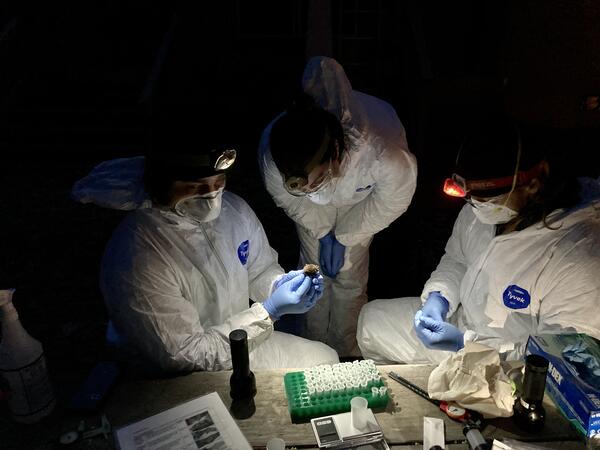
Setting up to collect samples from a bat
Scientists get ready to collect samples from a bat to test for Pseudogymnoascus destructans, the fungus that causes white-nose syndrome.
Scientists get ready to collect samples from a bat to test for Pseudogymnoascus destructans, the fungus that causes white-nose syndrome.
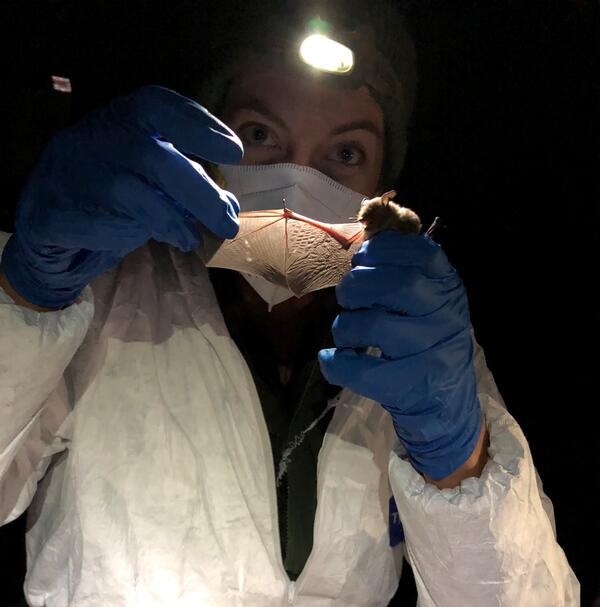
Looking for wing damage
Scientists look for damage on the skin of a bat's wing as an indicator of white-nose syndrome infection. This bat has no wing damage.
Scientists look for damage on the skin of a bat's wing as an indicator of white-nose syndrome infection. This bat has no wing damage.
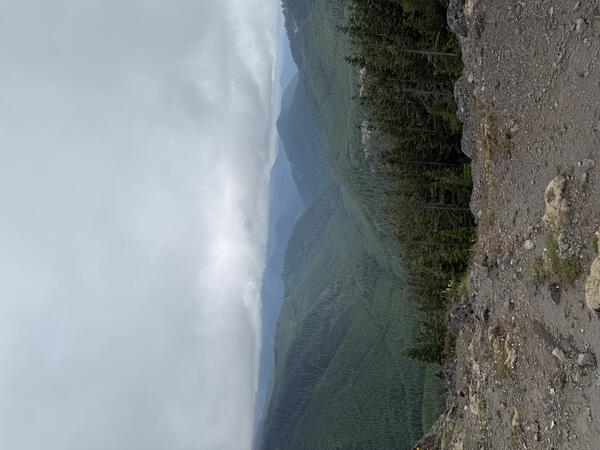
Bare Mountain, West Crater Volcanic Field, Washington
Bare Mountain, West Crater Volcanic Field, WashingtonThe top of Bare Mountain (foreground) looking towards the southwest. Bare Mountain has two components: a pre-glacial (older than about 20,000 years) andesite lava flow that travelled to the north, after which the top of the eruptive vent was destroyed in an explosive eruption that formed a 475 meter (1550 feet) wide and 145 meter (475 feet) deep crater.
Bare Mountain, West Crater Volcanic Field, Washington
Bare Mountain, West Crater Volcanic Field, WashingtonThe top of Bare Mountain (foreground) looking towards the southwest. Bare Mountain has two components: a pre-glacial (older than about 20,000 years) andesite lava flow that travelled to the north, after which the top of the eruptive vent was destroyed in an explosive eruption that formed a 475 meter (1550 feet) wide and 145 meter (475 feet) deep crater.
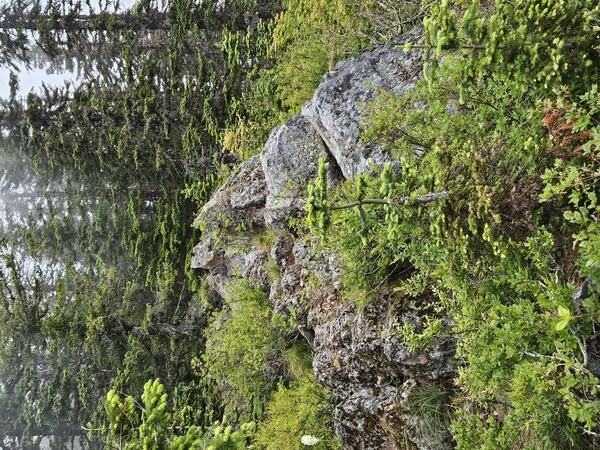
Dike in Sisters Rocks, West Crater Volcanic Field, Washington
Dike in Sisters Rocks, West Crater Volcanic Field, WashingtonA basalt of Sister Rocks dike (a subsurface magmatic structure) cutting across a scoria deposit from a previous eruption of Sister Rocks. Being in a scoria deposit can indicate that you are near a volcanic vent, as scoria is not ejected very far from its source. This feature can be accessed just off the trail to the summit of Sister Rocks.
Dike in Sisters Rocks, West Crater Volcanic Field, Washington
Dike in Sisters Rocks, West Crater Volcanic Field, WashingtonA basalt of Sister Rocks dike (a subsurface magmatic structure) cutting across a scoria deposit from a previous eruption of Sister Rocks. Being in a scoria deposit can indicate that you are near a volcanic vent, as scoria is not ejected very far from its source. This feature can be accessed just off the trail to the summit of Sister Rocks.
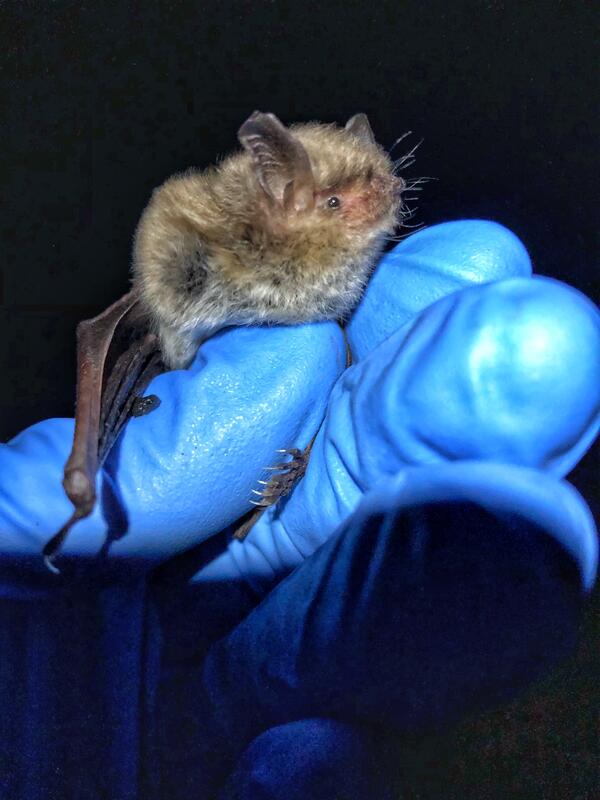
Yuma myotis bat
The Yuma myotis bat, Myotis yumanensis, has a body length of only 1.5-1.9 inches and they weigh less than half an ounce.
The Yuma myotis bat, Myotis yumanensis, has a body length of only 1.5-1.9 inches and they weigh less than half an ounce.
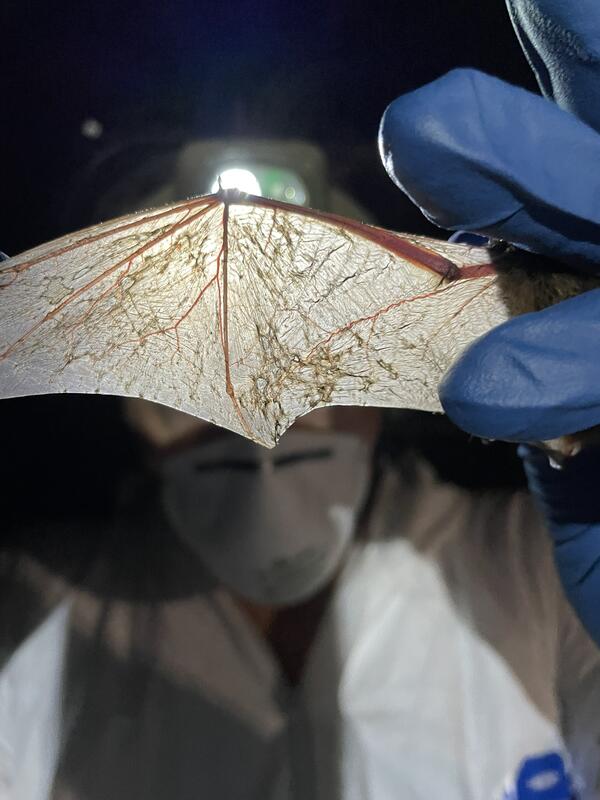
A bat's wing scarred by white-nose syndrome
Scars on the skin of this bat's wing suggest white-nose syndrome infection over the previous winter.
Scars on the skin of this bat's wing suggest white-nose syndrome infection over the previous winter.

Basalt of Soda Peaks and andesite of West Crater, southern Washington
Basalt of Soda Peaks and andesite of West Crater, southern WashingtonTalus slopes of the basalt of Soda Peaks (foreground), the oldest known eruption in the West Crater area, overlooking the andesite of West Crater (middle background), the youngest known eruption. This area is heavily vegetated and steeply sloped, which provide a challenge for rock sampling. Photo by James Genero, CVO summer intern, June 2025.
Basalt of Soda Peaks and andesite of West Crater, southern Washington
Basalt of Soda Peaks and andesite of West Crater, southern WashingtonTalus slopes of the basalt of Soda Peaks (foreground), the oldest known eruption in the West Crater area, overlooking the andesite of West Crater (middle background), the youngest known eruption. This area is heavily vegetated and steeply sloped, which provide a challenge for rock sampling. Photo by James Genero, CVO summer intern, June 2025.
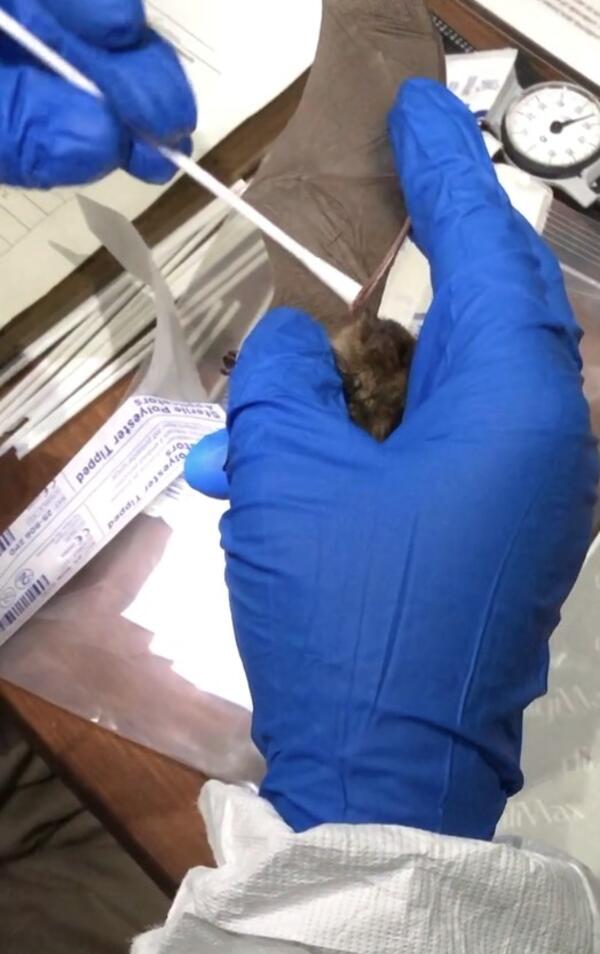
Collecting fungal samples to test for Pseudogymnoascus destructans
Collecting fungal samples to test for Pseudogymnoascus destructansIndividual bats are tested for Pseudogymnoascus destructans, the fungus that causes white-nose syndrome, by wiping a sterile swab across the skin of a bat's outstretched wing and muzzle.
Collecting fungal samples to test for Pseudogymnoascus destructans
Collecting fungal samples to test for Pseudogymnoascus destructansIndividual bats are tested for Pseudogymnoascus destructans, the fungus that causes white-nose syndrome, by wiping a sterile swab across the skin of a bat's outstretched wing and muzzle.
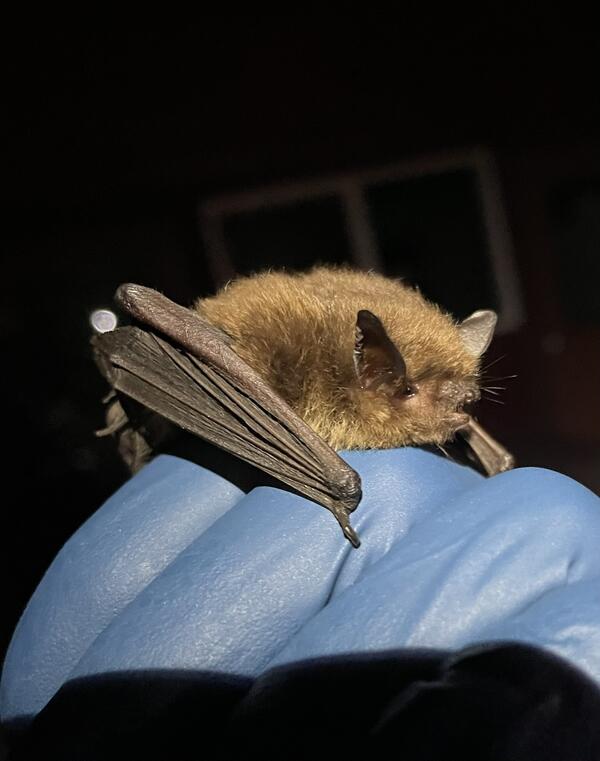
Perched Yuma myotis
Yuma myotis has a wide range throughout western North America, from the Southwestern regions of Canada into Mexico.
Yuma myotis has a wide range throughout western North America, from the Southwestern regions of Canada into Mexico.
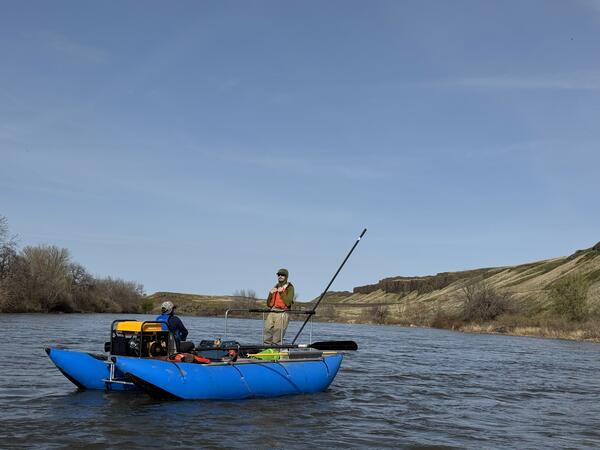
USGS Researchers Electrofishing on the Yakima River
USGS Researchers Electrofishing on the Yakima RiverThis is a photo from our scientists working with the Yakama Nation to remove smallmouth bass and other invasive salmon-eating predators. The work involves taking fin clips, scales, diet samples, and tagging and releasing larger fish. This fieldwork will continue through late May 2025. The crew shown in the photos are Ben, Becky, Jeff, and Chloe.
USGS Researchers Electrofishing on the Yakima River
USGS Researchers Electrofishing on the Yakima RiverThis is a photo from our scientists working with the Yakama Nation to remove smallmouth bass and other invasive salmon-eating predators. The work involves taking fin clips, scales, diet samples, and tagging and releasing larger fish. This fieldwork will continue through late May 2025. The crew shown in the photos are Ben, Becky, Jeff, and Chloe.

Justin B. Greer
Justin Greer is a Computational Biologist at the Western Fisheries Research Center. He conducts research on the effects of environmental stressors on the health of aquatic populations. Current research focuses on the effects of stormwater pollutants on salmonid health and strategies to reduce toxic stormwater inputs.
Justin Greer is a Computational Biologist at the Western Fisheries Research Center. He conducts research on the effects of environmental stressors on the health of aquatic populations. Current research focuses on the effects of stormwater pollutants on salmonid health and strategies to reduce toxic stormwater inputs.

Ellie Dalsky
This is a photo of Ellie Dalsky, a biological technician at the Western Fisheries Research Center.
This is a photo of Ellie Dalsky, a biological technician at the Western Fisheries Research Center.
Boat on Shasta Reservoir
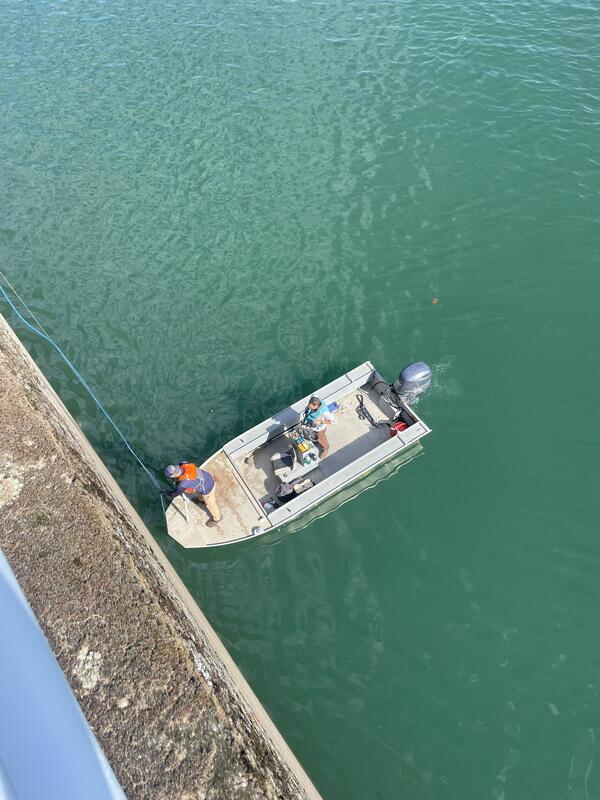
California Department of Fish & Wildlife boat on Shasta Reservoir partnering with USGS Western Fisheries Research Center to conduct telemetry studies.
California Department of Fish & Wildlife boat on Shasta Reservoir partnering with USGS Western Fisheries Research Center to conduct telemetry studies.

Telemetry Receivers on Shasta Reservoir, CA
Mitchell Morse and Caitlin Stockwell drove down to Redding, CA to wrap up the Shasta Reservoir fish telemetry project. They worked with California Department of Fish and Wildlife partners to remove 16 submersible acoustic telemetry receivers within the reservoir, and 5 receivers installed on Shasta Dam.
Mitchell Morse and Caitlin Stockwell drove down to Redding, CA to wrap up the Shasta Reservoir fish telemetry project. They worked with California Department of Fish and Wildlife partners to remove 16 submersible acoustic telemetry receivers within the reservoir, and 5 receivers installed on Shasta Dam.

Shasta Reservoir McCloud Arm
A photo of the McCloud arm looking upstream from one of the telemetry deployment sites.
A photo of the McCloud arm looking upstream from one of the telemetry deployment sites.
Shasta Dam
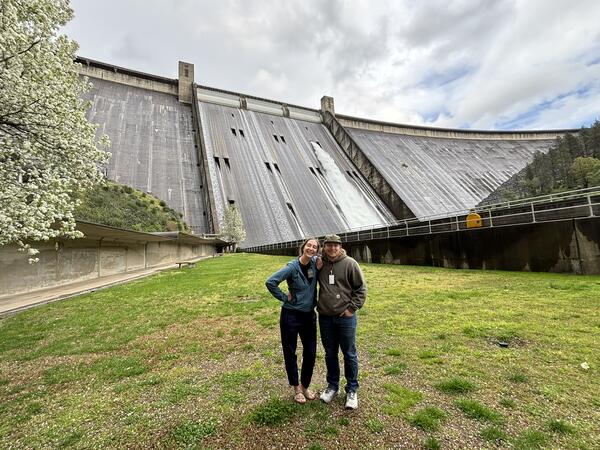
This is Shasta Dam in California. Mitchell Morse and Caitlin Stockwell drove down to Redding, CA to wrap up the Shasta Reservoir fish telemetry project. They worked with California Department of Fish and Wildlife partners to remove 16 submersible acoustic telemetry receivers within the reservoir, and 5 receivers installed on Shasta Dam.
This is Shasta Dam in California. Mitchell Morse and Caitlin Stockwell drove down to Redding, CA to wrap up the Shasta Reservoir fish telemetry project. They worked with California Department of Fish and Wildlife partners to remove 16 submersible acoustic telemetry receivers within the reservoir, and 5 receivers installed on Shasta Dam.

Dorothy M. Chase
Dorothy Chase began her career at Western Fisheries Research Center in the Fish Health section where her research focused on Bacterial Kidney Disease (BKD) in salmonids. She is now a part of the Ecology section, focusing on research that uses environmental DNA to detect and quantify fish species, fish pathogens and invasive aquatic species in environmental samples.
Dorothy Chase began her career at Western Fisheries Research Center in the Fish Health section where her research focused on Bacterial Kidney Disease (BKD) in salmonids. She is now a part of the Ecology section, focusing on research that uses environmental DNA to detect and quantify fish species, fish pathogens and invasive aquatic species in environmental samples.