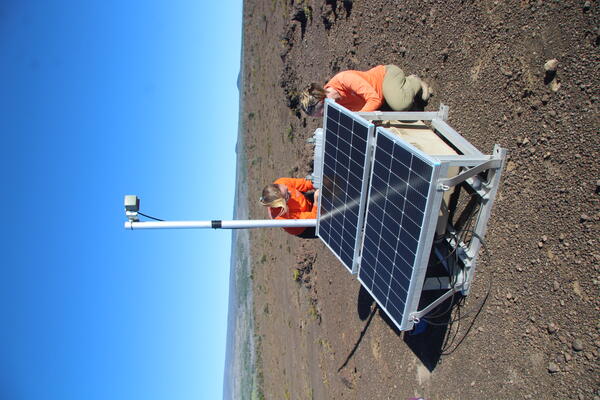
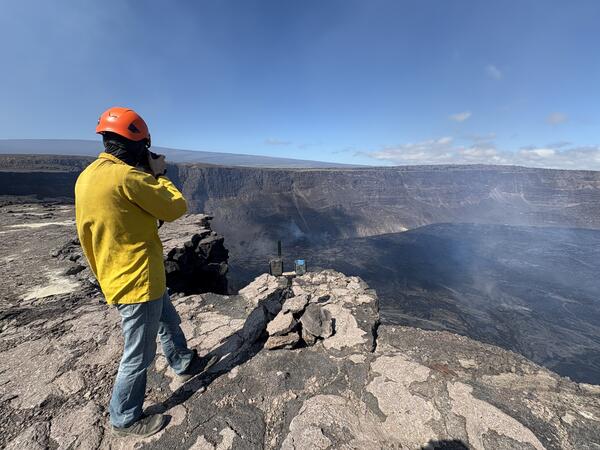
A gravimeter being deployed on the floor of Kīlauea caldera, with a GPS station located on a tripod nearby. The gravimeter is the small, shoebox-sized instrument, which can measure a change in the force of gravity to one-in-one billionth of the force you feel every day. USGS photo by A. Ellis.
Images
Kīlauea images of eruptive activity, field work, and more.
A gravimeter being deployed on the floor of Kīlauea caldera, with a GPS station located on a tripod nearby. The gravimeter is the small, shoebox-sized instrument, which can measure a change in the force of gravity to one-in-one billionth of the force you feel every day. USGS photo by A. Ellis.
Gravity measurements detect subsurface mass change—for example, magma accumulation or removal beneath the surface. If magma is filling or draining void spaces, it may not be signaled by ground deformation or earthquake activity, but it will be signaled by gravity because of the mass change.
At each gravity survey location, a kinematic GPS station is deployed nearby for precise location data, used to correct for the variety of factors that influence gravity results—especially vertical deformation. This survey location is located near the CALS continuous GPS site on the portion of Kīlauea caldera that collapsed in 2018.
On March 25, HVO staff and collaborators conducted the annual gravity survey in Kaluapele (the summit caldera of Kīlauea volcano). Measurements of gravity over time can show how mass is distributed beneath a volcano. At Kīlauea, these routine microgravity surveys help the observatory to monitor volcanic activity and to determine changes in gravity. USGS photo by A.
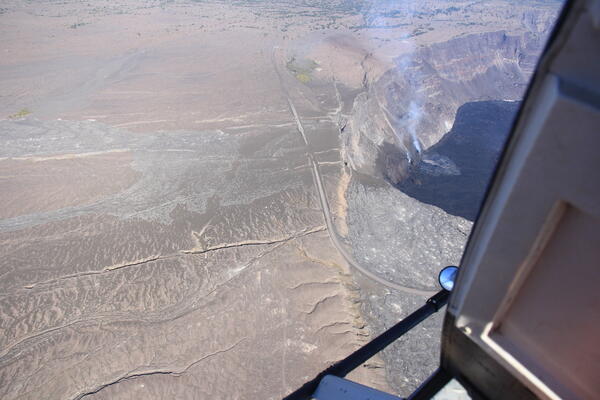
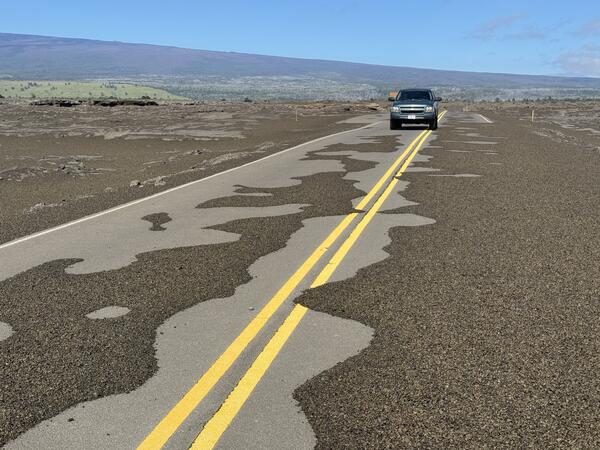
This photo shows the eastern portion of Halema‘uma‘u, at the summit of Kīlauea. The circular area of yellow coloration, near the top of the photo, is spot where the first lava fountain emerged in the September 2023 eruption. In the lower portion of the photo, the remains of Crater Rim Drive and the Halema‘uma‘u parking lot are visible.
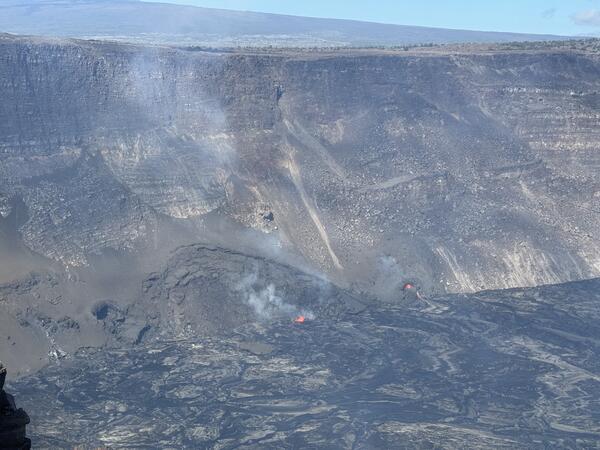
A close-up of the central portion of the floor of Halema‘uma‘u, at the summit of Kīlauea. The small mound is the remaining portion of the island (or raft) of material formed in the early stages of the first crater-filling eruption in December 2020. USGS photo by M. Patrick.
February 6, 2024 — Aerial survey of Kīlauea Koa‘e fault system and Southwest Rift Zone
February 6, 2024 — Aerial survey of Kīlauea Koa‘e fault system and Southwest Rift ZonePu‘ukoa‘e, on the Southwest Rift Zone of Kīlauea, is prominent in this aerial photo taken on February 6, 2024. The slopes of Mauna Loa and the Nīnole Hills are visible in the background. USGS photo by H. Winslow.
February 6, 2024 — Aerial survey of Kīlauea Koa‘e fault system and Southwest Rift Zone
February 6, 2024 — Aerial survey of Kīlauea Koa‘e fault system and Southwest Rift ZonePu‘ukoa‘e, on the Southwest Rift Zone of Kīlauea, is prominent in this aerial photo taken on February 6, 2024. The slopes of Mauna Loa and the Nīnole Hills are visible in the background. USGS photo by H. Winslow.
February 6, 2024 — Aerial survey of Kīlauea Koa‘e fault system and Southwest Rift Zone
February 6, 2024 — Aerial survey of Kīlauea Koa‘e fault system and Southwest Rift ZoneAerial view of Halema‘uma‘u, a crater within Kaluapele, the summit caldera of Kīlauea. Most of the crater has been filled in by lava erupted since 2020. The flanks of Mauna Loa are visible in the background of this southeast-facing view. USGS photo by K. Mulliken.
February 6, 2024 — Aerial survey of Kīlauea Koa‘e fault system and Southwest Rift Zone
February 6, 2024 — Aerial survey of Kīlauea Koa‘e fault system and Southwest Rift ZoneAerial view of Halema‘uma‘u, a crater within Kaluapele, the summit caldera of Kīlauea. Most of the crater has been filled in by lava erupted since 2020. The flanks of Mauna Loa are visible in the background of this southeast-facing view. USGS photo by K. Mulliken.
February 6, 2024 — Aerial survey of Kīlauea Koa‘e fault system and Southwest Rift Zone
February 6, 2024 — Aerial survey of Kīlauea Koa‘e fault system and Southwest Rift ZoneHVO geologists conducted an overflight of Halema‘uma‘u, Kaluapele (Kīlauea summit caldera), the Koa‘e fault system, and the upper Southwest Rift Zone of Kīlauea on February 6, 2024. This aerial view of Halema‘uma‘u shows the fumarolic areas marked by white alteration that have developed on the lava flows that make up the floor of Halema‘uma‘u. USGS photo by H.
February 6, 2024 — Aerial survey of Kīlauea Koa‘e fault system and Southwest Rift Zone
February 6, 2024 — Aerial survey of Kīlauea Koa‘e fault system and Southwest Rift ZoneHVO geologists conducted an overflight of Halema‘uma‘u, Kaluapele (Kīlauea summit caldera), the Koa‘e fault system, and the upper Southwest Rift Zone of Kīlauea on February 6, 2024. This aerial view of Halema‘uma‘u shows the fumarolic areas marked by white alteration that have developed on the lava flows that make up the floor of Halema‘uma‘u. USGS photo by H.
February 6, 2024 — Aerial survey of Kīlauea Koa‘e fault system and Southwest Rift Zon
February 6, 2024 — Aerial survey of Kīlauea Koa‘e fault system and Southwest Rift ZonAn aerial view of Mauna Loa, taken from the Southwest Rift Zone of Kīlauea during a Hawaiian Volcano Observatory monitoring overflight on February 6, 2024. USGS photo by H. Winslow.
February 6, 2024 — Aerial survey of Kīlauea Koa‘e fault system and Southwest Rift Zon
February 6, 2024 — Aerial survey of Kīlauea Koa‘e fault system and Southwest Rift ZonAn aerial view of Mauna Loa, taken from the Southwest Rift Zone of Kīlauea during a Hawaiian Volcano Observatory monitoring overflight on February 6, 2024. USGS photo by H. Winslow.
February 6, 2024 — Aerial survey of Kīlauea Koa‘e fault system and Southwest Rift Zone
February 6, 2024 — Aerial survey of Kīlauea Koa‘e fault system and Southwest Rift ZoneAn aerial view of the Twin Pit Craters near Maunaiki trail in the Ka‘ū Desert of Hawaii Volcanoes National Park. USGS photo by K. Mulliken.
February 6, 2024 — Aerial survey of Kīlauea Koa‘e fault system and Southwest Rift Zone
February 6, 2024 — Aerial survey of Kīlauea Koa‘e fault system and Southwest Rift ZoneAn aerial view of the Twin Pit Craters near Maunaiki trail in the Ka‘ū Desert of Hawaii Volcanoes National Park. USGS photo by K. Mulliken.
February 6, 2024 — Aerial survey of Kīlauea Koa‘e fault system and Southwest Rift Zone
February 6, 2024 — Aerial survey of Kīlauea Koa‘e fault system and Southwest Rift ZoneThis aerial photo shows some of the new cracks that developed as a result of the recent intrusion southwest of Kīlauea's summit.
February 6, 2024 — Aerial survey of Kīlauea Koa‘e fault system and Southwest Rift Zone
February 6, 2024 — Aerial survey of Kīlauea Koa‘e fault system and Southwest Rift ZoneThis aerial photo shows some of the new cracks that developed as a result of the recent intrusion southwest of Kīlauea's summit.
February 3, 2024 — Kīlauea Koa‘e fault system survey
February 3, 2024 — Kīlauea Koa‘e fault system surveyUniversity of Hawai‘i at Hilo geology professor Steve Lundblad takes a level reading during a survey of the Koa‘e fault system on Saturday, February 7, 2024. The KAOE fault system connects Kīlauea's East and Southwest Rift Zones south of the caldera, and a recent intrusion occurred in this area.
February 3, 2024 — Kīlauea Koa‘e fault system survey
February 3, 2024 — Kīlauea Koa‘e fault system surveyUniversity of Hawai‘i at Hilo geology professor Steve Lundblad takes a level reading during a survey of the Koa‘e fault system on Saturday, February 7, 2024. The KAOE fault system connects Kīlauea's East and Southwest Rift Zones south of the caldera, and a recent intrusion occurred in this area.
Ground cracks at Kīlauea following January 31–February 2, 2024 intrusion
Ground cracks at Kīlauea following January 31–February 2, 2024 intrusionOn February 3, 2024, a team of HVO scientists documented new ground cracks caused by the intrusion at Kīlauea southwest of the summit caldera. These cracks were observed along the Maunaiki Trail in the Ka‘ū Desert region of Hawai‘i Volcanoes National Park. USGS photo by N. Deligne.
Ground cracks at Kīlauea following January 31–February 2, 2024 intrusion
Ground cracks at Kīlauea following January 31–February 2, 2024 intrusionOn February 3, 2024, a team of HVO scientists documented new ground cracks caused by the intrusion at Kīlauea southwest of the summit caldera. These cracks were observed along the Maunaiki Trail in the Ka‘ū Desert region of Hawai‘i Volcanoes National Park. USGS photo by N. Deligne.
February 6, 2024 — Aerial survey of Kīlauea Koa‘e fault system and Southwest Rift Zone
February 6, 2024 — Aerial survey of Kīlauea Koa‘e fault system and Southwest Rift ZoneOn February 6, 2024, HVO geologists conducted an overflight of the Koa‘e fault system, south of Kīlauea caldera, and the Southwest Rift Zone to assess cracks observed by ground crews in the area over the weekend. This view shows lava flows from the 1971 Southwest Rift Zone eruption; Kīlauea caldera is visible to the northeast. USGS photo by H. Winslow.
February 6, 2024 — Aerial survey of Kīlauea Koa‘e fault system and Southwest Rift Zone
February 6, 2024 — Aerial survey of Kīlauea Koa‘e fault system and Southwest Rift ZoneOn February 6, 2024, HVO geologists conducted an overflight of the Koa‘e fault system, south of Kīlauea caldera, and the Southwest Rift Zone to assess cracks observed by ground crews in the area over the weekend. This view shows lava flows from the 1971 Southwest Rift Zone eruption; Kīlauea caldera is visible to the northeast. USGS photo by H. Winslow.
Ground cracks crossing Maunaiki trail following January 31–February 2, 2024, intrusion at Kīlauea
Ground cracks crossing Maunaiki trail following January 31–February 2, 2024, intrusion at KīlaueaThis photo shows where some recent cracks cut across the Maunaiki trail within Hawai‘i Volcanoes National Park as a result of the intrusive activity southwest of Kīlauea summit. On the trail, the cracks are less distinct because of foot traffic has moved the tephra around and started to fill in the cracks. USGS photo by N. Deligne.
Ground cracks crossing Maunaiki trail following January 31–February 2, 2024, intrusion at Kīlauea
Ground cracks crossing Maunaiki trail following January 31–February 2, 2024, intrusion at KīlaueaThis photo shows where some recent cracks cut across the Maunaiki trail within Hawai‘i Volcanoes National Park as a result of the intrusive activity southwest of Kīlauea summit. On the trail, the cracks are less distinct because of foot traffic has moved the tephra around and started to fill in the cracks. USGS photo by N. Deligne.
February 3, 2024 — Kīlauea Koa‘e fault system survey
February 3, 2024 — Kīlauea Koa‘e fault system surveyUniversity of Hawai‘i at Hilo geology professors and students, along with scientists from the Hawaiian Volcano Observatory, conducted a survey of the Koa‘e fault system on February 3, 2024. Despite very windy conditions, the group was able to make measurements showing ground changes resulting from the recent intrusion in this area.
February 3, 2024 — Kīlauea Koa‘e fault system survey
February 3, 2024 — Kīlauea Koa‘e fault system surveyUniversity of Hawai‘i at Hilo geology professors and students, along with scientists from the Hawaiian Volcano Observatory, conducted a survey of the Koa‘e fault system on February 3, 2024. Despite very windy conditions, the group was able to make measurements showing ground changes resulting from the recent intrusion in this area.
February 3, 2024 — Kīlauea Koa‘e fault system survey
February 3, 2024 — Kīlauea Koa‘e fault system surveyOn Saturday, February 3, University of Hawai‘i at Hilo scientists and students, and Hawaiian Volcano Observatory staff, conducted a survey of the Koa‘e fault system to measure changes during the recent intrusive activity southwest of Kīlauea summit caldera. In this photo, two people brace the leveling rod against the strong winds that day.
February 3, 2024 — Kīlauea Koa‘e fault system survey
February 3, 2024 — Kīlauea Koa‘e fault system surveyOn Saturday, February 3, University of Hawai‘i at Hilo scientists and students, and Hawaiian Volcano Observatory staff, conducted a survey of the Koa‘e fault system to measure changes during the recent intrusive activity southwest of Kīlauea summit caldera. In this photo, two people brace the leveling rod against the strong winds that day.
Ground cracks at Kīlauea following January 31–February 2, 2024 intrusion
Ground cracks at Kīlauea following January 31–February 2, 2024 intrusionOn February 3, 2024, a team of HVO scientists documented new ground cracks in three areas of the Maunaiki Trail in the Ka‘ū Desert, caused by the intrusion at Kīlauea south of the summit caldera. These cracks primarily cut the loose Keanakāko‘i tephra which blanketed the region in 1790 CE. Some cracks were over 100 feet (30 meters) long.
Ground cracks at Kīlauea following January 31–February 2, 2024 intrusion
Ground cracks at Kīlauea following January 31–February 2, 2024 intrusionOn February 3, 2024, a team of HVO scientists documented new ground cracks in three areas of the Maunaiki Trail in the Ka‘ū Desert, caused by the intrusion at Kīlauea south of the summit caldera. These cracks primarily cut the loose Keanakāko‘i tephra which blanketed the region in 1790 CE. Some cracks were over 100 feet (30 meters) long.
Ground cracks at Kīlauea following January 31–February 2, 2024 intrusion
Ground cracks at Kīlauea following January 31–February 2, 2024 intrusionOn February 3, 2024, a team of HVO scientists documented new ground cracks along the Maunaiki Trail in Hawai‘i Volcanoes National Park, caused by the recent intrusion southwest of Kaluapele (Kīlauea caldera). These cracks primarily cut the loose Keanakāko‘i tephra which blanketed the region in 1790 CE. Some cracks were over 100 feet (30 meters) long.
Ground cracks at Kīlauea following January 31–February 2, 2024 intrusion
Ground cracks at Kīlauea following January 31–February 2, 2024 intrusionOn February 3, 2024, a team of HVO scientists documented new ground cracks along the Maunaiki Trail in Hawai‘i Volcanoes National Park, caused by the recent intrusion southwest of Kaluapele (Kīlauea caldera). These cracks primarily cut the loose Keanakāko‘i tephra which blanketed the region in 1790 CE. Some cracks were over 100 feet (30 meters) long.
Ground cracks at Kīlauea following January 31–February 2, 2024 intrusion
Ground cracks at Kīlauea following January 31–February 2, 2024 intrusionThis photo shows a crack in spatter and lava previously erupted on the Southwest Rift Zone of Kīlauea, with a geologist for scale. The crack likely widened during the recent intrusion southwest of the summit of Kīlauea.
Ground cracks at Kīlauea following January 31–February 2, 2024 intrusion
Ground cracks at Kīlauea following January 31–February 2, 2024 intrusionThis photo shows a crack in spatter and lava previously erupted on the Southwest Rift Zone of Kīlauea, with a geologist for scale. The crack likely widened during the recent intrusion southwest of the summit of Kīlauea.