



USGS Scientists Share Their Research at the 2026 Bay-Delta Science Conference
USGS Scientists Share Their Research at the 2026 Bay-Delta Science Conference
USGS Scientists Share Their Research at the 2026 Bay-Delta Science Conference
USGS Scientists Share Their Research at the 2026 Bay-Delta Science Conference
USGS Scientists Share Their Research at the 2026 Bay-Delta Science Conference
Since the year 2000, the Bay-Delta Science Conference, held every two years in Northern California, has been co-hosted by the Delta Stewardship Council and the U.S. Geological Survey (USGS). The conference serves as a leading forum for scientific research that supports management of the San Francisco Bay and Sacramento–San Joaquin Delta (Bay-Delta).
The USGS studies the Bay-Delta to understand how estuaries and tidal river deltas function as well as how they change due to climate conditions and human impacts. USGS research addresses key water issues such as water flow; water quality—including temperature, salinity, nutrients, organic carbon, and more; sediment movement; and the dynamics of phytoplankton communities, including conditions that lead to harmful algal blooms.
This year’s conference, held from September 28-30, opened with a plenary session that included a talk titled “What we carry forward: How the Bay-Delta science community endures through change,” delivered by Lisamarie Windham-Myers, Lead Delta Scientist with the USGS Water Resources Mission Area.
The plenary session concluded with the presentation of the Brown-Nichols Science Award. Michelle Shouse of the USGS California Water Science Center (CAWSC) participated in the presentation of the award to Dr. Janet K. Thompson-McHendrie, an Emeritus Research Biologist with the USGS. Dr. Thompson‑McHendrie was recognized for her work as an aquatic ecologist, including studying how invasive clams and hydrodynamic conditions affect the Bay‑Delta ecosystem. Her research has shown how pelagic (water‑column) and benthic (bottom dwelling) communities are connected, particularly how bivalves influence phytoplankton levels and how bottom‑dwelling organisms respond to and accumulate natural and human‑made particles and toxins.
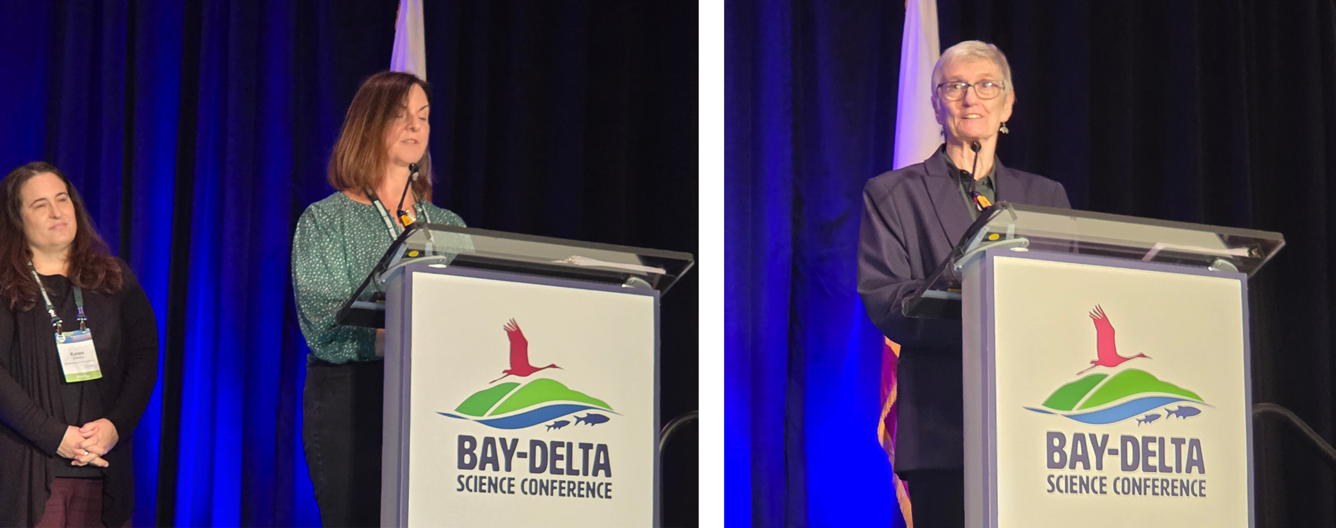
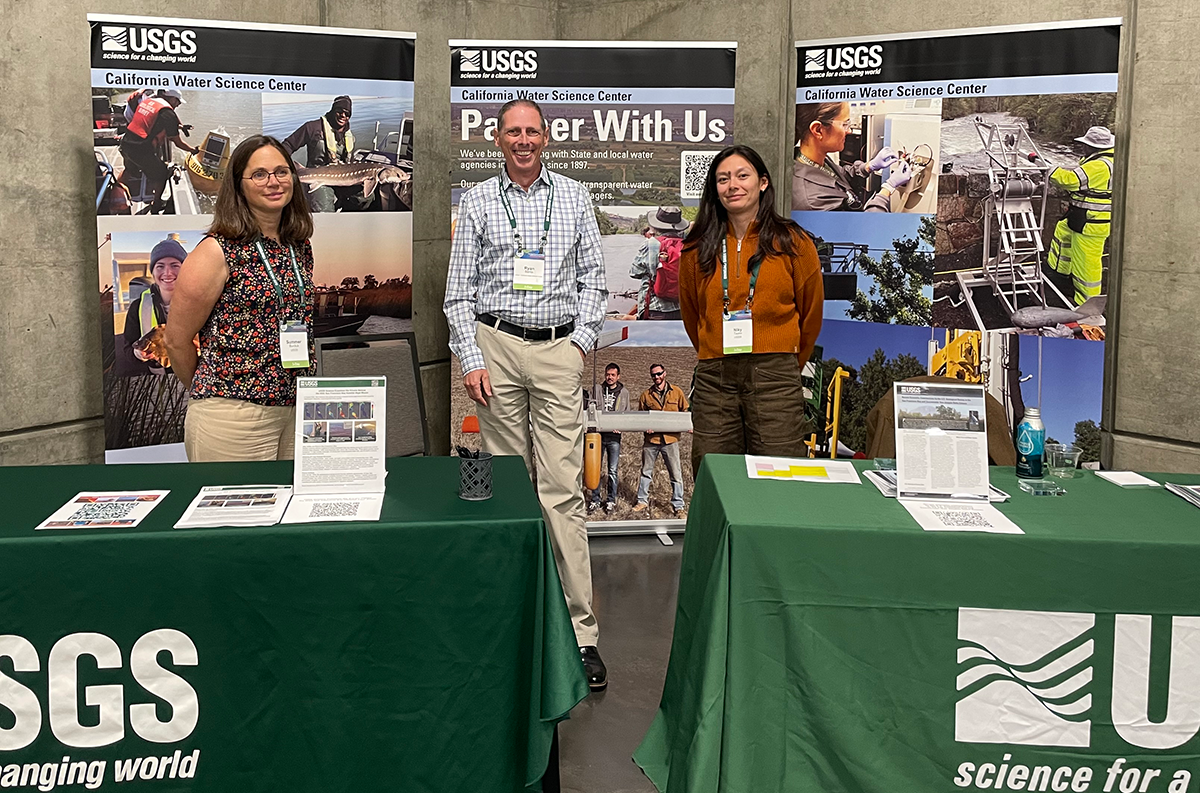
At this year’s conference, several CAWSC scientists gave talks and presented posters. USGS researchers from other centers also attended and presented, these included the Grand Canyon Research and Monitoring Center, Pacific Coastal and Marine Science Center, the Western Ecological Research Center, the Western Fisheries Research Center, and the Western Geographic Science Center. The USGS also hosted an information table where attendees could learn more about USGS science in the Bay-Delta.
Session Talks by CAWSC scientists at the Bay-Delta Science Conference included the following:
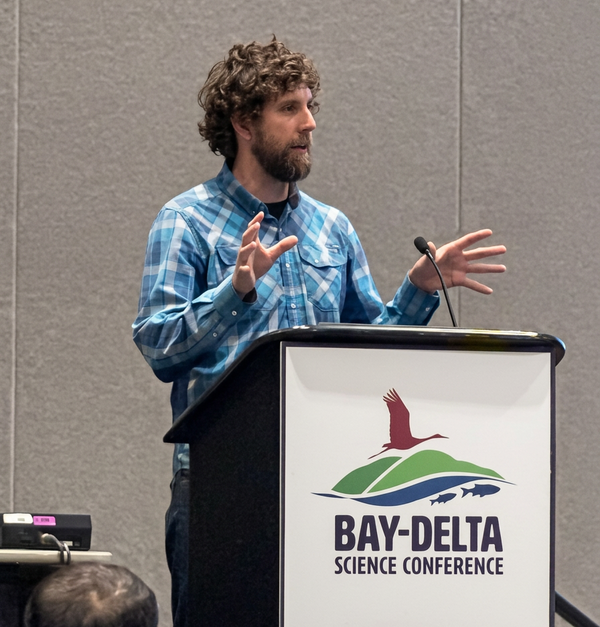
Assessing the dynamics of re-emerging spring phytoplankton blooms in the upper San Francisco Bay and Sacramento-San Joaquin Delta estuary, California
Schuyler Nardelli, Research Biologist
Consumption of juvenile Chinook salmon out-migrating through channels of the Sacramento-San Joaquin Delta by black basses
Brock Huntsman, Research Biologist
Data limitations of Sacramento-San Joaquin Delta food webs: incorporating uncertainty to inform ecosystem monitoring
Matthew Young, Research Fish Biologist
Evidence of Delta Smelt Predation During Experimental Releases from Gill Net Sampling and Gastric Lavage
Veronica Violette, Fish Biologist
Right place at the right time: Drivers of Sacramento-San Joaquin Delta phytoplankton across space-time
Kyle Leathers, Biologist
Integrated tools for monitoring and managing harmful algal blooms across the Bay-Delta
Keith Bouma-Gregson, Research Biologist (co-chaired the session)
Integrating sampling methods to inform fish community composition at delta smelt release sites
Marissa Wulff, Biologist
Variation in marine habitat suitability during estuarine-marine habitat transitions by longfin smelt in the San Francisco Bay and Sacramento-San Joaquin Delta estuary
Matthew Young, Research Fish Biologist (co-chaired the session)
Watershed-wide fish communities across space and time
Brock Huntsman, Research Biologist
CAWSC Scientists also gave the following Poster Presentations:
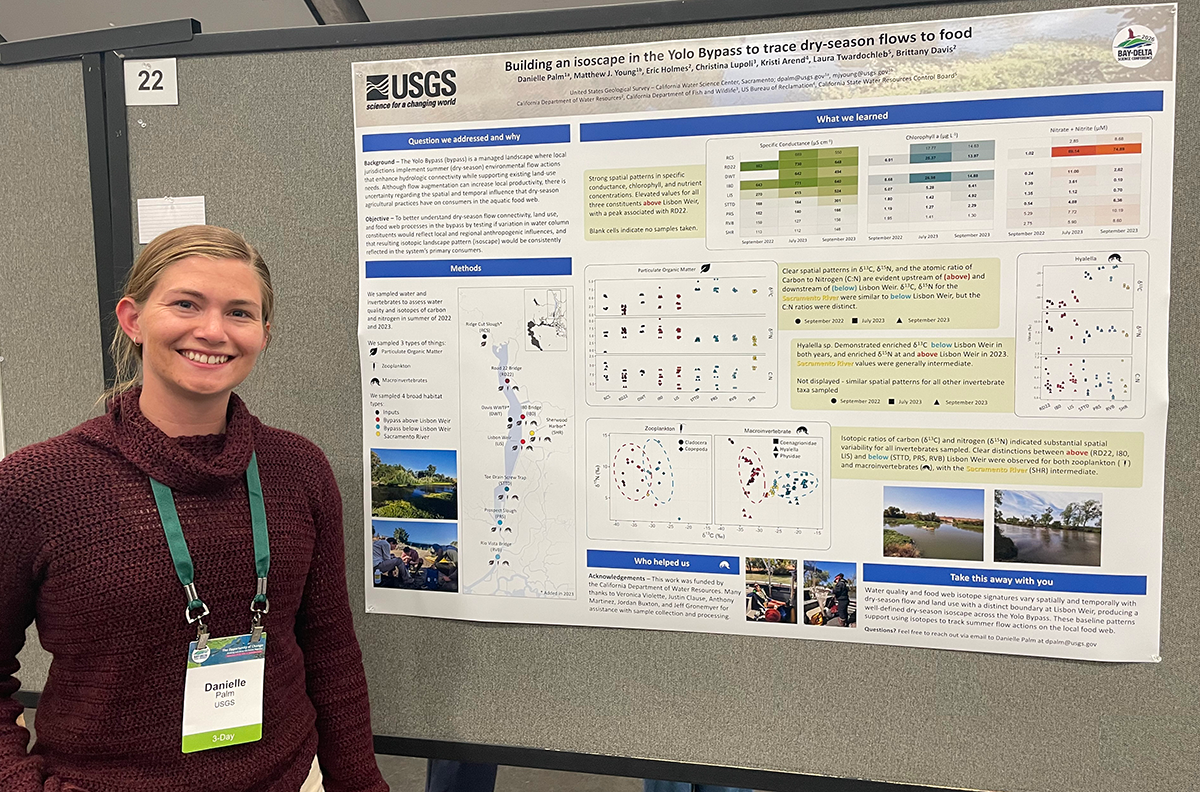
Building an isoscape in the Yolo Bypass to trace dry-season flows to food
Danielle Palm, Matthew Young, and others
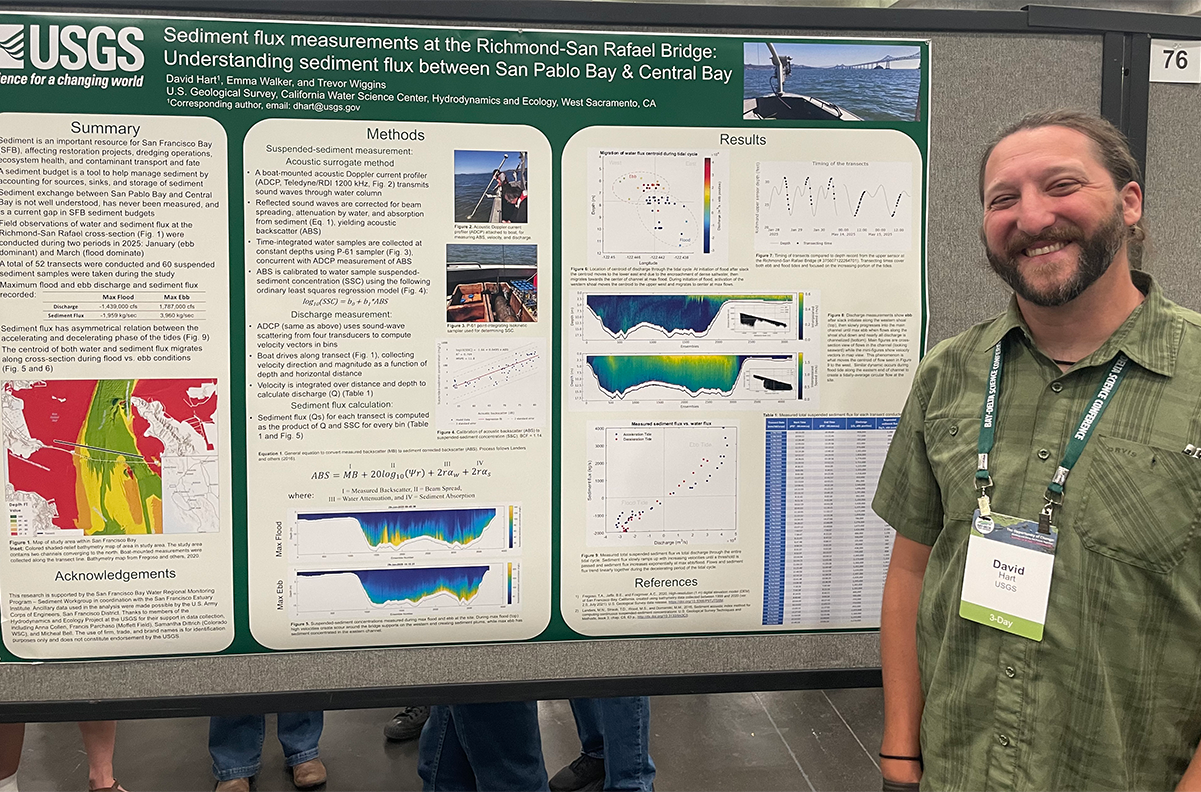
Suspended sediment flux measurements at the Richmond-San Rafael Bridge: Understanding sediment flux between San Pablo Bay and Central Bay
David Hart, Emma Walker, and Trevor Wiggins
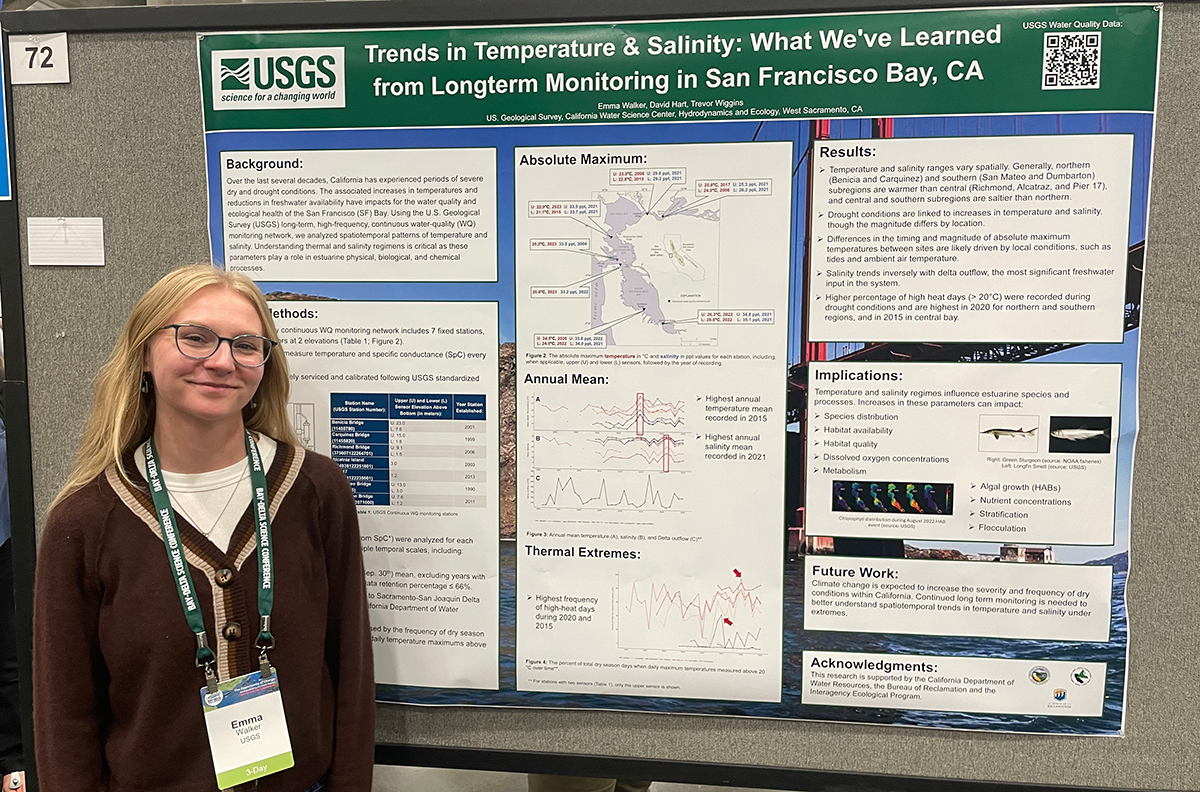
Trends in Temperature and Salinity: What We’ve Learned from Longterm Monitoring in San Francisco Bay
Emma Walker, David Hart, and Trevor Wiggins
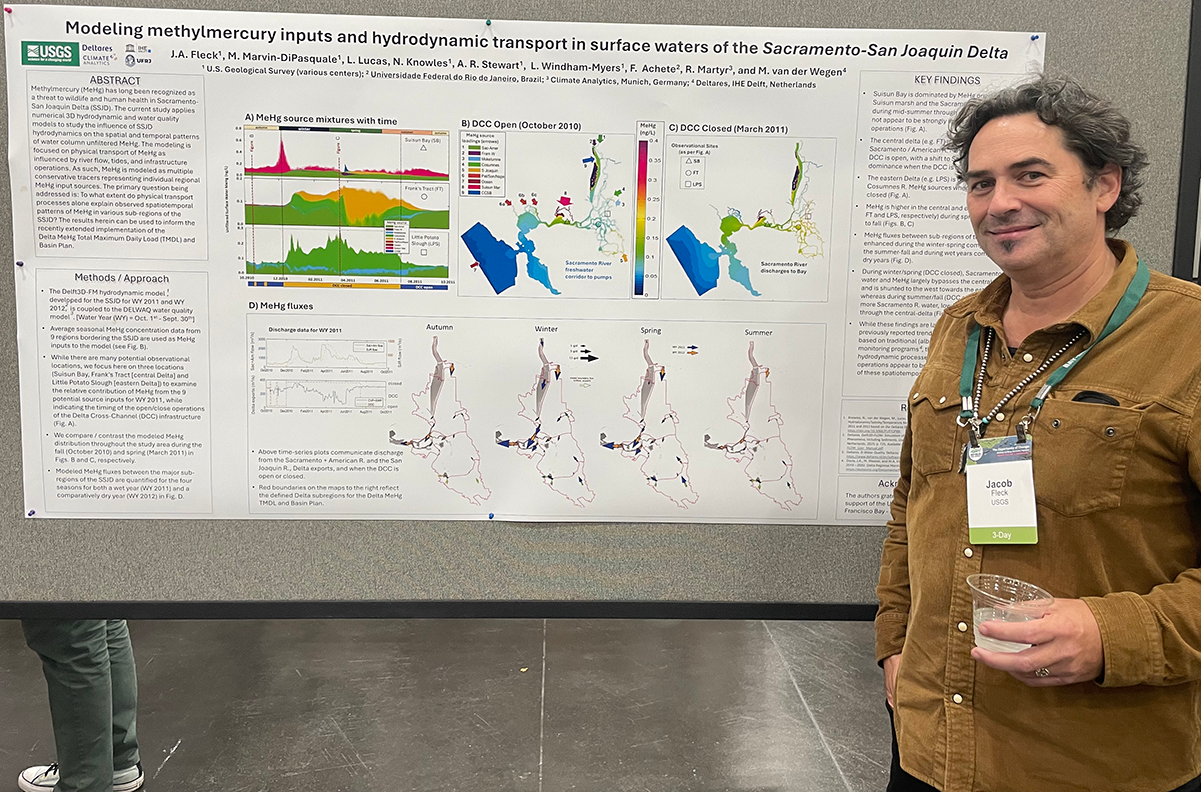
Modeling methylmercury inputs and hydrodynamic transport in surface waters of the Sacramento-San Joaquin delta
Jacob Fleck, Marvin DiPasquale, Lucas Knowles, A.R. Stewart, Lisamarie Windham-Meyers
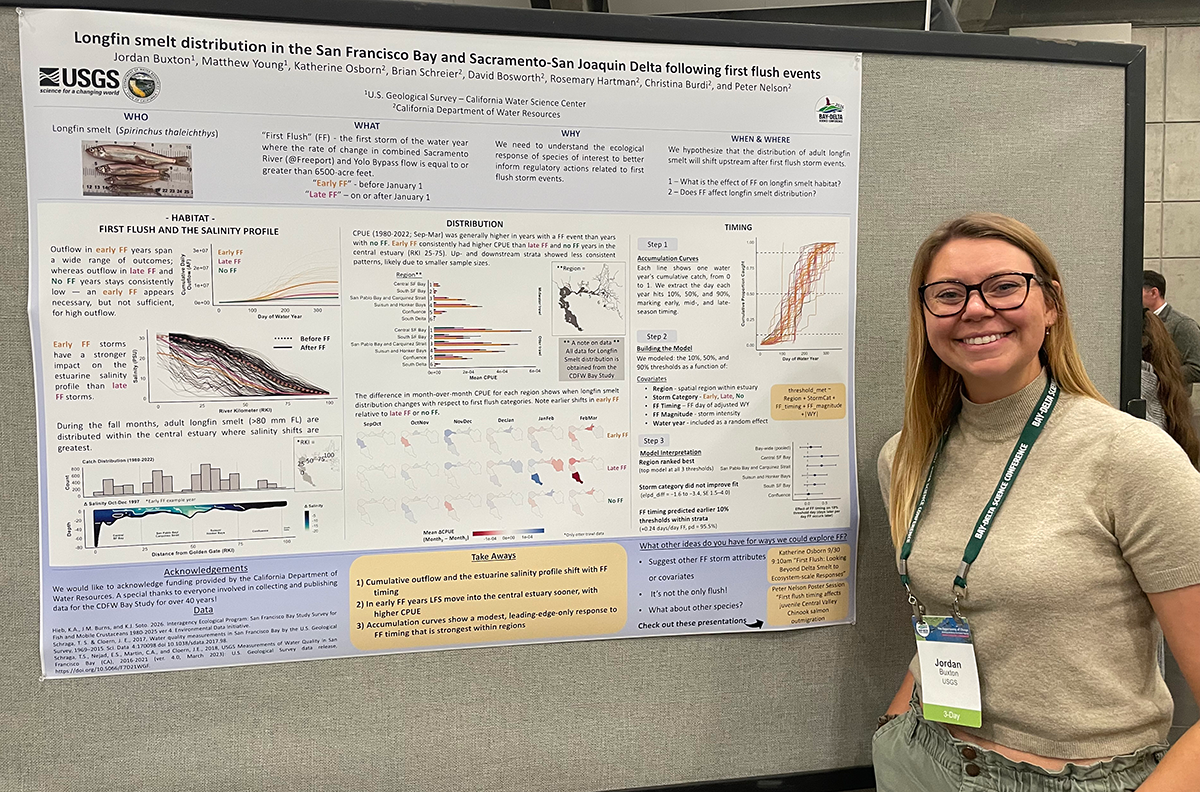
Longfin smelt distribution in the San Francisco-San Joaquin Delta following first flush events
Jordan Buxton, Matthew Young, and others
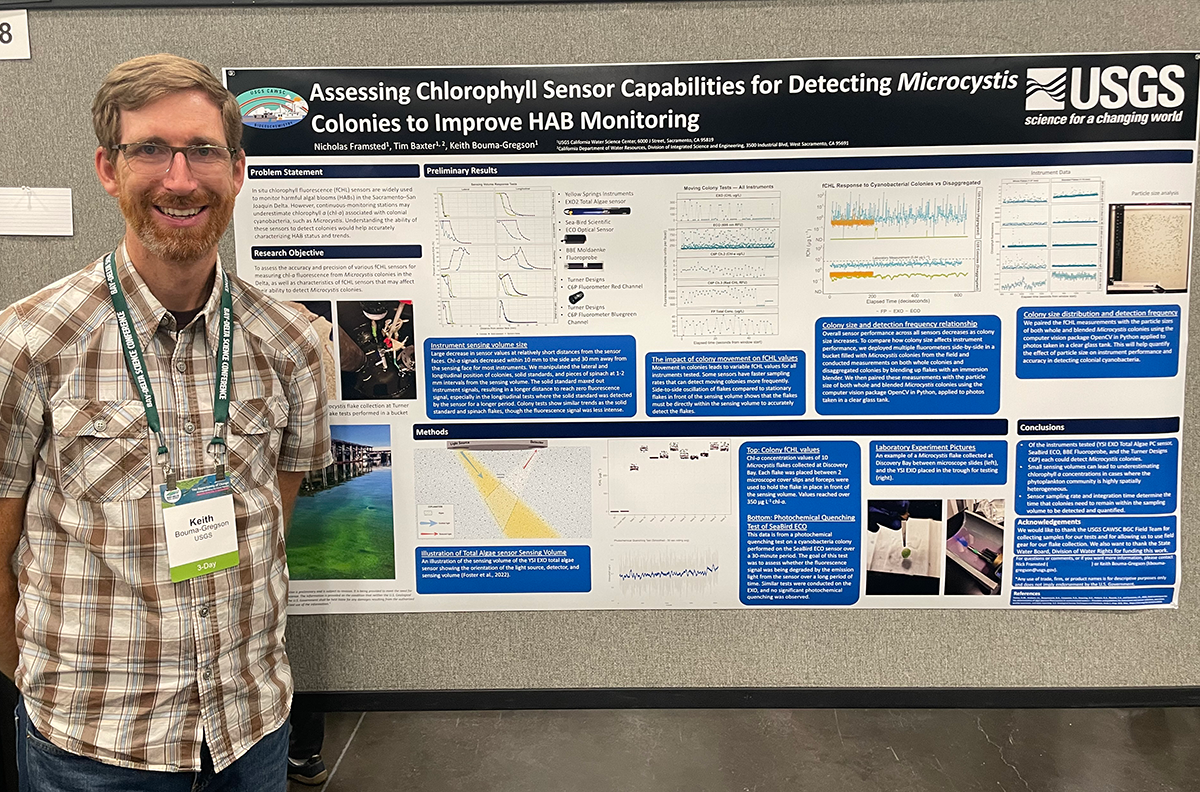
Assessing Chlorophyll Sensor Capabilities for Detecting Microcystis Colonies to Improve HAB Monitoring
Nicholas Framsted, Keith Bouma-Gregson
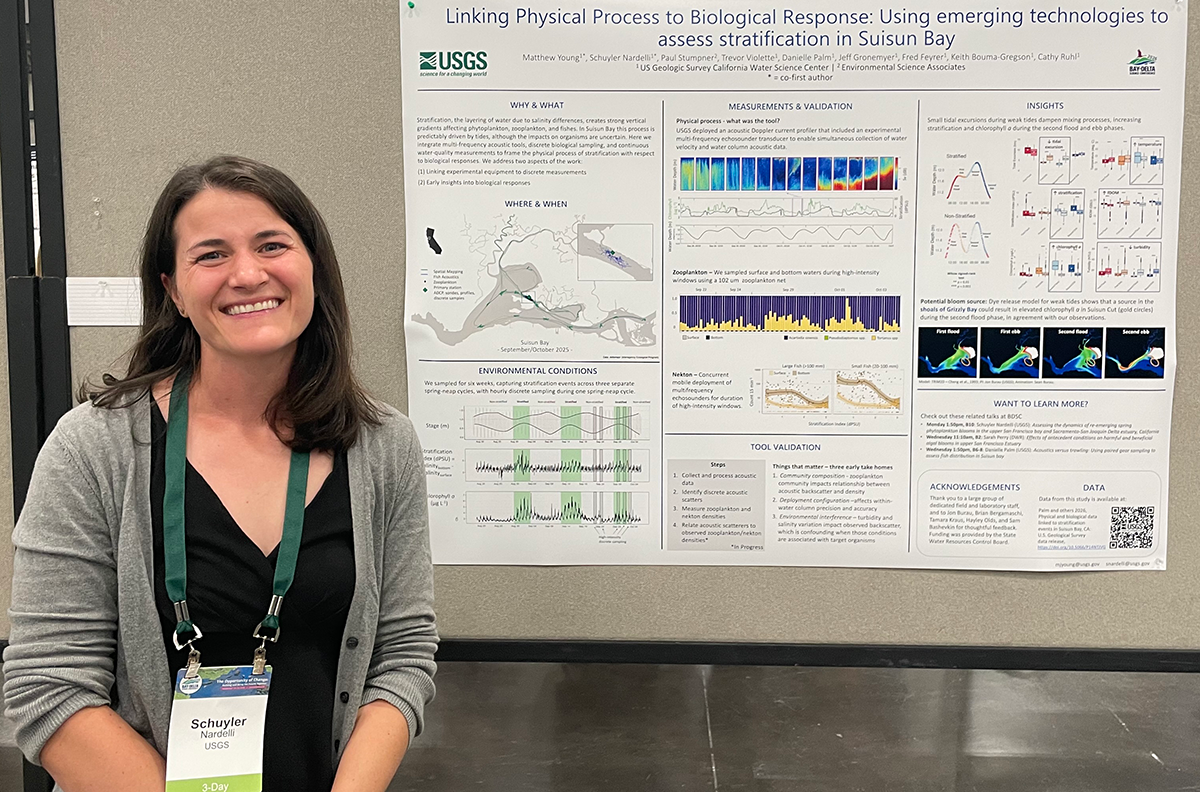
Linking Physical Process to Biological Response: Using emerging technologies to assess stratification in Suisun Bay
Matthew Young, Schuyler Nardelli, Trevor Violette, Danielle Palm, Jeff Gronemyer, Fred Feyrer, Keith Bouma-Gregson, Cathy Ruhl, and others
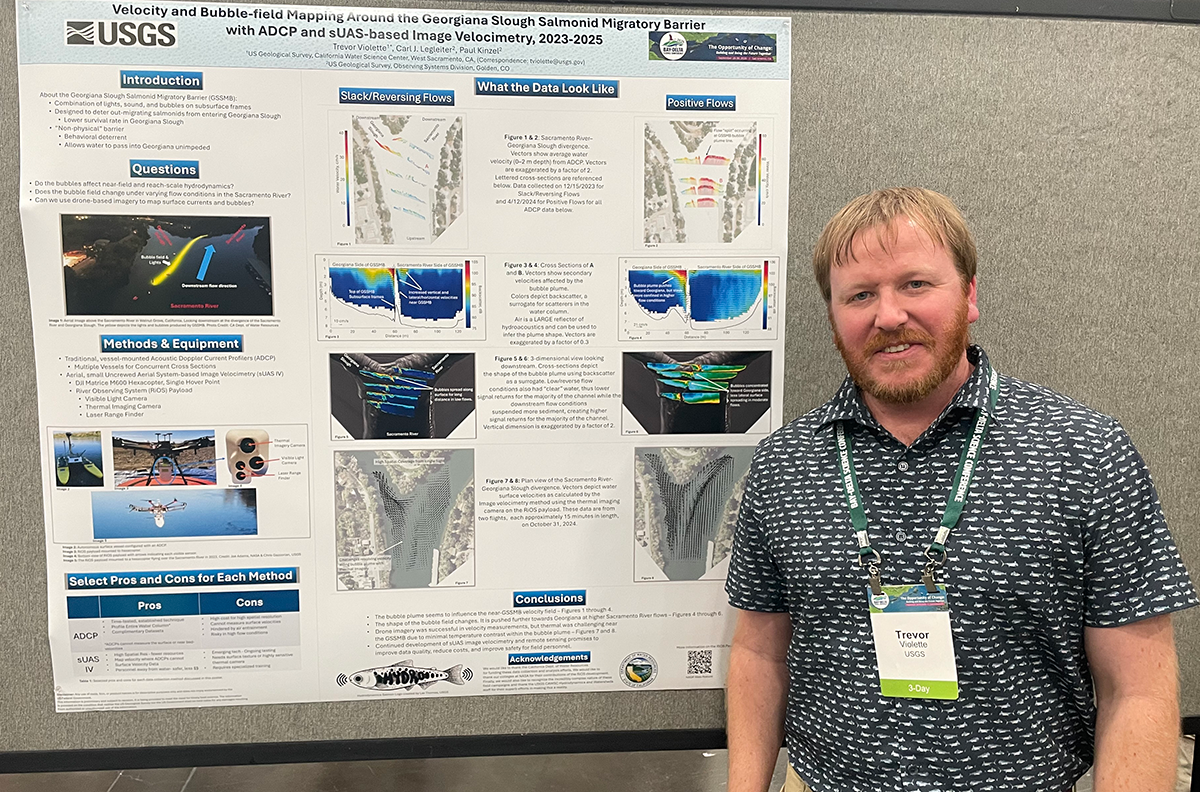
Velocity and Bubble-field Mapping Around the Georgiana Slough Salmonid Migratory Barrier with ADCP and sUAS-based Image Velocimetry, 2023-2025
Trevor Violette and others
U.S. Geological Survey Science Activities in the Bay-Delta Region
Eli Duber and others
Slideshow of the scientists standing next to their posters.
(Click "show captions" for details.)
Learn more about USGS science in the Bay-Delta.
For more information about the Bay-Delta Science Conference, visit the conference website.
See tab below for recent USGS publications related to the Bay-Delta.