



Headshot for Sydney Shumar, scientist with the The U.S. Geological Survey (USGS) Bee Lab at the Eastern Ecological Science Center.
Images
Eastern Ecological Science Center images.
Filter Total Items: 5119

Sydney Shumar
Headshot for Sydney Shumar, scientist with the The U.S. Geological Survey (USGS) Bee Lab at the Eastern Ecological Science Center.
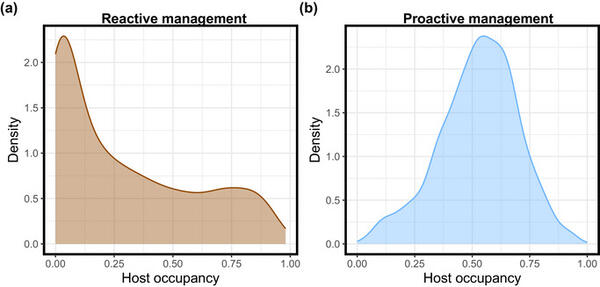
Effect of proactive versus reactive management for chytrid fungus, Batrachochytrium salamandrivorans (Bsal)
Effect of proactive versus reactive management for chytrid fungus, Batrachochytrium salamandrivorans (Bsal)
Hunter holding banded ducks
Hunter Tyler Coleman holds two harvested ducks - both birds have been banded. Coleman is wearing a necklace of bands he's collected over the years.
Hunter Tyler Coleman holds two harvested ducks - both birds have been banded. Coleman is wearing a necklace of bands he's collected over the years.

Cheyenne Smith
Cheyenne Smith is a post doctoral research fish biologist with the Eastern Ecological Science Center
Cheyenne Smith is a post doctoral research fish biologist with the Eastern Ecological Science Center

Ghost Forest - Goose Creek
A ghost forest stands in Goose Creek State Park in North Carolina. This is an example of a freshwater forested wetland that is transitioning to open water.
A ghost forest stands in Goose Creek State Park in North Carolina. This is an example of a freshwater forested wetland that is transitioning to open water.

School of alewife
Alewife, also known as river herring, swim along a rocky bottom. The fish are silvery and shiny.
Alewife, also known as river herring, swim along a rocky bottom. The fish are silvery and shiny.

Ghost Forest II - Goose Creek
A ghost forest stands in Goose Creek State Park in North Carolina. This is an example of a freshwater forested wetland that is transitioning to open water.
A ghost forest stands in Goose Creek State Park in North Carolina. This is an example of a freshwater forested wetland that is transitioning to open water.

Harvested Banded Ducks
Close-up of two ducks harvested by Tyler Coleman. The ducks have both been banded.
Close-up of two ducks harvested by Tyler Coleman. The ducks have both been banded.

Holding Banded Ducks
Hunter Tyler Coleman holds two harvested ducks that have been banded. Coleman believes all hunter should report bands.
Hunter Tyler Coleman holds two harvested ducks that have been banded. Coleman believes all hunter should report bands.

Hunting dog with a duck in its mouth
Preacher, a Boykin spaniel, holds a harvest duck in his mouth. He belongs to longtime waterfowl hunter Tyler Coleman. The duck has bird bands on its legs.
Preacher, a Boykin spaniel, holds a harvest duck in his mouth. He belongs to longtime waterfowl hunter Tyler Coleman. The duck has bird bands on its legs.
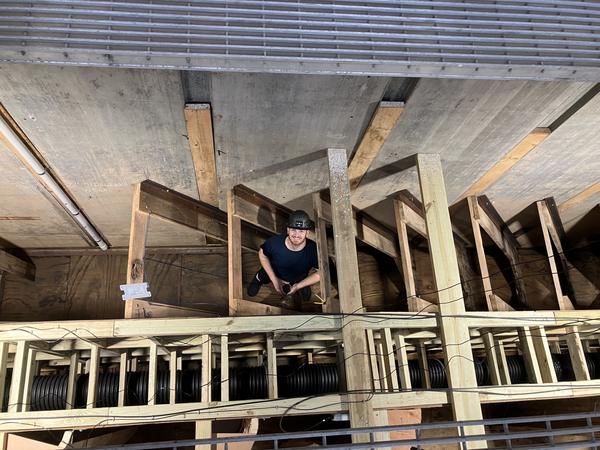
Kyle Hubbard, assists with PIT antennas for East Coast Ladder study
Kyle Hubbard, assists with PIT antennas for East Coast Ladder studyBiological Science Technician, Kyle Hubbard, assists with checking and installing passive integrated transponder antennas for Kevin Mulligan's East Coast Ladder study in the East flume of the Fish Passage Complex at the Conte Lab.
Kyle Hubbard, assists with PIT antennas for East Coast Ladder study
Kyle Hubbard, assists with PIT antennas for East Coast Ladder studyBiological Science Technician, Kyle Hubbard, assists with checking and installing passive integrated transponder antennas for Kevin Mulligan's East Coast Ladder study in the East flume of the Fish Passage Complex at the Conte Lab.
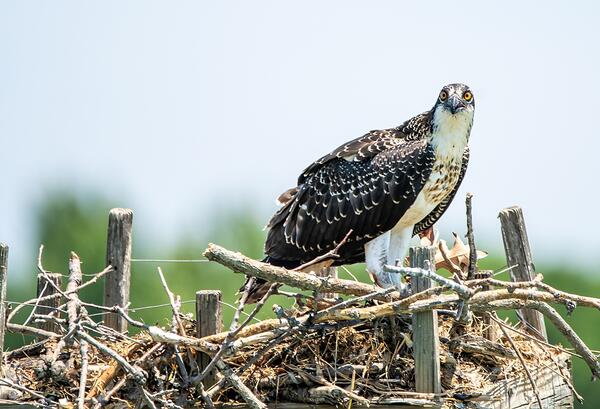
Osprey_Nestling
Osprey nestling nearing age of fledging sits on a nest of sticks on a raised platform.
Osprey nestling nearing age of fledging sits on a nest of sticks on a raised platform.
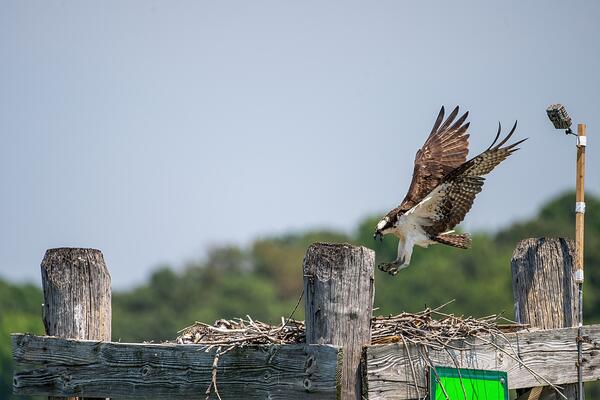
Osprey_Landing
An osprey landing on its nest with game camera capturing images of young and prey delivery. The osprey nests on the Choptank River.
An osprey landing on its nest with game camera capturing images of young and prey delivery. The osprey nests on the Choptank River.

Observing osprey nest
USGS scientist observing an osprey nest. Use of a mirror pole allows the researcher to observe the nest from a boat without disturbing the nest. The image was taken during a USGS study of osprey (Pandion haliaetus) and their prey (menhaden (Brevoortia tyrannus), and other species of fish) in the middle and lower Chesapeake Bay and its tributaries.
USGS scientist observing an osprey nest. Use of a mirror pole allows the researcher to observe the nest from a boat without disturbing the nest. The image was taken during a USGS study of osprey (Pandion haliaetus) and their prey (menhaden (Brevoortia tyrannus), and other species of fish) in the middle and lower Chesapeake Bay and its tributaries.

Dots installed at EESC Gabrielson windows in a 2x2 inch pattern.
Dots installed at EESC Gabrielson windows in a 2x2 inch pattern.Vinyl “dots” installed on the glass at EESC Gabrielson building in a 2x2 inch grid pattern.
Dots installed at EESC Gabrielson windows in a 2x2 inch pattern.
Dots installed at EESC Gabrielson windows in a 2x2 inch pattern.Vinyl “dots” installed on the glass at EESC Gabrielson building in a 2x2 inch grid pattern.

Windows with bird collision “dots” to prevent bird collisions.
Windows with bird collision “dots” to prevent bird collisions.Front left side windows of EESC Gabrielson building replaced with bird collision deterrent “dots” to prevent bird collisions with glass.
Windows with bird collision “dots” to prevent bird collisions.
Windows with bird collision “dots” to prevent bird collisions.Front left side windows of EESC Gabrielson building replaced with bird collision deterrent “dots” to prevent bird collisions with glass.

Collision dots from the inside of an office at EESC Gabrielson.
Collision dots from the inside of an office at EESC Gabrielson.The view of the collision dots from the inside of an office at EESC Gabrielson building.
Collision dots from the inside of an office at EESC Gabrielson.
Collision dots from the inside of an office at EESC Gabrielson.The view of the collision dots from the inside of an office at EESC Gabrielson building.

Extracting blood from a blue catfish
Dr. Heather Walsh uses a syringe to extract blood samples from a blue catfish. The blood will be tested for PFAS in the Leetown PFAS Lab.
Dr. Heather Walsh uses a syringe to extract blood samples from a blue catfish. The blood will be tested for PFAS in the Leetown PFAS Lab.

Dr. Heather Walsh holding a blue catfish
Dr. Heather Walsh holds a blue catfish as part of sampling to determine PFAS levels in the fish.
Dr. Heather Walsh holds a blue catfish as part of sampling to determine PFAS levels in the fish.

Measuring the length of a blue catfish
Dr. Heather Walsh measures the length of a blue catfish as part of a sampling to determine PFAS levels in the fish.
Dr. Heather Walsh measures the length of a blue catfish as part of a sampling to determine PFAS levels in the fish.

Scientists perform necropsies on blue catfish
EESC research volunteers Sean Walsh, Lydia Reed and Lindsey Hartzell take organ and tissue samples from two blue catfish. The research is part of a study to determine PFAS levels in blue catfish.
EESC research volunteers Sean Walsh, Lydia Reed and Lindsey Hartzell take organ and tissue samples from two blue catfish. The research is part of a study to determine PFAS levels in blue catfish.