



Water Quality
Water Quality
These are our active and completred studies related to water quality.
Filter Total Items: 30

Groundwater Quality and Nutrient Trends near Marsing, Southwestern Idaho
In cooperation with the Idaho Department of Environmental Quality, we sampled groundwater from 15 wells during spring 2018 near the city of Marsing in rural northwestern Owyhee County, southwestern Idaho. Samples were analyzed for field parameters, nutrients, trace elements, major inorganics, and dissolved gas, including methane. To examine trends in individual wells and in the region, ammonia and...

Water Quality in Aquifers Used for Drinking-Water Supplies, Gem County
The U.S. Geological Survey, in cooperation with Gem County and the Idaho Department of Environmental Quality, is assessing the quality of groundwater from freshwater aquifers used for drinking-water supplies.
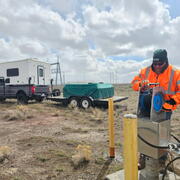
INLPO Water Monitoring
The U.S. Geological Survey (USGS) first characterized the water resources of the Idaho National Laboratory (INL) area prior to the establishment of nuclear reactor testing facilities in 1949. Since then, the USGS has maintained monitoring networks for groundwater quality and water levels at the INL. These efforts provide essential data on hydrologic trends and track the movement of radioactive and...
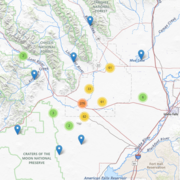
INLPO Monitoring Networks
The INLPO Monitoring Networks are essential for understanding the dynamics of groundwater and surface water, facilitating effective management of water resources within the eastern Snake River Plain aquifer system. These networks consist of multiple components designed to monitor various aspects, such as water levels and quality, providing vital data for environmental assessments and informed...
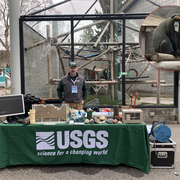
INLPO Outreach
The USGS Idaho National Laboratory Project Office is committed to engaging the public through a variety of outreach initiatives across multiple locations. We provide enriching educational materials and content tailored for diverse audiences, including K-12 students, college classes, public forums, Water Festivals, Earth Day events, and citizen advisory board meetings. Our goal is to foster a...
Idaho National Laboratory Project Office (INLPO)
The mission of the U.S. Geological Survey (USGS) at the Idaho National Laboratory Project Office (INLPO) is to implement a comprehensive groundwater monitoring and hydrogeologic studies program. This program focuses on evaluating the availability and movement of water within the eastern Snake River Plain (ESRP) aquifer, in alignment with the Department of Energy's (DOE) strategic goal of...

Selenium in the Blackfoot River Watershed
The upper Blackfoot River receives runoff from 12 large phosphate mines. Shale waste rock that is a byproduct of mining is highly enriched in naturally occurring selenium. At optimal concentrations, selenium can be a positive nutrient and antioxidant in mammals and fish. At elevated concentrations, however, it can damage fish and animal immune systems. As early as 1996, livestock deaths attributed...

Occurrence and Potential Risk of Microplastics in Lake Mead and the Delaware River
There is mounting evidence that microplastics present a significant threat to aquatic organisms. Microplastics – defined as plastic particles less than 5 mm in diameter – come from many different sources, including synthetic textiles, industrial waste products, personal care products, and the breakdown of litter, car tires, and other objects. This study will assess the occurrence of microplastics...

Trace Elements in Streams Near the Stibnite Mining Area
Mining of stibnite (antimony sulfide), tungsten, gold, silver, and mercury near the town of Stibnite in central Idaho has left a legacy of trace element contamination in the East Fork of the South Fork of the Salmon River (EFSFSR) and its tributaries. Concentrations of arsenic, antimony, and mercury frequently exceed human health criteria and may impact threatened or endangered salmonid species...

Coeur d'Alene Basin Water-Quality Monitoring
We partner with the EPA to conduct long-term water-quality and streamflow monitoring in the Coeur d’Alene River Basin, which has been widely impacted by historic mining activities.

Effects of Nutrient Enrichment on Stream Ecosystems (Upper Snake River Basin NAWQA)
Nutrient enrichment can affect the ecological health of a stream. For example, excessive aquatic plant growth caused by increased nutrients can reduce dissolved oxygen necessary for other aquatic life. Topics of particular interest in this study area include: seasonal patterns among nutrients, flows, algae and plants in streams rooted aquatic plant vs. algae growth stream metabolism and nutrient...

Surrogate Technologies for Estimating Suspended Sediment in the Snake and Clearwater Rivers
Because fluvial sediment poses both economic and ecological problems, resource managers need a safe, cost-effective way to measure sediment in streams, particularly in remote areas.