



The USGS work in collaboration with Federal, tribal, state, university, Canadian Provincial, and non-government organizations on research and monitoring efforts in the Lake Champlain Basin. For many years, the USGS has produced water quality, hydrologic, and ecological data and science to support the management of the lake and watershed through increased scientific understanding.
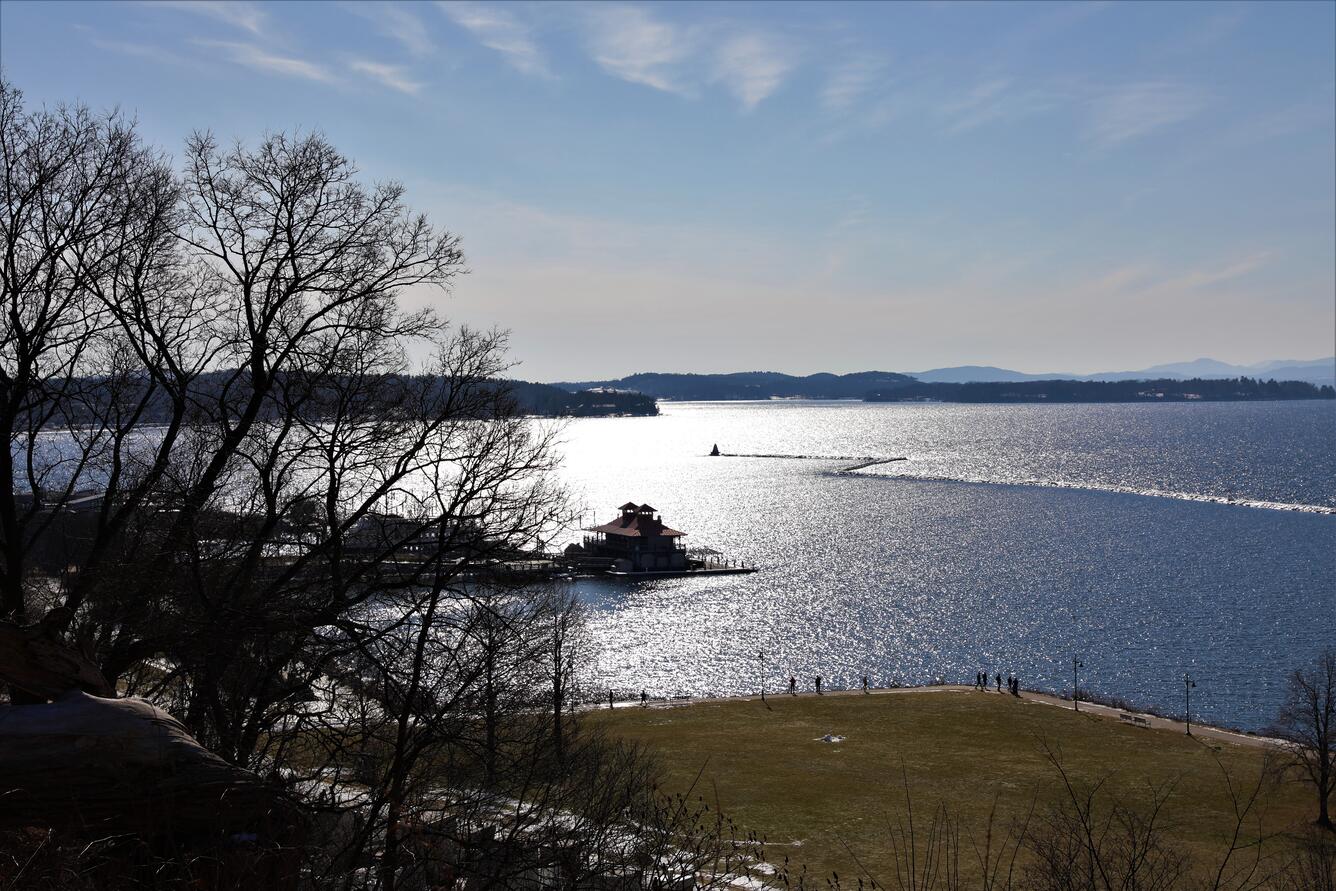
The USGS continuous-record streamgages, lake-stage gages, and groundwater well data are used within many watershed-wide studies and assessments from flood forecasting to nutrient loading. Science activities focus on characterizing hydrologic and water-quality conditions, with an emphasis on priority concerns such as invasive species, emerging contaminants, harmful algal blooms, and changing aquatic habitats. This includes quantifying current and historical patterns in cyanobacterial occurrence, refining predictive modeling frameworks for water quality and hydrologic and hydraulic prediction, and conducting environmental health studies to better understand potential human and ecosystem exposure risks. Additional work includes advancing innovative water-quality technologies, hydrodynamic modeling, hydrologic response to changes in climatic conditions, and transportation and infrastructure-related hydrologic studies.
Current Monitoring and Research
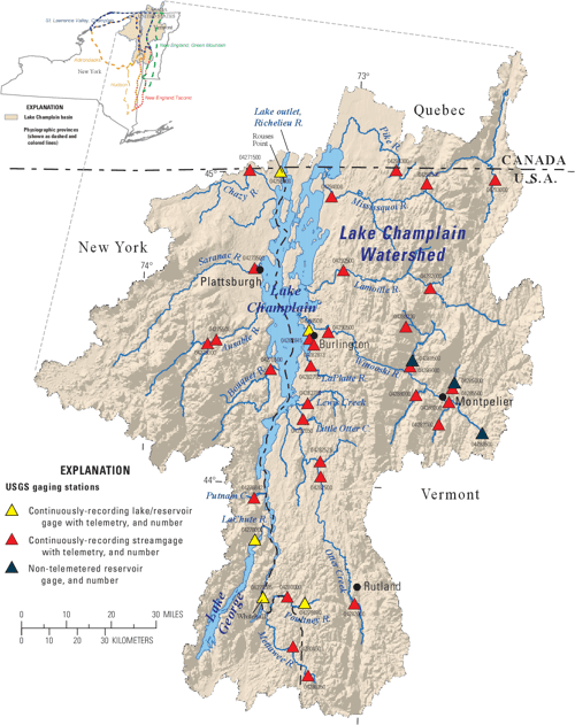
- Operation of 37 stream gages and 4 lake-stage gages
- PFAS Model for Soil and Groundwater
- Round Goby Distribution and Ecological Impacts
- Predicting Cyanobacteria Harmful Algal Blooms
- Sedimentary Record Comparison for Historical Cyanobacteria Occurrence
- Identification of Cyanobacteria in Adirondack Lakes
- Culvert Sizing Tool for Vermont StreamStats
- Vermont Low-Flow Statistics
- New England Precipitation-Runoff Modeling System Development
- Improving Basin Characteristic Data for Hydrologic Analyses
- USGS Environmental Health Program Research
- Monitoring Lake Champlain Water Quality and AUVs
- Emerging Contaminants Study in Rivers, Lakes, and Sediment
- Adirondack Streams Long-Term Monitoring & Research
- Mapping Thermal Refuge Areas for Cold-Water Fishes
- Biosurveillance Demonstration at an International Joint Commission Waterway
- Characterization of Benthic Harmful Algal Blooms
- Environmental Sensitivity Index Development
Lake Champlain Projects

Lake Champlain Basin Research
A Culvert Sizing Tool for Vermont StreamStats
Low-Streamflow Statistics for Unregulated Streams in Vermont
Predicting Cyanobacterial Harmful Algal Blooms at Lake Champlain Beaches
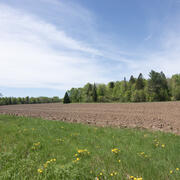
Determining How New England’s Water Resources Respond to Various Climate Scenarios
IJC Lake Champlain and the Richelieu River Project
The USGS work in collaboration with Federal, tribal, state, university, Canadian Provincial, and non-government organizations on research and monitoring efforts in the Lake Champlain Basin. For many years, the USGS has produced water quality, hydrologic, and ecological data and science to support the management of the lake and watershed through increased scientific understanding.
The USGS continuous-record streamgages, lake-stage gages, and groundwater well data are used within many watershed-wide studies and assessments from flood forecasting to nutrient loading. Science activities focus on characterizing hydrologic and water-quality conditions, with an emphasis on priority concerns such as invasive species, emerging contaminants, harmful algal blooms, and changing aquatic habitats. This includes quantifying current and historical patterns in cyanobacterial occurrence, refining predictive modeling frameworks for water quality and hydrologic and hydraulic prediction, and conducting environmental health studies to better understand potential human and ecosystem exposure risks. Additional work includes advancing innovative water-quality technologies, hydrodynamic modeling, hydrologic response to changes in climatic conditions, and transportation and infrastructure-related hydrologic studies.
Current Monitoring and Research
- Operation of 37 stream gages and 4 lake-stage gages
- PFAS Model for Soil and Groundwater
- Round Goby Distribution and Ecological Impacts
- Predicting Cyanobacteria Harmful Algal Blooms
- Sedimentary Record Comparison for Historical Cyanobacteria Occurrence
- Identification of Cyanobacteria in Adirondack Lakes
- Culvert Sizing Tool for Vermont StreamStats
- Vermont Low-Flow Statistics
- New England Precipitation-Runoff Modeling System Development
- Improving Basin Characteristic Data for Hydrologic Analyses
- USGS Environmental Health Program Research
- Monitoring Lake Champlain Water Quality and AUVs
- Emerging Contaminants Study in Rivers, Lakes, and Sediment
- Adirondack Streams Long-Term Monitoring & Research
- Mapping Thermal Refuge Areas for Cold-Water Fishes
- Biosurveillance Demonstration at an International Joint Commission Waterway
- Characterization of Benthic Harmful Algal Blooms
- Environmental Sensitivity Index Development
Lake Champlain Projects
Lake Champlain Basin Research
A Culvert Sizing Tool for Vermont StreamStats
Low-Streamflow Statistics for Unregulated Streams in Vermont
Predicting Cyanobacterial Harmful Algal Blooms at Lake Champlain Beaches
Determining How New England’s Water Resources Respond to Various Climate Scenarios