U.S. flag

An official website of the United States government

Images

Pacific Coastal and Marine Science Center images.

Filter Total Items: 1369
Scientists separating a sediment core split lengthwise
Scientists separating a sediment core split lengthwise_3

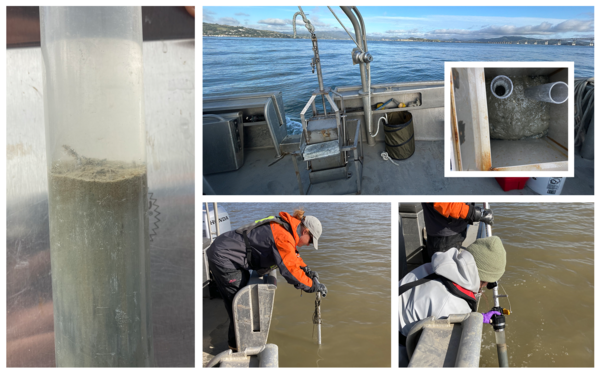
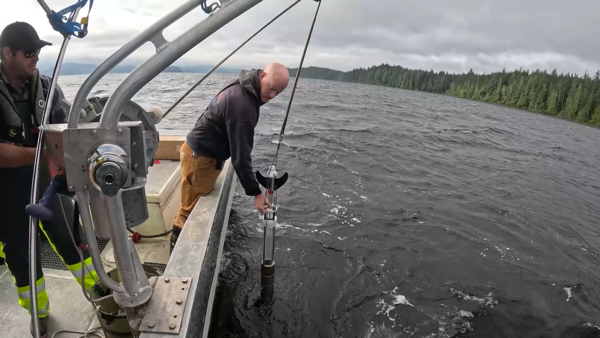
USGS scientists collect core samples from estuaries, lakes, coasts, and marine environments to study a range of physical and chemical properties preserved in sediments over time. They process and analyze these core samples in the Pacific Coastal and Marine Science Center’s Core Labs.
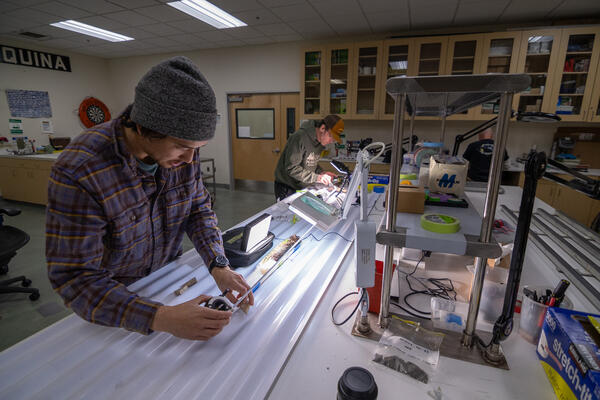
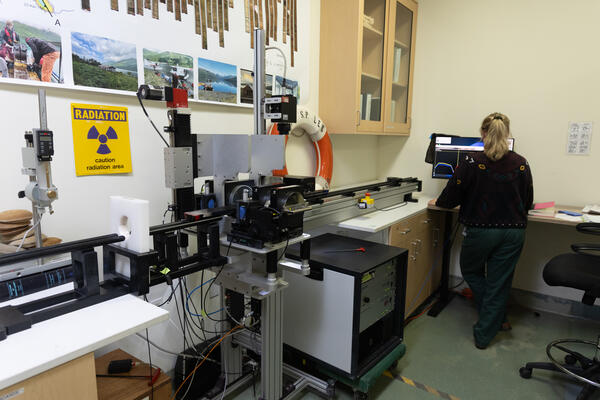
USGS scientists collect core samples from estuaries, lakes, coasts, and marine environments to study a range of physical and chemical properties preserved in sediments over time. They process and analyze these core samples in the Pacific Coastal and Marine Science Center’s Core Labs.
Scientists sub-sampling split sediment cores
Scientists sub-sampling split sediment cores_3

USGS scientists collect core samples from estuaries, lakes, coasts, and marine environments to study a range of physical and chemical properties preserved in sediments over time. They process and analyze these core samples in the Pacific Coastal and Marine Science Center’s Core Labs. 
USGS scientists collect core samples from estuaries, lakes, coasts, and marine environments to study a range of physical and chemical properties preserved in sediments over time. They process and analyze these core samples in the Pacific Coastal and Marine Science Center’s Core Labs. 
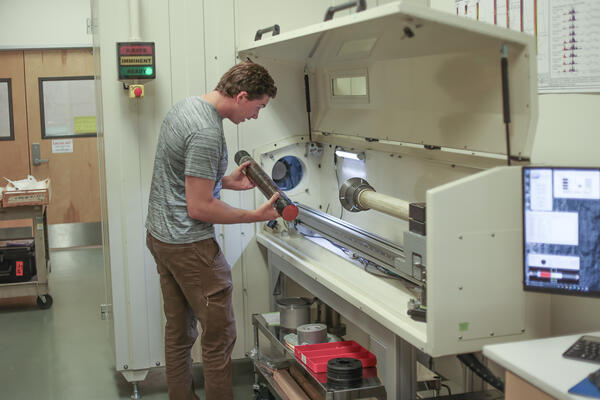
Scientist operating the multi-sensor core logger

USGS scientists collect core samples from estuaries, lakes, coasts, and marine environments to study a range of physical and chemical properties preserved in sediments over time. They process and analyze these core samples in the Pacific Coastal and Marine Science Center’s Core Labs.
USGS scientists collect core samples from estuaries, lakes, coasts, and marine environments to study a range of physical and chemical properties preserved in sediments over time. They process and analyze these core samples in the Pacific Coastal and Marine Science Center’s Core Labs.
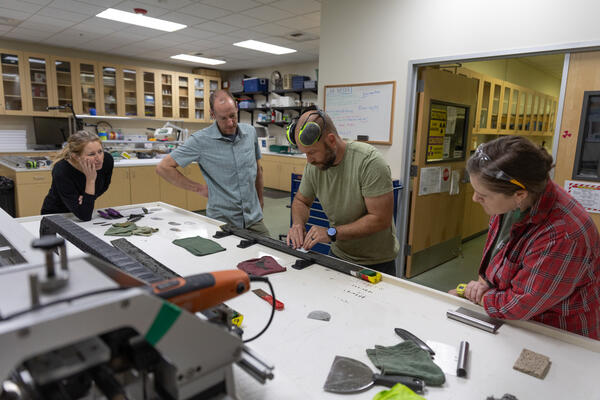
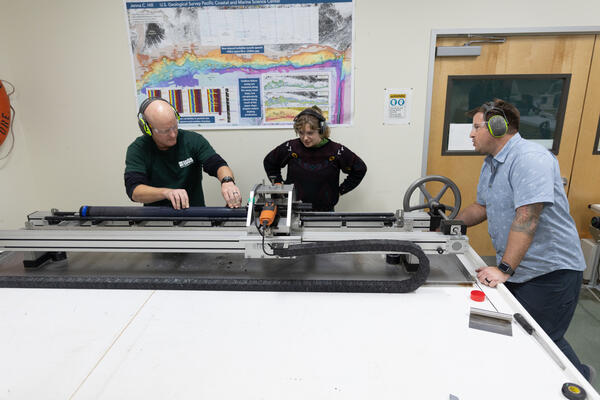
Scientists splitting a sediment core with the GeoTek core splitter
Scientists splitting a sediment core with the GeoTek core splitter_3

USGS scientists collect core samples from estuaries, lakes, coasts, and marine environments to study a range of physical and chemical properties preserved in sediments over time. They process and analyze these core samples in the Pacific Coastal and Marine Science Center’s Core Labs. 
USGS scientists collect core samples from estuaries, lakes, coasts, and marine environments to study a range of physical and chemical properties preserved in sediments over time. They process and analyze these core samples in the Pacific Coastal and Marine Science Center’s Core Labs. 
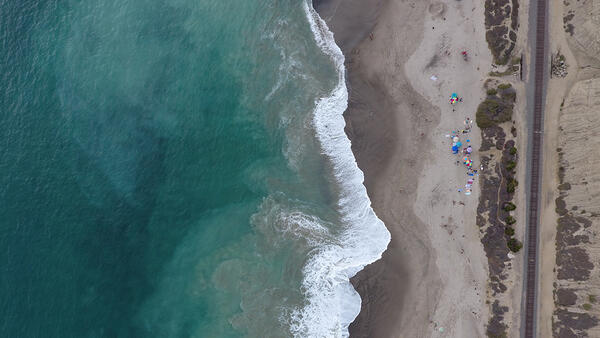
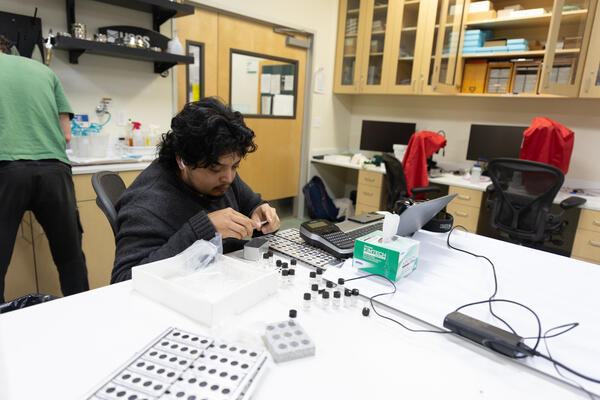
Scientists analyzing material extracted from sediment cores
Scientists analyzing material extracted from sediment cores_2

USGS scientists collect core samples from estuaries, lakes, coasts, and marine environments to study a range of physical and chemical properties preserved in sediments over time. They process and analyze these core samples in the Pacific Coastal and Marine Science Center’s Core Labs.
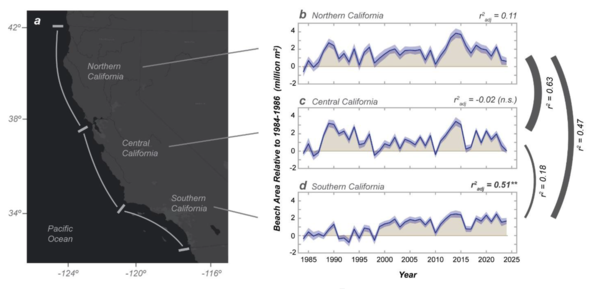
USGS scientists collect core samples from estuaries, lakes, coasts, and marine environments to study a range of physical and chemical properties preserved in sediments over time. They process and analyze these core samples in the Pacific Coastal and Marine Science Center’s Core Labs.
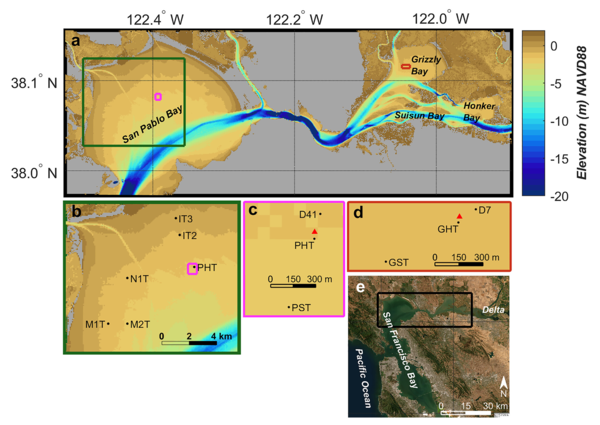
Scientist placing a sediment core in the rotating x-ray computed tomography system

USGS scientists collect core samples from estuaries, lakes, coasts, and marine environments to study a range of physical and chemical properties preserved in sediments over time. They process and analyze these core samples in the Pacific Coastal and Marine Science Center’s Core Labs.
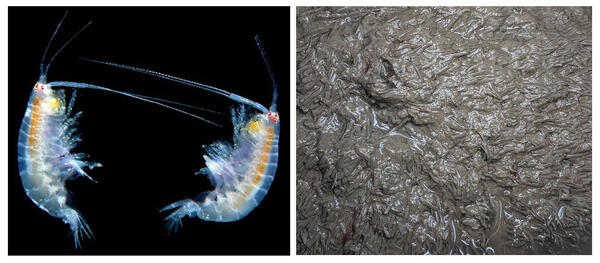
USGS scientists collect core samples from estuaries, lakes, coasts, and marine environments to study a range of physical and chemical properties preserved in sediments over time. They process and analyze these core samples in the Pacific Coastal and Marine Science Center’s Core Labs.
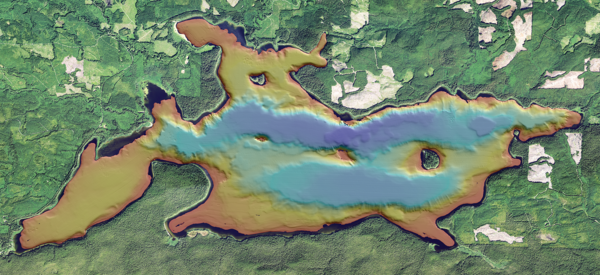
Bathymetric map of Ozette Lake in Washington State
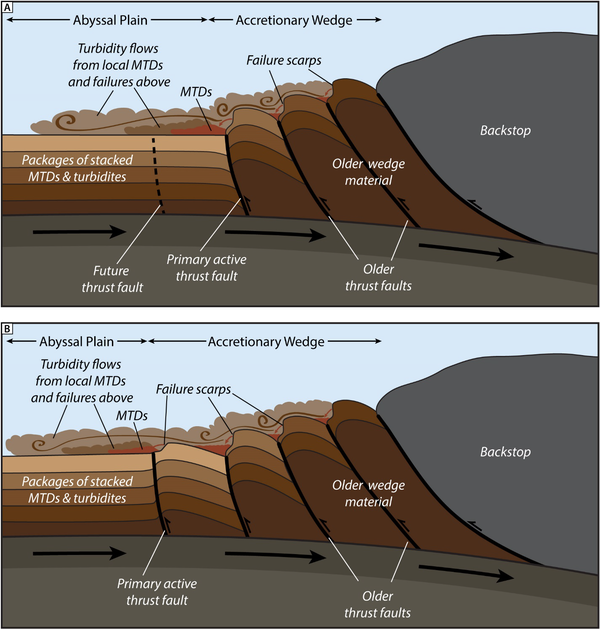
Geologic model for abyssal seismoturbidite generation along the Cascadia Subduction Zone

Geologic model for abyssal seismoturbidite generation along the Cascadia Subduction Zone. (A) With each earthquake cycle, slope failures occur on the oversteepened limbs of thrust folds in the accretionary wedge, resulting in proximal MTDs and turbidity flows that spread out across the abyssal plain.

Geologic model for abyssal seismoturbidite generation along the Cascadia Subduction Zone. (A) With each earthquake cycle, slope failures occur on the oversteepened limbs of thrust folds in the accretionary wedge, resulting in proximal MTDs and turbidity flows that spread out across the abyssal plain.

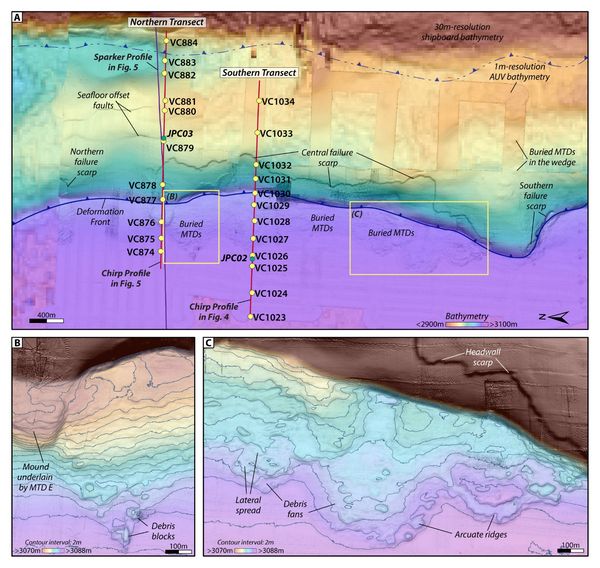
Enlargements of 1-m AUV bathymetry overlain on 30-m bathymetry grid for the study area along the Cascadia Subduction Zone

Enlargements of 1-m AUV bathymetry overlain on 30-m bathymetry grid for the study area along the Cascadia Subduction Zone. (A) The AUV bathymetry data reveal a 10m high failure scarp that extends for 4km along the seaward face of the frontal thrust fold. Secondary reverse faults observed in the chirp subbottom data are expressed at the seafloor with ~3m offsets.

Enlargements of 1-m AUV bathymetry overlain on 30-m bathymetry grid for the study area along the Cascadia Subduction Zone. (A) The AUV bathymetry data reveal a 10m high failure scarp that extends for 4km along the seaward face of the frontal thrust fold. Secondary reverse faults observed in the chirp subbottom data are expressed at the seafloor with ~3m offsets.

Was this page helpful?