U.S. flag

An official website of the United States government

Images

Volcano Science Center images.

Filter Total Items: 551
Dragline work to lower the outlet channel of Earthquake Lake on October 18, 1959
Dragline working to lower the outlet channel of Earthquake Lake on October 18, 1959

Dragline work to lower the outlet channel of Earthquake Lake on October 18, 1959. The tripod on the hill at center left is one of five lighting plants that allowed nighttime work. Note the “bathtub ring” of killed trees along the shoreline marking the high stand of Earthquake Lake before lowering of the outlet channel. Photo by Mrs. Steven W. Nile (Dr.

Dragline work to lower the outlet channel of Earthquake Lake on October 18, 1959. The tripod on the hill at center left is one of five lighting plants that allowed nighttime work. Note the “bathtub ring” of killed trees along the shoreline marking the high stand of Earthquake Lake before lowering of the outlet channel. Photo by Mrs. Steven W. Nile (Dr.

View of the Madison Slide on August 21, 1959 with rapidly filling Earthquake Lake

View of the Madison Slide on August 21, 1959 with rapidly filling Earthquake Lake. Rock Creek Campground was near the flooded trees. Camping gear was left behind by survivors who sought high ground following the slide. Photo by Professor William B. Hall, Montana School of Mines Geology Department.

View of the Madison Slide on August 21, 1959 with rapidly filling Earthquake Lake. Rock Creek Campground was near the flooded trees. Camping gear was left behind by survivors who sought high ground following the slide. Photo by Professor William B. Hall, Montana School of Mines Geology Department.

Irving Friedman (left) and William D. Long in 1958 in a USGS laboratory in Washington, D.C.
Ash plume from Paracutin Volcano, Mexico, sometime during 1946-1948

An ash plume rises from the summit crater of Parícutin sometime during 1946-48. A thick ash deposit covers the foreground. An estimated 4,500 cattle and 550 horses died during the heavy ashfall in the early months of the eruption, devastating the local people who depended on the animals for food, plowing, and transportation.

An ash plume rises from the summit crater of Parícutin sometime during 1946-48. A thick ash deposit covers the foreground. An estimated 4,500 cattle and 550 horses died during the heavy ashfall in the early months of the eruption, devastating the local people who depended on the animals for food, plowing, and transportation.

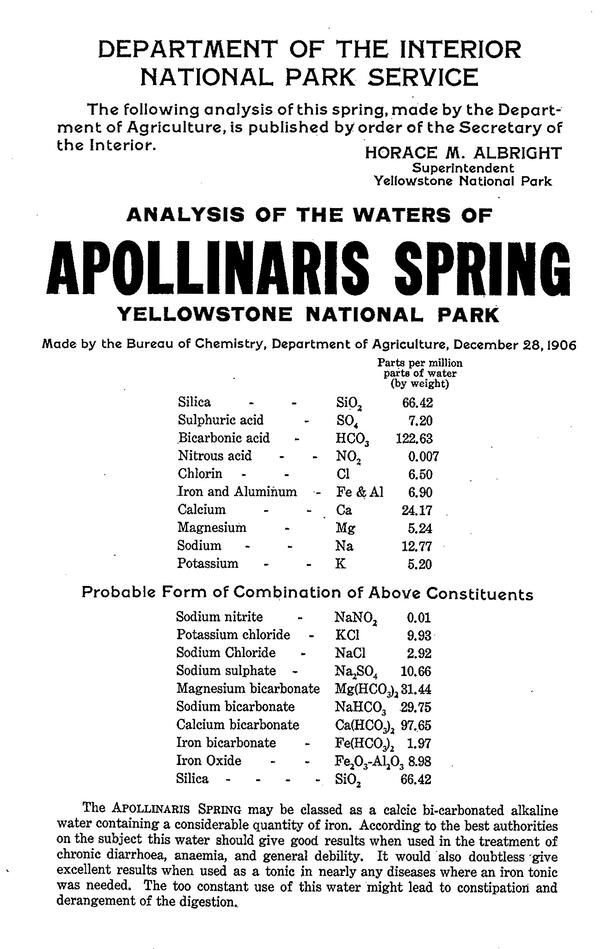
Reproduction of a poster showing chemical contents of water from Apollinaris Spring
Poster with chemical composition of water from Apollinaris Spring

Poster containing information about the chemical composition of water from Apollinaris Spring. Analysis is from 1906, but this poster is from the 1920s, when Horace Albright was the park’s Superintendent. Posters like this were posted in hotels and at the spring itself. 

Poster containing information about the chemical composition of water from Apollinaris Spring. Analysis is from 1906, but this poster is from the 1920s, when Horace Albright was the park’s Superintendent. Posters like this were posted in hotels and at the spring itself. 

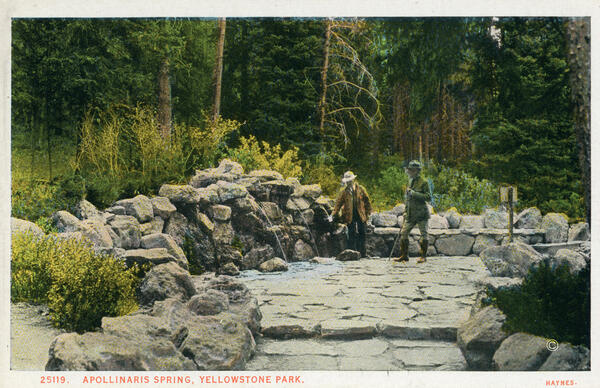
Colored 1920s postcard with two people on a stone platform hosting a cold water spring within a forested area
Haynes postcard showing Apollinaris Spring sometime after its 1925 renovation
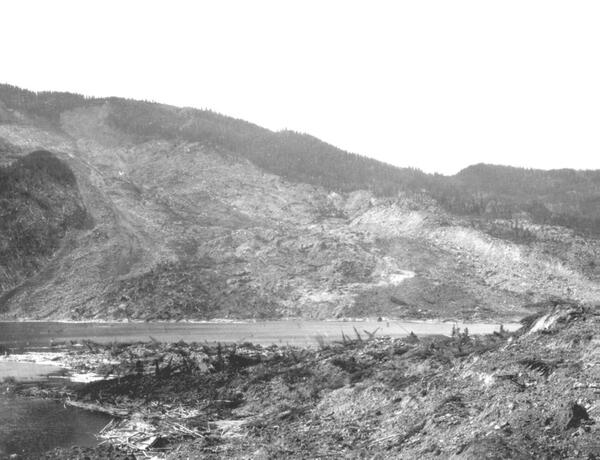
Black and white photo of a hillside that has been devastated by a landslide, with rock debris in the foreground and a lake
Gros Ventre landslide as seen shortly after it occurred in 1925

Photograph taken several months after the Gros Ventre Slide, Wyoming, showing the slide path (background), debris at the toe (foreground), and the waters of Lower Slide Lake.  Photo by William C. Alden, U.S. Geological Survey, 1925.

Photograph taken several months after the Gros Ventre Slide, Wyoming, showing the slide path (background), debris at the toe (foreground), and the waters of Lower Slide Lake.  Photo by William C. Alden, U.S. Geological Survey, 1925.

Visitors observing Beryl Spring, Yellowstone National Park, in 1923

Visitors observing Beryl Spring from the side of the road in 1923, prior to the construction that breached its sinter cap and altered the spring’s characteristics. From the National Park Service archives, retrieved by M.A. Bellingham.

Visitors observing Beryl Spring from the side of the road in 1923, prior to the construction that breached its sinter cap and altered the spring’s characteristics. From the National Park Service archives, retrieved by M.A. Bellingham.

Black and while photo if a valley with numerous scattered steam vents and a mountain range in the distance.  Tents are in the foreground.
Campsite of Griggs expedition of 1917 in the Valley of 10,000 smokes, Alaska

Campsite of Griggs expedition of 1917 on bench at north toe of Mount Cerberus near Katmai, Alaska. View to north-northwest down Lethe arm of the Valley of Ten Thousand Smokes. Photo courtesy of National Geographic Society.

Campsite of Griggs expedition of 1917 on bench at north toe of Mount Cerberus near Katmai, Alaska. View to north-northwest down Lethe arm of the Valley of Ten Thousand Smokes. Photo courtesy of National Geographic Society.

The Fountain Hotel with Leather Pool in the foreground, Yellowstone National Park
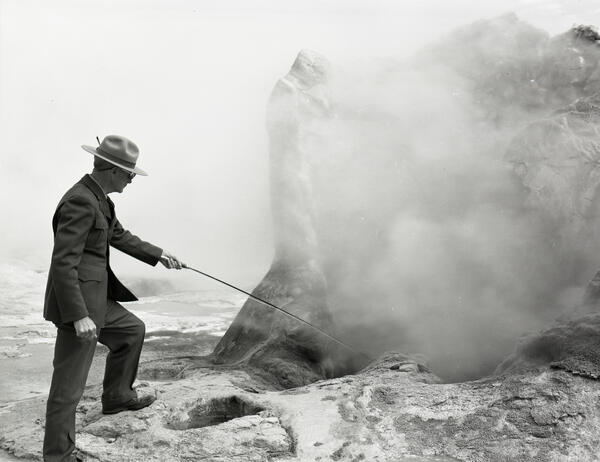
Dr. Hermon Schlundt sampling a pool in Norris Geyser Basin for radium in the early 1900s

Photo of Dr. Hermon Schlundt and a park ranger sampling a pool in Norris Geyser Basin for radium. The description of the photo states that this was the site where the radioactive element thorium was first discovered in the United States. Plate IIIB from Schlundt and Moore, 1909 (USGS Bulletin 395).

Photo of Dr. Hermon Schlundt and a park ranger sampling a pool in Norris Geyser Basin for radium. The description of the photo states that this was the site where the radioactive element thorium was first discovered in the United States. Plate IIIB from Schlundt and Moore, 1909 (USGS Bulletin 395).

Historic colorized photograph of Old Faithful geyser and Old Faithful Inn

Historic colorized photograph of Old Faithful geyser and Old Faithful Inn. Originally, the shingle roofing of the Old Faithful Inn was painted red with a material thought to be a fire retardant. Today, the shingles have a natural wood finish.

Historic colorized photograph of Old Faithful geyser and Old Faithful Inn. Originally, the shingle roofing of the Old Faithful Inn was painted red with a material thought to be a fire retardant. Today, the shingles have a natural wood finish.

Newspaper clipping from the Billings Weekly Gazette about Leroy R. Piper's 1900 disappearance from Yellowstone National Park

Newspaper clipping from the Billings Weekly Gazette, December 21, 1900, detailing possible reasons for the disappearance of Leroy R. Piper on July 30, 1900 (source: https://www.newspapers.com/clip/20351311/lr-piper-still-missing-relatives-of/).

The Buffalo Soldiers of the 25th Infantry Regiment Bicycle Corps walk their cycles up Minerva Terrace, Mammoth Hot Springs, Yellowstone National Park
Buffalo Soldiers walk their cycles up Minerva Terrace, Yellowstone National Park

The Buffalo Soldiers of the 25th Infantry Regiment Bicycle Corps walk their cycles up Minerva Terrace, Mammoth Hot Springs, Yellowstone National Park. Photo by F. Jay Haynes, 1896.  Montana Historical Society Research Center, Haynes Foundation Photograph Collection, H-3615. Used with permission from the Montana Historical Society.

The Buffalo Soldiers of the 25th Infantry Regiment Bicycle Corps walk their cycles up Minerva Terrace, Mammoth Hot Springs, Yellowstone National Park. Photo by F. Jay Haynes, 1896.  Montana Historical Society Research Center, Haynes Foundation Photograph Collection, H-3615. Used with permission from the Montana Historical Society.

The Buffalo Soldiers of the 25th Infantry Regiment Bicycle Corps pose on Minerva Terrace, Mammoth Hot Springs, Yellowstone National Park.
Buffalo Soldiers with bicycles pose on Minerva Terrace, Yellowstone National Park.

The Buffalo Soldiers of the 25th Infantry Regiment Bicycle Corps pose on Minerva Terrace, Mammoth Hot Springs, Yellowstone National Park. Pvt. John Findley, front left, was the primary bicycle mechanic for the unit, and so carried a heavy toolbox attached to his handlebars.  Photo by F.

The Buffalo Soldiers of the 25th Infantry Regiment Bicycle Corps pose on Minerva Terrace, Mammoth Hot Springs, Yellowstone National Park. Pvt. John Findley, front left, was the primary bicycle mechanic for the unit, and so carried a heavy toolbox attached to his handlebars.  Photo by F.

The Buffalo Soldiers of the 25th Infantry Regiment Bicycle Corps ride on an inactive portion of Minerva Terrace, Mammoth Hot Springs, Yellowstone National Park
Buffalo Soldiers cycle on an inactive are of Minerva Terrace, Yellowstone National Park

The Buffalo Soldiers of the 25th Infantry Regiment Bicycle Corps ride on an inactive portion of Minerva Terrace, Mammoth Hot Springs, Yellowstone National Park. Photo by F. Jay Haynes, 1896.  Montana Historical Society Research Center, Haynes Foundation Photograph Collection, H-3616. Used with permission from the Montana Historical Society.

The Buffalo Soldiers of the 25th Infantry Regiment Bicycle Corps ride on an inactive portion of Minerva Terrace, Mammoth Hot Springs, Yellowstone National Park. Photo by F. Jay Haynes, 1896.  Montana Historical Society Research Center, Haynes Foundation Photograph Collection, H-3616. Used with permission from the Montana Historical Society.

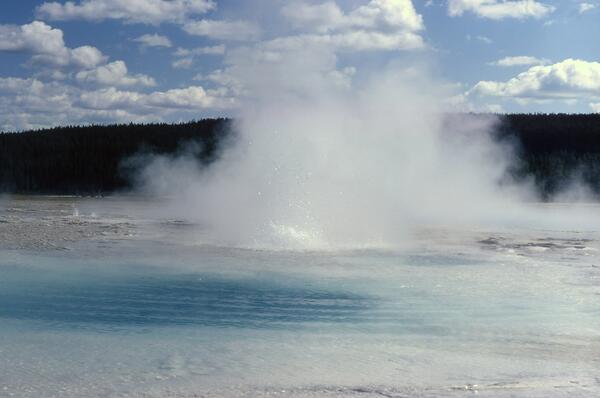
Black and white photo of water and steam bursting into the air.  The foreground is flat, and the background is forested.
Eruption of Excelsior Geyser, Midway Geyser Basin, in 1888
Sapphire Pool in Biscuit Basin, Yellowstone National Park, in 1887

Sapphire Pool in Biscuit Basin, Yellowstone National Park, photographed by Frank Jay Haynes in about 1887. Bulbous-shaped geyserite knobs surrounding the pool reminded the photographer of biscuits. Haynes was the official Yellowstone National Park photographer at the time.  

Sapphire Pool in Biscuit Basin, Yellowstone National Park, photographed by Frank Jay Haynes in about 1887. Bulbous-shaped geyserite knobs surrounding the pool reminded the photographer of biscuits. Haynes was the official Yellowstone National Park photographer at the time.  

Geological map of Yellowstone National Park based on work by William Henry Holmes in 1878.
Geological map of Yellowstone National Park based on work by William Henry Holmes in 1878

Geological map of Yellowstone National Park based on work by William Henry Holmes in 1878 as part of Ferdinand Vandeveer Hayden’s United States Geological and Geographical Survey of the Territories, with topography mapped by Henry Gannett and triangulation by Allen David Wilson.  From the Twelfth Annual Re

Geological map of Yellowstone National Park based on work by William Henry Holmes in 1878 as part of Ferdinand Vandeveer Hayden’s United States Geological and Geographical Survey of the Territories, with topography mapped by Henry Gannett and triangulation by Allen David Wilson.  From the Twelfth Annual Re

Was this page helpful?