



Tuff Cliff, located north of Madison Junction in Yellowstone National Park, is one of the best-known exposures of the Lava Creek Tuff and has long been cited as a classic example of member A of that deposit. USGS photo by Mike Poland, September 24, 2026.
Multimedia
Images
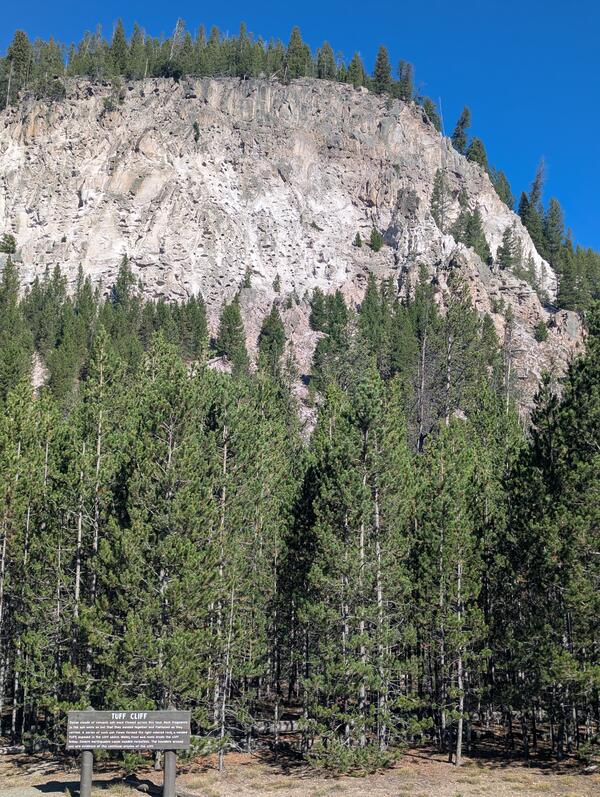
Tuff Cliff, in Yellowstone National Park
Tuff Cliff, located north of Madison Junction in Yellowstone National Park, is one of the best-known exposures of the Lava Creek Tuff and has long been cited as a classic example of member A of that deposit. USGS photo by Mike Poland, September 24, 2026.
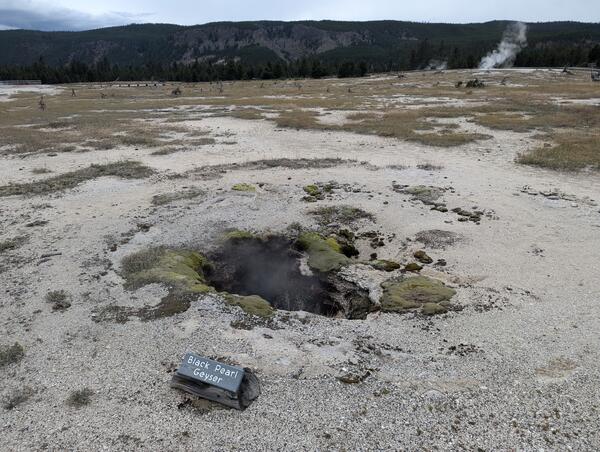
Black Pearl Geyser, Biscuit Basin, Yellowstone National Park
Black Pearl Geyser, Biscuit Basin, Yellowstone National ParkBlack Pearl Geyser in Biscuit Basin, Upper Geyser Basin, Yellowstone National Park. USGS photo by Mike Poland, September 22, 2026.
Black Pearl Geyser, Biscuit Basin, Yellowstone National Park
Black Pearl Geyser, Biscuit Basin, Yellowstone National ParkBlack Pearl Geyser in Biscuit Basin, Upper Geyser Basin, Yellowstone National Park. USGS photo by Mike Poland, September 22, 2026.
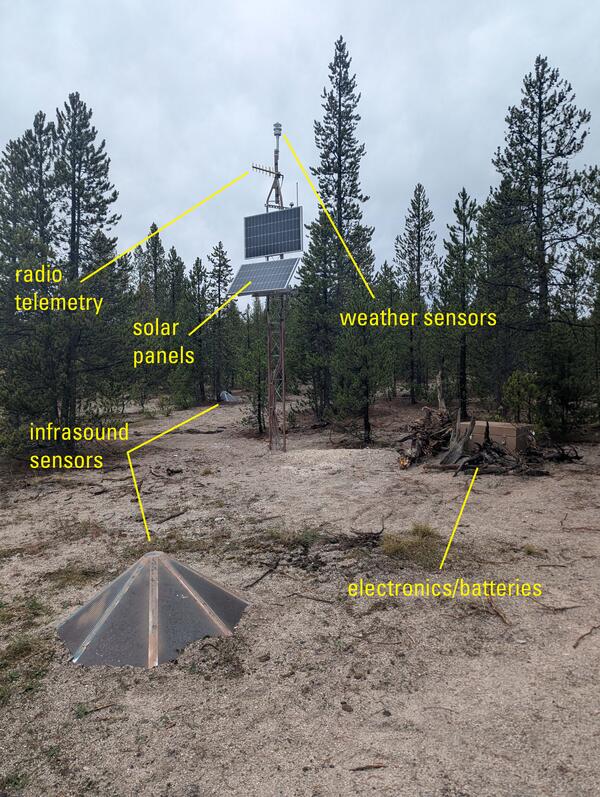
YGH monitoring station in Yellowstone National Park
YGH monitoring station in Yellowstone National ParkYGH monitoring station near Geyser Hill, Upper Geyser Basin, Yellowstone National Park. Infrasound sensors sit under the brown "hats" that serve as wind screens, and a seismometer is buried nearby.
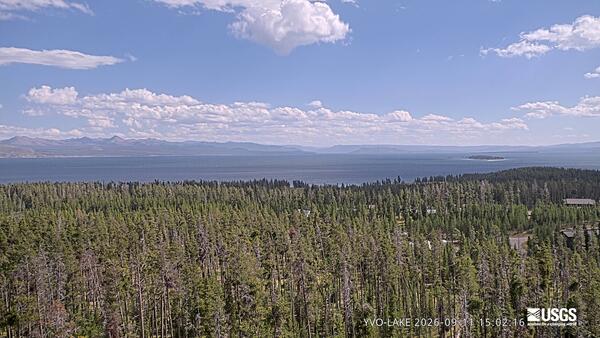
View of Yellowstone Lake from the 2026 edition of the Lake camera
View of Yellowstone Lake from the 2026 edition of the Lake cameraView from September 11, 2026, at 3:02:16 p.m.
View of Yellowstone Lake from the 2026 edition of the Lake camera
View of Yellowstone Lake from the 2026 edition of the Lake cameraView from September 11, 2026, at 3:02:16 p.m.
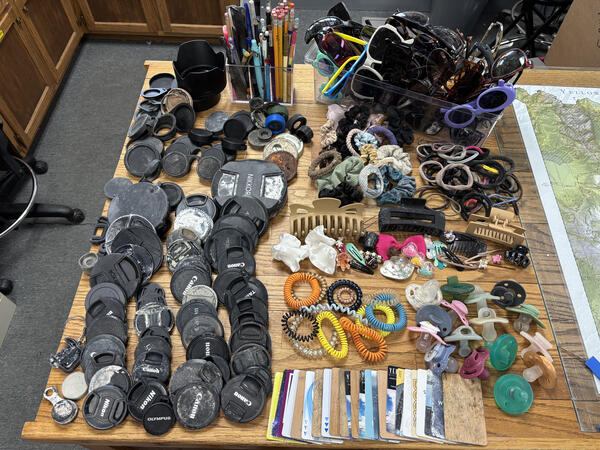
Frequent finds collected in summer 2026 by the Yellowstone National Park Geology Team
Frequent finds collected in summer 2026 by the Yellowstone National Park Geology TeamFrequent finds collected by the Yellowstone National Park Geology Team from hydrothermal areas during the summer season in 2026: camera lens covers and binocular parts, pens and pencils, sunglasses, hair accessories, hotel keys, and more! National Park Service photo by Margery Price, September 2026.
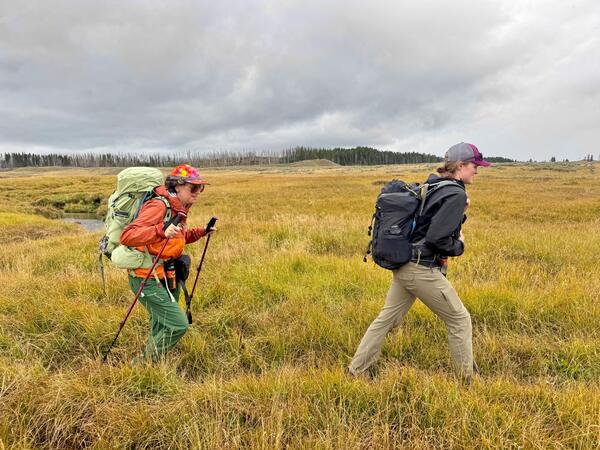
EarthScope field engineers hike to a GPS station in Hayden Valley, Yellowstone National Park
EarthScope field engineers hike to a GPS station in Hayden Valley, Yellowstone National ParkEarthScope intern Lexi Kenis (left) and field engineer Lia Lajoie (right) hike through Hayden Valley in Yellowstone National Park on their way to GPS Station HVWY. Photo by Brendan Hodge, EarthScope Consortium, September 2026.
Videos
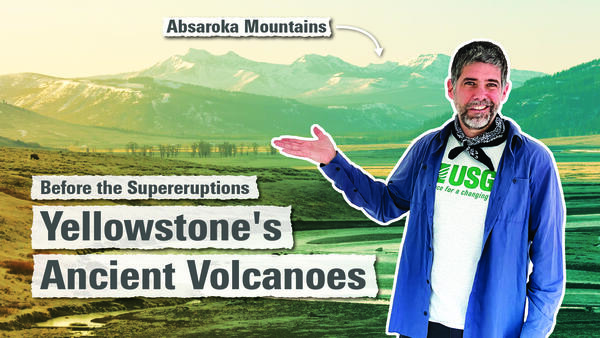
Before the supereruptions: Yellowstone’s ancient volcanoes (Yellowstone monthly update – August 2026)
Before the supereruptions: Yellowstone’s ancient volcanoes (Yellowstone monthly update – August 2026)Long before explosive eruptions formed the Yellowstone Caldera and heat from the magmatic system began feeding a dynamic hydrothermal system, there was the Absaroka volcanic range. Remnants of the rugged terrain are still visible on the east and north sides of Yellowstone National Park.
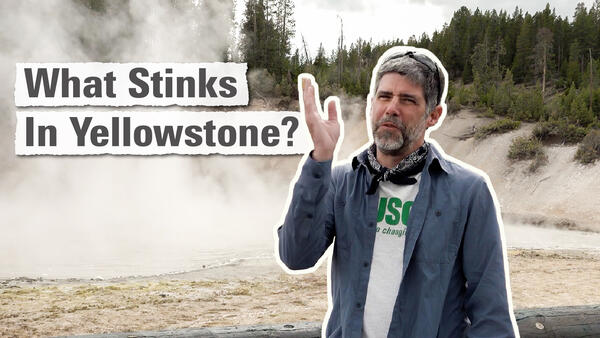
What stinks in Yellowstone? (Yellowstone monthly update – September 2026)
What stinks in Yellowstone? (Yellowstone monthly update – September 2026)When you get out of your car at Mud Volcano, your nose immediately detects something that smells like rotten eggs. That smell is hydrogen sulfide, H2S. It’s very common in geothermal systems like the ones in Yellowstone.
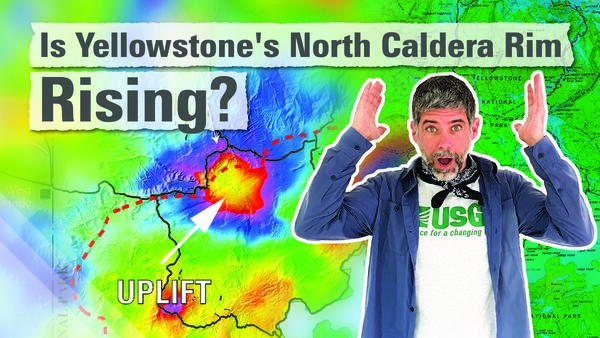
Is Yellowstone's north caldera rim rising? (Yellowstone Monthly Update - July 2026)
Is Yellowstone's north caldera rim rising? (Yellowstone Monthly Update - July 2026)Over the past few decades, an area on the north rim of Yellowstone Caldera has risen and fallen. Just last year a new period of uplift in this area began!
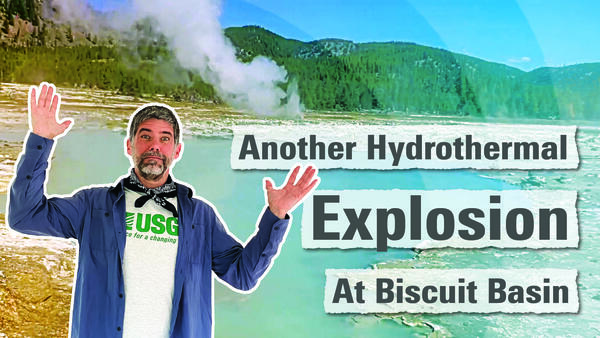
Another hydrothermal explosion at Biscuit Basin (Yellowstone Monthly Update - June 2026)
Another hydrothermal explosion at Biscuit Basin (Yellowstone Monthly Update - June 2026)On June 13, 2026, Yellowstone National Park’s newest geophysical monitoring sites captured a small hydrothermal explosion in Biscuit Basin! That story is the subject of this month’s video update.
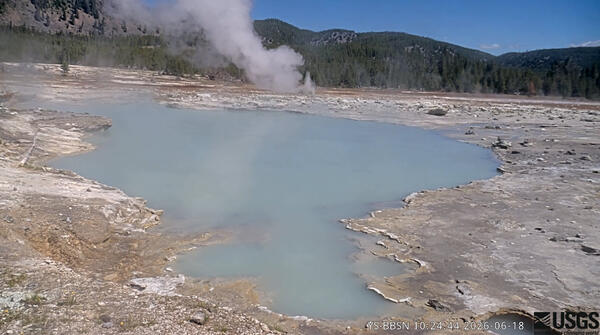
Water spouting on June 18, 2026, from a new thermal pool that formed shortly after a small hydrothermal explosion at Biscuit Basin, Yellowstone National Park, on June 13, 2026
Water spouting on June 18, 2026, from a new thermal pool that formed shortly after a small hydrothermal explosion at Biscuit Basin, Yellowstone National Park, on June 13, 2026This video is from the Biscuit Basin camera, which is located on the boardwalk adjacent to Black Diamond Pool (the blue-water feature in the foreground) and looking to the north. Black Diamond Pool was the site of a hydrothermal explosion on July 23, 2024, and the pool has erupted numerous times since that event.
Water spouting on June 18, 2026, from a new thermal pool that formed shortly after a small hydrothermal explosion at Biscuit Basin, Yellowstone National Park, on June 13, 2026
Water spouting on June 18, 2026, from a new thermal pool that formed shortly after a small hydrothermal explosion at Biscuit Basin, Yellowstone National Park, on June 13, 2026Water spouting on June 18, 2026, from a new thermal pool that formed shortly after a small hydrothermal explosion at Biscuit Basin, Yellowstone National Park, on June 13, 2026
Water spouting on June 18, 2026, from a new thermal pool that formed shortly after a small hydrothermal explosion at Biscuit Basin, Yellowstone National Park, on June 13, 2026This video is from the Biscuit Basin camera, which is located on the boardwalk adjacent to Black Diamond Pool (the blue-water feature in the foreground) and looking to the north. Black Diamond Pool was the site of a hydrothermal explosion on July 23, 2024, and the pool has erupted numerous times since that event.
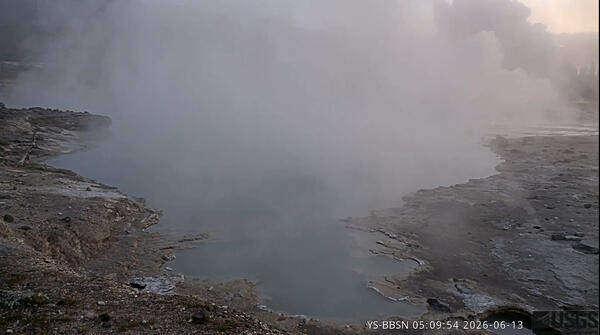
Video of small hydrothermal explosion at Biscuit Basin on June 13, 2026
Video of small hydrothermal explosion at Biscuit Basin on June 13, 2026Video from a research and monitoring camera located at Biscuit Basin, Yellowstone National Park, recorded between 05:09:45 and 05:10:15 a.m. MDT on June 13, 2026. Black Diamond Pool, site of a hydrothermal explosion on July 23, 2024, is steaming in the foreground. At about 05:09:50 a.m.
Webcams
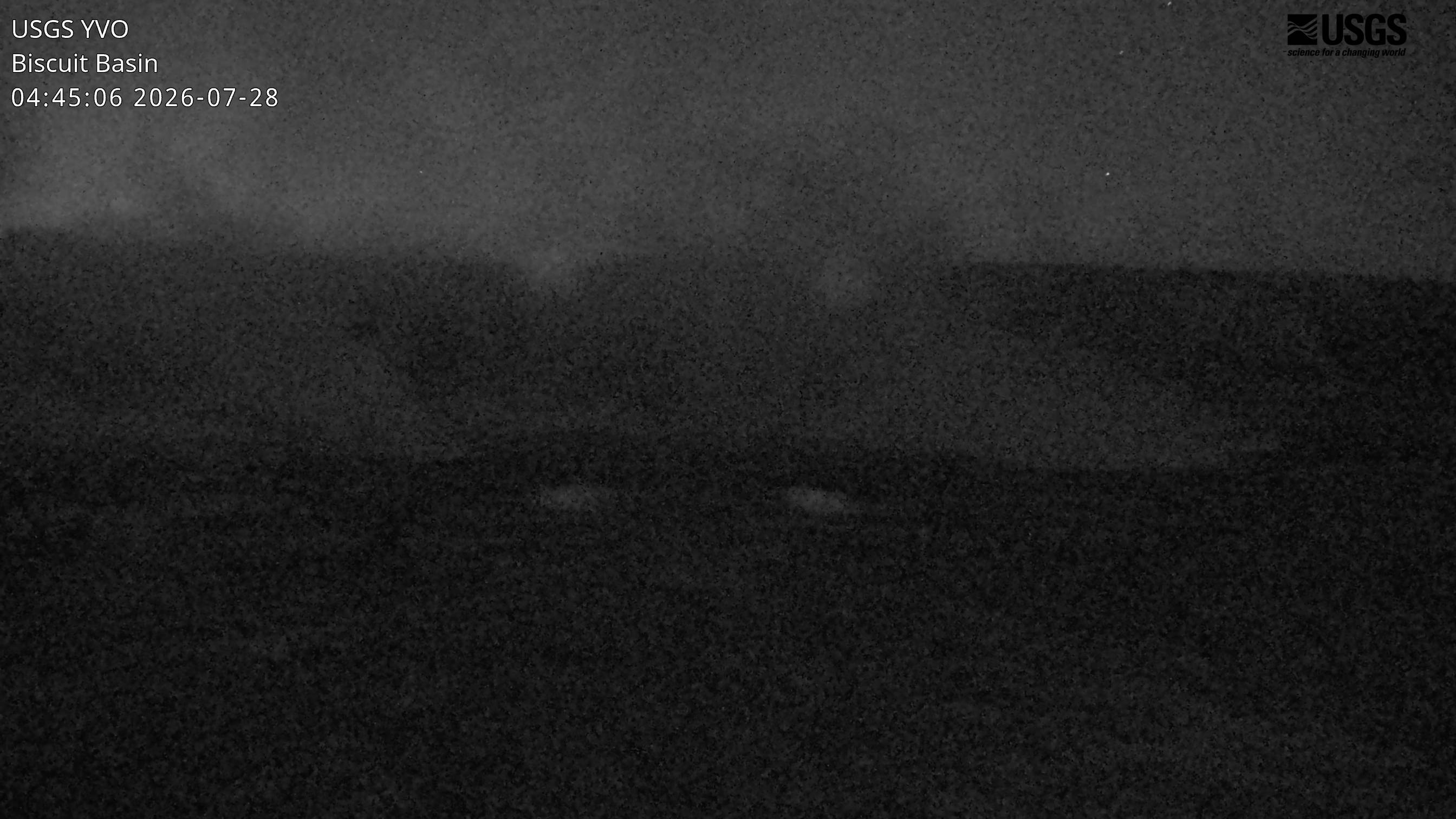
Biscuit Basin webcam
The camera view is east-southeast from the seismic/infrasound monitoring station in Biscuit Basin, Yellowstone National Park.
The camera view is east-southeast from the seismic/infrasound monitoring station in Biscuit Basin, Yellowstone National Park.
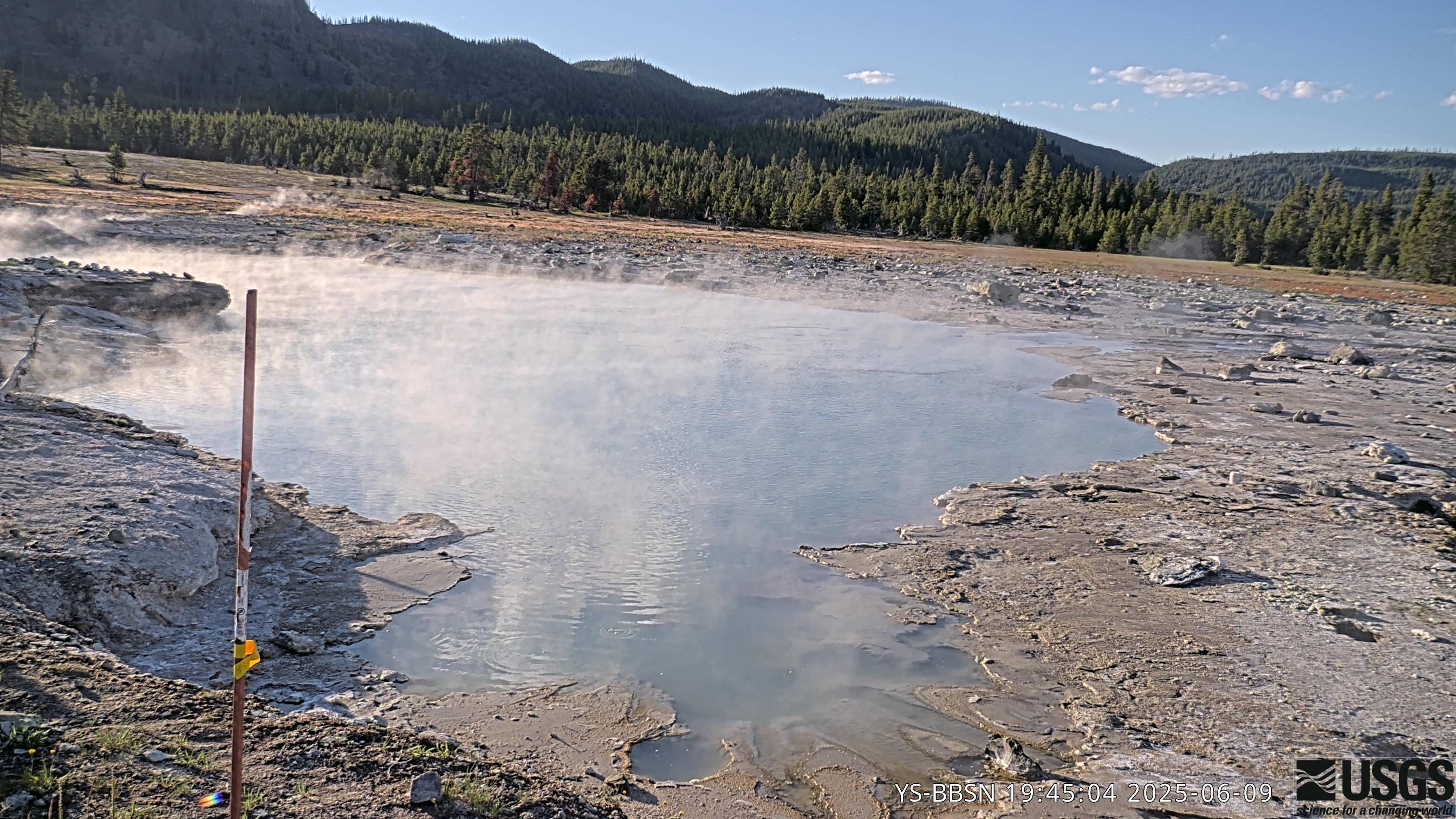
Black Diamond Pool (Biscuit Basin) webcam
The camera view is north-northwest from the Biscuit Basin boardwalk looking at Black Diamond Pool, which is in the foreground (the tilted viewing angle is due to the slope of the boardwalk).
The camera view is north-northwest from the Biscuit Basin boardwalk looking at Black Diamond Pool, which is in the foreground (the tilted viewing angle is due to the slope of the boardwalk).
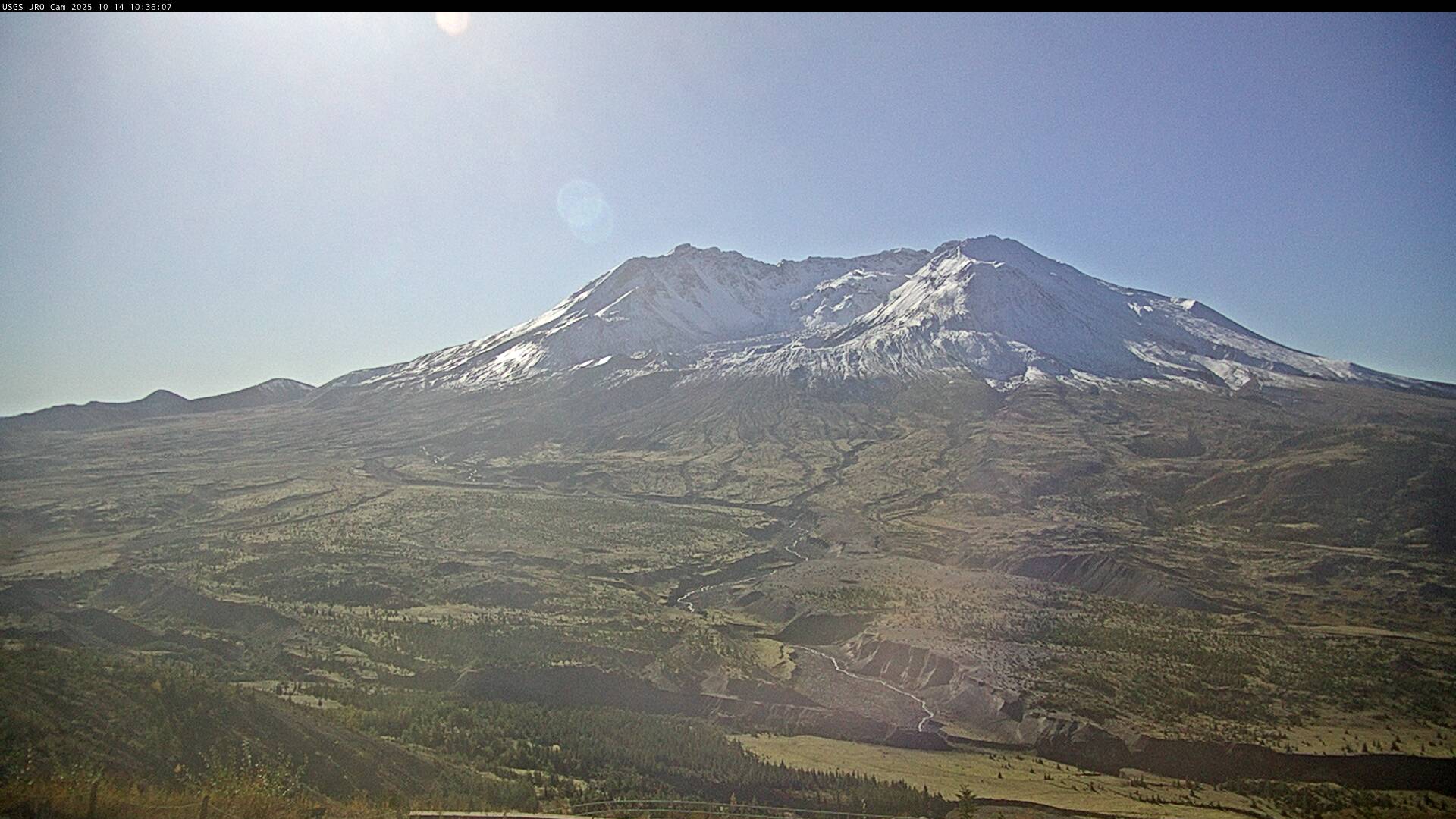
Johnston Ridge Observatory, Mount St. Helens
This static image is from a USGS Cascades Volcano Observatory research camera located at the Johnston Ridge Observatory, north of Mount St. Helens. The view is to the south. This camera is intended to assist the USGS with situational awareness. At times, clouds, rain, and snow obscure visibility.
This static image is from a USGS Cascades Volcano Observatory research camera located at the Johnston Ridge Observatory, north of Mount St. Helens. The view is to the south. This camera is intended to assist the USGS with situational awareness. At times, clouds, rain, and snow obscure visibility.
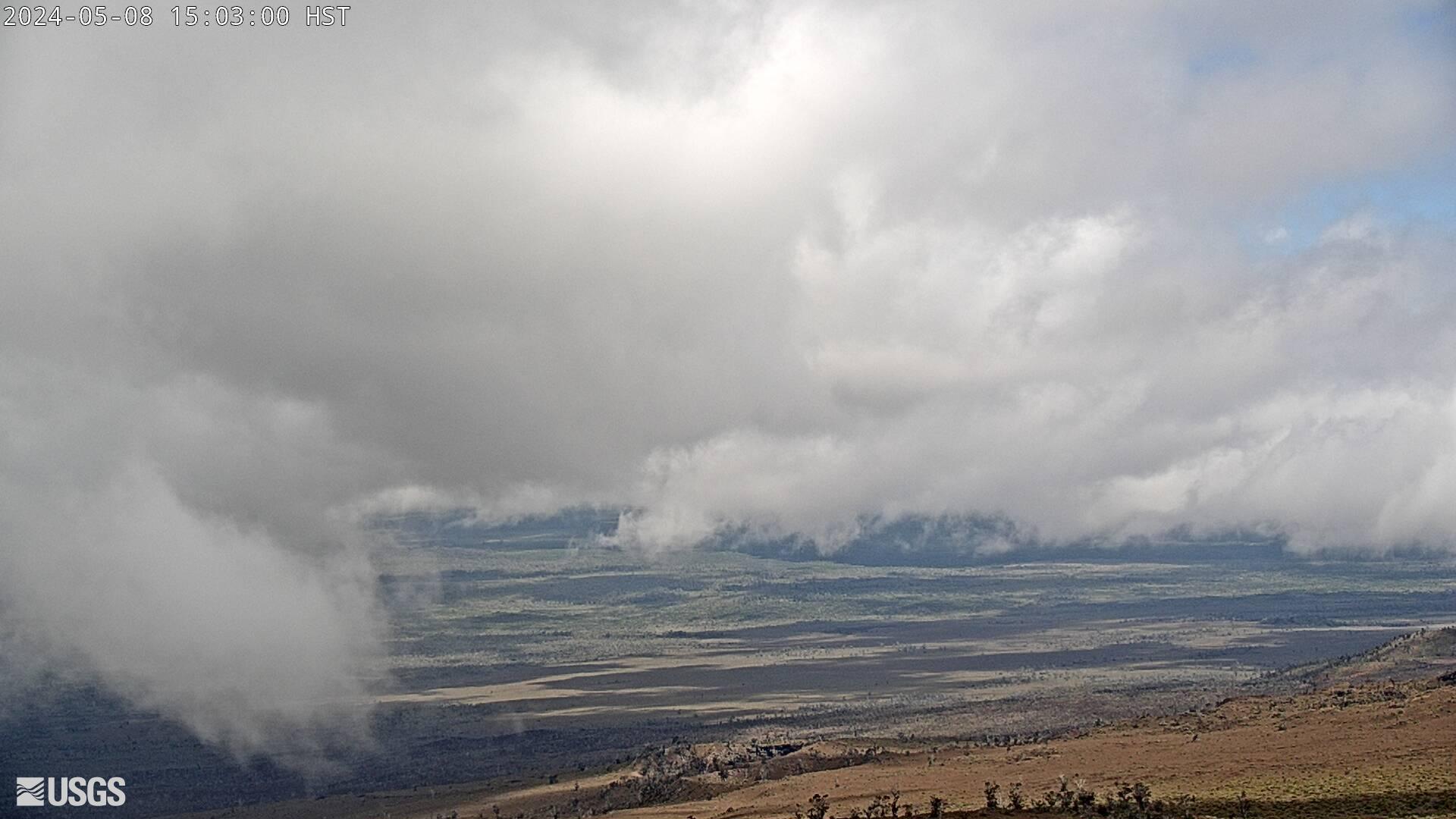
[HLcam] Live Image of Mauna Loa's northwest flank from Hualālai volcano
[HLcam] Live Image of Mauna Loa's northwest flank from Hualālai volcanoLive view of the northwest flank of Mauna Loa; the view is from the southeast flank of Hualālai [HLcam]. This camera is a pan-tilt-zoom model and the view may change depending on activity.
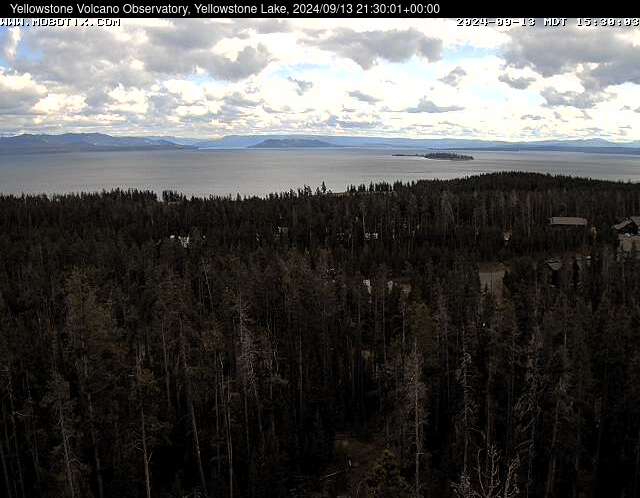
Webcam at Yellowstone Lake
The camera view is south-southeast over Yellowstone Lake from the cell phone tower near Fishing Bridge. Stevenson Island is visible within the lake on the right. The view extends down the Southeast Arm between the Promontory (low ridge rising from the lake) and the eastern shore.
The camera view is south-southeast over Yellowstone Lake from the cell phone tower near Fishing Bridge. Stevenson Island is visible within the lake on the right. The view extends down the Southeast Arm between the Promontory (low ridge rising from the lake) and the eastern shore.