



Evaluating Efficacy of Stewardship Actions for Vulnerable Gulf of America Coastal Birds Through Co-Production Between Scientists and Resource Managers
The USGS and partners will survey bird and human activity on beaches in Alabama, Mississippi, and Louisiana to determine breeding bird response to stewardship activities aimed at protecting and recovering bird populations.
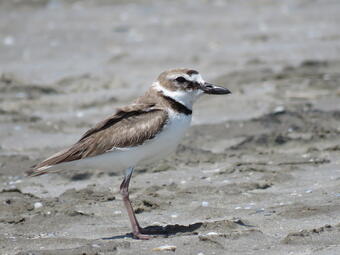
The Science Issue and Relevance: Due to their reliance on undisturbed coastal habitats and abundant prey, coastal bird populations can be key indicators of marine and coastal ecosystem health. In the face of a myriad of environmental threats and disturbance to their habitats, many coastal bird species have experienced steep declines, with many losing more than 50 percent of their population over the last three decades. As part of efforts to protect and recover bird populations, various stewardship actions—such as signage, symbolic fencing, volunteer patrols, and informal education—are being implemented where birds must compete with humans wishing to use coastal habits. Intensive stewardship programs have shown to provide some benefit to bird populations, including vulnerable species such as the Piping Plover (Charadrius melodus), but little is known about the effectiveness of stewardship along the northern Gulf. This project aims to better understand the effectiveness of coastal bird stewardship on the Gulf Coast, specifically, whether stewardship activities can benefit coastal bird populations and mitigate human disturbance to coastal bird habitat.
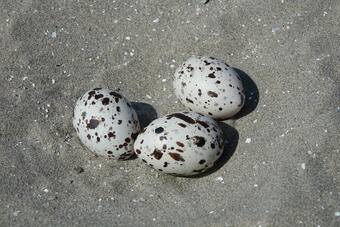
Methodology for Addressing the Issue: This project will address whether stewardship activities are effective in 1) protecting and recovering coastal bird populations along the Gulf Coast and 2) mitigating human disturbance in coastal bird habitat. The USGS and partners will survey bird and human activity (e.g., beach driving, dog walking) on beaches with nesting bird colonies in Alabama, Mississippi, and Louisiana to determine breeding bird response to these activities. Field efforts will also include nest monitoring and bird banding of individuals to understand how stewardship and disturbance impact factors such as nesting success and population changes. The project will also conduct surveys that assess which stewardship techniques and what level of community involvement in those activities can lead to a population-level response in coastal bird species.
Future Steps: Community involvement can be an asset when implementing conservation, restoration, and management strategies. The findings from this study will inform Gulf-specific stewardship activities led by Audubon and other management partners. Results will be incorporated into an interactive decision support tool (DST) and shared with decision makers and other interested parties to assist in making the best use of limited resources for avian conservation.

Monitoring Effects of Barrier Island Restoration on Piping Plovers in Louisiana

Understanding Avian Habitat Availability and Use After Barrier Island Restoration in Coastal Louisiana

Seasonal Surveys of Shorebird and Coastal Waterbird Utilization of Dredged Material Islands in the Baptiste Collette Bayou, U.S. Army Corps of Engineers (USACE) New Orleans District, Louisiana

Non-breeding Habitat Use of Flooded Agricultural Fields by Shorebirds within the Mississippi Delta
The USGS and partners will survey bird and human activity on beaches in Alabama, Mississippi, and Louisiana to determine breeding bird response to stewardship activities aimed at protecting and recovering bird populations.
The Science Issue and Relevance: Due to their reliance on undisturbed coastal habitats and abundant prey, coastal bird populations can be key indicators of marine and coastal ecosystem health. In the face of a myriad of environmental threats and disturbance to their habitats, many coastal bird species have experienced steep declines, with many losing more than 50 percent of their population over the last three decades. As part of efforts to protect and recover bird populations, various stewardship actions—such as signage, symbolic fencing, volunteer patrols, and informal education—are being implemented where birds must compete with humans wishing to use coastal habits. Intensive stewardship programs have shown to provide some benefit to bird populations, including vulnerable species such as the Piping Plover (Charadrius melodus), but little is known about the effectiveness of stewardship along the northern Gulf. This project aims to better understand the effectiveness of coastal bird stewardship on the Gulf Coast, specifically, whether stewardship activities can benefit coastal bird populations and mitigate human disturbance to coastal bird habitat.
Methodology for Addressing the Issue: This project will address whether stewardship activities are effective in 1) protecting and recovering coastal bird populations along the Gulf Coast and 2) mitigating human disturbance in coastal bird habitat. The USGS and partners will survey bird and human activity (e.g., beach driving, dog walking) on beaches with nesting bird colonies in Alabama, Mississippi, and Louisiana to determine breeding bird response to these activities. Field efforts will also include nest monitoring and bird banding of individuals to understand how stewardship and disturbance impact factors such as nesting success and population changes. The project will also conduct surveys that assess which stewardship techniques and what level of community involvement in those activities can lead to a population-level response in coastal bird species.
Future Steps: Community involvement can be an asset when implementing conservation, restoration, and management strategies. The findings from this study will inform Gulf-specific stewardship activities led by Audubon and other management partners. Results will be incorporated into an interactive decision support tool (DST) and shared with decision makers and other interested parties to assist in making the best use of limited resources for avian conservation.
Monitoring Effects of Barrier Island Restoration on Piping Plovers in Louisiana
Understanding Avian Habitat Availability and Use After Barrier Island Restoration in Coastal Louisiana
Seasonal Surveys of Shorebird and Coastal Waterbird Utilization of Dredged Material Islands in the Baptiste Collette Bayou, U.S. Army Corps of Engineers (USACE) New Orleans District, Louisiana