



The clouds begin to clear over the Arctic Ocean Aug. 19, 2009.
Images
Images
Filter Total Items: 9448
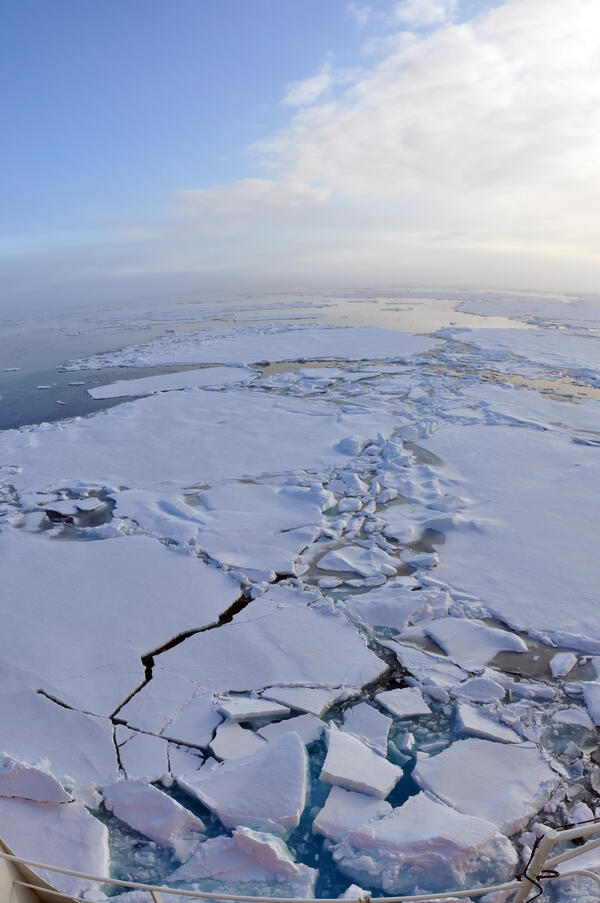
Clearing Up
The clouds begin to clear over the Arctic Ocean Aug. 19, 2009.
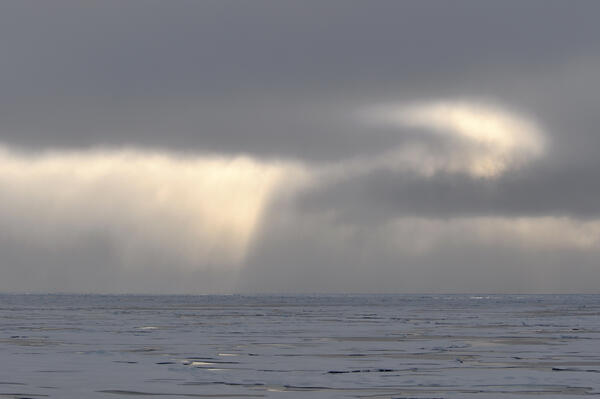
Swirling Sky
The sun shines through the clouds over the Arctic Ocean Aug. 17, 2009.
The sun shines through the clouds over the Arctic Ocean Aug. 17, 2009.

Studying Old Organic Carbon in the Yukon River
USGS scientists Doug Halm, Paul Schuster, Peter Murdoch, and Kathy Kelsey collecting melt water samples from Gulkana Glacier.
USGS research of the Yukon River has had a long term goal of determining the source and fate of organic carbon transported by the river to the Bering Sea and ultimately the Arctic Ocean.
USGS scientists Doug Halm, Paul Schuster, Peter Murdoch, and Kathy Kelsey collecting melt water samples from Gulkana Glacier.
USGS research of the Yukon River has had a long term goal of determining the source and fate of organic carbon transported by the river to the Bering Sea and ultimately the Arctic Ocean.

Studying Old Organic Carbon in the Yukon River
Melt water stream discharging from Gulkana Glacier, Alaska.
USGS research of the Yukon River has had a long term goal of determining the source and fate of organic carbon transported by the river to the Bering Sea and ultimately the Arctic Ocean.
Melt water stream discharging from Gulkana Glacier, Alaska.
USGS research of the Yukon River has had a long term goal of determining the source and fate of organic carbon transported by the river to the Bering Sea and ultimately the Arctic Ocean.

Studying Old Organic Carbon in the Yukon River
USGS scientists Doug Halm, Paul Schuster, and Kathy Kelsey collecting melt water samples from Gulkana Glacier.
USGS scientists Doug Halm, Paul Schuster, and Kathy Kelsey collecting melt water samples from Gulkana Glacier.

The View
ARCTIC OCEAN - A multi-year ice floe slides down the starboard side of the Coast Guard Cutter Healy Aug. 12, 2009, as the ship heads north into even thicker ice. "You can tell that this is a multi-year ice floe by the light blue melt ponds that have formed on top of the floe," said Pablo Clemente-Colón, chief scientist at the U.S. National Ice Center.
ARCTIC OCEAN - A multi-year ice floe slides down the starboard side of the Coast Guard Cutter Healy Aug. 12, 2009, as the ship heads north into even thicker ice. "You can tell that this is a multi-year ice floe by the light blue melt ponds that have formed on top of the floe," said Pablo Clemente-Colón, chief scientist at the U.S. National Ice Center.

Arctic Ice
Ice is pushed away from the hull of the Coast Guard Cutter Healy Aug. 12, 2009.
Ice is pushed away from the hull of the Coast Guard Cutter Healy Aug. 12, 2009.

Alligator Ice
A melting ice floe in the Arctic Ocean resembles an alligator Aug. 12, 2009.
A melting ice floe in the Arctic Ocean resembles an alligator Aug. 12, 2009.

Pollution Along the Coast
Garbage that has accumulated at a dock on the edge of the Great Lakes. This type of pollution is one of the ways contaminants and pathogens enter the Great Lakes and pose human health concerns.
Garbage that has accumulated at a dock on the edge of the Great Lakes. This type of pollution is one of the ways contaminants and pathogens enter the Great Lakes and pose human health concerns.

Recovery Act Invests $116,000 at Apostle Islands
Park Ranger Jim Stowell conducts a living history lighthouse tour dressed as a lighthouse keeper of yesteryear. Secretary Salazar is to his right with Assistant Secretary for Fish Wildlife and Parks Tom Strickland and Acting Director of the National Park Service Dan Wenk in the background.
Park Ranger Jim Stowell conducts a living history lighthouse tour dressed as a lighthouse keeper of yesteryear. Secretary Salazar is to his right with Assistant Secretary for Fish Wildlife and Parks Tom Strickland and Acting Director of the National Park Service Dan Wenk in the background.

Recovery Act Invests $116,000 at Apostle Islands
Secretary Salazar hikes a popular trail on Raspberry Island with Wisconsin State Senator Bob Jauch (in yellow to his left).
Secretary Salazar hikes a popular trail on Raspberry Island with Wisconsin State Senator Bob Jauch (in yellow to his left).

Recovery Act Invests $116,000 at Apostle Islands
Congressman David Obey, Apostle Islands National Lakeshore Superintendent Bob Krumenaker and Secretary Salazar on Raspberry Island. In the background is Acting Director of the National Park Service Dan Wenk.
Congressman David Obey, Apostle Islands National Lakeshore Superintendent Bob Krumenaker and Secretary Salazar on Raspberry Island. In the background is Acting Director of the National Park Service Dan Wenk.

The Meltwater Stonefly
A Meltwater stonefly rests on a rock in Reynolds Creek spring on Logan Pass in Glacier National Park.
A Meltwater stonefly rests on a rock in Reynolds Creek spring on Logan Pass in Glacier National Park.

After the Storm
Long Creek at Western Crossing of International Boundary, Saskatchewan, Canada, after a storm. Long Creek crosses into North Dakota near where this picture was taken, then returns to Canada.
Long Creek at Western Crossing of International Boundary, Saskatchewan, Canada, after a storm. Long Creek crosses into North Dakota near where this picture was taken, then returns to Canada.

Retreating Glacier in Denali National Park, Alaska
Retreating Glacier in Denali National Park, AlaskaRetreating glacier viewed southward from Polychrome Mountain in Denali National Park, Alaska, on July 29, 2009.
Retreating Glacier in Denali National Park, Alaska
Retreating Glacier in Denali National Park, AlaskaRetreating glacier viewed southward from Polychrome Mountain in Denali National Park, Alaska, on July 29, 2009.

Survey of Dall Sheep Habitat, Denali National Park, Alaska
Survey of Dall Sheep Habitat, Denali National Park, AlaskaEd Pfeifer of the USGS Southwest Geographic Science Team recording field notes in alpine tundra during a field study of Dall sheep habitat in Denali National Park, Alaska, on July 29, 2009.
Survey of Dall Sheep Habitat, Denali National Park, Alaska
Survey of Dall Sheep Habitat, Denali National Park, AlaskaEd Pfeifer of the USGS Southwest Geographic Science Team recording field notes in alpine tundra during a field study of Dall sheep habitat in Denali National Park, Alaska, on July 29, 2009.

Dall Sheep Habitat, Denali National Park, Alaska
Ed Pfeifer of the USGS Southwest Geographic Science Team surveying alpine vegetation during a field study of Dall sheep habitat in Denali National Park, Alaska, on July 28, 2009.
Ed Pfeifer of the USGS Southwest Geographic Science Team surveying alpine vegetation during a field study of Dall sheep habitat in Denali National Park, Alaska, on July 28, 2009.

Kemmerer and Releated Items
Water sampling kit including a kemmerer. The Kemmerer, also known as a water bottle is used by lowering it to the desired depth of water to be tested. A messenger (torpedo-like object with slit on the side) is attached to the rope holding kemmerer and slides down to it. It hits the kemmerer and closes it.
Water sampling kit including a kemmerer. The Kemmerer, also known as a water bottle is used by lowering it to the desired depth of water to be tested. A messenger (torpedo-like object with slit on the side) is attached to the rope holding kemmerer and slides down to it. It hits the kemmerer and closes it.

Spotting of Dall Sheep, Denali National Park, Alaska
Spotting of Dall Sheep, Denali National Park, AlaskaBarry Middleton (left) and Ed Pfeifer (right) of the USGS Southwest Geographic Science Team engaged in field observations of Dall sheep in Denali National Park, Alaska, on July 27, 2009.
Spotting of Dall Sheep, Denali National Park, Alaska
Spotting of Dall Sheep, Denali National Park, AlaskaBarry Middleton (left) and Ed Pfeifer (right) of the USGS Southwest Geographic Science Team engaged in field observations of Dall sheep in Denali National Park, Alaska, on July 27, 2009.

Kemmerer and Releated Items
Water sampling kit including a kemmerer. The Kemmerer, also known as a water bottle is used by lowering it to the desired depth of water to be tested. A messenger (torpedo-like object with slit on the side) is attached to the rope holding kemmerer and slides down to it. It hits the kemmerer and closes it.
Water sampling kit including a kemmerer. The Kemmerer, also known as a water bottle is used by lowering it to the desired depth of water to be tested. A messenger (torpedo-like object with slit on the side) is attached to the rope holding kemmerer and slides down to it. It hits the kemmerer and closes it.

Kemmerer and Releated Items (4 of 4)
Water sampling kit including a kemmerer. The Kemmerer, also known as a water bottle is used by lowering it to the desired depth of water to be tested. A messenger (torpedo-like object with slit on the side) is attached to the rope holding kemmerer and slides down to it. It hits the kemmerer and closes it.
Water sampling kit including a kemmerer. The Kemmerer, also known as a water bottle is used by lowering it to the desired depth of water to be tested. A messenger (torpedo-like object with slit on the side) is attached to the rope holding kemmerer and slides down to it. It hits the kemmerer and closes it.