



Manufactured by Buff & Buff, Boston, Massachusetts, serial #12759. Both George Buff and Christian Louis Berger immigrated to this country and became partners of Buff & Berger in the 1870s. The partnership was dissolved in 1898, at which time Berger organized C.L. Berger & Sons, a noted manufacturer of surveying equipment.
Images
Images
Filter Total Items: 9448
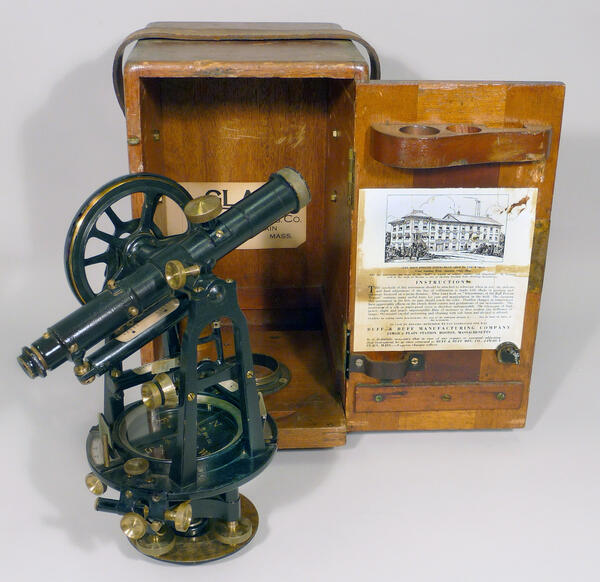
Buff & Buff Engineer's Transit with Case
Manufactured by Buff & Buff, Boston, Massachusetts, serial #12759. Both George Buff and Christian Louis Berger immigrated to this country and became partners of Buff & Berger in the 1870s. The partnership was dissolved in 1898, at which time Berger organized C.L. Berger & Sons, a noted manufacturer of surveying equipment.
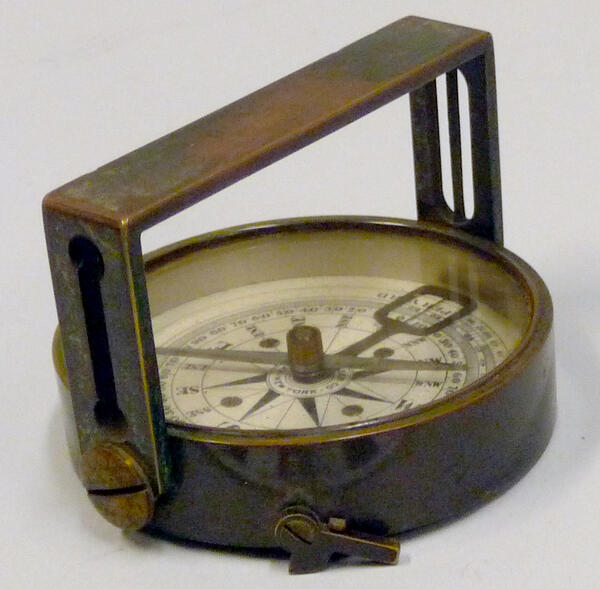
Surveying Compass with Leather Case
The cardinal points are lettered N, W, S and E, graduated to degrees and numbered every ten degrees to 360. The connecting sights fold away for storage. Manufactured by Keuffel & Esser, New York.
Object ID: USGS-000162
The cardinal points are lettered N, W, S and E, graduated to degrees and numbered every ten degrees to 360. The connecting sights fold away for storage. Manufactured by Keuffel & Esser, New York.
Object ID: USGS-000162
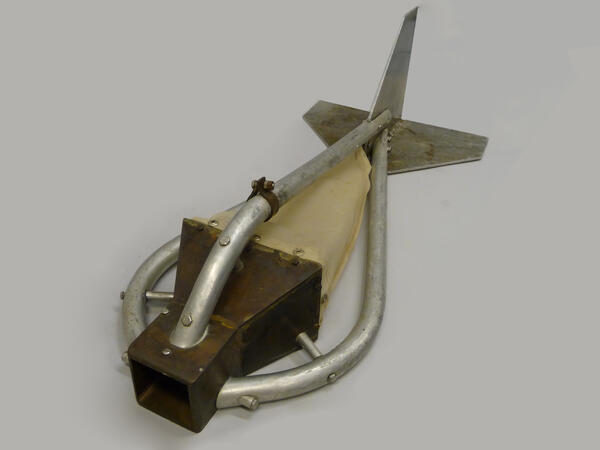
Small Bedload Sampler
Named for co-inventors Ed Helley and Winchell Smith; built in the 1960s by Vigus and Lyle, machinists in the Geology Department of the University of California, Berkeley. This sampler was first used in California and later at several locations around the country.
Named for co-inventors Ed Helley and Winchell Smith; built in the 1960s by Vigus and Lyle, machinists in the Geology Department of the University of California, Berkeley. This sampler was first used in California and later at several locations around the country.
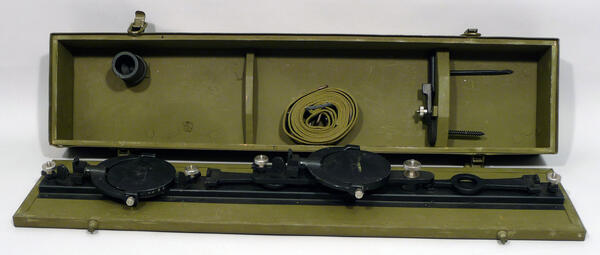
Heliotrope
Manufactured by American Instrument Company. Survey instrument to take measurements from the Sun.
Object ID: USGS-000471
Manufactured by American Instrument Company. Survey instrument to take measurements from the Sun.
Object ID: USGS-000471
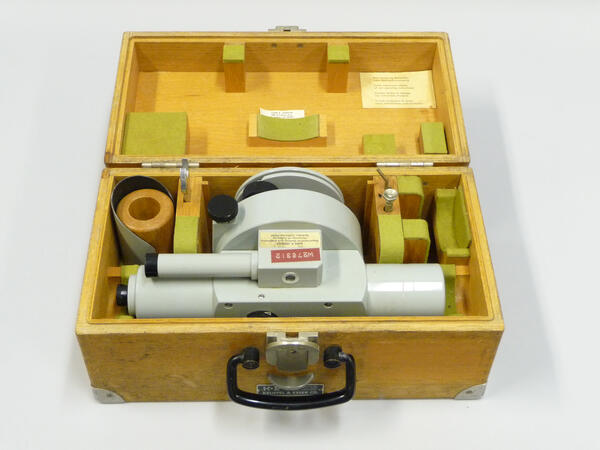
Surveyor's Level used by Luna Leopold
Post WWII instrument manufactured by Zeiss/Keuffel & Esser (K+E), New York and New Jersey.
Luna Leopold was the Director of the Water Resource Discipline at the USGS.
Object ID: USGS-000495
Post WWII instrument manufactured by Zeiss/Keuffel & Esser (K+E), New York and New Jersey.
Luna Leopold was the Director of the Water Resource Discipline at the USGS.
Object ID: USGS-000495
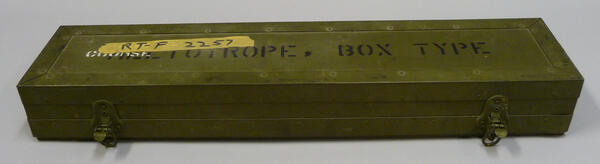
Heliotrope
Manufactured by American Instrument Company. Survey instrument to take measurements from the Sun.
Object ID: USGS-000471
Manufactured by American Instrument Company. Survey instrument to take measurements from the Sun.
Object ID: USGS-000471

Deep River Gage House
The USGS gage house for measuring streamflow on Deep River near Upham, North Dakota.
The USGS gage house for measuring streamflow on Deep River near Upham, North Dakota.
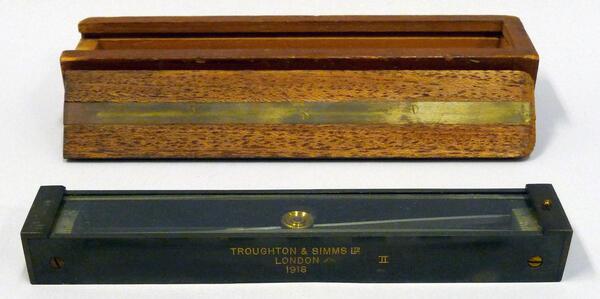
Trough Compass with Case, 1916
The storage case has a sliding lid. The compass is marked Troughton & Simms Ltd, London, 1916, No.9214. A trough compass is used with either a plane table or a theodolite. The needle is a long magnetized bar of steel which is pointed at both ends.
Object ID: USGS-000824
The storage case has a sliding lid. The compass is marked Troughton & Simms Ltd, London, 1916, No.9214. A trough compass is used with either a plane table or a theodolite. The needle is a long magnetized bar of steel which is pointed at both ends.
Object ID: USGS-000824

NetQuakes Instrument in Place
NetQuakes strong-motion instruments enable seismologists to collect extensive data in urban areas where installing traditional seismographs is not practical. This instrument (in blue, to the right of the upended chairs) takes up very little space in a San Francisco Bay Area resident's garage.
NetQuakes strong-motion instruments enable seismologists to collect extensive data in urban areas where installing traditional seismographs is not practical. This instrument (in blue, to the right of the upended chairs) takes up very little space in a San Francisco Bay Area resident's garage.
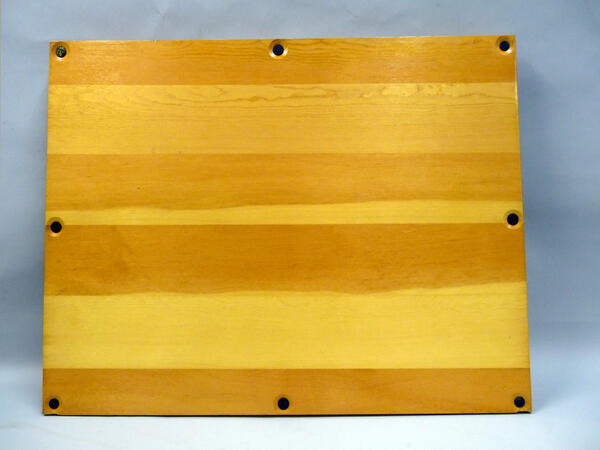
Drawing Board with Case
Drawing board with mount for a tripod. Used in field survey work. This is a particularly fine example in pristine condition.
Object ID: USGS-Temp47
Drawing board with mount for a tripod. Used in field survey work. This is a particularly fine example in pristine condition.
Object ID: USGS-Temp47
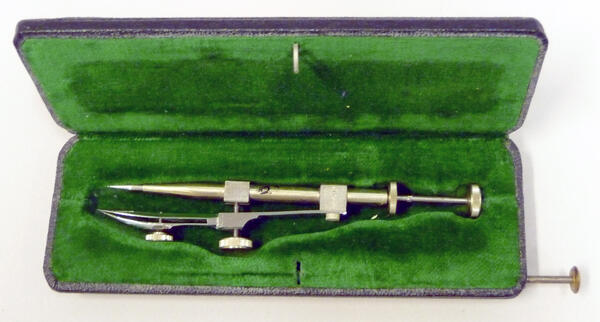
Bow Compass with Case
Bow Compass with Case. Also known as a Drop Bow Pen or Spring Bow, serial #760 C. This instrument was made by Eugene Dietzgen & Company, Chicago and New York and used by the U.S. Geological Survey Topographic Branch after 1945-1960s.
Object ID: USGS-000645
Bow Compass with Case. Also known as a Drop Bow Pen or Spring Bow, serial #760 C. This instrument was made by Eugene Dietzgen & Company, Chicago and New York and used by the U.S. Geological Survey Topographic Branch after 1945-1960s.
Object ID: USGS-000645

Surveying Compass with Leather Case
The cardinal points are lettered N, W, S and E, graduated to degrees and numbered every ten degrees to 360. The connecting sights fold away for storage. Manufactured by Keuffel & Esser, New York.
Object ID: USGS-000162
The cardinal points are lettered N, W, S and E, graduated to degrees and numbered every ten degrees to 360. The connecting sights fold away for storage. Manufactured by Keuffel & Esser, New York.
Object ID: USGS-000162
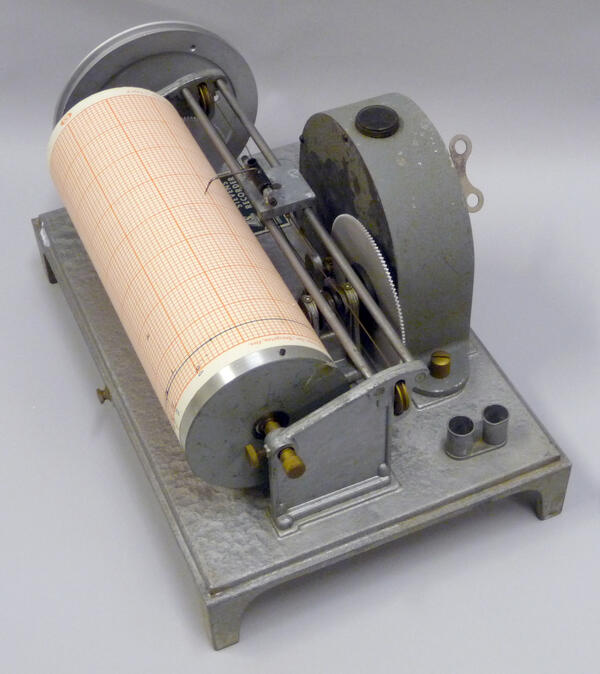
Stevens Type F Weekly Water Recorder
This drum recorder with a weekly paper chart was used to record the levels of water in ground water wells.
Object ID: USGS-000452
This drum recorder with a weekly paper chart was used to record the levels of water in ground water wells.
Object ID: USGS-000452
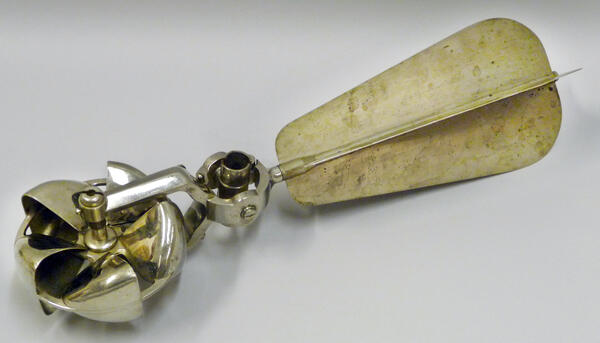
Price Current Meter
Developed in the early 1900s and modified many times prior to 1930. Purchased from the W. & L. E. Gurley Company, Troy, New York.
Object ID: USGS-000458
Developed in the early 1900s and modified many times prior to 1930. Purchased from the W. & L. E. Gurley Company, Troy, New York.
Object ID: USGS-000458
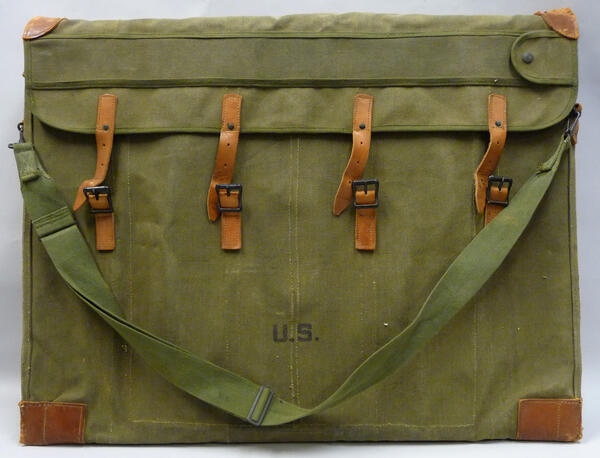
Drawing Board with Case
Drawing board with mount for a tripod. Used in field survey work. This is a particularly fine example in pristine condition.
Object ID: USGS-Temp47
Drawing board with mount for a tripod. Used in field survey work. This is a particularly fine example in pristine condition.
Object ID: USGS-Temp47
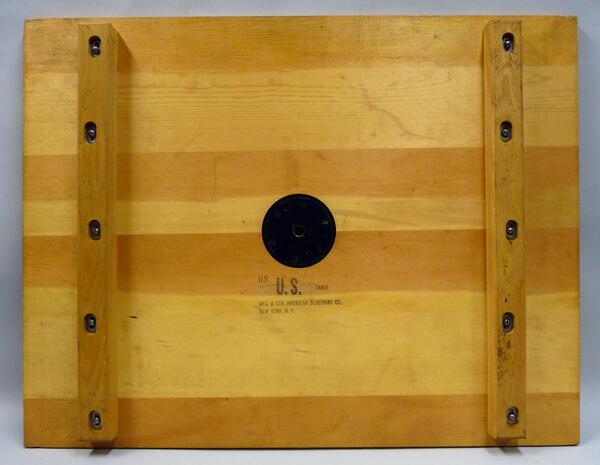
Drawing Board with Case
Drawing board with mount for a tripod. Used in field survey work. This is a particularly fine example in pristine condition.
Object ID: USGS-Temp47
Drawing board with mount for a tripod. Used in field survey work. This is a particularly fine example in pristine condition.
Object ID: USGS-Temp47
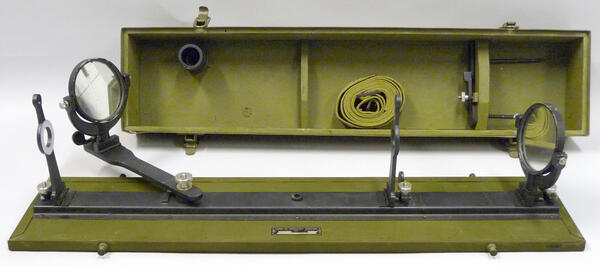
Heliotrope
Manufactured by American Instrument Company. Survey instrument to take measurements from the Sun.
Object ID: USGS-000471
Manufactured by American Instrument Company. Survey instrument to take measurements from the Sun.
Object ID: USGS-000471
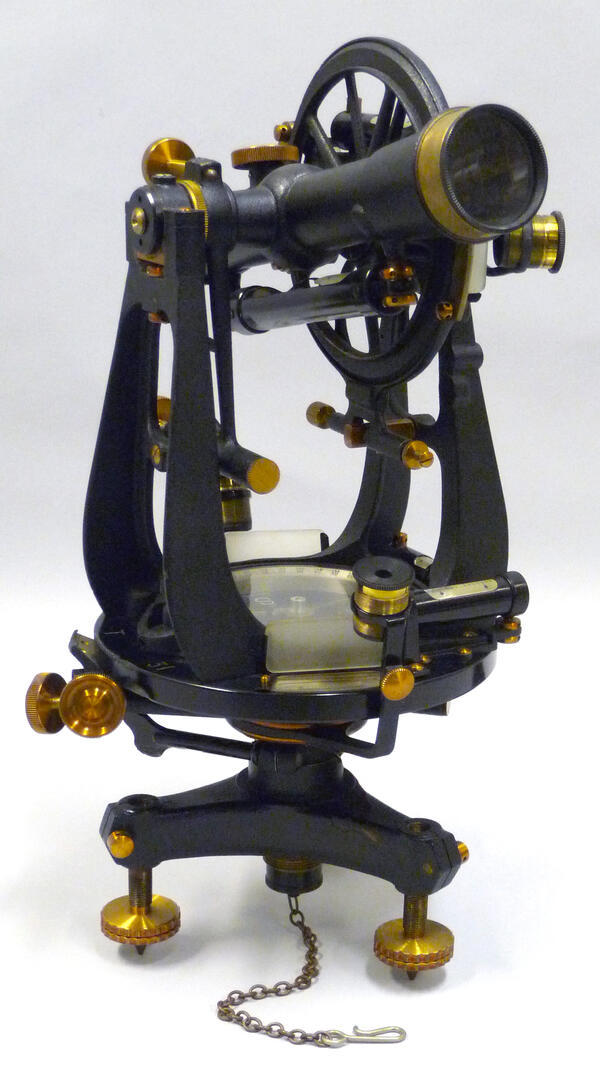
Engineer's and Surveyor's Transit
Manufactured by C.L. Berger & Sons, Boston, Massachusetts, serial #27124. The company was founded by Christian Louis Berger (1842-1922) who was born at Stuttgart, Germany and moved to Boston in 1866. In 1871 he joined with George Louis Buff, and began trading as Buff & Berger.
Manufactured by C.L. Berger & Sons, Boston, Massachusetts, serial #27124. The company was founded by Christian Louis Berger (1842-1922) who was born at Stuttgart, Germany and moved to Boston in 1866. In 1871 he joined with George Louis Buff, and began trading as Buff & Berger.
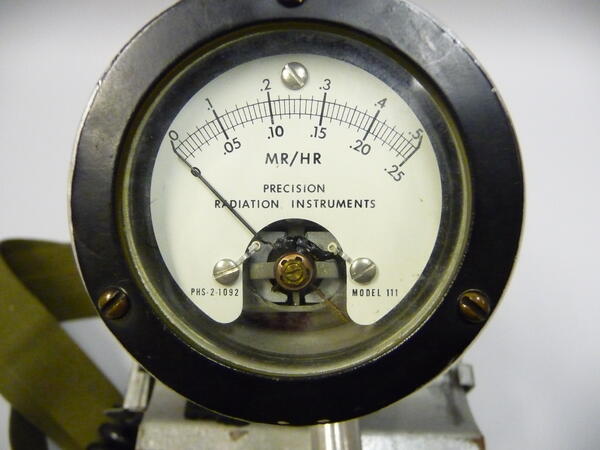
Geiger Counter
Manufactured by Precision Radiation Instruments, Los Angeles, California, 1950s. The instrument was used in the Rocky Mountain States, as well as by the Ohio Department of Natural Resources, Division of Geological Survey in the 1960s.
Object ID: USGS-000667
Manufactured by Precision Radiation Instruments, Los Angeles, California, 1950s. The instrument was used in the Rocky Mountain States, as well as by the Ohio Department of Natural Resources, Division of Geological Survey in the 1960s.
Object ID: USGS-000667
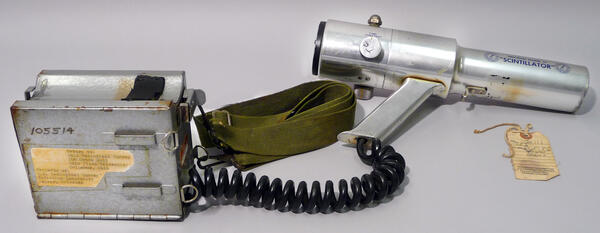
Geiger Counter
Manufactured by Precision Radiation Instruments, Los Angeles, California, 1950s. The instrument was used in the Rocky Mountain States, as well as by the Ohio Department of Natural Resources, Division of Geological Survey in the 1960s.
Object ID: USGS-000667
Manufactured by Precision Radiation Instruments, Los Angeles, California, 1950s. The instrument was used in the Rocky Mountain States, as well as by the Ohio Department of Natural Resources, Division of Geological Survey in the 1960s.
Object ID: USGS-000667

Bamboo Pointer belonging to Levi F. Noble
The pointer is a souvenir from the Third Pan-Pacific Science Congress held in Tokyo in 1926. A prominent geologist, Noble (1882-1965) spent his entire career with the U.S. Geological Survey.
The pointer is a souvenir from the Third Pan-Pacific Science Congress held in Tokyo in 1926. A prominent geologist, Noble (1882-1965) spent his entire career with the U.S. Geological Survey.