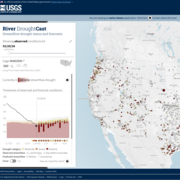
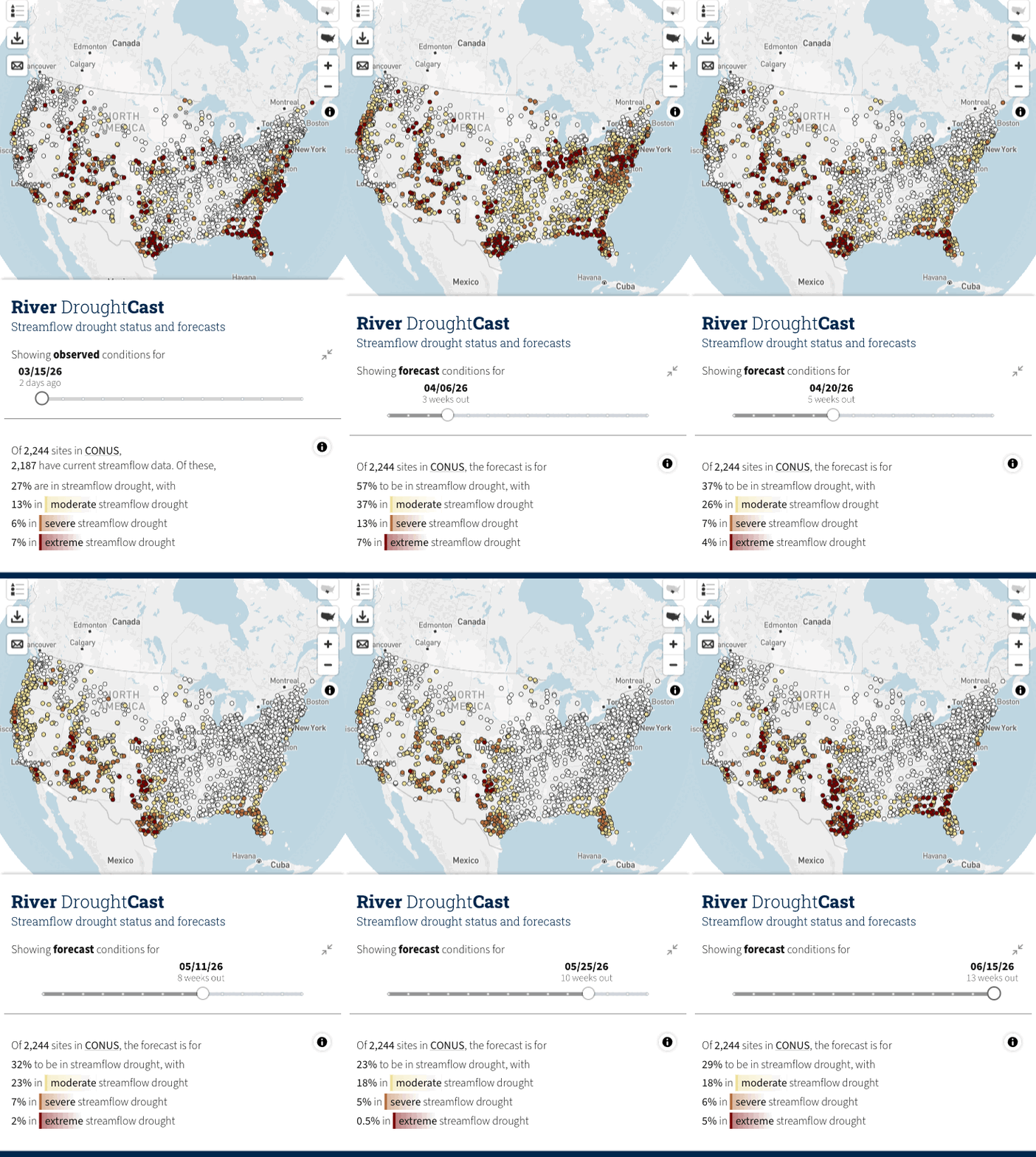
How should River DroughtCast drought conditions and forecasts be interpreted at different locations?
When watersheds have been modified due to human activities, it can be complex to characterize hydrological drought using streamflow percentiles. For example, in areas downstream of dams, streamflow that falls below normal percentiles may reflect drought in systems with irrigation and water supply reservoirs that store water from year to year. However, reservoirs are often managed together. Reviewing other data sources and multiple sites in the region can provide a clearer picture.
In areas where rivers depend on melting snow, changes in the timing of snowmelt can shift when water arrives in streams. Our tool flags streamflow conditions that are much lower than expected based on the 1981–2020 normal. Sometimes a shift in timing may trigger drought-like conditions in the data even if the total amount of water over the year is similar. In these cases, the hydrologic impacts can vary:
- In some basins, earlier snow melting can cause substantial challenges for water users and ecosystems that depend on water arriving at a particular time of year.
- In other basins, timing shifts may be less impactful because users and ecosystems are less sensitive to when water arrives.
Because of this, drought indicators linked to changing snowmelt timing should be interpreted in context. A streamflow drought identified by the tool may reflect real, important disruptions for some users, even if annual totals are near normal, while in other cases the impacts may be limited.
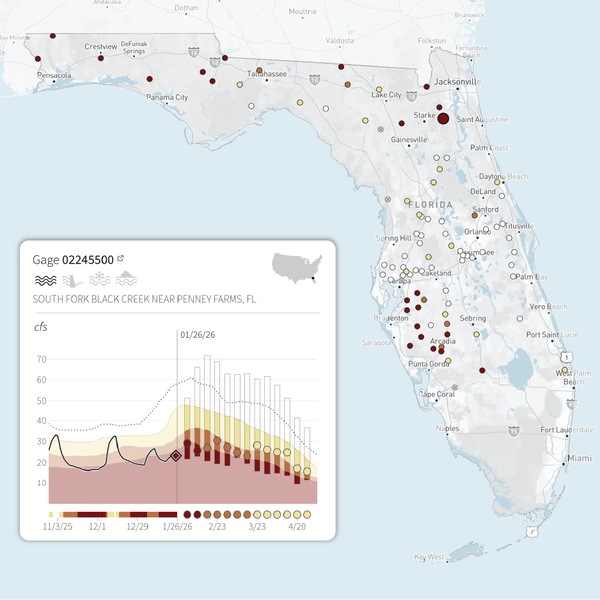
In River DroughtCast, we define drought at regulated sites based on past patterns of how reservoirs store and release water from 1981 to 2020. Some streamgages are below dams, where reservoir operations can affect streamflow. The tool uses icons at each site to highlight conditions that may affect how forecasts should be read. These icons show whether a site is influenced by reservoirs, has year-round flow, is affected by snowmelt timing, or may freeze during part of the year.
Updated Date: March 31, 2026