



Tracking Invasive African Clawed Frogs in Washington: New Insights and Ongoing Challenges
WFRC research helps uncover the spread and impact of invasive African clawed frogs in Washington.
Invasive species present a growing threat to ecosystems worldwide, and the African clawed frog (Xenopus laevis) is no exception. First detected in the U.S. in 1964, African clawed frogs have now made their way to Washington State where they pose a growing threat to local ecosystems. Known for their voracious appetite and remarkable adaptability, these frogs are proving to be formidable invaders.
A new paper from multiple collaborators including the USGS Western Fisheries Research Center (WFRC) sheds light on the status of these frogs in Washington by studying their establishment, potential impact on native species, and the ongoing challenges to management. This paper contributes valuable data to this ongoing effort, providing insights into the frogs' distribution, reproductive habits, and the strategies used to track their movements.
The Spread of an Invasive Species
The first confirmed sightings of African clawed frogs in Washington occurred in 2015, when two independent populations were discovered in the Puget Sound region—one in Lacey, and another in Bothell. These discoveries triggered immediate response efforts from state agencies and local researchers to determine the scope of the invasion and develop management strategies. Since then, African clawed frogs have been found in three distinct urbanized areas, each in separate watersheds: Lacey, Bothell, and Issaquah. While various eradication techniques have been employed, the frogs' persistence highlights the difficulty of managing such a resilient and adaptable species.
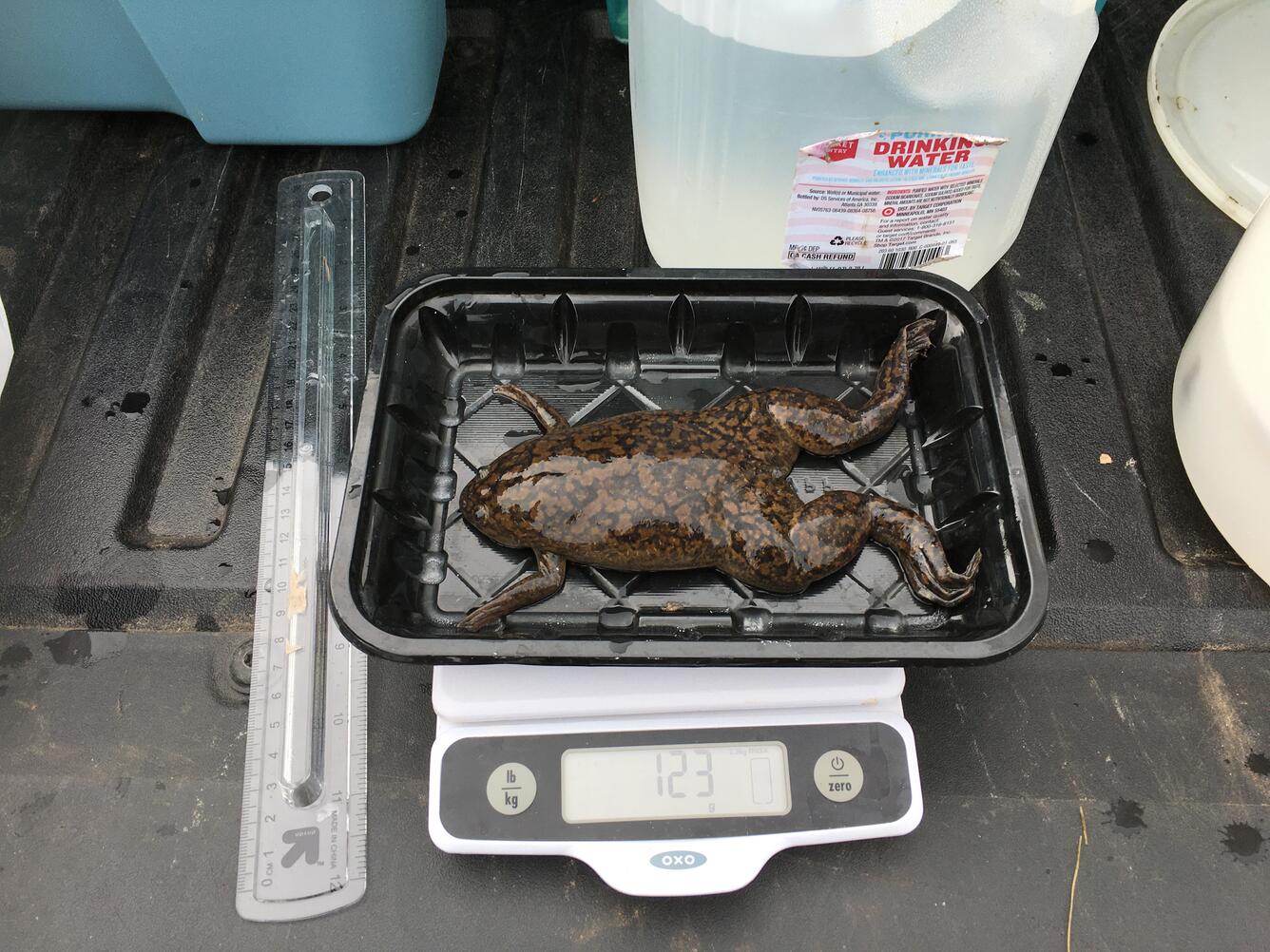
The African clawed frog is recognizable by its flattened body, long limbs, and claws on its hind feet. Female frogs can lay thousands of eggs at a time and multiple clutches per year, making them especially prolific. Once introduced to an environment, these frogs can quickly establish populations, often outcompeting native amphibians for food and habitat. Their diet is equally concerning; African clawed frogs are known to consume anything they can overpower, including fish fry and amphibian larvae. In Washington, this predation could destabilize food webs, particularly in local wetlands and ponds that are critical nursery habitats for salmon and other native species.
Management Challenges and Research Findings
Efforts to control the frog populations have seen mixed results. In Lacey, for example, over 6,200 frogs were removed between 2015 and 2017 using methods like trapping, seining, and pond draining. Despite these intensive efforts, frogs reappeared by 2018, infiltrating local stormwater systems and spreading to additional ponds. In Bothell, initial surveys suggested a lower density of frogs and follow-up trapping efforts between 2019 to 2023 continue to indicate lower population densities and limited downstream migration. Issaquah has proven to be the most concerning site, where frogs appear to be potentially dispersing downstream into Lake Sammamish. This information, published in the recent WFRC paper, is vital for understanding how African clawed frogs are establishing themselves and what challenges lie ahead for local wildlife managers.
Monitoring and Future Efforts
As climate change continues to affect ecosystems, scientists are exploring whether warmer temperatures may be aiding the frogs’ northward expansion, allowing them to thrive further north in Washington’s climate. Another significant concern is the potential for these frogs to act as carriers for pathogens that could harm native fish and amphibians. While the frogs themselves seem resistant to disease, they could transmit pathogens to vulnerable species, compounding the ecological threat they already pose. Researchers are looking closely at the broader implications of this invasion, including competition with native species and the risk of disease transmission.
To improve monitoring and eradication efforts, researchers are working to determine whether the African clawed frog populations in Washington represent independent introductions or if they are the result of a single source that has gone unnoticed for some time. Researchers are also exploring new methods, such as environmental DNA (eDNA) sampling, to monitor their spread more effectively.
The African clawed frog’s presence in Washington serves as a reminder of the delicate balance that exists in ecosystems and the challenges posed by invasive species. While eradication efforts continue, the future remains uncertain for the control of African clawed frogs in Washington. With ongoing research and collaboration among various agencies and organizations, there is hope for developing strategies that can manage their spread.
Learn More
For more details on the research efforts and findings surrounding African clawed frogs in Washington, check out the full paper: Emmenegger et al. (2025) Invasive African Clawed Frogs (Xenopus laevis) in Washington State: Status, Response Efforts, and Lessons Learned, Frontiers in Amphibian and Reptile Science, 3, 1524644 at <https://www.frontiersin.org/journals/amphibian-and-reptile-science/articles/10.3389/famrs.2025.1524644/full>.