A scientist on the Aleutian Arc Expedition sets Niskin bottles on the CTD
A scientist on the Aleutian Arc Expedition sets Niskin bottles on the CTDA scientist on the Aleutian Arc Expedition sets Niskin bottles on the CTD, Alaska


Official websites use .gov
A .gov website belongs to an official government organization in the United States.

Secure .gov websites use HTTPS
A lock () or https:// means you’ve safely connected to the .gov website. Share sensitive information only on official, secure websites.

A picture is worth a thousand words. Take a look at some images capturing science activities at the USGS Wetland and Aquatic Research Center.
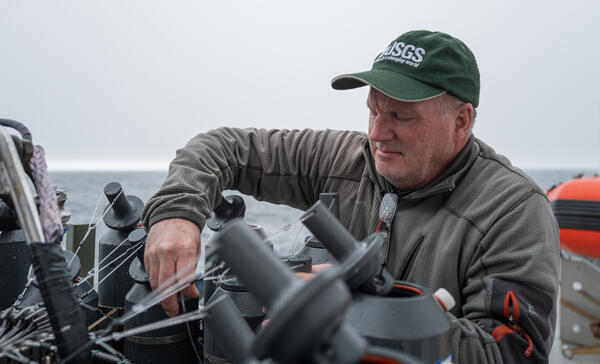
A scientist on the Aleutian Arc Expedition sets Niskin bottles on the CTD, Alaska
A scientist on the Aleutian Arc Expedition sets Niskin bottles on the CTD, Alaska
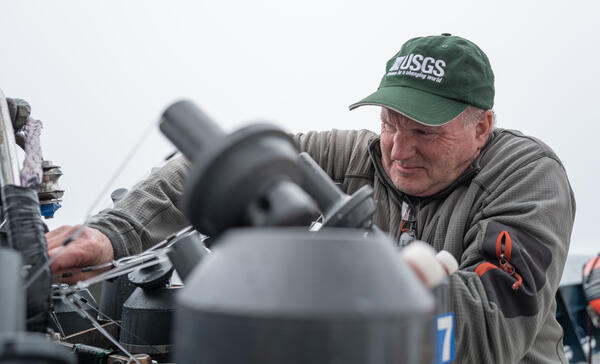
A scientist on the Aleutian Arc Expedition sets Niskin bottles on the CTD before it is deployed
A scientist on the Aleutian Arc Expedition sets Niskin bottles on the CTD before it is deployed
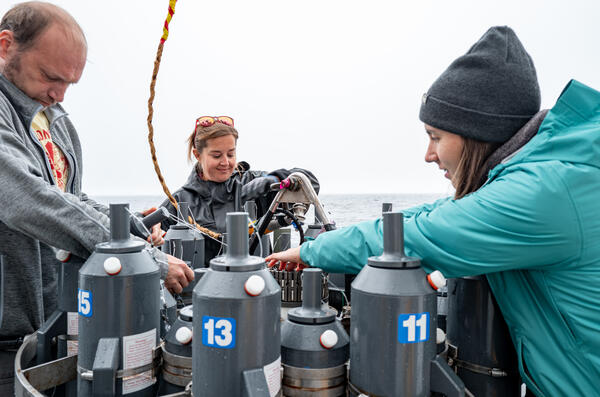
Three scientists prepare a CTD for deployment aboard the Aleutian Arc expedition, Alaska
Three scientists prepare a CTD for deployment aboard the Aleutian Arc expedition, Alaska
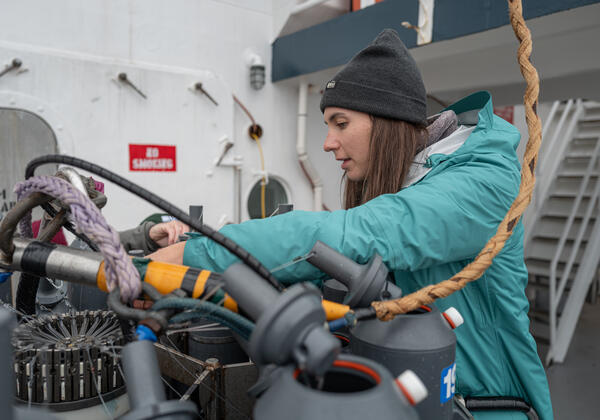
A scientist prepares the Niskin bottles on a CTD before deployment on the Aleutian Arc expedition
A scientist prepares the Niskin bottles on a CTD before deployment on the Aleutian Arc expedition

Dr. Maria Figueroa, Research Geologist at USGS Pacific Coastal and Marine Science Center, holding two splits from a mustone recovered from the seafloor.
Dr. Maria Figueroa, Research Geologist at USGS Pacific Coastal and Marine Science Center, holding two splits from a mustone recovered from the seafloor.
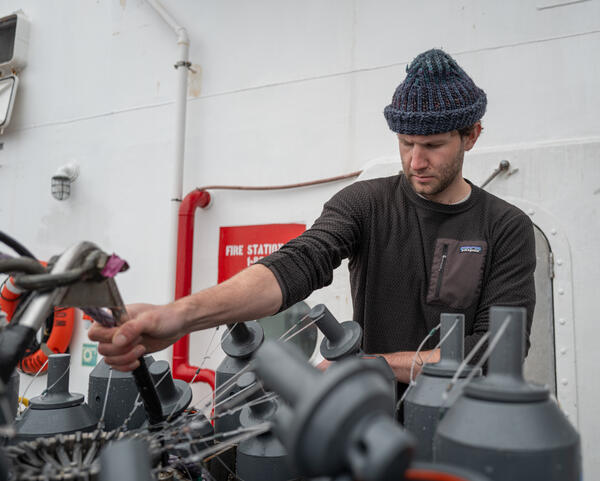
Scientist sets Niskin bottles attached to the CTD, Aleutians Arc Expedition, Alaska
Scientist sets Niskin bottles attached to the CTD, Aleutians Arc Expedition, Alaska
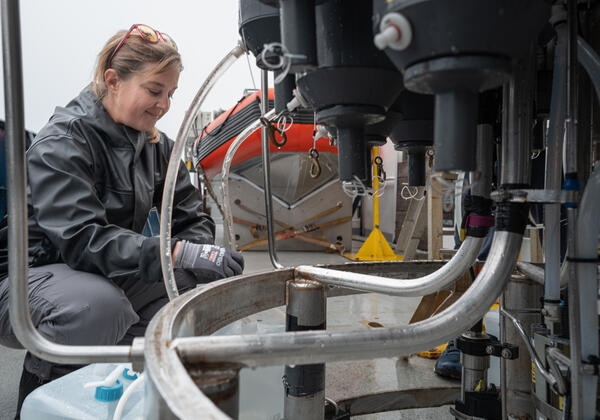
A USGS scientist collects water from a CTD aboard the Aleutian Arc expedition. Each CTD is equipped with an array of sensors and a rosette of Niskin bottles, which collect discrete water samples at targeted depths.
A USGS scientist collects water from a CTD aboard the Aleutian Arc expedition. Each CTD is equipped with an array of sensors and a rosette of Niskin bottles, which collect discrete water samples at targeted depths.
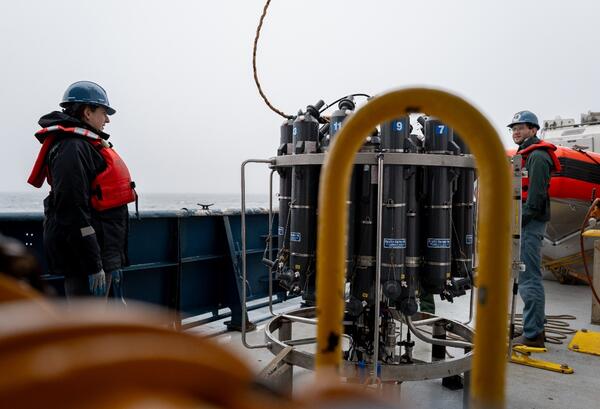
Two scientists prepare to deploy the CTD aboard the Aleutian Arc Expedition, Alaska
Two scientists prepare to deploy the CTD aboard the Aleutian Arc Expedition, Alaska
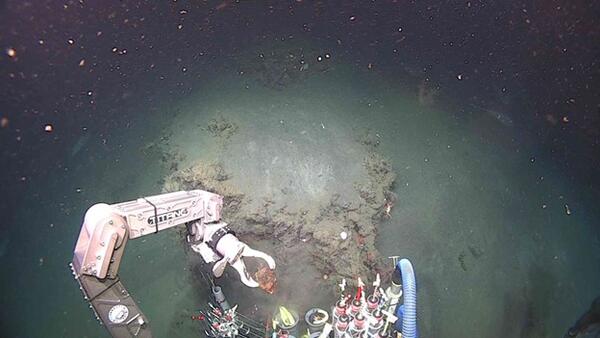
The human-occupied vehicle Alvin grabs a piece of altered volcanic rock from a mound on the seafloor of the Aleutian Islands
The human-occupied vehicle Alvin grabs a piece of altered volcanic rock from a mound on the seafloor of the Aleutian Islands
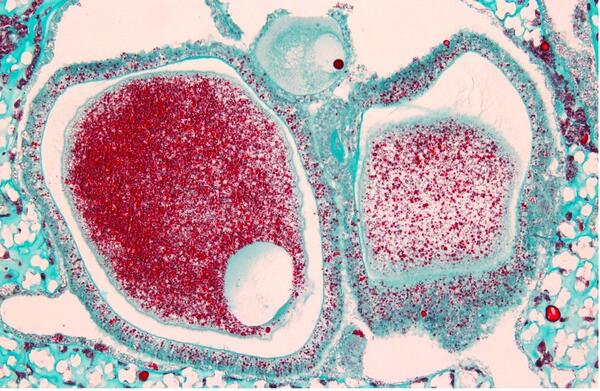
This image is made through a process called histology, where we take sections of an organism (in this case a Bubblegum coral collected in Alaska) and stain them different colors so we can see different structures. The two round objects that are stained pink/red are eggs that are mature; the green round structure is an egg that is immature, so still needs to grow.
This image is made through a process called histology, where we take sections of an organism (in this case a Bubblegum coral collected in Alaska) and stain them different colors so we can see different structures. The two round objects that are stained pink/red are eggs that are mature; the green round structure is an egg that is immature, so still needs to grow.
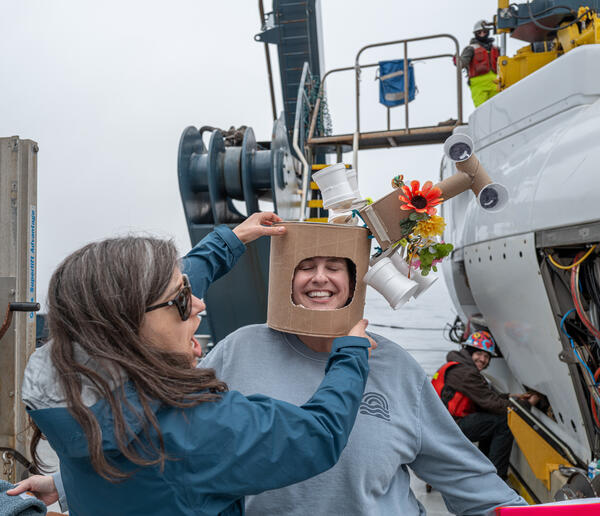
BOEM oceanographer Shannon Cofield receives a hat, decorated with a stylized Martian rover, after completing her first submersible dive on Alvin during the Aleutian Islands expedition.
BOEM oceanographer Shannon Cofield receives a hat, decorated with a stylized Martian rover, after completing her first submersible dive on Alvin during the Aleutian Islands expedition.
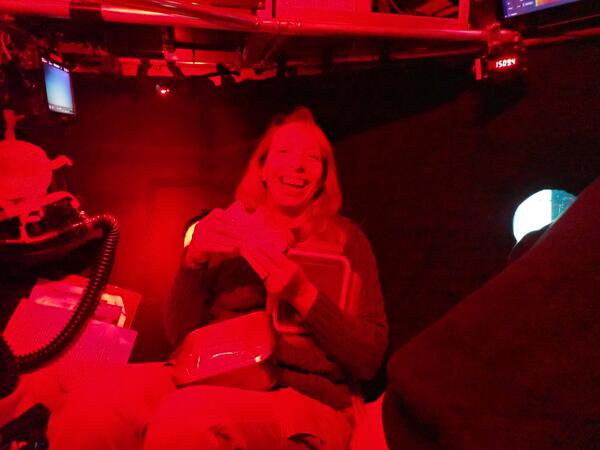
USGS Researcher Chris Kellogg about to have lunch on her dive on Alvin. Beside her rests a clipboard with the dive objectives and diagram to track where collected samples are stored. An emergency re-breather mask hangs below a monitor screen that displays the feed from an exterior camera.
USGS Researcher Chris Kellogg about to have lunch on her dive on Alvin. Beside her rests a clipboard with the dive objectives and diagram to track where collected samples are stored. An emergency re-breather mask hangs below a monitor screen that displays the feed from an exterior camera.
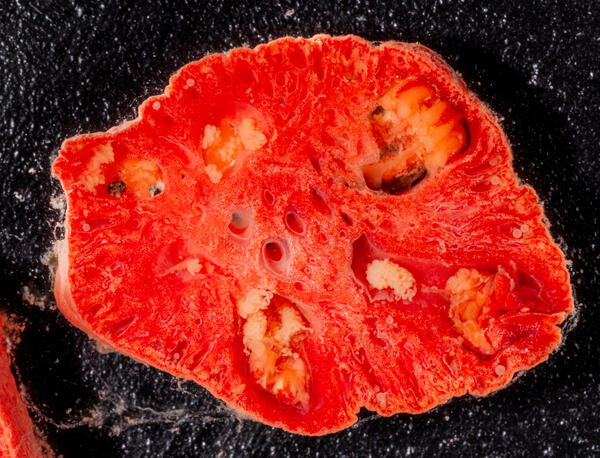
This is a slice of Bubblegum coral taken from AL5322 during the Aleutian Arc Expedition. If you look closely at the edges you can see little pockets of eggs (white spheres) showing us that this coral is a female.
This is a slice of Bubblegum coral taken from AL5322 during the Aleutian Arc Expedition. If you look closely at the edges you can see little pockets of eggs (white spheres) showing us that this coral is a female.
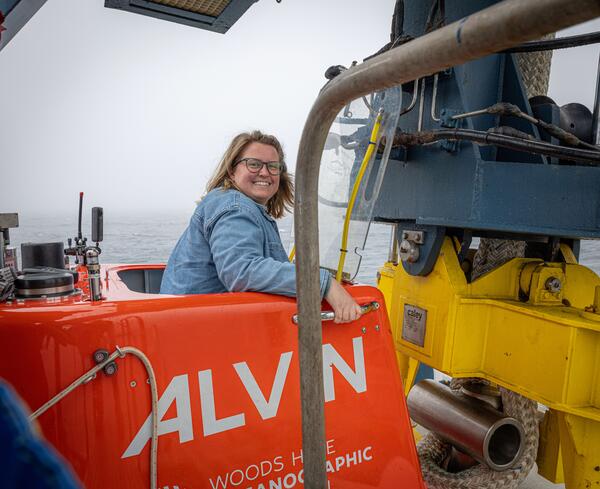
NOAA scientist Alexis Weinnig climbs out the sail atop the submersible Alvin after being recovered at the end of her dive. The top hatch that leads into Alvin’s titanium sphere lies within the sail, which helps to protect the entrance.
NOAA scientist Alexis Weinnig climbs out the sail atop the submersible Alvin after being recovered at the end of her dive. The top hatch that leads into Alvin’s titanium sphere lies within the sail, which helps to protect the entrance.

Alvin pilot Kaitlyn Beardshear peers through the forward viewport while controlling the submersible Alvin along the seabed. Above are various screens displaying camera feeds, depth, local sonar reads, heading as well as the latitude and longitude of sub. A portion of a manipulator arm can be seen out the viewport.
Alvin pilot Kaitlyn Beardshear peers through the forward viewport while controlling the submersible Alvin along the seabed. Above are various screens displaying camera feeds, depth, local sonar reads, heading as well as the latitude and longitude of sub. A portion of a manipulator arm can be seen out the viewport.
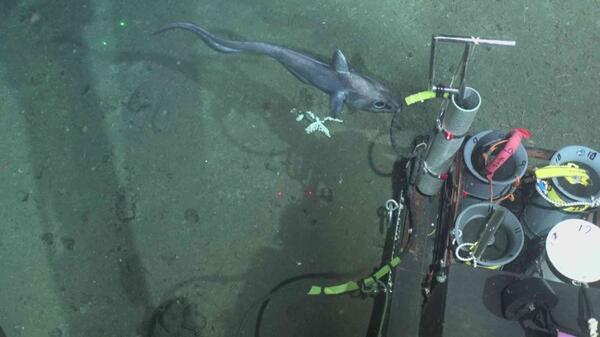
Coryphaenoides species, Aleutian Islands, Alaska; image captured by the HOV Alvin.
Coryphaenoides species, Aleutian Islands, Alaska; image captured by the HOV Alvin.

Seafloor in the Aleutian Islands, Alaska shows soft corals and eels. Photo taken by HOV Alvin.
Seafloor in the Aleutian Islands, Alaska shows soft corals and eels. Photo taken by HOV Alvin.
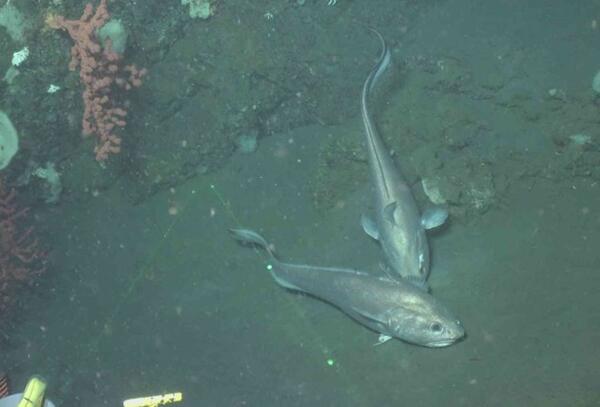
Macrouridae, also known as rattails or grenadiers, captured on the seafloor in the Aleutian Arc by the HOV Alvin
Macrouridae, also known as rattails or grenadiers, captured on the seafloor in the Aleutian Arc by the HOV Alvin
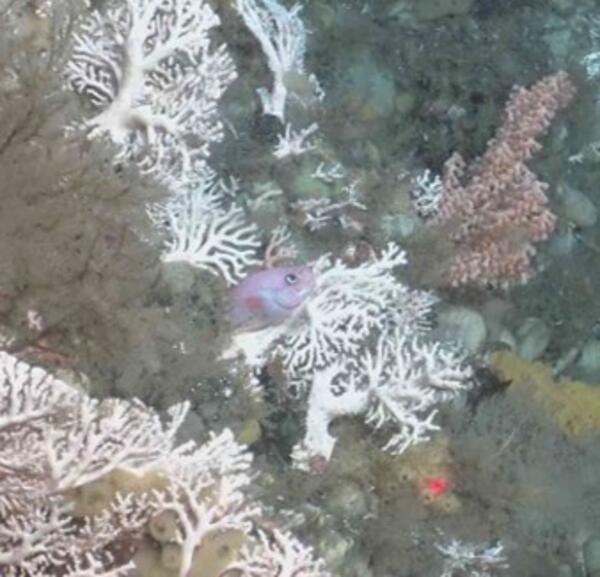
Deep-sea Aleutian Arc Snailfish pokes out of coral; image captured by HOV Alvin during the Aleutian Arc expedition in June 2025
Deep-sea Aleutian Arc Snailfish pokes out of coral; image captured by HOV Alvin during the Aleutian Arc expedition in June 2025
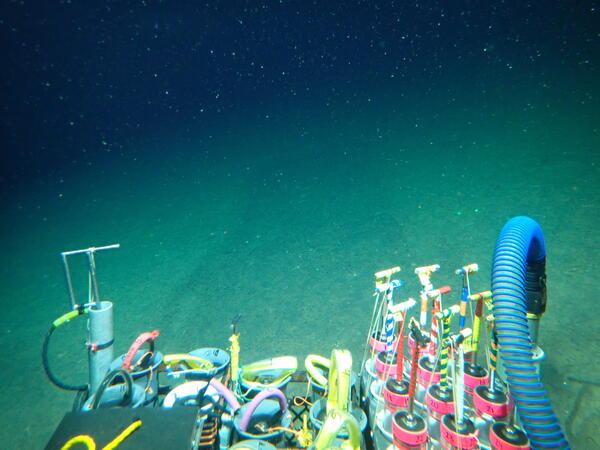
Sedimented seafloor with brittle stars as viewed from the HOV Alvin near Moffet Volcano, Aleutian Islands, Alaska
Sedimented seafloor with brittle stars as viewed from the HOV Alvin near Moffet Volcano, Aleutian Islands, Alaska
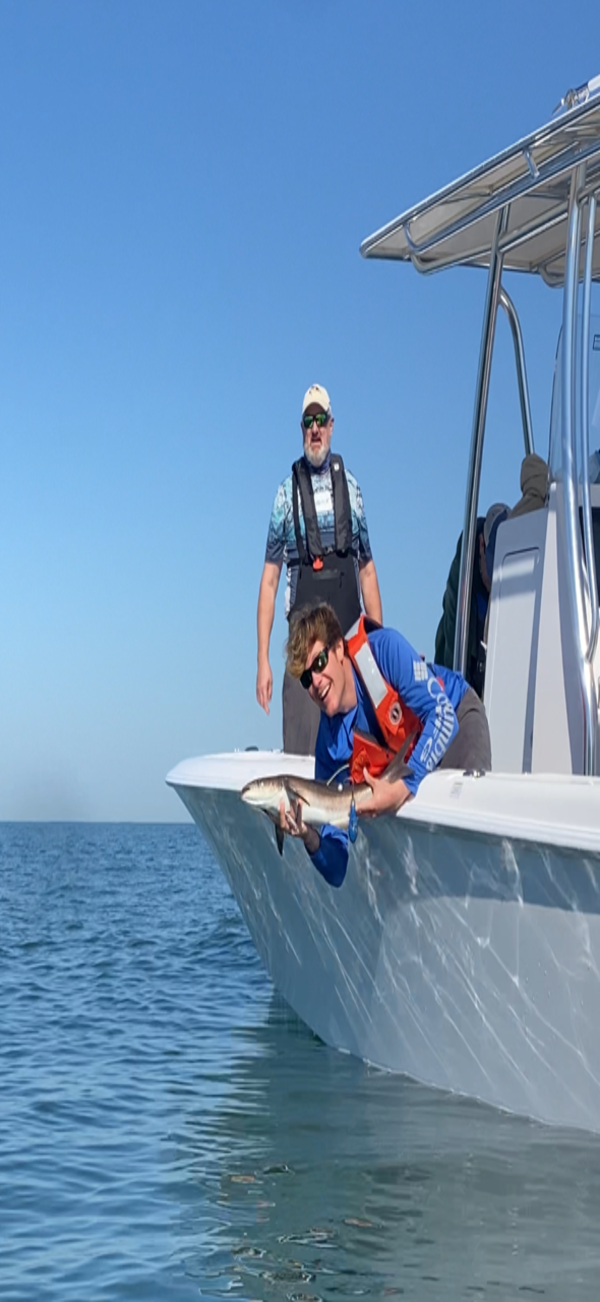
USGS biologist Joseph Alday releases a tagged cobia off Naples, Florida with Steve Vanderkooy of the Gulf States Marine Fisheries Commission
USGS biologist Joseph Alday releases a tagged cobia off Naples, Florida with Steve Vanderkooy of the Gulf States Marine Fisheries Commission