



Coastal Prairie Restoration at WARC Supports Ecological Biodiversity and Provides an Opportunity for Education
The USGS Wetland and Aquatic Research Center (WARC) has created a refuge for biodiversity in Lafayette, Louisiana, through the restoration of coastal prairie, a unique and vital ecosystem that has almost vanished within the last 100 years.
WHAT IS COASTAL PRAIRIE?
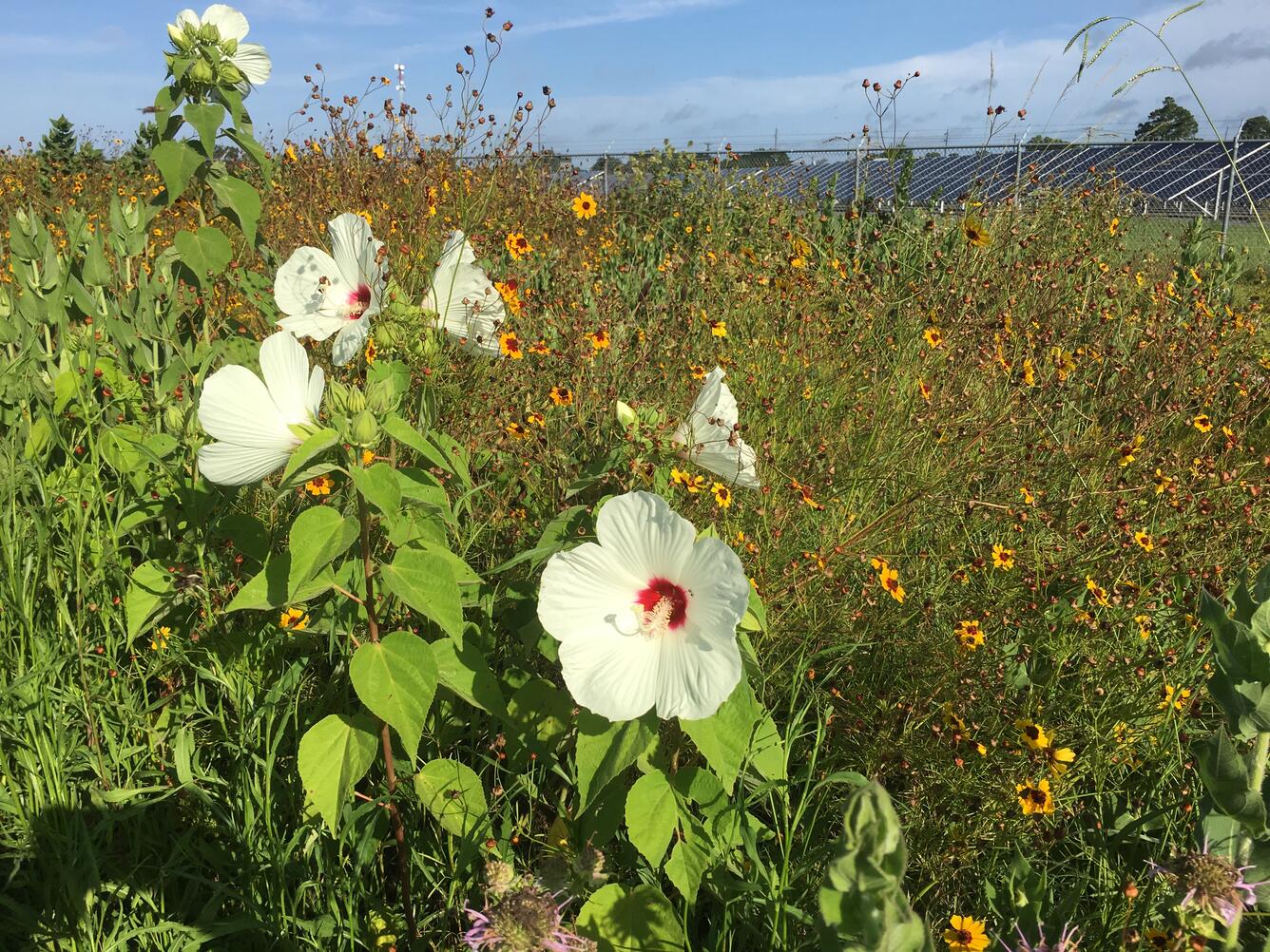
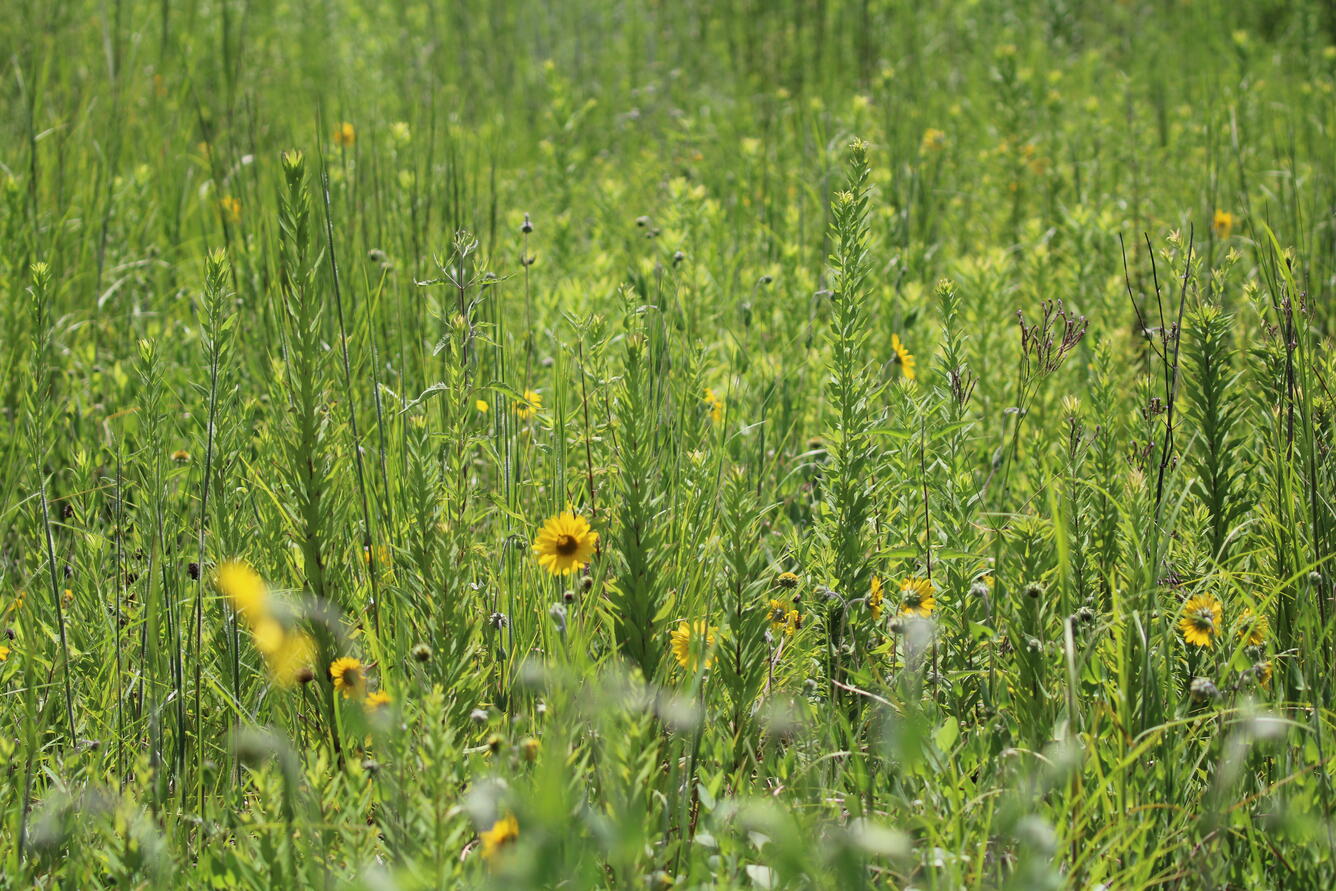
Coastal prairie is a native grassland found along the coastal plain of southwestern Louisiana and south-central Texas. Though they are similar to the coastal grasslands that exist along the Pacific Coast in California and the eastern Gulf coastal plain savanna and wet prairie, coastal prairies represent a unique ecosystem that encompass both upland and wetland plant communities and includes characteristics of tallgrass prairies, longleaf pine, and coastal marshes. Small variations in the landscape’s elevation plays an important role in coastal prairie ecosystem structure, with ridges, swales, mounds, and depressions creating a mosaic of drier and wetter plant communities. Over 900 plant species have been reported from all Louisiana prairies (Allen 2021). Many wildflowers common to the Midwestern prairies are also found in coastal prairie. Prairie species represent 126 families, including Asteraceae (sunflowers and daisies), Poacaea (grasses), Cyperaceae (sedges), Fabaceae (legume and pea), and Lamiaceae (mint).
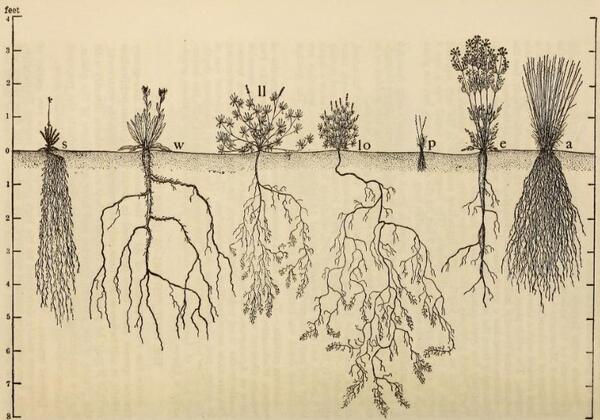
Dominated by perennials, most coastal prairie species have underground structures such as roots, rhizomes (modified plant stems), tubers, and crowns that provide a variety of functions, including water infiltration, soil stabilization, and resilience to drought. These underground structures are extensive and may be up to three times the size of the plant visible aboveground. Prairie plants are famously deep-rooted; purple coneflower roots can extend eight feet deep in the soil, compassplant to 14 feet, and leadplant as deep as 17 feet.
The historic expanse of coastal prairie has been attributed to heavy clay soils, frequent fire, and periodic grazing. Despite Louisiana and Texas receiving an average rainfall exceeding 50 inches, the coastal prairie ecosystem experiences drought conditions during periods of low rainfall in the summer.
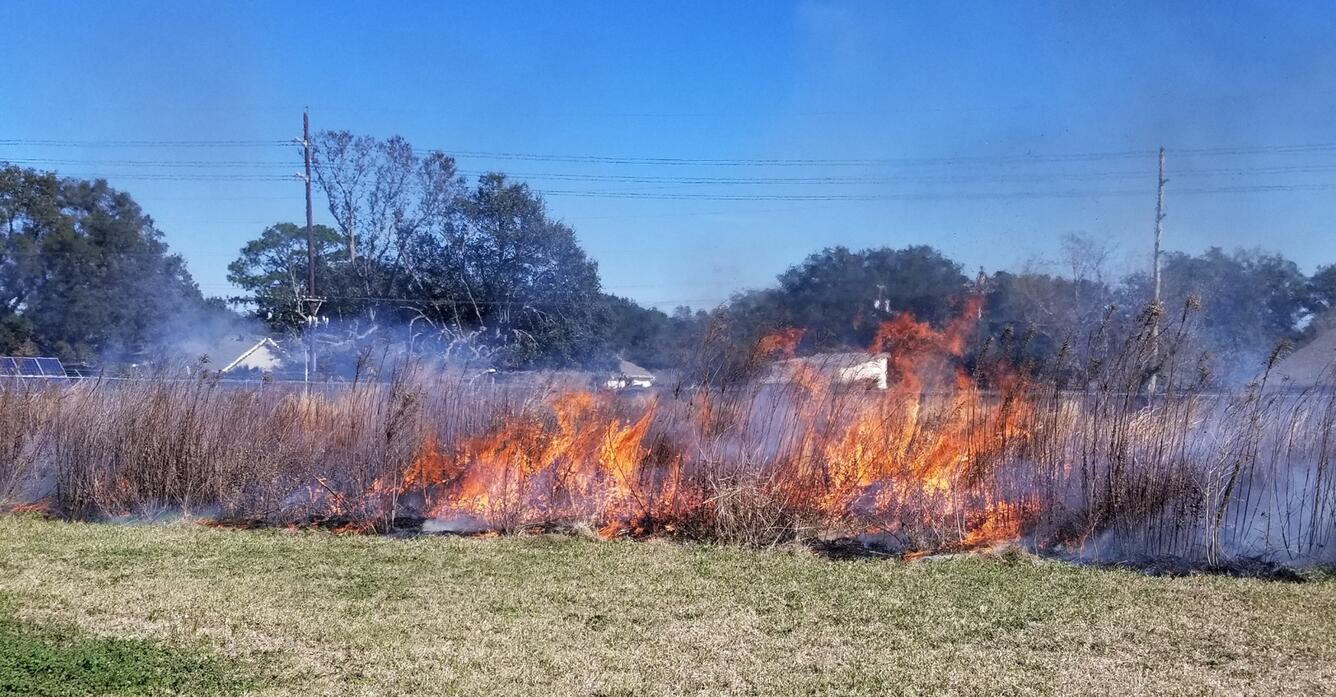
Fire is also critical for its maintenance. Many prairie species depend on fire for seed production because it removes accumulated plant litter, allowing the seeds to make contact with the soil. Burning is the natural mechanism by which the coastal prairie renews itself. Fire prevents woody plants from establishing, stimulates seed germination, replenishes nutrients, and allows light to reach young leaves. The deep roots of coastal prairie plants allow these species to survive frequent (every 1 to 3 years) and necessary burns.
Grazing by bison and other ungulates has also played an important role in maintaining the vegetation composition and structure of the coastal prairie system. Periodic grazing of the robust grasses decreases competition and increases plant species diversity. Trampling of the soil and deposition of urine and feces stimulates nutrient cycling and enhances soil biotic processes.
Without fire and/or grazing, woody plants can quickly become established, restricting sunlight and outcompeting herbaceous plants. Increases in tree cover reduce diversity, negatively affecting habitat and food availability for a variety of species. Additionally, large scale increases in tree cover alters albedo (the fraction of solar radiation reflected from the land surface back to the atmosphere) which may contribute to local and global warming.
ECOSYSTEM SERVICES
Historically, coastal prairie, and its adjacent marsh habitat, provided immense spaces for waterfowl and thousands of other species of wildlife. Coastal prairie provides crucial stopover areas for migratory birds, as a place to rest and replenish their energy stores. Additionally, it provides habitat for grassland birds, the most rapidly declining group of birds in North America such as the Henslow sparrow and Northern bobwhite quail.
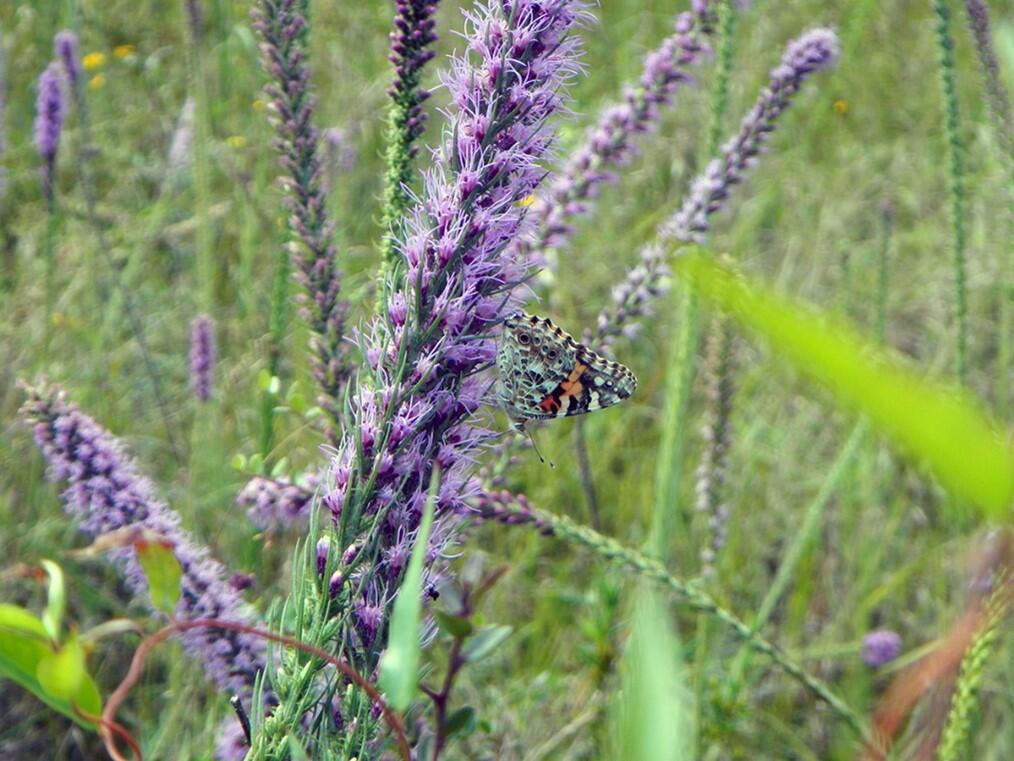
Coastal prairie is home to incredible insect diversity. Native insects rely on native plants for food, and many prairie plants provide plentiful and continuous supplies of nectar. The result is a habitat teeming with butterflies, dragonflies, bees, wasps, ants, grasshoppers, beetles, and praying mantises. This plethora of insects acts as a food source for many animals, enhancing the ecological value of coastal prairie.
PARADISE LOST
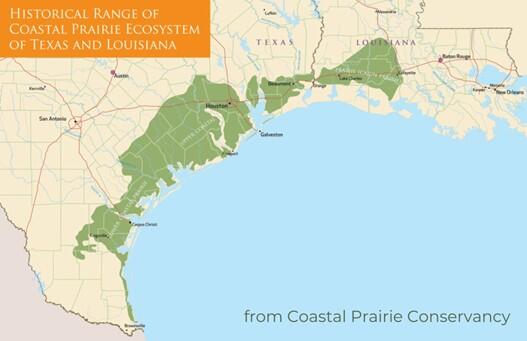
The coastal prairie is a unique and vital part of the biosphere that has almost vanished within the last 100 years. Once covering as much as 9 million acres, coastal prairie remnants include only about 100,000 acres. In less than 300 years, some 2.5 million acres of coastal prairie that once blanketed southwest Louisiana between the Atchafalaya and Sabine Rivers have dwindled to just over 1,000 acres in scattered parcels.
More than 99% of coastal prairie has been lost to agriculture, range improvement, and urbanization. What remains is highly fragmented and severely threatened by encroachment of trees and brush, invasive species, and urban sprawl. Despite the loss of contiguous coastal prairie, this grassland paradise remains a refuge for rare and endangered birds, mammals, reptiles, insects, and plants. But its continued reduction has led many to ask, “Is Paradise lost?”

With the loss of large stretches of coastal prairie, connectivity between populations of plants and animals has been severed, leading to the rarity of many species, and the extinction of some. No one knows exactly how many coastal prairie species have followed the Louisiana prairie vole (Microtus ochragaster ludovicianus) and the Louisiana Indian paintbrush (Castilleja ludoviciana) to extinction. While the black-lace cactus (Echinocereus reichenbachii var. albertii) and Texas prairie dawn-flower (Hymenoxys texana) are the only coastal prairie plant species listed as endangered under the U.S. Endangered Species Act, more than a dozen plant species have been listed as imperiled or critically imperiled, with another 15 listed as rare to very rare.


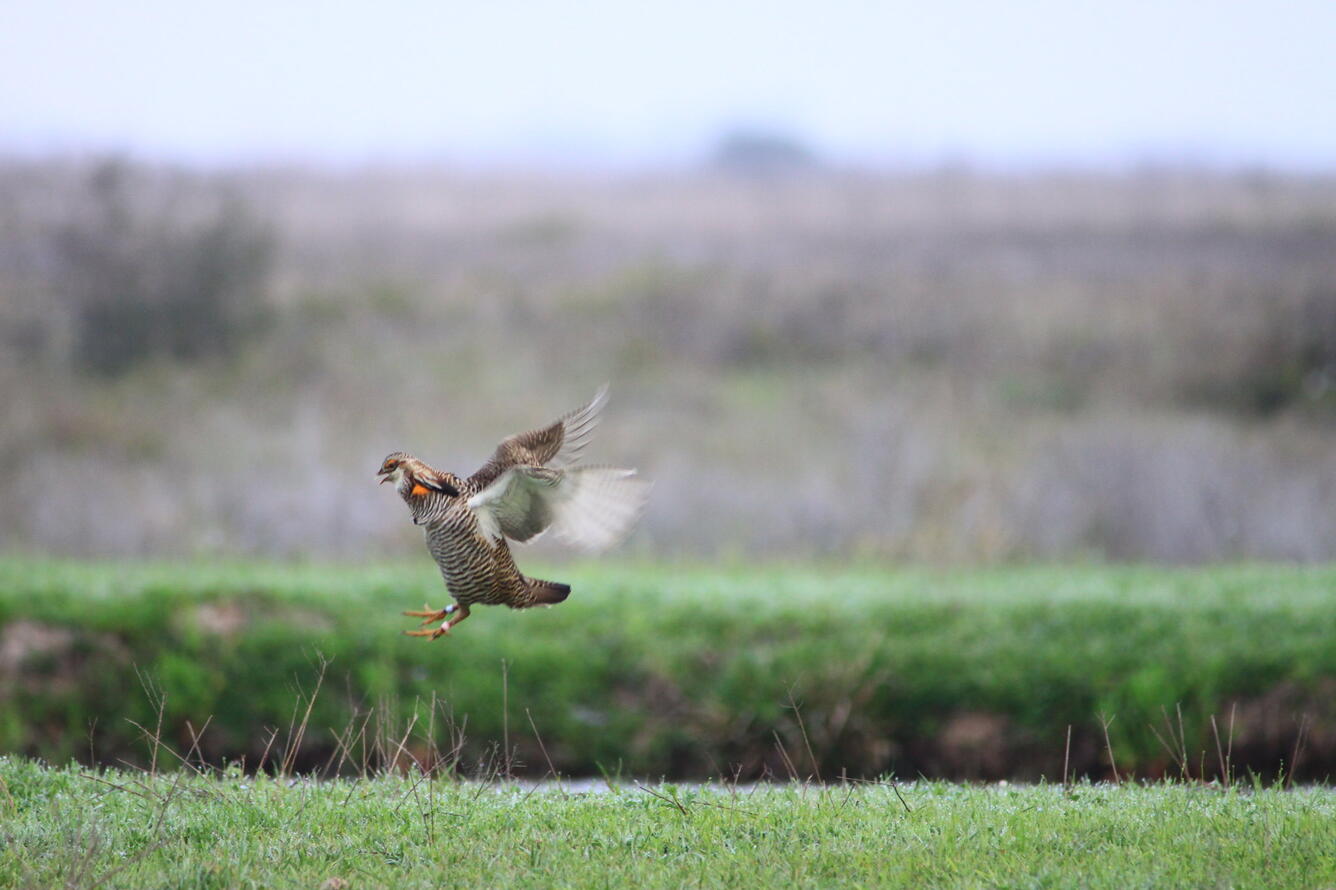
In addition to plants, the coastal prairie is home to North America’s most endangered bird, the Attwater’s prairie chicken, which is currently not known to exist in Louisiana and is the exclusive wintering ground of the federally endangered whooping crane. Other residents such as the Gulf coast hog-nosed skunk and the Cagle’s map turtle are also critically imperiled, and several rare migratory grassland birds depend on coastal prairie for their continued survival.
WARC GARDENS & RESTORED PRAIRIE
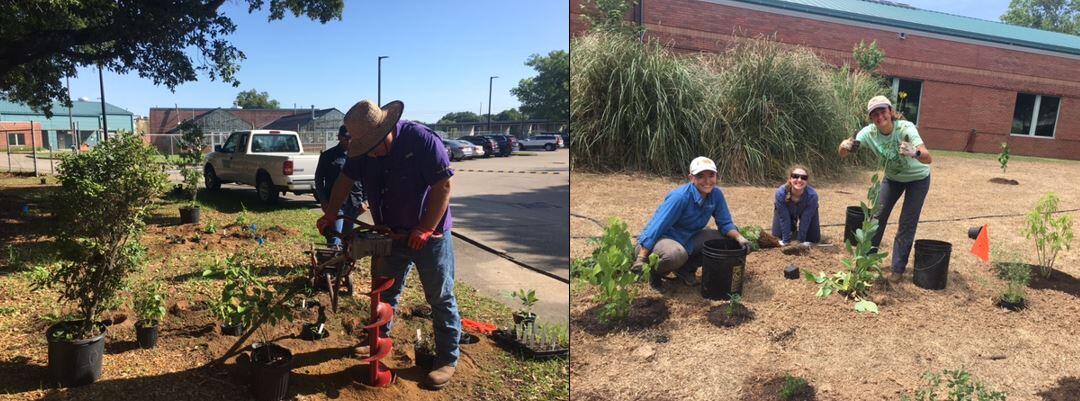
Private groups, conservation organizations, and government agencies are working together to protect and restore coastal prairie. In Lafayette, Louisiana, USGS WARC works with partners such as the University of Louisiana Ecology Center and the Acadiana Native Plant Project to plan restoration and garden plots on Center property, and source native plants.
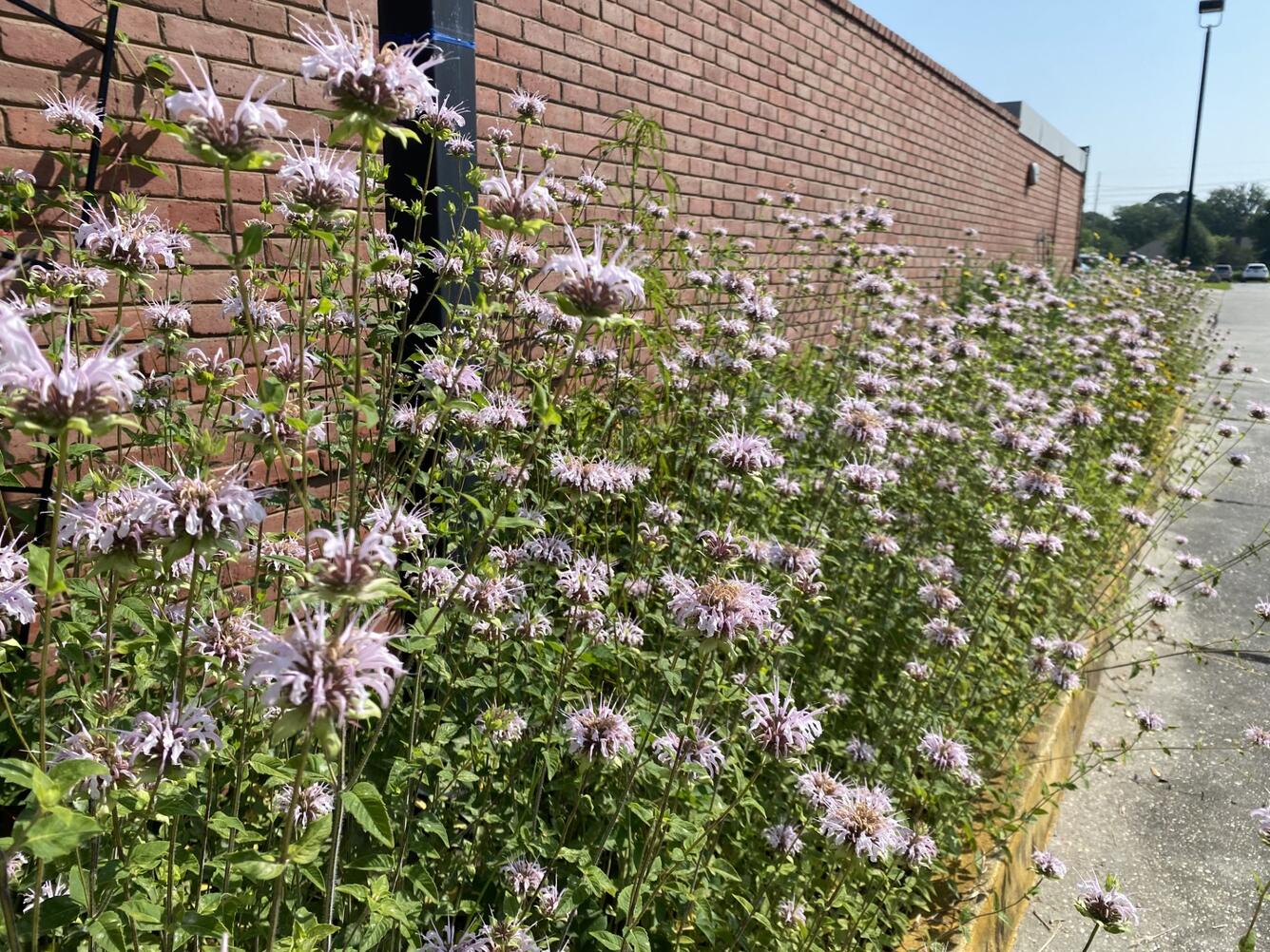
In 2015, WARC staff grew prairie species in the Center greenhouse and began planting coastal prairie species in a 700 sq ft garden bed lining a southeastern wall of the Center.
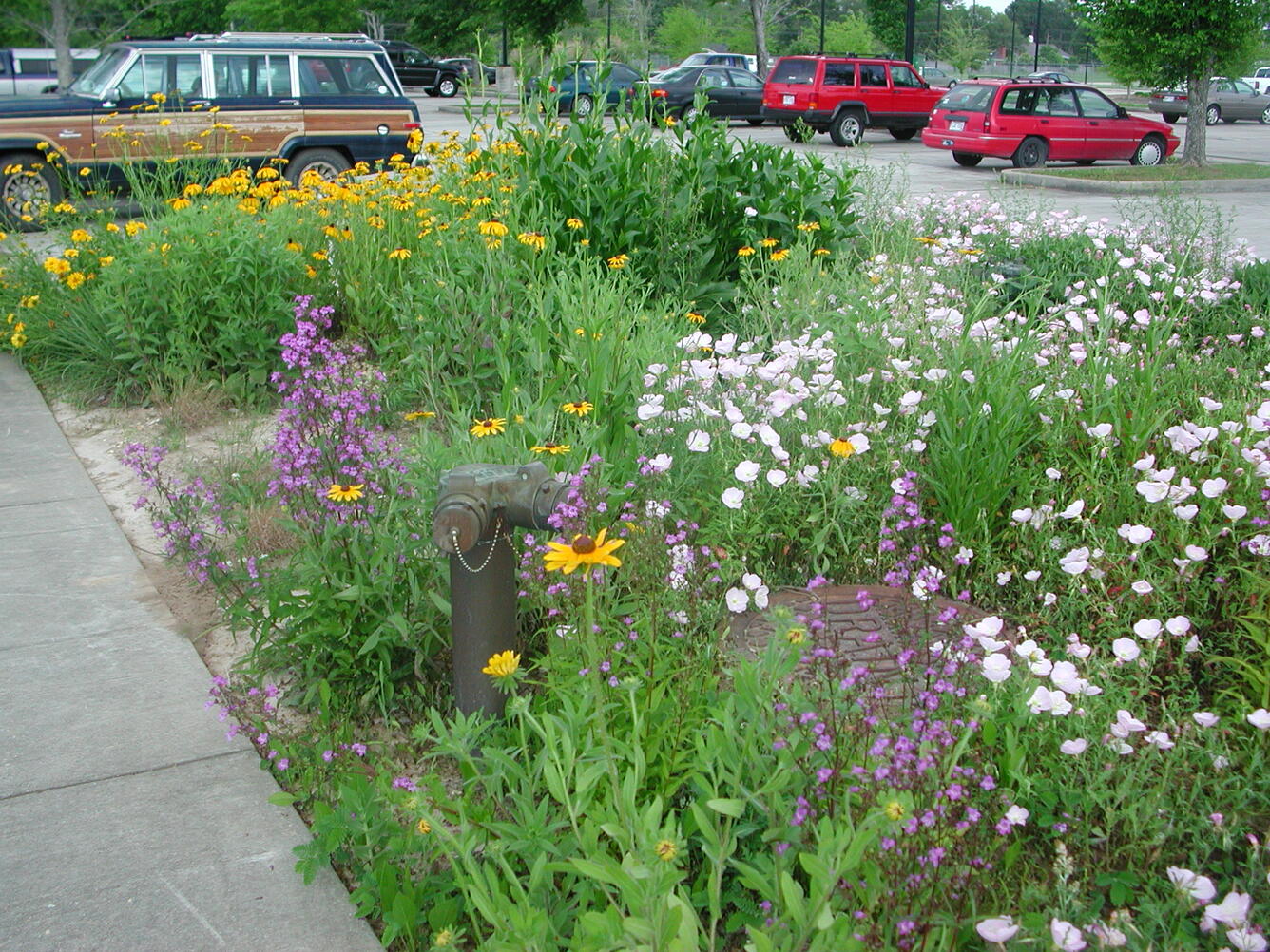

In 2017, WARC restored 0.7 acres of coastal prairie northeast of the Center. This was followed in 2019 by the restoration of an additional 0.5 acres northwest of the Center and the planting of a 250 sq ft garden bed. In 2023, the northwest prairie was extended by another 0.25 acres, and 0.4 acres of shrubs and forbs was planted to connect the 2017 and 2019 prairies. In 2024, preparation began for the restoration of 0.5 acres in the easternmost field.
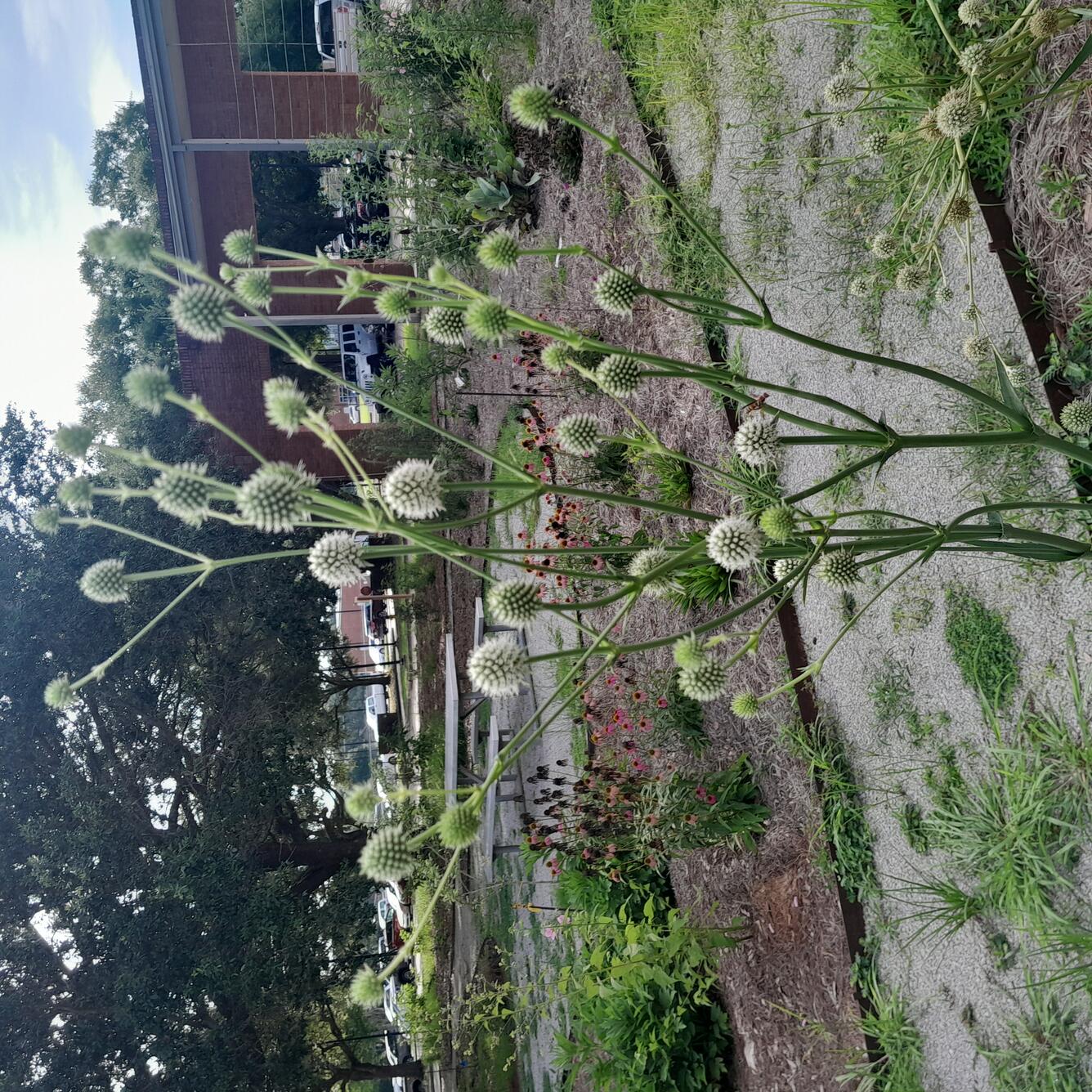
Additionally, a 0.5 acres educational pollinator garden was planted in 2024 that showcases native ornamentals and demonstrates the potential for creating beautiful and beneficial landscaping with native plants.
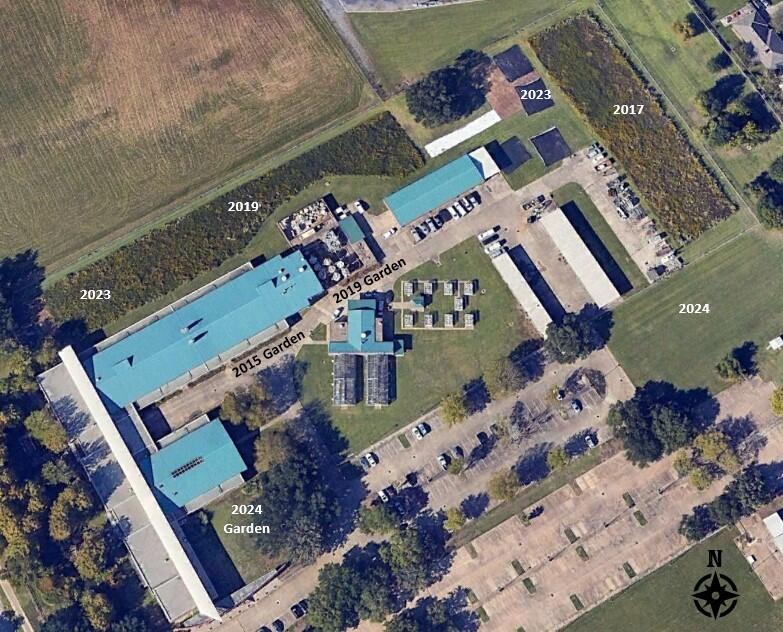
While providing a beautiful landscape in which to work, the conversion of nearly 3 acres of monoculture grass lawn to coastal prairie has reduced facility costs by decreasing fuel and labor costs associated with maintaining the lawn. Monoculture lawns contain a single species of grass grown at the exclusion of everything else. These grasses are frequently non-native, requiring manpower, fuel, and chemicals to maintain and provide little to no ecological benefit. Conversely, native species are adapted to the local climate and soil conditions, which can reduce or eliminate the need for chemical fertilizers and supplemental watering. They support biodiversity by providing habitat and nourishment for pollinators and other beneficial wildlife. Native grasses and plants also improve soil health and capture carbon more effectively than traditional lawns, helping to mitigate the impacts of changing environmental conditions.
Coastal Prairie Species at WARC
| Scientific Name | Common Name | Prairie Restoration | Pollinator Garden |
| Aesculus pavia | buckeye | x | |
| Agalinis fasciculata | beach false foxglove | x | |
| Andropogon gerardii | big bluestem | x | |
| Asclepias incarnata | swamp milkweed | x | |
| Asclepias perennis | aquatic milkweed | x | |
| Asclepias tuberosa | butterfly milkweed | x | |
| Asclepias viridis | green milkweed | x | |
| Azalea canadensis | native azalea | x | |
| Baptisia alba | white wild indigo | x | x |
| Baptisia sphaerocarpa | wild-yellow indigo | x | |
| Callicarpa americana | American beautyberry | x | |
| Carex cherokeensis | Cherokee sedge | x | |
| Chamaecrista fasciculata | partridge pea | x | |
| Chionanthus virginicus | fringe tree | x | |
| Chromolaena ivifolia | ivyleaf thoroughwort | x | |
| Coreopsis tinctoria | plains coreopsis | x | |
| Cornus drummondii | rough leaf dogwood | x | |
| Crategeus | parsley leaf hawthorne | x | |
| Cyrilla racimiflora | swamp titi | x | |
| Desmodium canadense | showy tick trefoil | x | |
| Echinacea purpurea | purple coneflower | x | x |
| Eryngium yuccifolium | rattlesnake master | x | x |
| Gaillardia pulchella | Indian blanket | x | |
| Gallardia aestavalis | lanceleaf blanketflower | x | |
| Halesia diptera var. magniflora | two-wing silverbell | x | |
| Helianthus angustifolius | swamp sunflower | x | |
| Helianthus mollis | ashy sunflower | x | |
| Hibiscus coccinea red | red Texas star | x | |
| Hibiscus coccinea white | white Texas star | x | |
| Hibiscus laevis | red throat mallow | x | |
| Hibiscus lasiocarpos | wooly rose mallow | x | |
| Ilex decidua | deciduous holly | x | |
| Itea virginica | Virginia willow | x | |
| Kosteletzkya pentacarpos | saltmarsh mallow | x | |
| Lespedeza capitata | round-headed bushclover | x | |
| Liatris acidota | slender blazingstar | x | |
| Liatris pychnostachya | prairie blazing star | x | x |
| Liatris spicata | dense blazing star | x | |
| Lobelia cardinalis | cardinal flower | x | |
| Malvaviscus arboreus | turk's cap | x | |
| Mimosa strigillosa | herbaceous mimosa | x | |
| Monarda citriodora | lemon beebalm | x | |
| Monarda fistulosa | bergamot/beebalm | x | x |
| Monarda punctata | spotted beebalm | x | |
| Morus rubra | red mulberry | x | |
| Muhlenbergia capillaris | muhly grass | x | |
| Oligoneuron nitidum | shiny goldenrod | x | |
| Panicum virgatum | switchgrass | x | |
| Paspalum floridanum | Florida paspalum | x | |
| Penstemon digitalis | foxglove beardtongue | x | x |
| Penstemon tenuis | sharpsepal beardtongue | x | x |
| Polystichum acrostichoides | Christmas fern | x | |
| Prunella | self-heal | x | |
| Prunus caroliniana | cherry laurel | x | |
| Prunus mexicana | Mexican plum | x | |
| Pycnanathemum tennuifolium | narrowleaf mountainmint | x | |
| Pycnanthemum albescens | white mountain mint | x | |
| Pycnanthemum muticum | blue mountain mint | x | |
| Pycnanthemum tenuifolium | narrowleaf mountain mint | x | |
| Rudbeckia grandiflora | tall coneflower | x | |
| Rudbeckia laciniata | cut leaf coneflower | x | |
| Rudbeckia maxima | great coneflower | x | |
| Rudbeckia texana | shiny coneflower | x | |
| Rudbeckia texana | shiny coneflower | x | |
| Salvia azurea | blue sage | x | |
| Salvia coccinea | tropical sage | x | |
| Schizachryium scoparium | little bluestem | x | x |
| Silphium gracile | slender rosinweed | x | |
| Silphium laciniatum | compass plant | x | x |
| Solidago odora | sweet goldenrod | x | |
| Sorghastrum nutans | Indiangrass | x | |
| Spigelia marylandica | Indian pink | x | |
| Stokesia laevis | Stoke's aster | x | |
| Symphotrichum lateriflorum | calico aster | x | |
| Symphyotrichum praealtum | willow leaf aster | x | |
| Tephrosia onbrychoides | hoary pea | x | x |
| Tridens strictus | longspike tridens | x | |
| Tripsacum dactyloides | eastern gamma grass | x | |
| Vernonia gigantia | giant ironweed | x | |
| Viburnum dentatum | arrowwood viburnum | x |
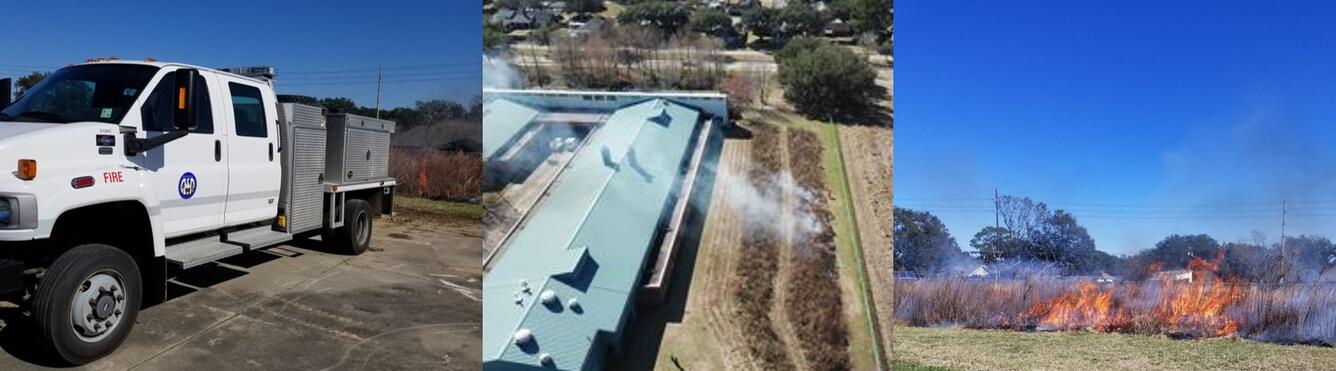
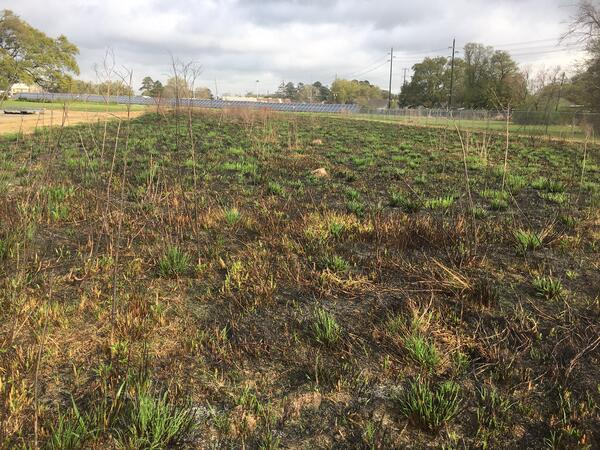
USGS WARC coordinates with the Louisiana Department of Agriculture and Forestry to safely perform semi-annual burning to maintain the diversity and vigor of the restored prairie. Timing is important. It is favorable to wait until the undesirable plants have initiated spring growth before burning, therefore destroying their new growth, and favoring the warm season prairie plants, many of which are dormant under the soil. Burning also removes plant litter from the previous year’s growth and exposes the soil surface to sunlight, which encourages new plant growth and increases flowering and seed production of native flowers and grasses.
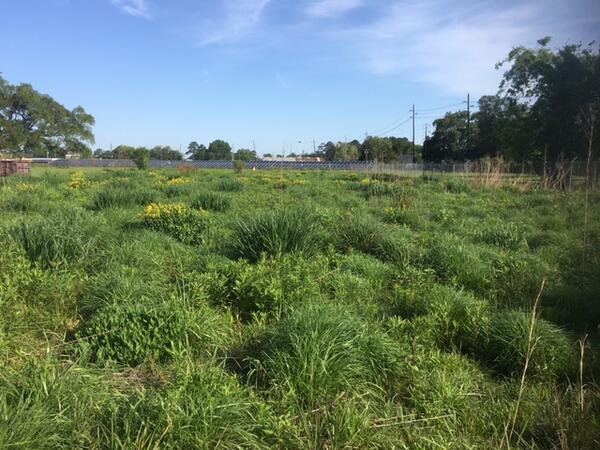
Restoring large areas of coastal prairie is currently limited by the supply and availability of locally sourced seed. Collecting seed is a manual, time-consuming practice. There exists heterogeneity in plant ecotypes across geographical regions. Plant ecotypes belong to the same species but exhibit different phenotypical features due to environmental factors such as climate, elevation, and predation. Restoration efforts have been shown to be more effective when seeds are sourced from local areas with similar climate and environment.

Efforts to conserve and restore this endangered ecosystem are limited by the ability of scientists, managers, and restoration practitioners to identify and access knowledge about this diverse group of plants. To aid in coastal prairie restoration in Louisiana, retired USGS WARC Botanist Larry Allain created the Coastal Prairie Restoration Information System (CPR), a database that allows users to query and view data about Louisiana coastal prairie species useful for designing, managing and evaluating restorations. In this database, a variety of data are provided for each of the 650 coastal prairie species known in Louisiana at the time of its publication. Coastal prairie remnants continue to be studied, with a 2020 USGS study finding that Louisiana remnants had a mean species richness of 75 species per site, which is higher than most other tallgrass prairie ecosystems in North America. Beyond the CPR, the USGS provides the online application “Guide to the Plants of Louisiana” which contains photos and distribution maps for 1,755 plant species in Louisiana.
WARC OUTREACH
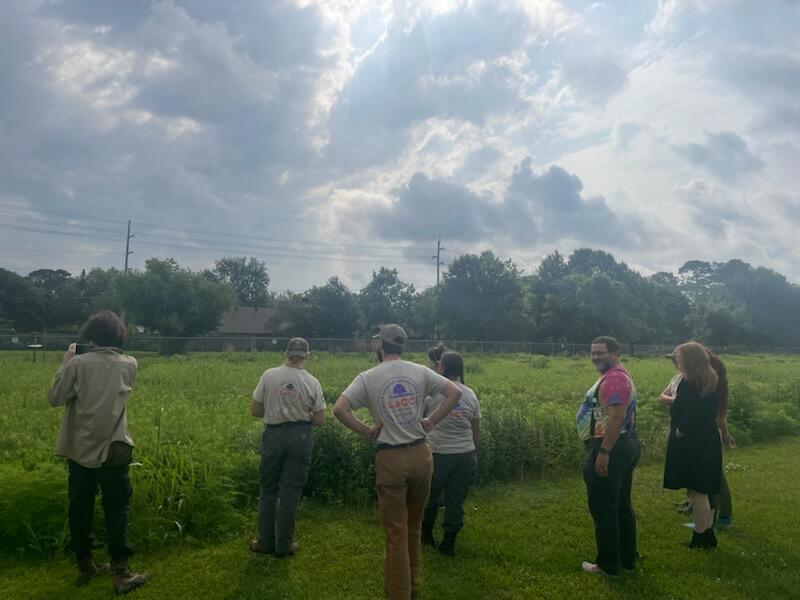
WARC is opening its doors to schools and organizations in Lafayette and the surrounding area that are interested in learning more about coastal prairie ecology and restoration. Visitors can walk through the prairies and learn about the plants that comprise it and the animals that inhabit it. WARC is pleased to welcome gardening clubs, private and governmental organizations, and homeowners to the Center to learn about how pollinator gardens and pocket prairies (small parcels of restored prairie) can reduce maintenance costs and runoff while providing ecologically beneficial and aesthetically pleasing landscaping with no watering needed!

An Inventory and Comparative Study of Bees, A Keystone Ecological Group in the Endangered Coastal Prairie of Louisiana
The USGS Wetland and Aquatic Research Center (WARC) has created a refuge for biodiversity in Lafayette, Louisiana, through the restoration of coastal prairie, a unique and vital ecosystem that has almost vanished within the last 100 years.
WHAT IS COASTAL PRAIRIE?
Coastal prairie is a native grassland found along the coastal plain of southwestern Louisiana and south-central Texas. Though they are similar to the coastal grasslands that exist along the Pacific Coast in California and the eastern Gulf coastal plain savanna and wet prairie, coastal prairies represent a unique ecosystem that encompass both upland and wetland plant communities and includes characteristics of tallgrass prairies, longleaf pine, and coastal marshes. Small variations in the landscape’s elevation plays an important role in coastal prairie ecosystem structure, with ridges, swales, mounds, and depressions creating a mosaic of drier and wetter plant communities. Over 900 plant species have been reported from all Louisiana prairies (Allen 2021). Many wildflowers common to the Midwestern prairies are also found in coastal prairie. Prairie species represent 126 families, including Asteraceae (sunflowers and daisies), Poacaea (grasses), Cyperaceae (sedges), Fabaceae (legume and pea), and Lamiaceae (mint).
Dominated by perennials, most coastal prairie species have underground structures such as roots, rhizomes (modified plant stems), tubers, and crowns that provide a variety of functions, including water infiltration, soil stabilization, and resilience to drought. These underground structures are extensive and may be up to three times the size of the plant visible aboveground. Prairie plants are famously deep-rooted; purple coneflower roots can extend eight feet deep in the soil, compassplant to 14 feet, and leadplant as deep as 17 feet.
The historic expanse of coastal prairie has been attributed to heavy clay soils, frequent fire, and periodic grazing. Despite Louisiana and Texas receiving an average rainfall exceeding 50 inches, the coastal prairie ecosystem experiences drought conditions during periods of low rainfall in the summer.
Fire is also critical for its maintenance. Many prairie species depend on fire for seed production because it removes accumulated plant litter, allowing the seeds to make contact with the soil. Burning is the natural mechanism by which the coastal prairie renews itself. Fire prevents woody plants from establishing, stimulates seed germination, replenishes nutrients, and allows light to reach young leaves. The deep roots of coastal prairie plants allow these species to survive frequent (every 1 to 3 years) and necessary burns.
Grazing by bison and other ungulates has also played an important role in maintaining the vegetation composition and structure of the coastal prairie system. Periodic grazing of the robust grasses decreases competition and increases plant species diversity. Trampling of the soil and deposition of urine and feces stimulates nutrient cycling and enhances soil biotic processes.
Without fire and/or grazing, woody plants can quickly become established, restricting sunlight and outcompeting herbaceous plants. Increases in tree cover reduce diversity, negatively affecting habitat and food availability for a variety of species. Additionally, large scale increases in tree cover alters albedo (the fraction of solar radiation reflected from the land surface back to the atmosphere) which may contribute to local and global warming.
ECOSYSTEM SERVICES
Historically, coastal prairie, and its adjacent marsh habitat, provided immense spaces for waterfowl and thousands of other species of wildlife. Coastal prairie provides crucial stopover areas for migratory birds, as a place to rest and replenish their energy stores. Additionally, it provides habitat for grassland birds, the most rapidly declining group of birds in North America such as the Henslow sparrow and Northern bobwhite quail.
Coastal prairie is home to incredible insect diversity. Native insects rely on native plants for food, and many prairie plants provide plentiful and continuous supplies of nectar. The result is a habitat teeming with butterflies, dragonflies, bees, wasps, ants, grasshoppers, beetles, and praying mantises. This plethora of insects acts as a food source for many animals, enhancing the ecological value of coastal prairie.
PARADISE LOST
The coastal prairie is a unique and vital part of the biosphere that has almost vanished within the last 100 years. Once covering as much as 9 million acres, coastal prairie remnants include only about 100,000 acres. In less than 300 years, some 2.5 million acres of coastal prairie that once blanketed southwest Louisiana between the Atchafalaya and Sabine Rivers have dwindled to just over 1,000 acres in scattered parcels.
More than 99% of coastal prairie has been lost to agriculture, range improvement, and urbanization. What remains is highly fragmented and severely threatened by encroachment of trees and brush, invasive species, and urban sprawl. Despite the loss of contiguous coastal prairie, this grassland paradise remains a refuge for rare and endangered birds, mammals, reptiles, insects, and plants. But its continued reduction has led many to ask, “Is Paradise lost?”
With the loss of large stretches of coastal prairie, connectivity between populations of plants and animals has been severed, leading to the rarity of many species, and the extinction of some. No one knows exactly how many coastal prairie species have followed the Louisiana prairie vole (Microtus ochragaster ludovicianus) and the Louisiana Indian paintbrush (Castilleja ludoviciana) to extinction. While the black-lace cactus (Echinocereus reichenbachii var. albertii) and Texas prairie dawn-flower (Hymenoxys texana) are the only coastal prairie plant species listed as endangered under the U.S. Endangered Species Act, more than a dozen plant species have been listed as imperiled or critically imperiled, with another 15 listed as rare to very rare.
In addition to plants, the coastal prairie is home to North America’s most endangered bird, the Attwater’s prairie chicken, which is currently not known to exist in Louisiana and is the exclusive wintering ground of the federally endangered whooping crane. Other residents such as the Gulf coast hog-nosed skunk and the Cagle’s map turtle are also critically imperiled, and several rare migratory grassland birds depend on coastal prairie for their continued survival.
WARC GARDENS & RESTORED PRAIRIE
Private groups, conservation organizations, and government agencies are working together to protect and restore coastal prairie. In Lafayette, Louisiana, USGS WARC works with partners such as the University of Louisiana Ecology Center and the Acadiana Native Plant Project to plan restoration and garden plots on Center property, and source native plants.
In 2015, WARC staff grew prairie species in the Center greenhouse and began planting coastal prairie species in a 700 sq ft garden bed lining a southeastern wall of the Center.
In 2017, WARC restored 0.7 acres of coastal prairie northeast of the Center. This was followed in 2019 by the restoration of an additional 0.5 acres northwest of the Center and the planting of a 250 sq ft garden bed. In 2023, the northwest prairie was extended by another 0.25 acres, and 0.4 acres of shrubs and forbs was planted to connect the 2017 and 2019 prairies. In 2024, preparation began for the restoration of 0.5 acres in the easternmost field.
Additionally, a 0.5 acres educational pollinator garden was planted in 2024 that showcases native ornamentals and demonstrates the potential for creating beautiful and beneficial landscaping with native plants.
While providing a beautiful landscape in which to work, the conversion of nearly 3 acres of monoculture grass lawn to coastal prairie has reduced facility costs by decreasing fuel and labor costs associated with maintaining the lawn. Monoculture lawns contain a single species of grass grown at the exclusion of everything else. These grasses are frequently non-native, requiring manpower, fuel, and chemicals to maintain and provide little to no ecological benefit. Conversely, native species are adapted to the local climate and soil conditions, which can reduce or eliminate the need for chemical fertilizers and supplemental watering. They support biodiversity by providing habitat and nourishment for pollinators and other beneficial wildlife. Native grasses and plants also improve soil health and capture carbon more effectively than traditional lawns, helping to mitigate the impacts of changing environmental conditions.
Coastal Prairie Species at WARC
| Scientific Name | Common Name | Prairie Restoration | Pollinator Garden |
| Aesculus pavia | buckeye | x | |
| Agalinis fasciculata | beach false foxglove | x | |
| Andropogon gerardii | big bluestem | x | |
| Asclepias incarnata | swamp milkweed | x | |
| Asclepias perennis | aquatic milkweed | x | |
| Asclepias tuberosa | butterfly milkweed | x | |
| Asclepias viridis | green milkweed | x | |
| Azalea canadensis | native azalea | x | |
| Baptisia alba | white wild indigo | x | x |
| Baptisia sphaerocarpa | wild-yellow indigo | x | |
| Callicarpa americana | American beautyberry | x | |
| Carex cherokeensis | Cherokee sedge | x | |
| Chamaecrista fasciculata | partridge pea | x | |
| Chionanthus virginicus | fringe tree | x | |
| Chromolaena ivifolia | ivyleaf thoroughwort | x | |
| Coreopsis tinctoria | plains coreopsis | x | |
| Cornus drummondii | rough leaf dogwood | x | |
| Crategeus | parsley leaf hawthorne | x | |
| Cyrilla racimiflora | swamp titi | x | |
| Desmodium canadense | showy tick trefoil | x | |
| Echinacea purpurea | purple coneflower | x | x |
| Eryngium yuccifolium | rattlesnake master | x | x |
| Gaillardia pulchella | Indian blanket | x | |
| Gallardia aestavalis | lanceleaf blanketflower | x | |
| Halesia diptera var. magniflora | two-wing silverbell | x | |
| Helianthus angustifolius | swamp sunflower | x | |
| Helianthus mollis | ashy sunflower | x | |
| Hibiscus coccinea red | red Texas star | x | |
| Hibiscus coccinea white | white Texas star | x | |
| Hibiscus laevis | red throat mallow | x | |
| Hibiscus lasiocarpos | wooly rose mallow | x | |
| Ilex decidua | deciduous holly | x | |
| Itea virginica | Virginia willow | x | |
| Kosteletzkya pentacarpos | saltmarsh mallow | x | |
| Lespedeza capitata | round-headed bushclover | x | |
| Liatris acidota | slender blazingstar | x | |
| Liatris pychnostachya | prairie blazing star | x | x |
| Liatris spicata | dense blazing star | x | |
| Lobelia cardinalis | cardinal flower | x | |
| Malvaviscus arboreus | turk's cap | x | |
| Mimosa strigillosa | herbaceous mimosa | x | |
| Monarda citriodora | lemon beebalm | x | |
| Monarda fistulosa | bergamot/beebalm | x | x |
| Monarda punctata | spotted beebalm | x | |
| Morus rubra | red mulberry | x | |
| Muhlenbergia capillaris | muhly grass | x | |
| Oligoneuron nitidum | shiny goldenrod | x | |
| Panicum virgatum | switchgrass | x | |
| Paspalum floridanum | Florida paspalum | x | |
| Penstemon digitalis | foxglove beardtongue | x | x |
| Penstemon tenuis | sharpsepal beardtongue | x | x |
| Polystichum acrostichoides | Christmas fern | x | |
| Prunella | self-heal | x | |
| Prunus caroliniana | cherry laurel | x | |
| Prunus mexicana | Mexican plum | x | |
| Pycnanathemum tennuifolium | narrowleaf mountainmint | x | |
| Pycnanthemum albescens | white mountain mint | x | |
| Pycnanthemum muticum | blue mountain mint | x | |
| Pycnanthemum tenuifolium | narrowleaf mountain mint | x | |
| Rudbeckia grandiflora | tall coneflower | x | |
| Rudbeckia laciniata | cut leaf coneflower | x | |
| Rudbeckia maxima | great coneflower | x | |
| Rudbeckia texana | shiny coneflower | x | |
| Rudbeckia texana | shiny coneflower | x | |
| Salvia azurea | blue sage | x | |
| Salvia coccinea | tropical sage | x | |
| Schizachryium scoparium | little bluestem | x | x |
| Silphium gracile | slender rosinweed | x | |
| Silphium laciniatum | compass plant | x | x |
| Solidago odora | sweet goldenrod | x | |
| Sorghastrum nutans | Indiangrass | x | |
| Spigelia marylandica | Indian pink | x | |
| Stokesia laevis | Stoke's aster | x | |
| Symphotrichum lateriflorum | calico aster | x | |
| Symphyotrichum praealtum | willow leaf aster | x | |
| Tephrosia onbrychoides | hoary pea | x | x |
| Tridens strictus | longspike tridens | x | |
| Tripsacum dactyloides | eastern gamma grass | x | |
| Vernonia gigantia | giant ironweed | x | |
| Viburnum dentatum | arrowwood viburnum | x |
USGS WARC coordinates with the Louisiana Department of Agriculture and Forestry to safely perform semi-annual burning to maintain the diversity and vigor of the restored prairie. Timing is important. It is favorable to wait until the undesirable plants have initiated spring growth before burning, therefore destroying their new growth, and favoring the warm season prairie plants, many of which are dormant under the soil. Burning also removes plant litter from the previous year’s growth and exposes the soil surface to sunlight, which encourages new plant growth and increases flowering and seed production of native flowers and grasses.
Restoring large areas of coastal prairie is currently limited by the supply and availability of locally sourced seed. Collecting seed is a manual, time-consuming practice. There exists heterogeneity in plant ecotypes across geographical regions. Plant ecotypes belong to the same species but exhibit different phenotypical features due to environmental factors such as climate, elevation, and predation. Restoration efforts have been shown to be more effective when seeds are sourced from local areas with similar climate and environment.
Efforts to conserve and restore this endangered ecosystem are limited by the ability of scientists, managers, and restoration practitioners to identify and access knowledge about this diverse group of plants. To aid in coastal prairie restoration in Louisiana, retired USGS WARC Botanist Larry Allain created the Coastal Prairie Restoration Information System (CPR), a database that allows users to query and view data about Louisiana coastal prairie species useful for designing, managing and evaluating restorations. In this database, a variety of data are provided for each of the 650 coastal prairie species known in Louisiana at the time of its publication. Coastal prairie remnants continue to be studied, with a 2020 USGS study finding that Louisiana remnants had a mean species richness of 75 species per site, which is higher than most other tallgrass prairie ecosystems in North America. Beyond the CPR, the USGS provides the online application “Guide to the Plants of Louisiana” which contains photos and distribution maps for 1,755 plant species in Louisiana.
WARC OUTREACH
WARC is opening its doors to schools and organizations in Lafayette and the surrounding area that are interested in learning more about coastal prairie ecology and restoration. Visitors can walk through the prairies and learn about the plants that comprise it and the animals that inhabit it. WARC is pleased to welcome gardening clubs, private and governmental organizations, and homeowners to the Center to learn about how pollinator gardens and pocket prairies (small parcels of restored prairie) can reduce maintenance costs and runoff while providing ecologically beneficial and aesthetically pleasing landscaping with no watering needed!