
U.S. flag

An official website of the United States government

Applied Microbiology

Filter Total Items: 22

Can There be Unintended Benefits when Wastewater Treatment Infrastructure is Upgraded?

Science from the U.S. Geological Survey (USGS) and other entities has shown that a mixture of natural and synthetic estrogens and other similar chemicals are discharged from wastewater treatment plants (WWTPs) to streams and rivers.
Can There be Unintended Benefits when Wastewater Treatment Infrastructure is Upgraded?

Can There be Unintended Benefits when Wastewater Treatment Infrastructure is Upgraded?

Science from the U.S. Geological Survey (USGS) and other entities has shown that a mixture of natural and synthetic estrogens and other similar chemicals are discharged from wastewater treatment plants (WWTPs) to streams and rivers.
Learn More

Are Naturally Occurring Algal Toxins in Water Resources a Health Hazard?

A growing number of human gastrointestinal, respiratory, dermatologic, and neurologic effects, as well as dog and livestock illnesses and deaths, in the United States have been linked to exposures to algal blooms in recreational lakes and stock ponds. Some of the blooms contain cyanobacteria, which have the potential to produce cyanotoxins in freshwater systems. However, the connection between...
Are Naturally Occurring Algal Toxins in Water Resources a Health Hazard?

Are Naturally Occurring Algal Toxins in Water Resources a Health Hazard?

A growing number of human gastrointestinal, respiratory, dermatologic, and neurologic effects, as well as dog and livestock illnesses and deaths, in the United States have been linked to exposures to algal blooms in recreational lakes and stock ponds. Some of the blooms contain cyanobacteria, which have the potential to produce cyanotoxins in freshwater systems. However, the connection between...
Learn More

What is the Chemical and Microbial Content of Our Tap Waters?

Safe Drinking Water Act compliance addresses the safety of public-supply water systems. The composition of public-supply drinking water is generally only tested at the treatment facility, and not at the tap in homes and businesses after traveling through the water distribution system. Only lead and copper are tested at a subset of residential and other taps. Testing of water in private wells is...
What is the Chemical and Microbial Content of Our Tap Waters?

What is the Chemical and Microbial Content of Our Tap Waters?

Safe Drinking Water Act compliance addresses the safety of public-supply water systems. The composition of public-supply drinking water is generally only tested at the treatment facility, and not at the tap in homes and businesses after traveling through the water distribution system. Only lead and copper are tested at a subset of residential and other taps. Testing of water in private wells is...
Learn More

Michigan Bacteriological Research Laboratory

Microbiologists at the Michigan Bacteriological Research Laboratory (MI-BaRL) use a wide array of traditional and modern molecular approaches to evaluate microbial pathogens and antimicrobial resistance pathways in the environment.
Michigan Bacteriological Research Laboratory

Michigan Bacteriological Research Laboratory

Microbiologists at the Michigan Bacteriological Research Laboratory (MI-BaRL) use a wide array of traditional and modern molecular approaches to evaluate microbial pathogens and antimicrobial resistance pathways in the environment.
Learn More

Occurrence of Avian Influenza Virus in Groundwater—Study Provides Baseline Data and Informs Future Studies

This pilot study provided baseline data on avian influenza virus (AIV) occurrence in groundwater underlying poultry farms and documented the challenges for conducting a pathogen transport study during a disease outbreak.
Occurrence of Avian Influenza Virus in Groundwater—Study Provides Baseline Data and Informs Future Studies

Occurrence of Avian Influenza Virus in Groundwater—Study Provides Baseline Data and Informs Future Studies

This pilot study provided baseline data on avian influenza virus (AIV) occurrence in groundwater underlying poultry farms and documented the challenges for conducting a pathogen transport study during a disease outbreak.
Learn More

USGS Scientists Receive Award for Pioneering Work on White-Nose Syndrome in Bats

Dr. Carol U. Meteyer and Dr. David S. Blehert received the Tom Thorne and Beth Williams Memorial Award from the Wildlife Disease Association and the American Association of Wildlife Veterinarians for their pioneering work on white-nose syndrome (WNS) in bats.
USGS Scientists Receive Award for Pioneering Work on White-Nose Syndrome in Bats

USGS Scientists Receive Award for Pioneering Work on White-Nose Syndrome in Bats

Dr. Carol U. Meteyer and Dr. David S. Blehert received the Tom Thorne and Beth Williams Memorial Award from the Wildlife Disease Association and the American Association of Wildlife Veterinarians for their pioneering work on white-nose syndrome (WNS) in bats.
Learn More

Distinct Microbiomes Identified in Landfills Throughout the United States

A comprehensive study by U.S. Geological Survey (USGS) and scientists from the University of Oklahoma finds distinct microbial assemblages (microbiomes) in landfill leachate across the United States and investigates factors related to microbiome formation.
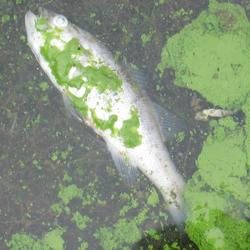
Distinct Microbiomes Identified in Landfills Throughout the United States

Distinct Microbiomes Identified in Landfills Throughout the United States

A comprehensive study by U.S. Geological Survey (USGS) and scientists from the University of Oklahoma finds distinct microbial assemblages (microbiomes) in landfill leachate across the United States and investigates factors related to microbiome formation.
Learn More

New Study on Cyanotoxins in Lakes and Reservoirs Provides Insights into Assessing Health Risks

Newly published study provides new evidence of the widespread occurrence of cyanotoxins in lakes and reservoirs of the United States and offers new insights into measures used for assessing potential recreational health risks.
New Study on Cyanotoxins in Lakes and Reservoirs Provides Insights into Assessing Health Risks

New Study on Cyanotoxins in Lakes and Reservoirs Provides Insights into Assessing Health Risks

Newly published study provides new evidence of the widespread occurrence of cyanotoxins in lakes and reservoirs of the United States and offers new insights into measures used for assessing potential recreational health risks.
Learn More

Antibiotics in Groundwater Affect Natural Bacteria

U.S. Geological Survey (USGS) scientists have documented adverse health effects on populations of native soil bacteria exposed to levels of the antibiotic (SMX) below those used to treat diseases (subtherapeutic). Because SMX has been found in environmental waters by many previous studies, the scientists conducted laboratory exposure experiments to determine the effect of SMX on native bacteria...
Antibiotics in Groundwater Affect Natural Bacteria

Antibiotics in Groundwater Affect Natural Bacteria

U.S. Geological Survey (USGS) scientists have documented adverse health effects on populations of native soil bacteria exposed to levels of the antibiotic (SMX) below those used to treat diseases (subtherapeutic). Because SMX has been found in environmental waters by many previous studies, the scientists conducted laboratory exposure experiments to determine the effect of SMX on native bacteria...
Learn More

Algal Blooms Consistently Produce Complex Mixtures of Cyanotoxins and Co-Occur with Taste-and-Odor Causing Compounds in 23 Midwestern Lakes

U.S. Geological Survey (USGS) scientists studying the effects of harmful algal blooms on lake water quality found that blooms of blue-green algae (cyanobacteria) in Midwestern lakes produced mixtures of cyanotoxins and taste-and-odor causing compounds, which co-occurred in lake water samples. Cyanotoxins can cause allergic and/or respiratory issues, attack the liver and kidneys, or affect the...
Algal Blooms Consistently Produce Complex Mixtures of Cyanotoxins and Co-Occur with Taste-and-Odor Causing Compounds in 23 Midwestern Lakes

Algal Blooms Consistently Produce Complex Mixtures of Cyanotoxins and Co-Occur with Taste-and-Odor Causing Compounds in 23 Midwestern Lakes

U.S. Geological Survey (USGS) scientists studying the effects of harmful algal blooms on lake water quality found that blooms of blue-green algae (cyanobacteria) in Midwestern lakes produced mixtures of cyanotoxins and taste-and-odor causing compounds, which co-occurred in lake water samples. Cyanotoxins can cause allergic and/or respiratory issues, attack the liver and kidneys, or affect the...
Learn More
Was this page helpful?