U.S. flag

An official website of the United States government

Images

Kīlauea images of eruptive activity, field work, and more.

Filter Total Items: 2978
Color photograph of volcanic crater with vents and lava flows
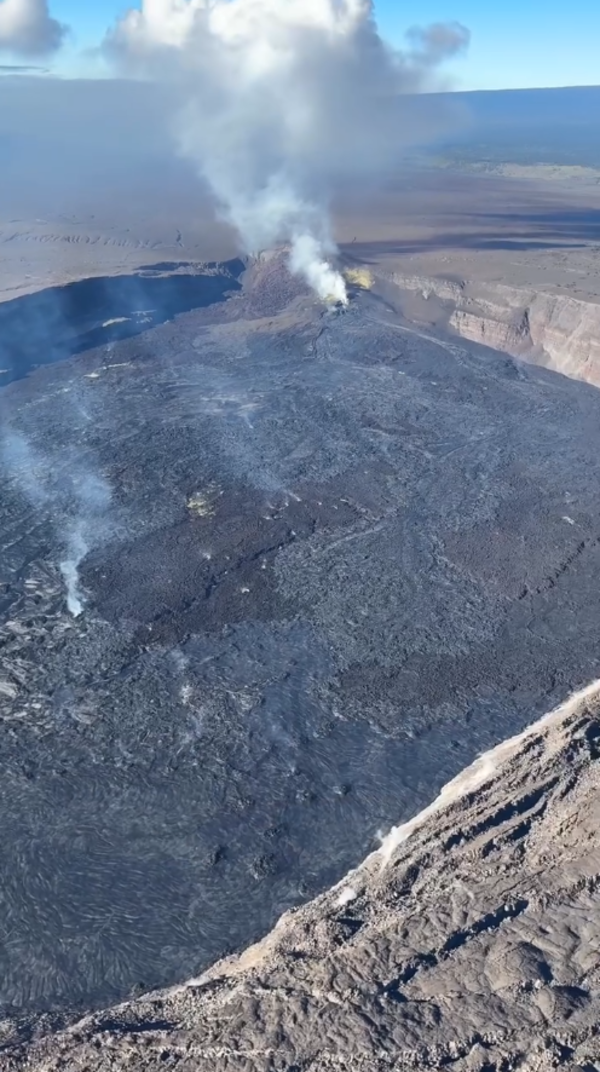
December 2, 2025—Halemaʻumaʻu crater aerial overview

An aerial image of Halemaʻumaʻu crater, showing the degassing eruptive vents in the southwest part of the crater (background) and lava flows erupted during episode 37 on November 25 (foreground. This image was taken during a USGS Hawaiian Volcano Observatory monitoring overflight of Halema‘uma‘u crater on December 2, 2025. USGS photo by K. Mulliken. 
An aerial image of Halemaʻumaʻu crater, showing the degassing eruptive vents in the southwest part of the crater (background) and lava flows erupted during episode 37 on November 25 (foreground. This image was taken during a USGS Hawaiian Volcano Observatory monitoring overflight of Halema‘uma‘u crater on December 2, 2025. USGS photo by K. Mulliken. 
Color photograph of a wall of rock
December 2, 2025—Halemaʻumaʻu crater wall

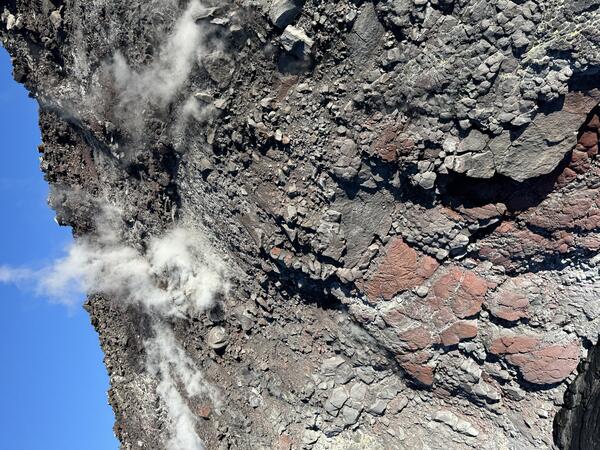
The steaming north wall of Halemaʻumaʻu crater wall rises several hundred feet above the lava flows that cover the floor of the crater.

The steaming north wall of Halemaʻumaʻu crater wall rises several hundred feet above the lava flows that cover the floor of the crater.

Color photograph of volcanic landscape
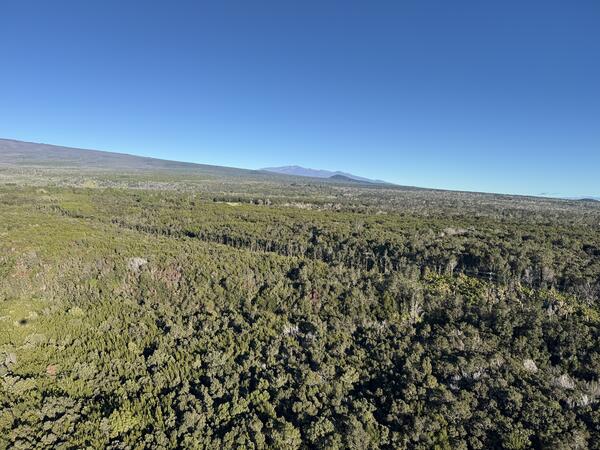
December 2, 2025—Kīlauea, Mauna Loa, and Mauna Kea

This aerial photograph shows Kīlauea, Mauna Loa and Mauna Kea. In the foreground is the forested area just north of Kīlauea caldera; the slope of Mauna Loa's Northeast Rift Zone rises to the left side of the image, while Mauna Kea is visible in the background. USGS photo by K. Mulliken. 
This aerial photograph shows Kīlauea, Mauna Loa and Mauna Kea. In the foreground is the forested area just north of Kīlauea caldera; the slope of Mauna Loa's Northeast Rift Zone rises to the left side of the image, while Mauna Kea is visible in the background. USGS photo by K. Mulliken. 
View of volcanic vent that is degassing
December 2, 2025—Aerial view into Halemaʻumaʻu north vent

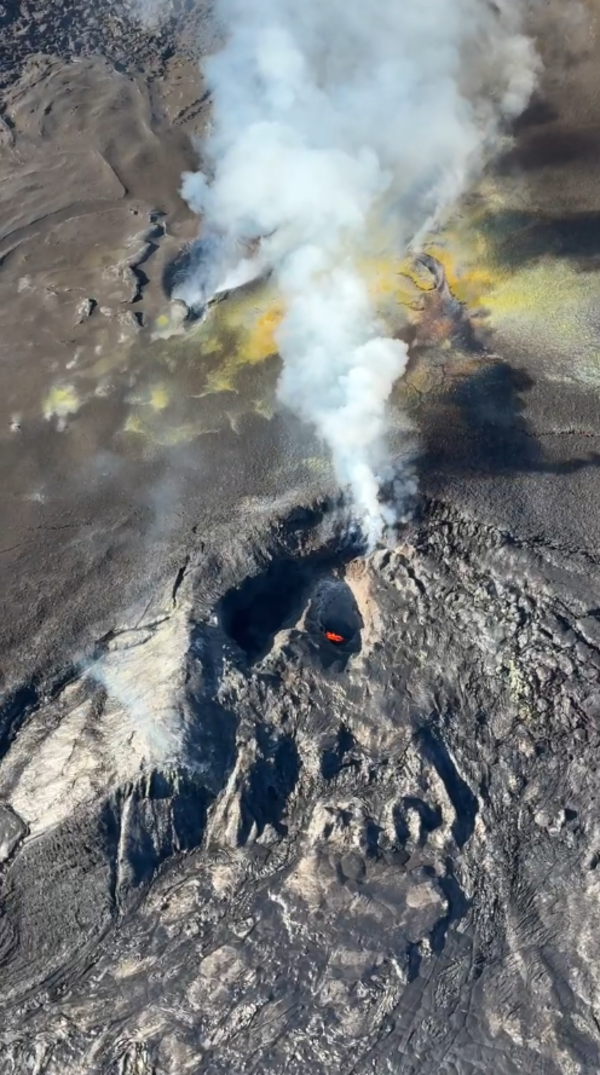
During a USGS Hawaiian Volcano Observatory monitoring overflight the morning of December 2, 2025, geologists were able to see a spattering lava surface deep within the north vent. The yellow material around the vents is native sulfur.

During a USGS Hawaiian Volcano Observatory monitoring overflight the morning of December 2, 2025, geologists were able to see a spattering lava surface deep within the north vent. The yellow material around the vents is native sulfur.

Color photograph of solidified lava channel next to crater wall
December 2, 2025—Solidified lava channel from the north vent in Halemaʻumaʻu, Kīlauea summit

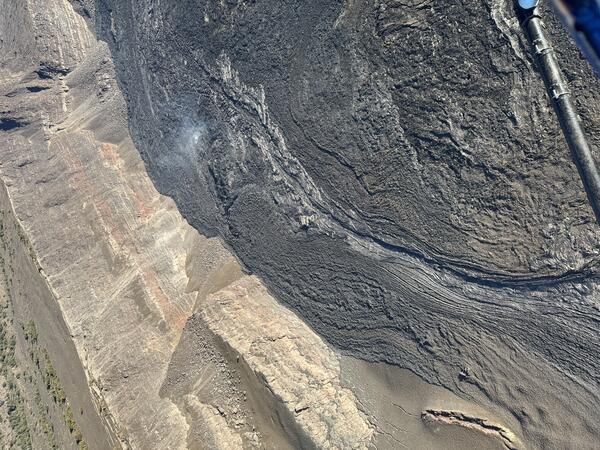
This black solidified lava channel is a stark contrast to the weathered brown walls of Halemaʻumaʻu crater nearby. The lava channel transported lava from the north vent, along the north rim of the crater, allowing lava flows to reach the farthest regions of the crater to the east during the 9 hours of lava fountaining of episode 37 on November 25, 2025.

This black solidified lava channel is a stark contrast to the weathered brown walls of Halemaʻumaʻu crater nearby. The lava channel transported lava from the north vent, along the north rim of the crater, allowing lava flows to reach the farthest regions of the crater to the east during the 9 hours of lava fountaining of episode 37 on November 25, 2025.

Color photograph of volcanic vents degassing
December 2, 2025—Halemaʻumaʻu vents and puʻu

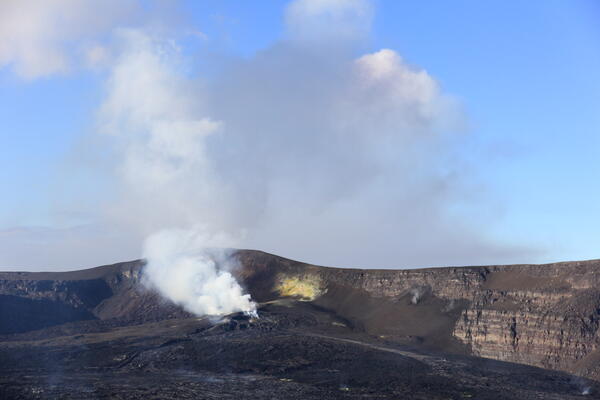
An aerial view of the volcanic vents in the southwest part of Halemaʻumaʻu crater, at the summit of Kīlaeua volcano. USGS photo by H. Winslow on December 2, 2025.  

An aerial view of the volcanic vents in the southwest part of Halemaʻumaʻu crater, at the summit of Kīlaeua volcano. USGS photo by H. Winslow on December 2, 2025.  

Panel showing four color photographs of dust devils in volcanic eruption settings
Puahiohio (dust devils) at Kīlauea and Mauna Loa

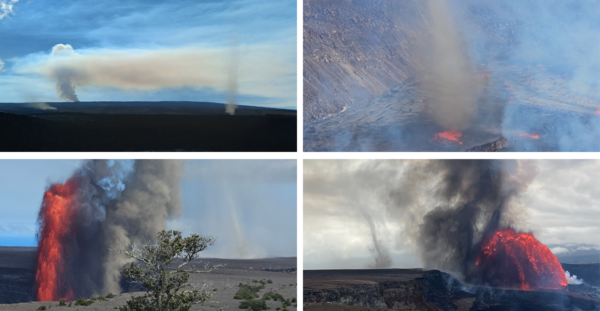
Upper left: a dusty lava puahiohio (at right in frame) above the main 2022 Mauna Loa lava flow on 2 December 2022, with the eruptive plume further in the background (at left in frame). Upper right: a lava puahiohio rips up the crust of the Kīlauea summit lava lake on 7 June 2023.

Upper left: a dusty lava puahiohio (at right in frame) above the main 2022 Mauna Loa lava flow on 2 December 2022, with the eruptive plume further in the background (at left in frame). Upper right: a lava puahiohio rips up the crust of the Kīlauea summit lava lake on 7 June 2023.

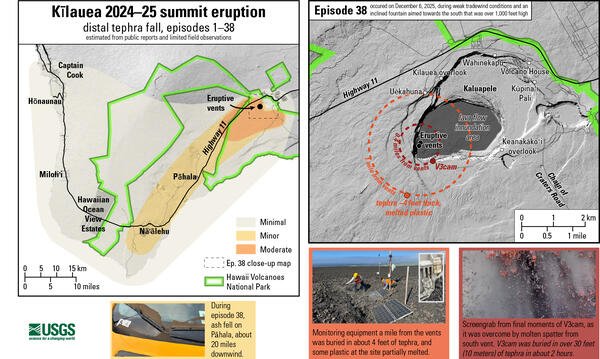
Color maps showing distribution of lava fallout material during eruption conditions
Kīlauea 2024-25 summit eruption tephrafall

The left map shows the tephra fall associated with Kīlauea's episodic summit eruption, from December 2024-December 2025. Tephra is a generic word for any material erupted by a volcano that travels through the air before landing on the ground.

The left map shows the tephra fall associated with Kīlauea's episodic summit eruption, from December 2024-December 2025. Tephra is a generic word for any material erupted by a volcano that travels through the air before landing on the ground.

Telephoto of lava flow
November 25, 2025—Kīlauea summit eruption episode 37 lava flow

The telephoto shows lava flowing east across the floor of Halemaʻumaʻu crater, fed by the lava fountains in the west part of the crater.  Preliminary estimates suggest that approximately 6 million cubic meters (7.8 million cubic yards) of lava were erupted during episode 37, based on ground deformation data. USGS photo by M. Patrick. 

The telephoto shows lava flowing east across the floor of Halemaʻumaʻu crater, fed by the lava fountains in the west part of the crater.  Preliminary estimates suggest that approximately 6 million cubic meters (7.8 million cubic yards) of lava were erupted during episode 37, based on ground deformation data. USGS photo by M. Patrick. 

Color map showing area covered by lava flows in recent volcanic eruption
November 25, 2025—Kīlauea summit eruption reference map

This reference map depicts the Kīlauea summit eruption within Halema‘uma‘u crater that began on December 23, 2024. The data for this map were collected during a Hawaiian Volcano Observatory helicopter overflight on November 24, 2025; as such, the provided statistics are reflective of the first thirty-six episodes of the eruption through November 9.

This reference map depicts the Kīlauea summit eruption within Halema‘uma‘u crater that began on December 23, 2024. The data for this map were collected during a Hawaiian Volcano Observatory helicopter overflight on November 24, 2025; as such, the provided statistics are reflective of the first thirty-six episodes of the eruption through November 9.

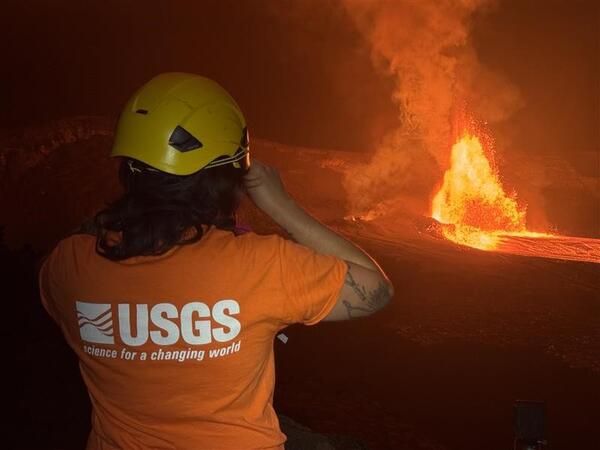
Color photograph of scientist monitoring a volcanic eruption
November 25, 2025—Monitoring Kīlauea summit eruption episode 37

USGS Hawaiian Volcano Observatory scientists document lava fountains and lava flows during episode 37 of the ongoing Kīlauea summit eruption in Halemaʻumaʻu crater. From the rim of the crater, scientists can use a laser rangefinding device to approximately measure the lava fountain heights, and distance the lava flows have travelled. USGS photo by M.

USGS Hawaiian Volcano Observatory scientists document lava fountains and lava flows during episode 37 of the ongoing Kīlauea summit eruption in Halemaʻumaʻu crater. From the rim of the crater, scientists can use a laser rangefinding device to approximately measure the lava fountain heights, and distance the lava flows have travelled. USGS photo by M.

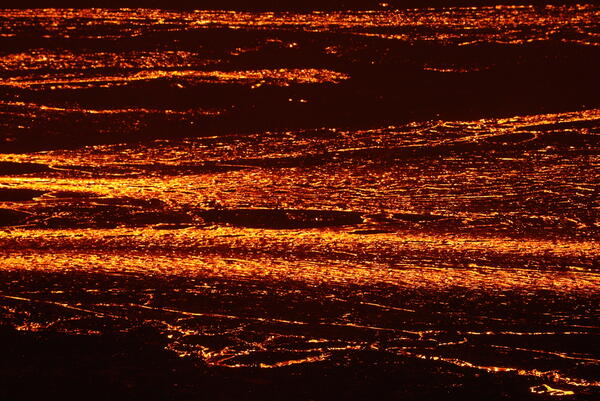
Color telephotograph of lava streams at night
November 25, 2025—Kīlauea summit eruption episode 37 lava flows

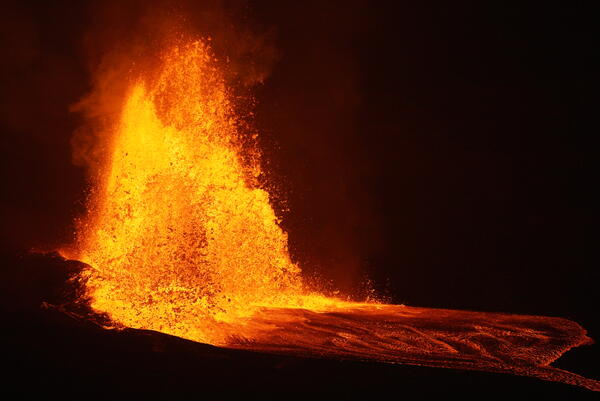
Telephoto view of lava flows on the floor of Halemaʻumaʻu crater. These lava flows were erupted during episode 37 of lava fountaining at the summit of Kīlauea, which was active for about 9 hours on November 25. USGS photo by M. Patrick. 

Telephoto view of lava flows on the floor of Halemaʻumaʻu crater. These lava flows were erupted during episode 37 of lava fountaining at the summit of Kīlauea, which was active for about 9 hours on November 25. USGS photo by M. Patrick. 

Color photograph of lava fountain
November 25, 2025—Kīlauea summit eruption episode 37

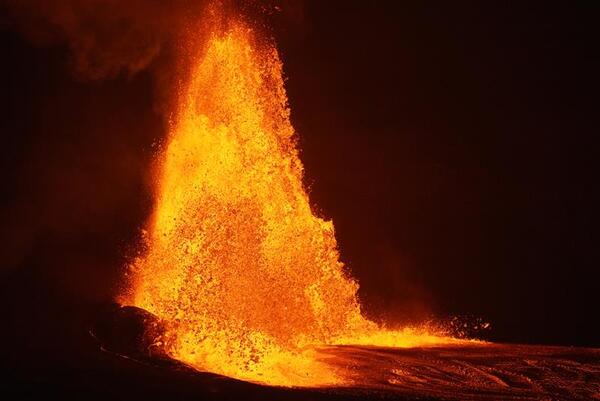
Episode 37 lava fountaining occurred On November 25, from 2:30 p.m. to 11:39 p.m., totaling just over 9 hours. Fountains were limited to the north vent, which sent lava flows over a large portion of the crater floor. Fountain heights reached 500-600 ft (150-180 meters). The south vent showed only weak spattering and flaming. USGS photo by M. Patrick. 

Episode 37 lava fountaining occurred On November 25, from 2:30 p.m. to 11:39 p.m., totaling just over 9 hours. Fountains were limited to the north vent, which sent lava flows over a large portion of the crater floor. Fountain heights reached 500-600 ft (150-180 meters). The south vent showed only weak spattering and flaming. USGS photo by M. Patrick. 

Color photograph of lava fountains
November 25, 2025—Kīlauea summit eruption episode 37 lava fountains

Following several days of precursory overflows and low dome fountaining, episode 37 of the Kīlauea summit eruption began yesterday at 2:30 p.m. with lava fountaining from the north vent.  A wide fountain developed, eventually reaching heights of 500-600 ft (150-180 meters), sending flows across a broad portion of the crater floor.

Following several days of precursory overflows and low dome fountaining, episode 37 of the Kīlauea summit eruption began yesterday at 2:30 p.m. with lava fountaining from the north vent.  A wide fountain developed, eventually reaching heights of 500-600 ft (150-180 meters), sending flows across a broad portion of the crater floor.

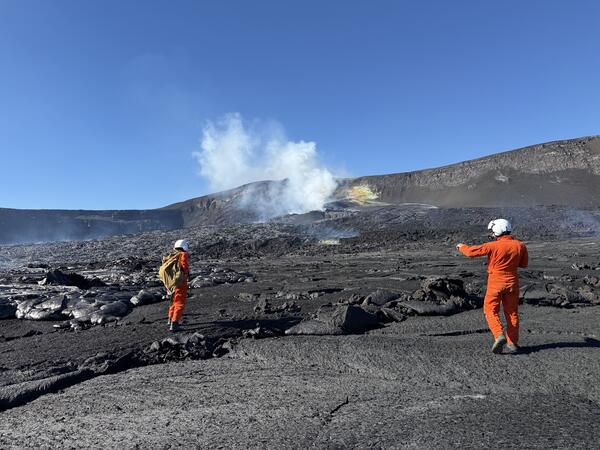
Color photograph of scientists in orange flight suits on a volcanic landscape
November 24, 2025 — Geologists visit Halema‘uma‘u

USGS Hawaiian Volcano Observatory scientists landed briefly on Halema‘uma‘u crater floor on November 24, 2025, during a Kīlauea summit monitoring overflight.

USGS Hawaiian Volcano Observatory scientists landed briefly on Halema‘uma‘u crater floor on November 24, 2025, during a Kīlauea summit monitoring overflight.

Color photograph of volcanic hill that is degassing
November 24, 2025 — The growing puʻu on the rim of Halema‘uma‘u

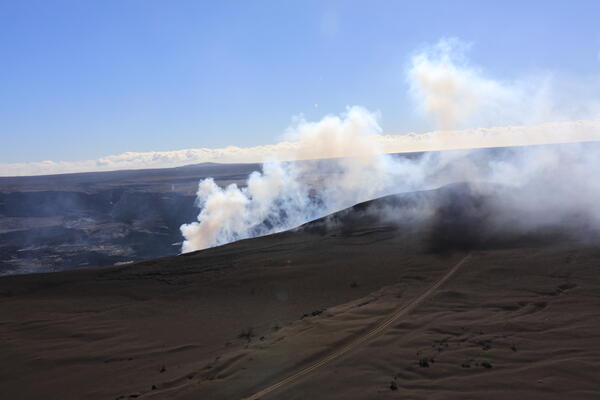
This aerial view looking to the southeast shows the volcanic gas plume being emitted from the vents of the ongoing Halema‘uma‘u eruption at Kīlauea summit.

Color photograph of volcanic vent that is degassing
November 24, 2025 — View into the Halema‘uma‘u vents

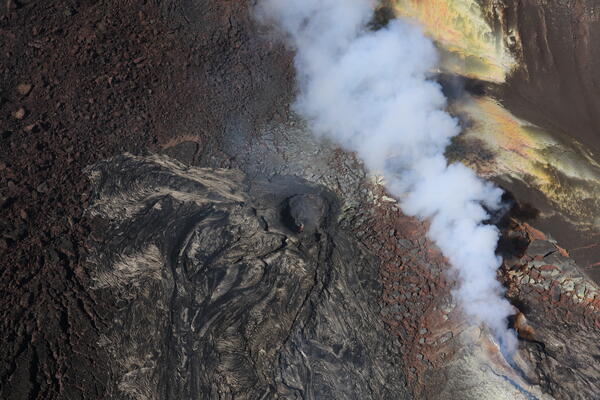
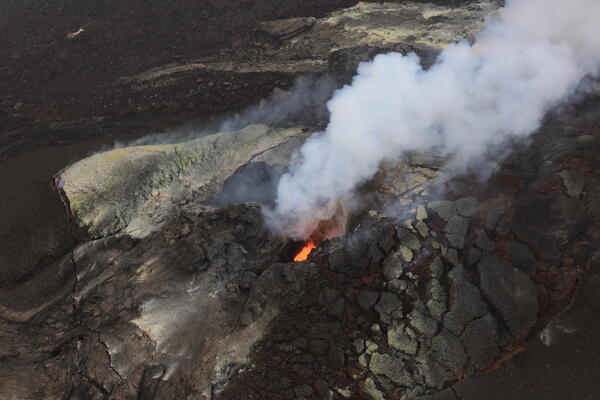
An aerial view looking down into the south vent (center) of the ongoing Kīlauea summit eruption within Halema‘uma‘u crater. A tiny spot of orange incandescent lava was visible deep in the south vent on the morning of November 24 during a USGS Hawaiian Volcano Observatory monitoring helicopter overflight.

An aerial view looking down into the south vent (center) of the ongoing Kīlauea summit eruption within Halema‘uma‘u crater. A tiny spot of orange incandescent lava was visible deep in the south vent on the morning of November 24 during a USGS Hawaiian Volcano Observatory monitoring helicopter overflight.

Color photograph of scientist collecting sample of cooled lava flow
November 24, 2025 — Geologist collects sample within Halema‘uma‘u

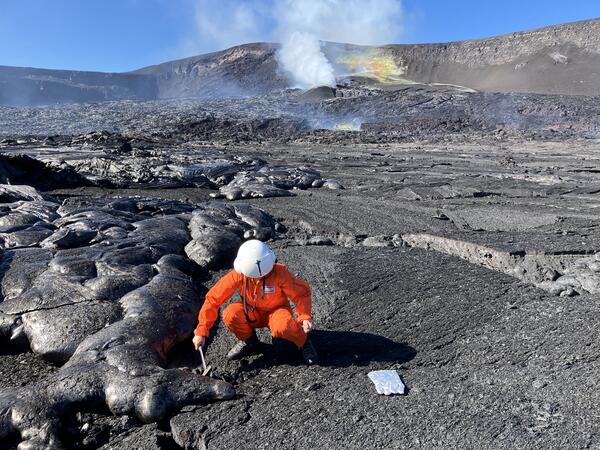
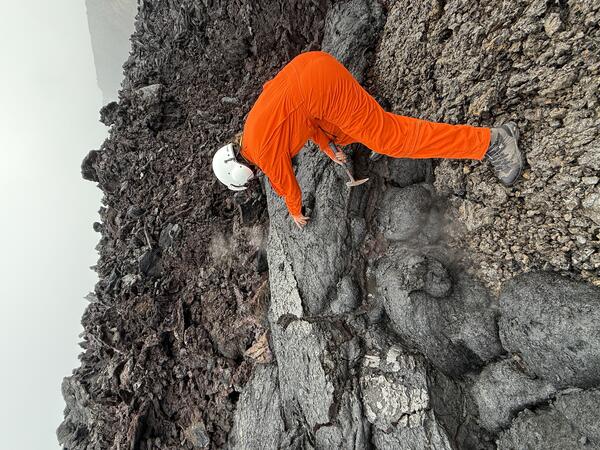
On November 24, a USGS Hawaiian Volcano Observatory helicopter overflight was able to land on the floor of Halema‘uma‘u crater for scientists to collect a sample of cooled lava from a recent overflow of the Kīlauea summit eruptive vents.

On November 24, a USGS Hawaiian Volcano Observatory helicopter overflight was able to land on the floor of Halema‘uma‘u crater for scientists to collect a sample of cooled lava from a recent overflow of the Kīlauea summit eruptive vents.

Color image of volcanic vent
November 24, 2025 — View into the Halema‘uma‘u vents

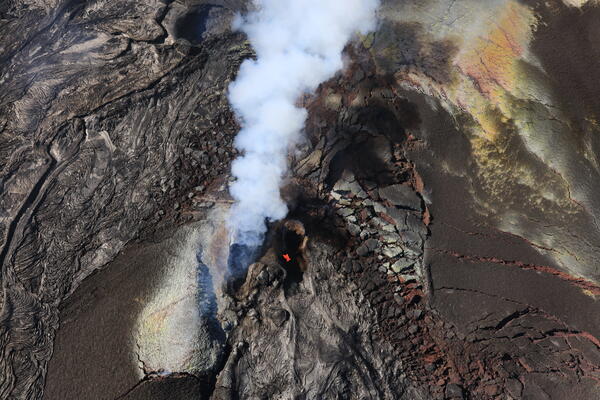
A telephoto aerial view looking down into the north vent (center) of the ongoing Kīlauea summit eruption within Halema‘uma‘u crater. Orange incandescent lava is visible deep in the vent. Lava overflows from both vents over the past few days produced shiny new Pāhoehoe flows (bottom center and left side of photo).

A telephoto aerial view looking down into the north vent (center) of the ongoing Kīlauea summit eruption within Halema‘uma‘u crater. Orange incandescent lava is visible deep in the vent. Lava overflows from both vents over the past few days produced shiny new Pāhoehoe flows (bottom center and left side of photo).

Color photograph of scientist collecting sample of cooled lava flow
November 21, 2025 — Cold lava sampling on floor of Halema‘uma‘u

On November 21, USGS Hawaiian Volcano Observatory scientists collected solid lava samples from the floor of Halema‘uma‘u crater at the summit of Kīlauea. All sampling in this area, which is significant to native Hawaiian communities, is done with permission from Hawai‘i Volcanoes National Park.

On November 21, USGS Hawaiian Volcano Observatory scientists collected solid lava samples from the floor of Halema‘uma‘u crater at the summit of Kīlauea. All sampling in this area, which is significant to native Hawaiian communities, is done with permission from Hawai‘i Volcanoes National Park.

Color photograph of volcanic vent with roiling lava in it
November 21, 2025 — Aerial view of Halema‘uma‘u north vent

On November 21, USGS Hawaiian Volcano Observatory scientists conducted an aerial overflight of the eruptive vent complex at the summit of Kīlauea. Roiling lava ponds were visible in both the north and south vents during the overflight; the north vent's incandescent pond barely visible in this aerial photo looking down from the north.

On November 21, USGS Hawaiian Volcano Observatory scientists conducted an aerial overflight of the eruptive vent complex at the summit of Kīlauea. Roiling lava ponds were visible in both the north and south vents during the overflight; the north vent's incandescent pond barely visible in this aerial photo looking down from the north.

Was this page helpful?