



Groundwater
Groundwater is one of our most valuable resources—even though you probably never see it or realize it is there. There is water somewhere beneath your feet no matter where on Earth you live.
Groundwater starts as precipitation, just as surface water does, and once water penetrates the ground, it continues moving, sometimes quickly and sometimes very slowly. Eventually groundwater emerges back to the surface and continues to participate in the global water cycle.
Groundwater Basics
Groundwater Basics
-

Groundwater: What is Groundwater?
There is an immense amount of water in aquifers below the earth's surface. In fact, there is a over a thousand times more water in the ground than is in all the world's rivers and lakes. Here we introduce you to the basics about groundwater.
Aquifers and Groundwater
A huge amount of water exists in the ground below your feet, and people all over the world make great use of it. But it is only found in usable quantities in certain places underground — aquifers. Read on to understand the concepts of aquifers and how water exists in the ground.
Base Flow in Rivers
When a drought hits and little or no rain has fallen in a long time, you might expect small streams and even larger rivers to just dry up, right? In many cases, they don't. Streamflow might lessen to a trickle or so, but water continues to flow. How is that possible? Read on to find out how "base flow", which is water seeping into the stream from groundwater, helps keep water in streams during...
Artesian Water and Artesian Wells
Artesian water is really not different from other groundwater, except for the fact that it flows to the land surface because pressure in the rocks underground force it to the surface. But, having water flow to the surface naturally is a handy way to tap groundwater resources.
Drought and Groundwater Levels
Groundwater decline is a real and serious problem in many places of the Nation and the world. When rainfall is less than normal for several weeks, months, or years, the flow of streams and rivers declines, water levels in lakes and reservoirs fall, and the depth to water in wells increases.
Land Subsidence
Yes, land subsidence is responsible for you getting a little dizzy when you look at the first picture in the banner above, the one of a line of buildings. The land these buildings sit on has fallen and compacted because large amounts of groundwater have been withdrawn from the aquifers below ground. Land subsidence is a human-induced event.
Groundwater Flows Underground
Millions of cubic miles of water exists in the ground. You can't see it, but not only is it there, it is always moving around -- mostly downward, but also horizontally. Moving groundwater helps keep rivers full of water and allows for people to draw out water via wells. Moving groundwater is an important part of the water cycle.
Rivers Contain Groundwater
Naturally, the water running in rivers comes from precipitation that runs off the landscape into the river. But since precipitation also seeps into (and moves) into the ground, you don't often consider that a significant amount of the water flowing in rivers comes from water in the ground seeping back "up" into the river from below.
Sinkholes
It is a frightening thought to imagine the ground below your feet or house suddenly collapsing and forming a big hole in the ground. Sinkholes rarely happen, but when they strike, tragedy can occur. Sinkholes happen when the ground below the land surface cannot support the land surface. They happen for many reasons; read on to educate yourself about sinkholes.
Humans and Groundwater
Humans and Groundwater
-

Groundwater Wells
Wells are extremely important to all societies. In many places wells provide a reliable and ample supply of water for home uses, irrigation, and industries. Where surface water is scarce, such as in deserts, people couldn't survive and thrive without groundwater, and people use wells to get at underground water.
Groundwater Decline and Depletion
Groundwater is a valuable resource both in the United States and throughout the world. Groundwater depletion, a term often defined as long-term water-level declines caused by sustained groundwater pumping, is a key issue associated with groundwater use. Many areas of the United States are experiencing groundwater depletion.
Groundwater Use in the United States
Groundwater is one of our most valuable resource—even though you probably never see it or even realize it is there. Groundwater is essential for irrigation and human use in many parts of the country. The use of groundwater in the United States in 2015 is described below.
How Do Hydrologists Locate Groundwater?
As a non-existent proverb states: " Humans don't live by surface water alone." For thousands of years, people have also relied on groundwater to serve their every need. Groundwater is invaluable for many uses, from irrigation to drinking-water supply. But, you can't see groundwater, so how do water scientists know where it is in order to be able to drill wells and pump it out for use?
Water Dowsing
"Water dowsing" refers in general to the practice of using a forked stick, rod, pendulum, or similar device to locate underground water, minerals, or other hidden or lost substances, and has been a subject of discussion and controversy for hundreds, if not thousands, of years.
Groundwater Quality
Groundwater Quality
-

Groundwater Quality
Even though the ground is an excellent mechanism for filtering out particulate matter, such as leaves, soil, and bugs, dissolved chemicals and gases can still occur in large enough concentrations in groundwater to cause problems.
Contamination of Groundwater
Groundwater will normally look clear and clean because the ground naturally filters out particulate matter. But did you know that natural and human-induced chemicals can be found in groundwater even if appears to be clean? Below is a list of some contaminants that can occur in groundwater.
Contamination in U.S. Private Wells
Groundwater is crucial to millions of Americans as well as many more worldwide. Groundwater provides drinking water to many. Thus, having reliably clean groundwater is of concern for many throughout the world. But, groundwater can become contaminated with chemicals, biologic organisms, and other possibly-harmful agents.
Pesticides in Groundwater
Commercial pesticide applicators, farmers, and homeowners apply about 1 billion pounds of pesticides annually to agricultural land, non-crop land, and urban areas throughout the United States. The use of pesticides has helped to make the United States the largest producer of food in the world and has provided other benefits, but has also been accompanied by concerns about their potential adverse...
Groundwater and the Water Cycle
Groundwater and the Water Cycle
-

Groundwater Flow and the Water Cycle
Yes, water below your feet is moving all the time, but not like rivers flowing below ground. It's more like water in a sponge. Gravity and pressure move water downward and sideways underground through spaces between rocks. Eventually it emerges back to the land surface, into rivers, and into the oceans to keep the water cycle going.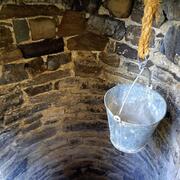
Groundwater Storage and the Water Cycle
The ground stores huge amounts of water and it exists to some degree no matter where on Earth you are. Lucky for people, in many places the water exists in quantities and at depths that wells can be drilled into the water-bearing aquifers and withdrawn to server the many needs people have.
Infiltration and the Water Cycle
You can't see it, but a large portion of the world's freshwater lies underground. It may all start as precipitation, but through infiltration and seepage, water soaks into the ground in vast amounts. Water in the ground keeps all plant life alive and serves peoples' needs, too.
Resources and activities
Resources and activities
-

Groundwater True/False Quiz
How much do you know about the water below your feet? Take our Groundwater True/False Quiz and find out.

Groundwater Questions & Answers
Our planet is covered in water. We see it in our oceans and on land we see it in our lakes and rivers. But did you know that there is a hundred times more water in the ground than in all the Earth's lakes and rivers? Though you cannot see it there is a plethora of groundwater beneath your feet. Here at the Water Science School we have the answers to your questions about groundwater.