



About
The Pacific Northwest eDNA Laboratory works with partners to realize the potential of eDNA detection through ecological guidance, protocols, sampling design, molecular techniques, statistical analysis, interpretation and reporting for eDNA research projects.
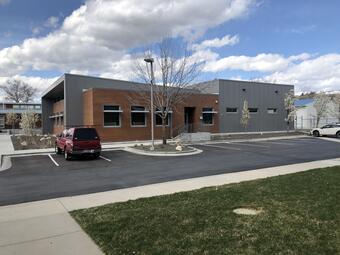
In 2017, the Forest and Rangeland Ecosystem Science Center received funding to establish a state-of-the-art environmental DNA laboratory to serve the research needs of DOI bureaus, other federal agencies, and cooperators. Our facility is located on the campus of the USGS Idaho Water Science Center, conveniently located near Boise State University, allowing for opportunities for students to participate in this rapidly evolving field of research.
What is eDNA?
Environmental DNA - or eDNA - is any DNA that is separated from the organism and is temporarily detectable in the environment. eDNA can come from any part of an organism containing genetic material, living or dead, such as from sloughed skin cells and excretions. Since eDNA was first used in 2008 to detect invasive bullfrogs in wetlands, the field of eDNA analysis has exploded as a revolutionary way to increase species detection.

What can eDNA be used for?
eDNA methods are being widely adopted by researchers and natural resource agencies for early detection of invasive species and assessing species distributions and aquatic biodiversity. The methods are particularly useful for rare and secretive species because eDNA methods can detect species without direct observation or handling. In many cases, eDNA methods are better able to detect species than traditional methods. The methods also can be employed relatively easily in the field (even allowing for involvement of citizen scientists) and often reduces costs compared with traditional sampling.
Want to learn more about eDNA? Read or download our fact sheet.
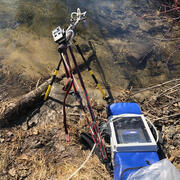
Shared Laboratory Information Dashboard for eDNA (SLIDe) Shared Laboratory Information Dashboard for eDNA (SLIDe)
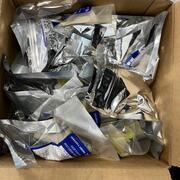
Science support for EDRR Science support for EDRR
