



Oregon Water Science Center
Welcome to the USGS in Oregon. Our mission is to explore the natural world around us and provide reliable scientific information to help Federal, State, and local agencies, Tribes, and the public make well-informed decisions. Our research is widely used to manage Oregon's water resources for the benefit and safety of people and the environment.
For updates please subscribe to our newsletter!
Live Stream Conditions
Live Stream Conditions

See what is happening in streams near you. View real-time stream data for streams around Oregon.
Relevant Information
Relevant Information
See what the USGS is doing locally.
News
The Oregon Water Science Center receives Portland State University’s 2026 Public Impact Partner Award
The Oregon Water Science Center receives Portland State University’s 2026 Public Impact Partner Award
Message from the Director - Oregon Water Science Center, Summer 2026
Message from the Director - Oregon Water Science Center, Summer 2026
Updates to the Upper Klamath and Harney Basin interactive data mappers
Updates to the Upper Klamath and Harney Basin interactive data mappers
Publications
Evaluation of submersible pressure transducers for streamflow monitoring in small streams Evaluation of submersible pressure transducers for streamflow monitoring in small streams
Compact streamgages requiring minimal infrastructure and equipped with submersible pressure transducers (PTs) are increasingly used to monitor small streams, yet disparate implementations obscure their accuracy under real-world conditions. This study isolated instrumentation-derived uncertainty in stage monitoring by co-locating various combinations of commercial vented and unvented PTs...
The Zooplankton International Geospatial (ZIG) dataset: A global repository of spatiotemporal freshwater zooplankton community composition data from lakes and reservoirs to support ecological research The Zooplankton International Geospatial (ZIG) dataset: A global repository of spatiotemporal freshwater zooplankton community composition data from lakes and reservoirs to support ecological research
Zooplankton transfer substantial energy in aquatic food webs and are used as indicators of environmental change. Syntheses of zooplankton community dynamics globally require datasets that span a wide range of environmental gradients; however, these datasets are limited due to methodological differences across programs, taxonomic inconsistencies, and a lack of standardized metadata. To...
Assessing the state of hydrologic science in the Upper Klamath Basin—A comprehensive review of data, tools, and models Assessing the state of hydrologic science in the Upper Klamath Basin—A comprehensive review of data, tools, and models
Water demand in the Upper Klamath Basin (UKB) from various stakeholders and ecological needs often outstrips available supply, leading to persistent management challenges. This study reviews the state of hydrologic science within the UKB as of 2025—specifically, the tools, data, and models available for assessing five key components of the water system: (1) surface water; (2)...
Science
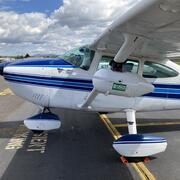
Geospatial Data Collection in the Willamette River Basin
A USGS geospatial data collection initiative in Oregon’s Willamette River Basin uses advanced remote sensing and on‑the‑ground measurements to map major rivers draining the Cascade Range. This work helps track how changing water resources and river channel conditions affect a wide array of water‑management needs, river hazards, recreational users, and habitat for ESA-listed spring Chinook salmon...

Integrated Water Science Basins: Willamette River
The Willamette River Basin reflects the conflicting water demands between humans and ecosystems—particularly salmon— and the challenge resource managers face throughout the Pacific Northwest.
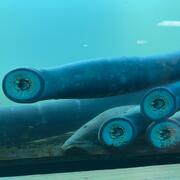
Linkages among pre-contact people, lamprey, and landscapes in the Willamette Valley
The U.S. Geological Survey and Portland State University are working with the Confederated Tribes of Grand Ronde and other partners to link past lamprey harvest locations with hydrogeomorphic conditions as landscape processes and shifting rivers have changed since the pre-contact archaeological period. This research provides a deeper historical context for lamprey conservation and restoration.