



NAS Database
Detailed Description
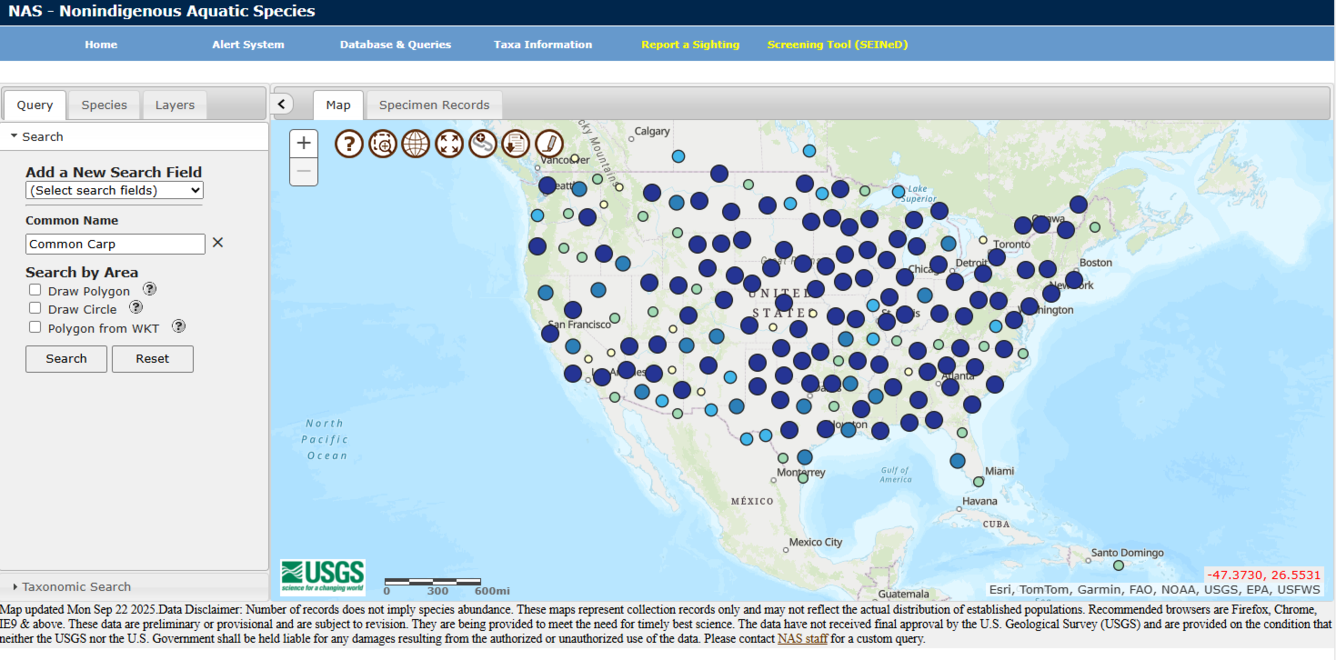
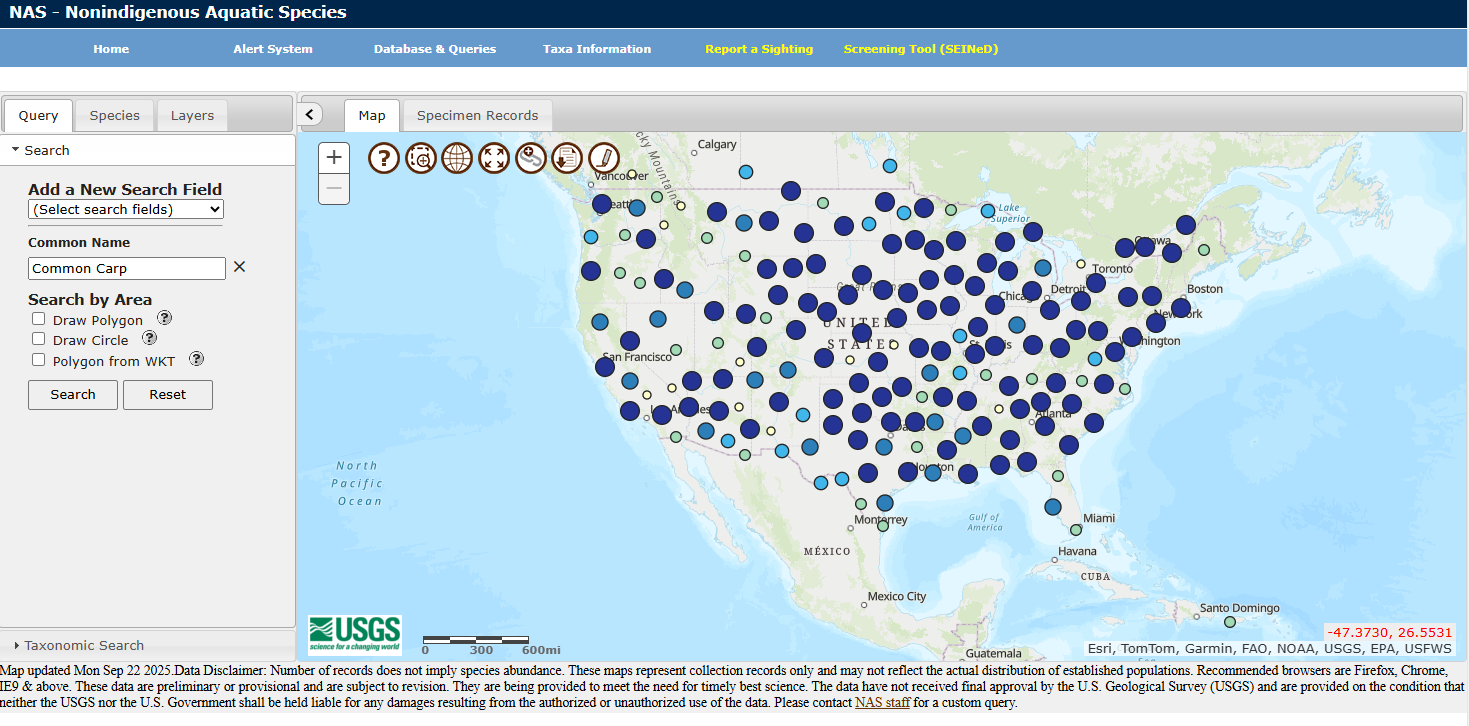
This is a screen grab of the Nonindigenous Aquatic Species Database. This database is used to track the spread of invasive aquatic species across the United States landscape.
Sources/Usage
Public Domain.
Related
Identifying gaps in regulatory prevention measures for nonindigenous aquatic species in the United States Identifying gaps in regulatory prevention measures for nonindigenous aquatic species in the United States
Nonindigenous aquatic species (NAS) present in trade can become costly invaders once introduced and established in a new environment. Preventing NAS introduction is considered the most effective strategy to avoid potential negative ecological, economic, and human health impacts associated with certain species. The United States government enacts regulatory prevention measures carried out...
Authors
Zoey Hendrickson, Charles M. Martin, Wesley M. Daniel
Gaining decision-maker confidence through community consensus: Developing environmental DNA standards for data display on the USGS Nonindigenous Aquatic Species database Gaining decision-maker confidence through community consensus: Developing environmental DNA standards for data display on the USGS Nonindigenous Aquatic Species database
To advance national efforts for the detection and biosurveillance of aquatic invasive species (AIS), we employed a community consensus process to enable the incorporation of environmental DNA (eDNA) detection data into the U.S. Geological Survey’s (USGS) Nonindigenous Aquatic Species (NAS) database (https://nas.er.usgs.gov/eDNA/). Our goal was to identify minimum standards and best...
Authors
Jason Ferrante, Wesley M. Daniel, Jonathan Adam Freedman, Katy E. Klymus, Matthew Neilson, Yale Passamaneck, Christopher B. Rees, Adam J. Sepulveda, Margaret Hunter
Trends in nonindigenous aquatic species richness in the United States reveal shifting spatial and temporal patterns of species introductions Trends in nonindigenous aquatic species richness in the United States reveal shifting spatial and temporal patterns of species introductions
Understanding the spatial and temporal dynamics underlying the introduction and spread of nonindigenous aquatic species (NAS) can provide important insights into the historical drivers of biological invasions and aid in forecasting future patterns of nonindigenous species arrival and spread. Increasingly, public databases of species observation records are being used to quantify changes...
Authors
Michael J. Mangiante, Amy J. S. Davis, Stephanie Panlasigui, Matthew E. Neilson, Ian Pfingsten, Pam Fuller, John A. Darling
The U.S. Geological Survey’s nonindigenous aquatic species database: over thirty years of tracking introduced aquatic species in the United States (and counting) The U.S. Geological Survey’s nonindigenous aquatic species database: over thirty years of tracking introduced aquatic species in the United States (and counting)
The U.S. Geological Survey’s Nonindigenous Aquatic Species (NAS) Database has tracked introductions of freshwater aquatic organisms in the United States for the past four decades. A website provides access to occurrence reports, distribution maps, and fact sheets for more than 1,000 species. The site also includes an on-line reporting system and an alert system for new occurrences. We...
Authors
Pamela L. Fuller, Matthew E. Neilson
USGS Nonindigenous Aquatic Species database with a focus on the introduced fishes of the lower Tennessee and Cumberland drainages USGS Nonindigenous Aquatic Species database with a focus on the introduced fishes of the lower Tennessee and Cumberland drainages
The Nonindigenous Aquatic Species (NAS) database (http://nas.er.usgs.gov) functions as a national repository and clearinghouse for occurrence data for introduced species within the United States. Included is locality information on over 1,100 species of vertebrates, invertebrates, and vascular plants introduced as early as 1850. Taxa include foreign (exotic) species and species native to...
Authors
Pamela L. Fuller, Matthew Cannister
The National Nonindigenous Aquatic Species Database The National Nonindigenous Aquatic Species Database
The U.S. Geological Survey (USGS) Nonindigenous Aquatic Species (NAS) Program maintains a database that monitors, records, and analyzes sightings of nonindigenous aquatic plant and animal species throughout the United States. The program is based at the USGS Wetland and Aquatic Research Center in Gainesville, Florida. The initiative to maintain scientific information on nationwide...
Authors
Matthew E. Neilson, Pamela L. Fuller
Impacts of aquatic nonindigenous invasive species on the Lake Erie ecosystem Impacts of aquatic nonindigenous invasive species on the Lake Erie ecosystem
Lake Erie is particularly vulnerable to the introduction and establishment of aquatic nonindigenous invasive species (NIS) populations. A minimum of 144 aquatic NIS have been recorded in the Lake Erie basin including several species [e.g., Eurasian watermilfoil (Myriophyllum spicatum); zebra mussel (Dreissena polymorpha); quagga mussel (Dreissena bugensis); an amphipod (Echinogammarus...
Authors
Madeline J.W. Austen, Jan J.H. Ciborowski, Lynda D. Corkum, Tim B. Johnson, Hugh J. MacIsaac, Janice L. Metcalfe-Smith, Donald W. Schloesser, Sandra E. George
Nonindigenous aquatic and selected terrestrial species of Florida. Report to U.S. Fish and Wildlife Service Nonindigenous aquatic and selected terrestrial species of Florida. Report to U.S. Fish and Wildlife Service
Abstract not supplied at this time
Authors
J.A. McCann, L.N. Arkin, J.D. Williams
Invasive Carp Open Data Hub Invasive Carp Open Data Hub
The Invasive Carp Open Data Hub is a platform for exploring and accessing USGS data, tools, applications, and publications related to invasive carp research and management.
Related
Identifying gaps in regulatory prevention measures for nonindigenous aquatic species in the United States Identifying gaps in regulatory prevention measures for nonindigenous aquatic species in the United States
Nonindigenous aquatic species (NAS) present in trade can become costly invaders once introduced and established in a new environment. Preventing NAS introduction is considered the most effective strategy to avoid potential negative ecological, economic, and human health impacts associated with certain species. The United States government enacts regulatory prevention measures carried out...
Authors
Zoey Hendrickson, Charles M. Martin, Wesley M. Daniel
Gaining decision-maker confidence through community consensus: Developing environmental DNA standards for data display on the USGS Nonindigenous Aquatic Species database Gaining decision-maker confidence through community consensus: Developing environmental DNA standards for data display on the USGS Nonindigenous Aquatic Species database
To advance national efforts for the detection and biosurveillance of aquatic invasive species (AIS), we employed a community consensus process to enable the incorporation of environmental DNA (eDNA) detection data into the U.S. Geological Survey’s (USGS) Nonindigenous Aquatic Species (NAS) database (https://nas.er.usgs.gov/eDNA/). Our goal was to identify minimum standards and best...
Authors
Jason Ferrante, Wesley M. Daniel, Jonathan Adam Freedman, Katy E. Klymus, Matthew Neilson, Yale Passamaneck, Christopher B. Rees, Adam J. Sepulveda, Margaret Hunter
Trends in nonindigenous aquatic species richness in the United States reveal shifting spatial and temporal patterns of species introductions Trends in nonindigenous aquatic species richness in the United States reveal shifting spatial and temporal patterns of species introductions
Understanding the spatial and temporal dynamics underlying the introduction and spread of nonindigenous aquatic species (NAS) can provide important insights into the historical drivers of biological invasions and aid in forecasting future patterns of nonindigenous species arrival and spread. Increasingly, public databases of species observation records are being used to quantify changes...
Authors
Michael J. Mangiante, Amy J. S. Davis, Stephanie Panlasigui, Matthew E. Neilson, Ian Pfingsten, Pam Fuller, John A. Darling
The U.S. Geological Survey’s nonindigenous aquatic species database: over thirty years of tracking introduced aquatic species in the United States (and counting) The U.S. Geological Survey’s nonindigenous aquatic species database: over thirty years of tracking introduced aquatic species in the United States (and counting)
The U.S. Geological Survey’s Nonindigenous Aquatic Species (NAS) Database has tracked introductions of freshwater aquatic organisms in the United States for the past four decades. A website provides access to occurrence reports, distribution maps, and fact sheets for more than 1,000 species. The site also includes an on-line reporting system and an alert system for new occurrences. We...
Authors
Pamela L. Fuller, Matthew E. Neilson
USGS Nonindigenous Aquatic Species database with a focus on the introduced fishes of the lower Tennessee and Cumberland drainages USGS Nonindigenous Aquatic Species database with a focus on the introduced fishes of the lower Tennessee and Cumberland drainages
The Nonindigenous Aquatic Species (NAS) database (http://nas.er.usgs.gov) functions as a national repository and clearinghouse for occurrence data for introduced species within the United States. Included is locality information on over 1,100 species of vertebrates, invertebrates, and vascular plants introduced as early as 1850. Taxa include foreign (exotic) species and species native to...
Authors
Pamela L. Fuller, Matthew Cannister
The National Nonindigenous Aquatic Species Database The National Nonindigenous Aquatic Species Database
The U.S. Geological Survey (USGS) Nonindigenous Aquatic Species (NAS) Program maintains a database that monitors, records, and analyzes sightings of nonindigenous aquatic plant and animal species throughout the United States. The program is based at the USGS Wetland and Aquatic Research Center in Gainesville, Florida. The initiative to maintain scientific information on nationwide...
Authors
Matthew E. Neilson, Pamela L. Fuller
Impacts of aquatic nonindigenous invasive species on the Lake Erie ecosystem Impacts of aquatic nonindigenous invasive species on the Lake Erie ecosystem
Lake Erie is particularly vulnerable to the introduction and establishment of aquatic nonindigenous invasive species (NIS) populations. A minimum of 144 aquatic NIS have been recorded in the Lake Erie basin including several species [e.g., Eurasian watermilfoil (Myriophyllum spicatum); zebra mussel (Dreissena polymorpha); quagga mussel (Dreissena bugensis); an amphipod (Echinogammarus...
Authors
Madeline J.W. Austen, Jan J.H. Ciborowski, Lynda D. Corkum, Tim B. Johnson, Hugh J. MacIsaac, Janice L. Metcalfe-Smith, Donald W. Schloesser, Sandra E. George
Nonindigenous aquatic and selected terrestrial species of Florida. Report to U.S. Fish and Wildlife Service Nonindigenous aquatic and selected terrestrial species of Florida. Report to U.S. Fish and Wildlife Service
Abstract not supplied at this time
Authors
J.A. McCann, L.N. Arkin, J.D. Williams
Invasive Carp Open Data Hub Invasive Carp Open Data Hub
The Invasive Carp Open Data Hub is a platform for exploring and accessing USGS data, tools, applications, and publications related to invasive carp research and management.