



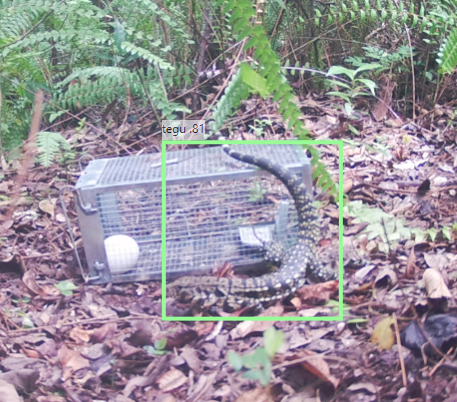
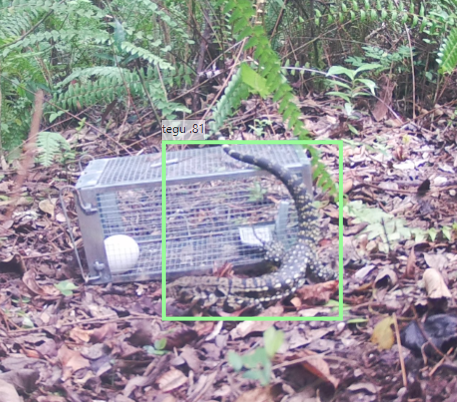
Photo used to train AI-based image detection algorithms for tegu surveillance
By Fort Collins Science Center
May 2025 (approx.)


Detailed Description
FORT scientists are using images like this to train artificial intelligence-based, image detection algorithms. These algorithms will be house in trail cameras to surveil natural areas for invasive tegus like the one seen in this photo.
Sources/Usage
Public Domain.
Related
Early detection and rapid response tools for invasive tegu lizards
Scientists at USGS have shown that much of the US is suitable for invasion by tegu lizards, and suitability will likely increase in the future. While tegus can be removed via trapping, it is difficult to monitor every geographic area where tegus could invade. Thus, methods for quickly detecting and removing tegus in new areas are the best way to prevent spread and minimize damage from these...

Artificial Intelligence in the USGS Ecosystems Mission Area
As a data-driven bureau, the USGS Ecosystem Mission Area (EMA) relies on artificial intelligence (AI) to efficiently gather, analyze, and deliver natural resource information to Federal, State, Tribal, academic, and industry partners. USGS EMA scientists are developing and testing innovative uses of AI, including machine learning, deep neural network models, and photogrammetry, to streamline the...
Related
Early detection and rapid response tools for invasive tegu lizards
Scientists at USGS have shown that much of the US is suitable for invasion by tegu lizards, and suitability will likely increase in the future. While tegus can be removed via trapping, it is difficult to monitor every geographic area where tegus could invade. Thus, methods for quickly detecting and removing tegus in new areas are the best way to prevent spread and minimize damage from these...
Artificial Intelligence in the USGS Ecosystems Mission Area
As a data-driven bureau, the USGS Ecosystem Mission Area (EMA) relies on artificial intelligence (AI) to efficiently gather, analyze, and deliver natural resource information to Federal, State, Tribal, academic, and industry partners. USGS EMA scientists are developing and testing innovative uses of AI, including machine learning, deep neural network models, and photogrammetry, to streamline the...