An official website of the United States government
Here's how you know
Official websites use .gov
A .gov website belongs to an official government organization in the United States.
Secure .gov websites use HTTPS
A lock () or https:// means you’ve safely connected to the .gov website. Share sensitive information only on official, secure websites.
USGS celebrates the International Day of Women and Girls in Science by featuring five fascinating animals and five phenomenal female scientists who study them.
When an animal elicits feelings of adoration or empathy, we consider it charismatic—think pandas.
Traditionally, charismatic wildlife have been large and non-threatening. But even complicated animals, like bats and sharks, have gotten their time to shine with well-executed public education campaigns. These days, there’s a diverse pool of what can be considered a charismatic wildlife species.
Just like charismatic wildlife, there was a time when the scientists who studied them might have fit a standard mold. Thankfully, times are changing.
To celebrate the International Day of Women and Girls in Science, the U.S. Geological Survey is showcasing five charismatic wildlife species and five female scientists who study them. The science these women produce answers some of these species’ most pressing science needs and demonstrates the outmatched contribution of USGS scientists to the field of wildlife biology.
(Read along or click an image below to go to that section)
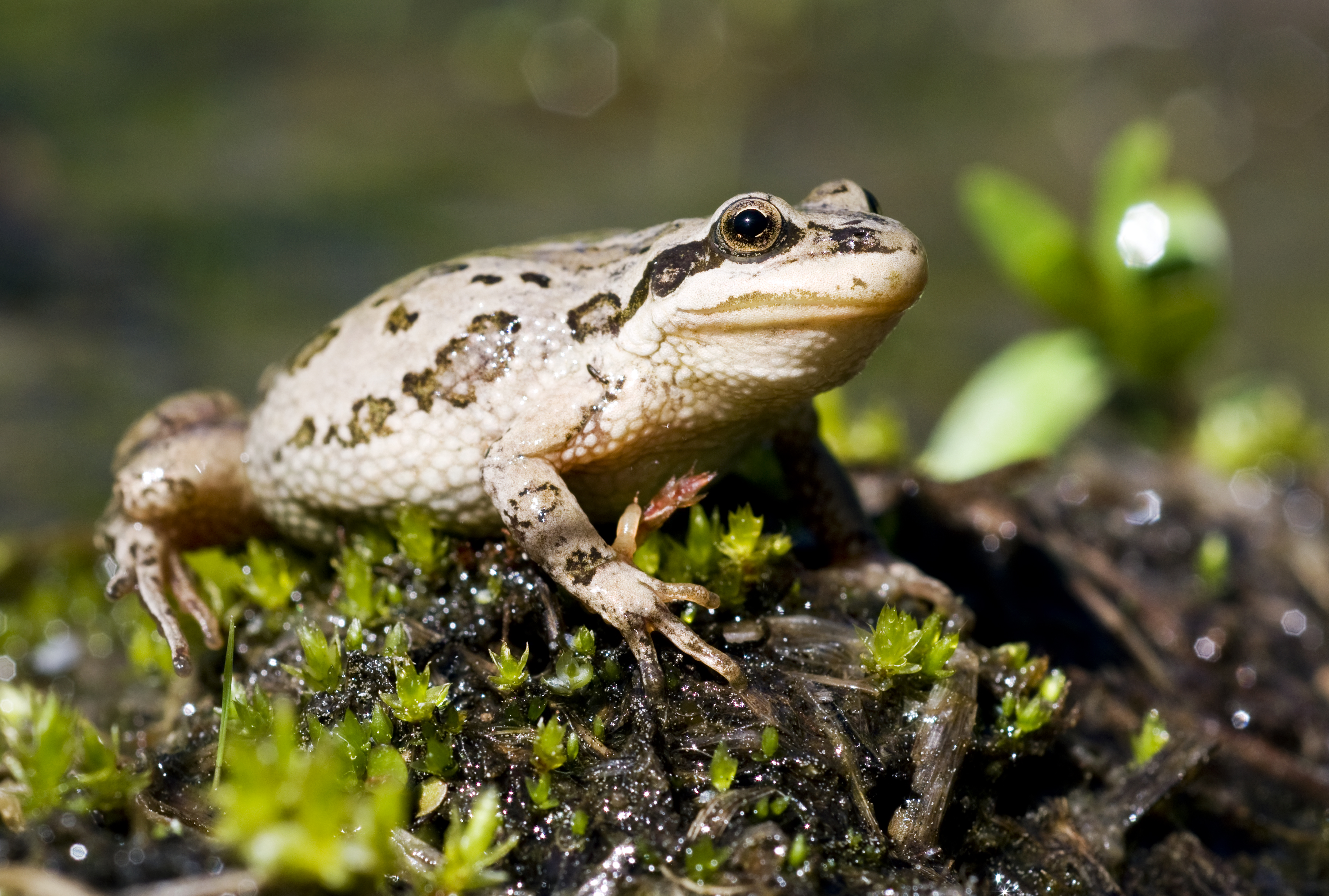
Itty bitty and vocal, it’s easy to be drawn to the boreal chorus frog, Pseudacris maculata. Like their name implies, the species’ range—which is a large swath of the interior of the North American continent—extends far into the north to the boreal lands almost to the Arctic Circle.
In spring, when it’s time to breed, boreal chorus frogs are the first to begin calling. During this period, they form very large “choruses” or aggregations of calling males, which can get tremendously loud.
Like most amphibians, there isn’t a ton of information about the species as a whole. But there is a wealth of information on two populations in Colorado thanks, in part, to USGS Fort Collins Science Center Research Zoologist Erin Muths.
The two populations of boreal chorus frogs were a research interest of Dave Pettus with Colorado State University and his graduate student Al Spencer, who started studying them in the 1960s. Eventually, Steve Corn with the USGS took over studies on the two populations. It was he who hired Muths, with her freshly earned PhD, which she acquired studying kangaroos in Australia.
When Muths joined the project in 1995, the populations had already been studied continuously for three decades. Now, in the population’s sixth decade of data collection, Muths reflected on the value of such a long-term dataset, “Having this wealth of data allows us to consider questions about amphibian populations, like the effects of snowpack, density and landscape change, that we couldn’t otherwise answer.”
Erin Muths with toad at Amphibians on the Mall 2023
Globally amphibians are disappearing. Although this alarming trend is not reflected in the two populations of boreal chorus frog Muths studies, her research on them is helping to home in on things that may impact amphibian population health, like contaminants.
Muths’s dedication to studying the boreal chorus frog is characteristic of her dogged approach to science.
Although much has probably changed over her career in the scientific field, she admits to keeping her head down and focusing on the science.
“The frogs don’t care about who’s in charge of what,” Muths asserted. “My job is to provide the best available science for partners so they can facilitate conservation. Although chorus frogs are not at risk that we know of, information about their demography and how they respond to change can often be applied more broadly to species that might be in trouble.”
Muths is a persistent person and dedicated scientist. As a woman who has always conducted field research in remote places and worked predominantly with men, she thinks that gender has not been a factor in her career—neither positive nor negative. The advice she’d offer to anyone interested in pursuing a career in science is to, basically, just do it. Don’t let anything hold you back.
Polar bears, Ursus maritimus, are both familiar and mysterious. They are huge and regal, with big black eyes that draw you in like tractor beams. Although they may appear cuddly, they are the top predator of the north.
Polar bears live in the Arctic. They evolved and behaviorally adapted to use sea ice to move around and hunt their prey, which are primarily seals and occasionally whales. But in a warming world, sea ice has been disappearing.
That’s the main focus of Research Wildlife Biologist Karyn Rode’s work. She’s studied polar bears for nearly two decades, first with the U.S. Fish and Wildlife Service and then with the USGS Alaska Science Center.
“Polar bears occur in some of the most remote places on earth. The environments and ecosystems they occupy are some of the least studied in the world, yet they are also the places where some of the greatest environmental changes are occurring,” Rode notes.
Karyn Rode assessing health of tranquilized polar bear
Rode’s research focuses on two main questions: 1) how does and will sea ice loss affect polar bear land use during summer months and 2) how does polar bear health, reproduction and, ultimately, the total number of polar bears change with the continued loss of sea ice?
Polar bears are interconnected with life in the Arctic making Rode’s research important for informing more than just polar bear conservation efforts. They are an important resource for Alaska Native subsistence hunters, and they are increasingly entering areas where people live and work looking for food, which endangers people and bears.
Understanding how polar bears react to their changing environment is, therefore, critical.
The science Rode produces at the USGS is focused on informing management and policy decisions, something she is able to do well because she serves on several polar bear-focused scientific advisory groups, like the U.S.-Russia Scientific working group under the U.S.-Russia polar bear treaty and the International Union for Conservation of Nature Polar Bear specialist group.
Rode is clearly a busy person, but she still finds time to respond to the many budding scientists who reach out to her for advice. Many ask how they, too, can become bear biologists.
Her answer is to be flexible and open to opportunity, that there are a variety of paths that may become available to you that could lead to a rewarding career. Rode herself bounced around the globe studying different animals, including elephants and primates in Africa, before she landed on the path to polar bear research where she remains today.
“Don’t compare yourself or your work to others,” Rode emphasizes. “Determine for yourself what you think is good and meaningful work. Pave your own way.”
Sirens of the not-so-deep, manatees are marine mammals that regale with their tiny, beady eyes and coarsely whiskered snout. Their serene demeanor and penchant for grazing underwater vegetation make their nickname—the sea cow—appropriate. It’s hard not to smile when you see one.
Florida manatees are a sub-species of the West Indian manatee (Trichechus manatus latirostris), and are in the genus Sirenia, named for the mermaids and sirens of myth and lore, which includes manatees and dugongs.
manatee feeding in extremely shallow water in the Indian River system
Where the sirens of lore call lovesick sailors to their watery graves, the siren’s call of the Florida manatee, on the other hand, is alerting scientists of threats to manatee health.
Florida manatee populations were on the rise for decades, but in 2020, they started dying in alarming numbers along the eastern coast of Florida. The event is now known as the Indian River Unusual Mortality Event, and it raises some new science questions.
Florida manatees live in freshwater habitats and inshore ocean waters, often near well-populated areas. Their lumbering, quiet nature and proximity to people means that they are easy wildlife to view, but it also means that they live in environments that are heavily influenced by people.
There were many unknowns when the Florida manatee mortality event began. Besides figuring out what was causing the manatees to die, scientists and natural resource managers wanted to know what other impacts or consequences could stem from this event.
USGS Research Geneticist Maggie Hunter with the Wetland and Aquatic Research Center was one who answered the (siren) call-to-action.
Hunter had studied Sirenians, including Florida manatees, for two decades. She entered the field of population genetics when it was rapidly expanding, and she quickly found an unoccupied niche for herself with the USGS. Her early work helped answer basic questions about the population genetics of the Florida manatee. Over time, she expanded the questions she worked on from immunology to environmental DNA and toxicology, and increased the number of species she studied, all while building a lab from the ground up.
But when new science questions arose, Hunter was on the case.
In a previous mortality event, manatees had switched food sources from sea grass to macroalgae, which was causing digestive distress and deaths. When the current mortality event started, it was obvious that manatees were starving to death from their body condition and the lack of their food source—sea grass.
It appears that problems with their food source may not be the only reason manatees are falling ill and dying. Hunter and the other scientists who work in her lab are using their knowledge of molecular tools to help piece together what else is happening to the manatees in the Indian River system. She has teamed up with scientists at the USGS who specialize in immunology and contaminants research to look further into this question.
Maggie Hunter with manatee during manatee research
Just like her work has expanded from answering basic questions about species’ population genetics, Hunter’s influence has grown to making an impact on a global scale.
She worked with an international team of scientists to explain to the United Nations Convention on Biological Diversity the importance of including genetic diversity for all species (not just economic-related species) in the Global Biodiversity Framework, which is used to inform biodiversity-related conservation efforts. And the U.N. CBD did just that following the team’s recommendations.
Just like Rode, Hunter reserves time for fledgling scientists in her busy schedule. Her advice to anyone interested in a career in the sciences is to find the most interesting topic you can and pursue it through different types of opportunities.
“Whether or not your career leads to that specific topic, that strong interest can help to fuel your path. Be confident in your capabilities and search for new experiences and connections with supportive colleagues at all levels,” she notes.
There are ancient giants who lurk in the murky depths of the Great Lakes. Contemporaries of the dinosaurs, lake sturgeon, Acipenser fulvescens, are large, long-lived, plated fish that roam the rivers and lakes of the eastern half of North America.
Known as namé to the indigenous peoples of the Great Lakes region, they have been important to people for as long as people have been present. Indigenous societies are intimately tied to the fish, both culturally and nutritionally.
Besides being harvested for their meat, lake sturgeon also have tasty eggs. They were harvested for caviar to near extinction in the 1900s before they were protected. Today, lake sturgeon populations are recovering.
But lake sturgeon face a new threat—climate change.
The life cycle of the lake sturgeon is tied to water temperature. They take cues from water temperature for events like when to migrate for spawning and when to hatch out of their eggs. With warming water temperatures, the lake sturgeon life cycle is getting thrown out of whack.
Recognizing this problem and concerned over their cultural and nutritional future, Tribal leaders from the Great Lakes region raised the alarm.
On the case: Holly Embke, USGS Research Fish Biologist with the Midwest Climate Adaptation Science Center. Embke grew up near the Great Lakes in a family that frequented the waterways of their home. She has always been drawn to water, to how rivers and lakes can connect people to where they live. As a scientist, that interest spilled over into her work.
Embke loves studying the things that tie people and place together, like certain ecosystems or species. That’s what drew her to studying lake sturgeon—it’s a fish that connects people and places.
“Lake sturgeon are critically important to the cultural and subsistence needs of many diverse folks in the Great Lakes region, like indigenous nations and anglers,” Embke explains. “Being able to work with the communities who are most reliant on these fish to find ways to support lake sturgeon, ecosystems and community sustainability into the future given climate change makes addressing this complex problem all the more fulfilling.”
Although early in her career, Embke recognizes the necessity of having diverse perspectives inform the science she is conducting. She acknowledges that as a queer woman, she has not always felt welcome in fisheries, her field of study. Embke appreciates the mentors and allies who offered her space in a traditionally un-diverse field and intends to continue expanding the initiatives focused on diversity, equitability and inclusivity in aquatic ecology.
“I would not be where I am without the support of several mentors,” Embke notes. “I would highly recommend those interested in a career in science to reach out to potential mentors early and often. And continue this practice throughout your career. A simple email to someone communicating your admiration of their work can lead to fantastic opportunities down the line.”
Adorable as wee piglets and destructive as fully-grown behemoth boars, we saved the most complicated charismatic wildlife species for last—invasive wild pigs, Sus scrofa.
Wild pigs, sometimes referred to as feral hogs, were once domesticated pigs whose ancestors escaped or were let loose and cross-bred with introduced wild boars from Eurasia. They are problematic because they can destroy crops and damage natural ecosystems leading to huge economic and ecological losses.
Invasive wild pigs with evidence of rooting, one of their destructive behaviors
Like many of the other wildlife species presented here, wild pigs are connected to people, through their origins on the North American continent, through the problems they cause for us and through harvest. Where scientists are focusing on ways to manage the other species on this list for conservation, scientists who study wild pigs focus on ways to manage wild pigs to reduce their impacts.
Buchholtz is no stranger to human-wildlife conflict, for her PhD she studied elephants in northwest Botswana. In fact, she notes, invasive wild pigs have a lot in common with elephants—both species are (relatively) large, smart and can cause a lot of challenges for people by damaging crops and property. But where her PhD project focused on animals that are largely valued by the conservation community, Buchholtz’s present study subject, wild pigs, are not.
“Studying wild pigs, you can’t help but develop a grudging respect for how smart and adaptable they are,” Buchholtz admits. “Even as these characteristics are what make them so invasive, economically and ecologically damaging, and near impossible to eradicate.”
As a part of the USGS’s South Carolina Cooperative Fish and Wildlife Unit, Buchholtz doesn’t just work with resource management agencies to co-produce the science she conducts, she also helps to train the next generation of wildlife biologists.
Take the current wild pig project Buchholtz is leading. She and a graduate student run the project with hands-on research opportunities for undergraduate students of Clemson University. The students get to see what research is like up-close-and personal.
“We put GPS collars on pigs to learn more about how they navigate in the Clemson Experimental Forest and surrounding areas. We also put out game cameras to see how the pigs are using areas near biking and hiking trails. Now, we are analyzing the data and preparing to share our findings with local stakeholders.”
Just like working with wild pigs fulfills Buchholtz’s interest in researching how wildlife use space alongside people, working with students also gives her the opportunity to impart her own wisdom upon students.
“The three core values I try to hold at the center of my role as a scientist and mentor are curiosity, respect and kindness. So often, I think the stereotypes for successful scientists involve being competitive, objective or sterile, and results-driven to the exclusion of all else. But you don’t have to change who you are to be a scientist. There may be parts of you that you fear will hold you back from a career in science, but embracing diversity of thought and perspective through being true to ourselves is what we really need to make scientific fields the best they can be.”
Explore the related content below to learn more about these species and the scientists who study them
Polar bears ( Ursus maritimus) are one of 4 marine mammal species managed by the U.S. Department of Interior. The USGS Alaska Science Center leads long–term research on polar bears to inform local, state, national and international policy makers regarding conservation of the species and its habitat. Our studies, ongoing since 1985, are focused on population dynamics, health and energetics...
Polar bears ( Ursus maritimus) are one of 4 marine mammal species managed by the U.S. Department of Interior. The USGS Alaska Science Center leads long–term research on polar bears to inform local, state, national and international policy makers regarding conservation of the species and its habitat. Our studies, ongoing since 1985, are focused on population dynamics, health and energetics...
A multi-agency effort assesses the health of manatees and provides baseline information on their health, reproductive status, and nutritional condition.
A multi-agency effort assesses the health of manatees and provides baseline information on their health, reproductive status, and nutritional condition.
The warming climate has the potential to drive significant changes in the health and energetics of Arctic fauna, particularly those dependent on sea ice habitats like polar bears. An animal’s health and energetic state reflects the interaction between its behavioral choices and the environment. Because of this, measuring changes in health and energetics has potential for revealing important...
The warming climate has the potential to drive significant changes in the health and energetics of Arctic fauna, particularly those dependent on sea ice habitats like polar bears. An animal’s health and energetic state reflects the interaction between its behavioral choices and the environment. Because of this, measuring changes in health and energetics has potential for revealing important...
Polar bears are tied to the sea ice for nearly all of their life cycle functions. Most important of these is foraging, or access to food. Polar bears almost exclusively eat seals, and they are equally as dependent upon the sea for their nutrition as are seals, whales, and other aquatic mammals. Polar bears are not aquatic, however, and their only access to the seals is from the surface of the sea...
Polar bears are tied to the sea ice for nearly all of their life cycle functions. Most important of these is foraging, or access to food. Polar bears almost exclusively eat seals, and they are equally as dependent upon the sea for their nutrition as are seals, whales, and other aquatic mammals. Polar bears are not aquatic, however, and their only access to the seals is from the surface of the sea...
Feral pigs are invasive animals first introduced in the continental United States during the 1500s by European sailors. The animals are a problem across the Southeastern and the Western United States. Large numbers exist on Federal lands, including National Wildlife Refuges and National Parks, as a result of illegal releases and high reproductive rates. With adequate nutrition, breeding occurs...
Feral pigs are invasive animals first introduced in the continental United States during the 1500s by European sailors. The animals are a problem across the Southeastern and the Western United States. Large numbers exist on Federal lands, including National Wildlife Refuges and National Parks, as a result of illegal releases and high reproductive rates. With adequate nutrition, breeding occurs...
Lake sturgeon are a fish of strong subsistence, cultural, and spiritual importance for many Tribal nations. But lake sturgeon are especially vulnerable to climate change given their unique life history and historical mass declines. Therefore, there is a great need to incorporate Tribal perspectives on lake sturgeon shifts and information needs into adaptation planning to conserve these...
Indigenous Perspectives on Lake Sturgeon and the Potential Impact of Climate Change
Lake sturgeon are a fish of strong subsistence, cultural, and spiritual importance for many Tribal nations. But lake sturgeon are especially vulnerable to climate change given their unique life history and historical mass declines. Therefore, there is a great need to incorporate Tribal perspectives on lake sturgeon shifts and information needs into adaptation planning to conserve these fish in a
This is B-roll video of POV Polar Bear Collar Cam B-roll 2019, 2021, and 2022. First slide after large black USGS logo: Polar bears equipped with GPS-enabled video camera collars that show the bear’s point-of-view. This video was collected as part of a study measuring the energy expenditure, behavior, movement, and body composition changes of polar bears on land in Wapusk National Park Canada...
Climate Science Champions Season 3: Holly Embke, Research Fish Biologist
Research Fish Biologist Holly Embke investigates how climate change is impacting inland fish populations used by recreational anglers and for Tribal subsistence activities.
Research Fish Biologist Holly Embke investigates how climate change is impacting inland fish populations used by recreational anglers and for Tribal subsistence activities.
USGS Alaska Science Center Polar Bear Research Program
The USGS Alaska Science Center leads long–term research on polar bears to inform local, state, national and international policy makers regarding conservation of the species and its habitat.
The USGS Alaska Science Center leads long–term research on polar bears to inform local, state, national and international policy makers regarding conservation of the species and its habitat.
Spring 2014. USGS scientists conduct a health evaluation of a young male polar bear in the Arctic as part of the annual southern Beaufort Sea population survey. The bear is sedated for approximately an hour while the team records a variety of measurements and collects key biological samples.
Spring 2014. USGS scientists conduct a health evaluation of a young male polar bear in the Arctic as part of the annual southern Beaufort Sea population survey. The bear is sedated for approximately an hour while the team records a variety of measurements and collects key biological samples.
Monitoring trends in large mammal populations is a fundamental component of wildlife management and conservation. However, direct estimates of population size and vital rates of large mammals can be logistically challenging and expensive. Indicators that reflect trends in abundance, therefore, can be valuable tools for supporting population monitoring. Polar bears have a relatively...
Authors
Karyn D. Rode, Ryan R. Wilson, Justin A. Crawford, Lori T. Quakenbush
Acipenser fulvescens (Rafinesque, 1817; lake sturgeon) are the only sturgeon species native to the Great Lakes region and are threatened across most of their range. They are historically vulnerable because of overfishing and habitat fragmentation with the potential for climate change acting as an increasing stressor in the future. Lake sturgeon span multiple habitats during their long...
Authors
Holly S. Embke, Catherine A. Nikiel, Marta P. Lyons
This report provides analysis to extend the 2040 forecasts of polar bear (Ursus maritimus) land use for the southern Beaufort and Chukchi Sea populations presented in a recent publication (Rode and others, 2022) through the year 2065. To inform long-term polar bear management considerations, we provide point-estimate forecasts and 95-percent prediction intervals of the proportion of...
Authors
Karyn D. Rode, David C. Douglas, Todd C. Atwood, Ryan R. Wilson
Recent scientific evidence shows that genetic diversity must be maintained, managed, and monitored to protect biodiversity and nature's contributions to people. Three genetic diversity indicators, two of which do not require DNA-based assessment, have been proposed for reporting to the Convention on Biological Diversity and other conservation and policy initiatives. These indicators...
Authors
Sean M. Hoban, Jessica M. da Silva, Alicia Mastretta-Yanes, Catherine E. Grueber, Myriam Heuertz, Margaret Hunter, Joachim Mergeay, Ivan Paz-Vinas, Keiichi Fukaya, Fumiko Ishihama, Rebecca Jordan, Viktoria Koppa, Maria Camila Latorre-Cardenas, Anna J. MacDonald, Victor Rincon-Parra, Per Sjogren-Gulve, Naoki Tani, Henrik Thurfjell, Linda Laikre
Quantifying how contaminants change across life cycles of species that undergo metamorphosis is critical to assessing organismal risk, particularly for consumers. Pond-breeding amphibians can dominate aquatic animal biomass as larvae and are terrestrial prey as juveniles and adults. Thus, amphibians can be vectors of mercury exposure in both aquatic and terrestrial food webs. However, it...
Authors
Freya Elizabeth Rowland, Erin L. Muths, Collin A. Eagles-Smith, Craig A. Stricker, Johanna M. Kraus, Rachel A. Harrington, David Walters
The International Union for Conservation of Nature (IUCN) Red List is an important and widely used tool for conservation assessment. The IUCN uses information about a species’ range, population size, habitat quality and fragmentation levels, and trends in abundance to assess extinction risk. Genetic diversity is not considered, although it affects extinction risk. Declining populations...
Authors
Chloe Schmidt, Sean M. Hoban, Margaret Hunter, Ivan Paz-Vinas, Colin J. Garroway
Amphibians have one more thing to worry about—mercury—large USGS study shows
RESTON, Va. — The first widescale assessment of methylmercury in adult amphibians in the U.S. to date shows that, in amphibians, this toxic compound...
Polar bears ( Ursus maritimus) are one of 4 marine mammal species managed by the U.S. Department of Interior. The USGS Alaska Science Center leads long–term research on polar bears to inform local, state, national and international policy makers regarding conservation of the species and its habitat. Our studies, ongoing since 1985, are focused on population dynamics, health and energetics...
Polar bears ( Ursus maritimus) are one of 4 marine mammal species managed by the U.S. Department of Interior. The USGS Alaska Science Center leads long–term research on polar bears to inform local, state, national and international policy makers regarding conservation of the species and its habitat. Our studies, ongoing since 1985, are focused on population dynamics, health and energetics...
A multi-agency effort assesses the health of manatees and provides baseline information on their health, reproductive status, and nutritional condition.
A multi-agency effort assesses the health of manatees and provides baseline information on their health, reproductive status, and nutritional condition.
The warming climate has the potential to drive significant changes in the health and energetics of Arctic fauna, particularly those dependent on sea ice habitats like polar bears. An animal’s health and energetic state reflects the interaction between its behavioral choices and the environment. Because of this, measuring changes in health and energetics has potential for revealing important...
The warming climate has the potential to drive significant changes in the health and energetics of Arctic fauna, particularly those dependent on sea ice habitats like polar bears. An animal’s health and energetic state reflects the interaction between its behavioral choices and the environment. Because of this, measuring changes in health and energetics has potential for revealing important...
Polar bears are tied to the sea ice for nearly all of their life cycle functions. Most important of these is foraging, or access to food. Polar bears almost exclusively eat seals, and they are equally as dependent upon the sea for their nutrition as are seals, whales, and other aquatic mammals. Polar bears are not aquatic, however, and their only access to the seals is from the surface of the sea...
Polar bears are tied to the sea ice for nearly all of their life cycle functions. Most important of these is foraging, or access to food. Polar bears almost exclusively eat seals, and they are equally as dependent upon the sea for their nutrition as are seals, whales, and other aquatic mammals. Polar bears are not aquatic, however, and their only access to the seals is from the surface of the sea...
Feral pigs are invasive animals first introduced in the continental United States during the 1500s by European sailors. The animals are a problem across the Southeastern and the Western United States. Large numbers exist on Federal lands, including National Wildlife Refuges and National Parks, as a result of illegal releases and high reproductive rates. With adequate nutrition, breeding occurs...
Feral pigs are invasive animals first introduced in the continental United States during the 1500s by European sailors. The animals are a problem across the Southeastern and the Western United States. Large numbers exist on Federal lands, including National Wildlife Refuges and National Parks, as a result of illegal releases and high reproductive rates. With adequate nutrition, breeding occurs...
Lake sturgeon are a fish of strong subsistence, cultural, and spiritual importance for many Tribal nations. But lake sturgeon are especially vulnerable to climate change given their unique life history and historical mass declines. Therefore, there is a great need to incorporate Tribal perspectives on lake sturgeon shifts and information needs into adaptation planning to conserve these...
Indigenous Perspectives on Lake Sturgeon and the Potential Impact of Climate Change
Lake sturgeon are a fish of strong subsistence, cultural, and spiritual importance for many Tribal nations. But lake sturgeon are especially vulnerable to climate change given their unique life history and historical mass declines. Therefore, there is a great need to incorporate Tribal perspectives on lake sturgeon shifts and information needs into adaptation planning to conserve these fish in a
This is B-roll video of POV Polar Bear Collar Cam B-roll 2019, 2021, and 2022. First slide after large black USGS logo: Polar bears equipped with GPS-enabled video camera collars that show the bear’s point-of-view. This video was collected as part of a study measuring the energy expenditure, behavior, movement, and body composition changes of polar bears on land in Wapusk National Park Canada...
Climate Science Champions Season 3: Holly Embke, Research Fish Biologist
Research Fish Biologist Holly Embke investigates how climate change is impacting inland fish populations used by recreational anglers and for Tribal subsistence activities.
Research Fish Biologist Holly Embke investigates how climate change is impacting inland fish populations used by recreational anglers and for Tribal subsistence activities.
USGS Alaska Science Center Polar Bear Research Program
The USGS Alaska Science Center leads long–term research on polar bears to inform local, state, national and international policy makers regarding conservation of the species and its habitat.
The USGS Alaska Science Center leads long–term research on polar bears to inform local, state, national and international policy makers regarding conservation of the species and its habitat.
Spring 2014. USGS scientists conduct a health evaluation of a young male polar bear in the Arctic as part of the annual southern Beaufort Sea population survey. The bear is sedated for approximately an hour while the team records a variety of measurements and collects key biological samples.
Spring 2014. USGS scientists conduct a health evaluation of a young male polar bear in the Arctic as part of the annual southern Beaufort Sea population survey. The bear is sedated for approximately an hour while the team records a variety of measurements and collects key biological samples.
Monitoring trends in large mammal populations is a fundamental component of wildlife management and conservation. However, direct estimates of population size and vital rates of large mammals can be logistically challenging and expensive. Indicators that reflect trends in abundance, therefore, can be valuable tools for supporting population monitoring. Polar bears have a relatively...
Authors
Karyn D. Rode, Ryan R. Wilson, Justin A. Crawford, Lori T. Quakenbush
Acipenser fulvescens (Rafinesque, 1817; lake sturgeon) are the only sturgeon species native to the Great Lakes region and are threatened across most of their range. They are historically vulnerable because of overfishing and habitat fragmentation with the potential for climate change acting as an increasing stressor in the future. Lake sturgeon span multiple habitats during their long...
Authors
Holly S. Embke, Catherine A. Nikiel, Marta P. Lyons
This report provides analysis to extend the 2040 forecasts of polar bear (Ursus maritimus) land use for the southern Beaufort and Chukchi Sea populations presented in a recent publication (Rode and others, 2022) through the year 2065. To inform long-term polar bear management considerations, we provide point-estimate forecasts and 95-percent prediction intervals of the proportion of...
Authors
Karyn D. Rode, David C. Douglas, Todd C. Atwood, Ryan R. Wilson
Recent scientific evidence shows that genetic diversity must be maintained, managed, and monitored to protect biodiversity and nature's contributions to people. Three genetic diversity indicators, two of which do not require DNA-based assessment, have been proposed for reporting to the Convention on Biological Diversity and other conservation and policy initiatives. These indicators...
Authors
Sean M. Hoban, Jessica M. da Silva, Alicia Mastretta-Yanes, Catherine E. Grueber, Myriam Heuertz, Margaret Hunter, Joachim Mergeay, Ivan Paz-Vinas, Keiichi Fukaya, Fumiko Ishihama, Rebecca Jordan, Viktoria Koppa, Maria Camila Latorre-Cardenas, Anna J. MacDonald, Victor Rincon-Parra, Per Sjogren-Gulve, Naoki Tani, Henrik Thurfjell, Linda Laikre
Quantifying how contaminants change across life cycles of species that undergo metamorphosis is critical to assessing organismal risk, particularly for consumers. Pond-breeding amphibians can dominate aquatic animal biomass as larvae and are terrestrial prey as juveniles and adults. Thus, amphibians can be vectors of mercury exposure in both aquatic and terrestrial food webs. However, it...
Authors
Freya Elizabeth Rowland, Erin L. Muths, Collin A. Eagles-Smith, Craig A. Stricker, Johanna M. Kraus, Rachel A. Harrington, David Walters
The International Union for Conservation of Nature (IUCN) Red List is an important and widely used tool for conservation assessment. The IUCN uses information about a species’ range, population size, habitat quality and fragmentation levels, and trends in abundance to assess extinction risk. Genetic diversity is not considered, although it affects extinction risk. Declining populations...
Authors
Chloe Schmidt, Sean M. Hoban, Margaret Hunter, Ivan Paz-Vinas, Colin J. Garroway
Amphibians have one more thing to worry about—mercury—large USGS study shows
RESTON, Va. — The first widescale assessment of methylmercury in adult amphibians in the U.S. to date shows that, in amphibians, this toxic compound...