Thermal video of the October 26 Halema‘uma‘u water sampling mission
Thermal video of the October 26 Halema‘uma‘u water sampling missionThis thermal video was captured by the UAS as it collected a water sample in Halema‘uma‘u, at Kīlauea's summit.


Official websites use .gov
A .gov website belongs to an official government organization in the United States.

Secure .gov websites use HTTPS
A lock () or https:// means you’ve safely connected to the .gov website. Share sensitive information only on official, secure websites.

Volcano Hazard Program videos.

This thermal video was captured by the UAS as it collected a water sample in Halema‘uma‘u, at Kīlauea's summit.
This thermal video was captured by the UAS as it collected a water sample in Halema‘uma‘u, at Kīlauea's summit.

This video shows the unmanned aircraft system (UAS) collecting a water sample from Halema‘uma‘u. This wider view shows the scale of the UAS relative to the water pond. USGS video by M. Patrick, 26 Oct 2019.
This video shows the unmanned aircraft system (UAS) collecting a water sample from Halema‘uma‘u. This wider view shows the scale of the UAS relative to the water pond. USGS video by M. Patrick, 26 Oct 2019.

This video shows another view of the unmanned aircraft system sampling water from Halema‘uma‘u. USGS video by C. Parcheta, 26 Oct 2019.
This video shows another view of the unmanned aircraft system sampling water from Halema‘uma‘u. USGS video by C. Parcheta, 26 Oct 2019.

This timelapse video covers 1.5 hours and shows the motion of the water surface at the summit of Kīlauea. Along the shoreline, areas of apparent water influx are visible, often with a slightly greener color. Shifting steam on the surface attests to the high temperature of the water and the winds at the bottom of the crater.
This timelapse video covers 1.5 hours and shows the motion of the water surface at the summit of Kīlauea. Along the shoreline, areas of apparent water influx are visible, often with a slightly greener color. Shifting steam on the surface attests to the high temperature of the water and the winds at the bottom of the crater.

Mike Poland, Scientist-in-Charge of the Yellowstone Volcano Observatory, describes activity at Yellowstone during the month of September 2019.
Mike Poland, Scientist-in-Charge of the Yellowstone Volcano Observatory, describes activity at Yellowstone during the month of September 2019.

USGS Hawaiian Volcano Observatory scientists Matt Patrick and Jim Kauahikaua talk about the water that appeared at the bottom of Halemaʻumaʻu, a crater at the summit of Kīlauea Volcano, in July 2019 and continues to rise today. They address why it appeared, how it’s monitored, and its potential hazards.
USGS Hawaiian Volcano Observatory scientists Matt Patrick and Jim Kauahikaua talk about the water that appeared at the bottom of Halemaʻumaʻu, a crater at the summit of Kīlauea Volcano, in July 2019 and continues to rise today. They address why it appeared, how it’s monitored, and its potential hazards.

This timelapse video covers about 30 minutes of activity at the water pond in Halema‘uma‘u at the summit of Kīlauea. Water appears to be flowing into the pond from several locations, including the southern boundary (right side in this image). A small amount of material is also seen floating on the surface at the eastern end of the pond (top of image).
This timelapse video covers about 30 minutes of activity at the water pond in Halema‘uma‘u at the summit of Kīlauea. Water appears to be flowing into the pond from several locations, including the southern boundary (right side in this image). A small amount of material is also seen floating on the surface at the eastern end of the pond (top of image).

This time-lapse video shows circulation in the water pond in Halema‘uma‘u over a period of about 25 minutes. There appears to be an influx of water along the southern (right) shoreline. A broader eastward flow of water (toward top of image) is evident. The video is shown twice. USGS video.
This time-lapse video shows circulation in the water pond in Halema‘uma‘u over a period of about 25 minutes. There appears to be an influx of water along the southern (right) shoreline. A broader eastward flow of water (toward top of image) is evident. The video is shown twice. USGS video.

Views of the water pond in Halema‘uma‘u on Friday, September 6, and Monday, September 9 are shown in this video. Ripples are evident on the pond, presumably due to wind moving over the water surface. No significant changes in the pond were observed over the weekend, and the water level continues to slowly rise. USGS video by M. Patrick.
Views of the water pond in Halema‘uma‘u on Friday, September 6, and Monday, September 9 are shown in this video. Ripples are evident on the pond, presumably due to wind moving over the water surface. No significant changes in the pond were observed over the weekend, and the water level continues to slowly rise. USGS video by M. Patrick.
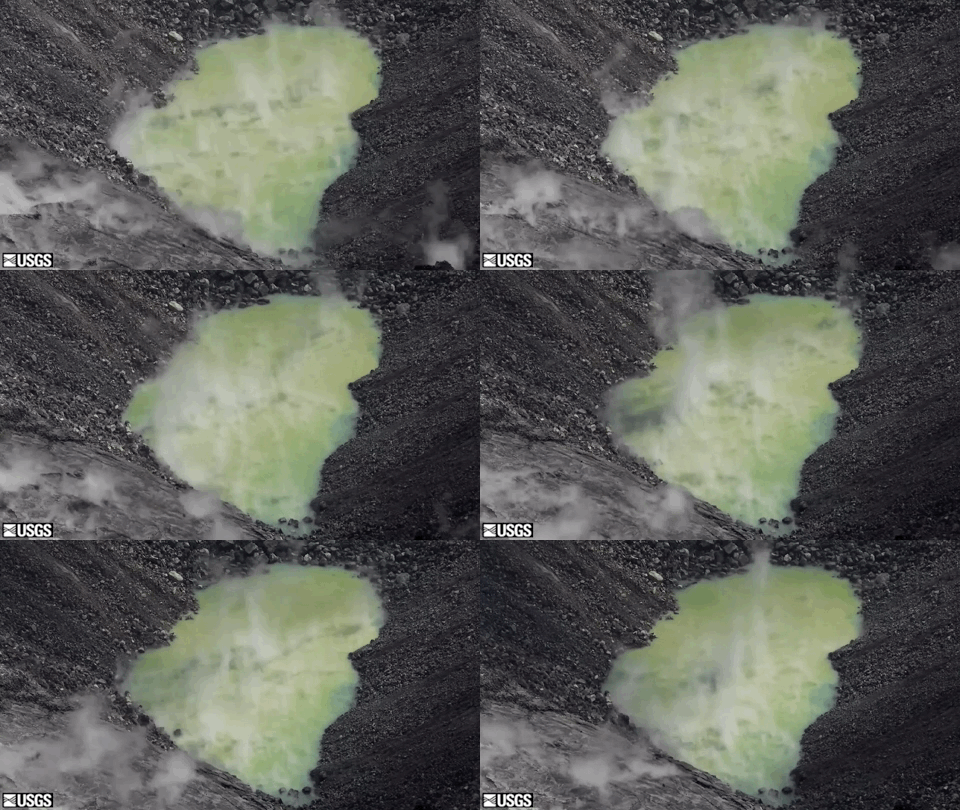
Shown at 30x speed, this video highlights changing activity on the surface of the water pond. Steam wafting above the pond shifts in the wind, and circulation of the water is evident in areas of sharp color boundaries. USGS video by M. Patrick, 09-17-2019.
Shown at 30x speed, this video highlights changing activity on the surface of the water pond. Steam wafting above the pond shifts in the wind, and circulation of the water is evident in areas of sharp color boundaries. USGS video by M. Patrick, 09-17-2019.

Mike Poland, Scientist-in-Charge of the Yellowstone Volcano Observatory, describes activity at Yellowstone during the month of August 2019.
Mike Poland, Scientist-in-Charge of the Yellowstone Volcano Observatory, describes activity at Yellowstone during the month of August 2019.
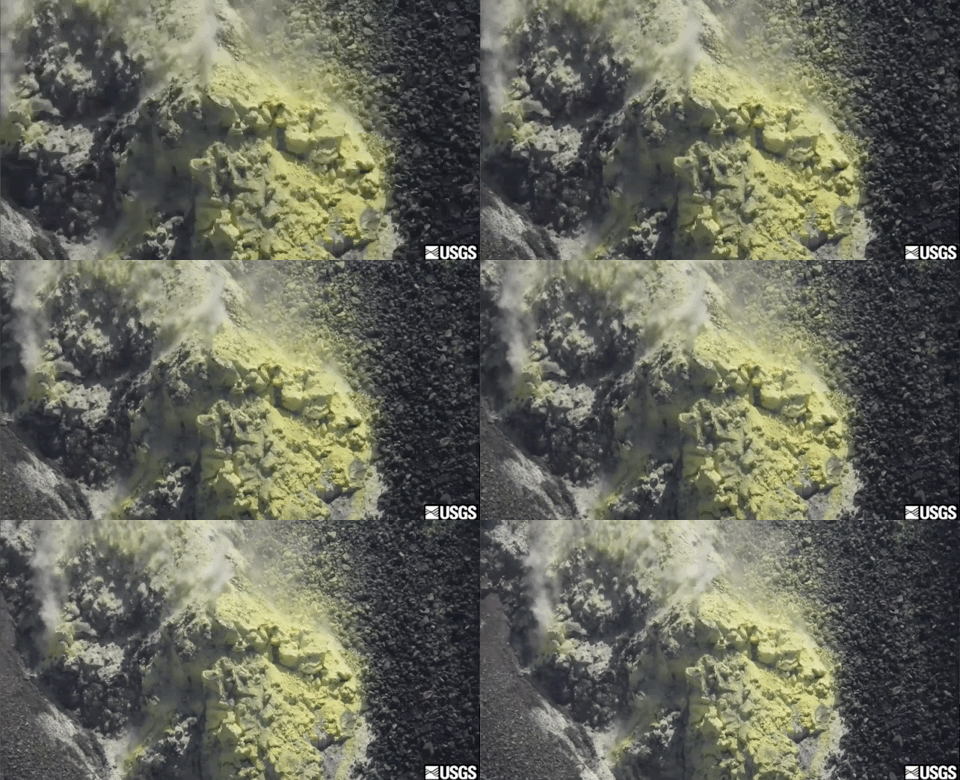
This sequence captured on August 31 begins with a close-up of the fumaroles on the north side of Halema‘uma‘u, then shows a broader view of the crater with the water pond at the bottom and a close-up of steaming and ripples on the water surface. USGS video by M. Patrick, 08-31-2019.
This sequence captured on August 31 begins with a close-up of the fumaroles on the north side of Halema‘uma‘u, then shows a broader view of the crater with the water pond at the bottom and a close-up of steaming and ripples on the water surface. USGS video by M. Patrick, 08-31-2019.
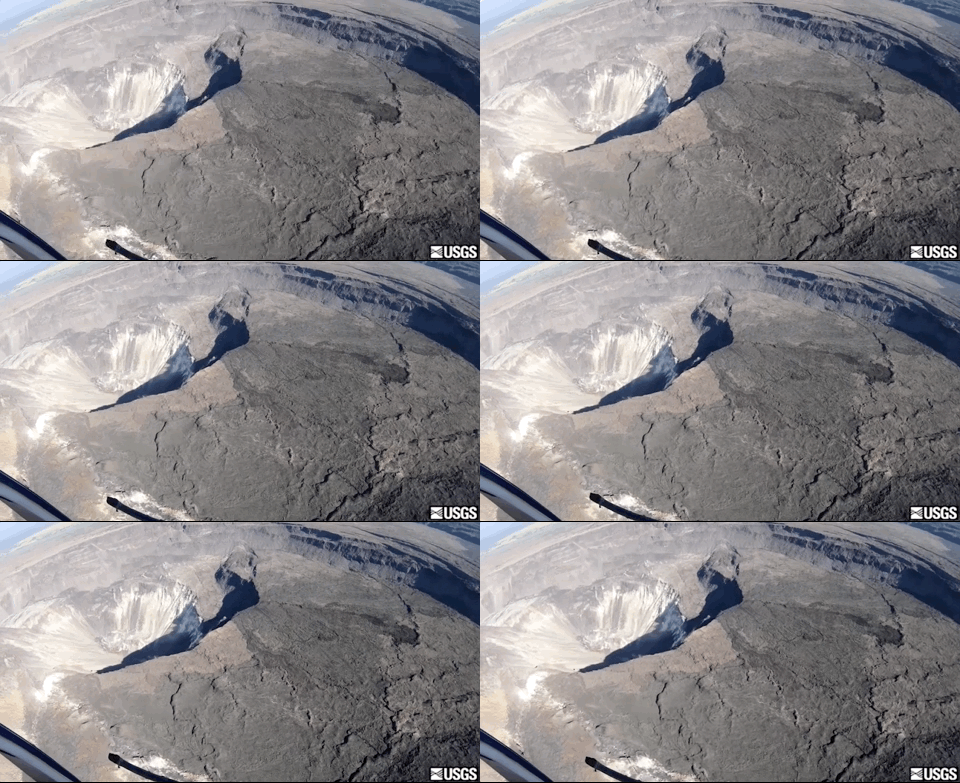
Another day of clear weather provided good views of the water pond in Halema‘uma‘u at Kīlauea's summit. No significant changes were observed, and the thermal camera showed the water surface is still about 70 degrees Celsius (158 degrees Fahrenheit). USGS video by M. Patrick.
Another day of clear weather provided good views of the water pond in Halema‘uma‘u at Kīlauea's summit. No significant changes were observed, and the thermal camera showed the water surface is still about 70 degrees Celsius (158 degrees Fahrenheit). USGS video by M. Patrick.

During Aug. 4-8, 2019, U.S. Geological Survey women scientists, university researchers and Mount St. Helens Institute staff led 25 middle-school girls from Washington and Oregon in the fifth annual “GeoGirls” outdoor volcano science program at Mount St. Helens, Washington.
During Aug. 4-8, 2019, U.S. Geological Survey women scientists, university researchers and Mount St. Helens Institute staff led 25 middle-school girls from Washington and Oregon in the fifth annual “GeoGirls” outdoor volcano science program at Mount St. Helens, Washington.
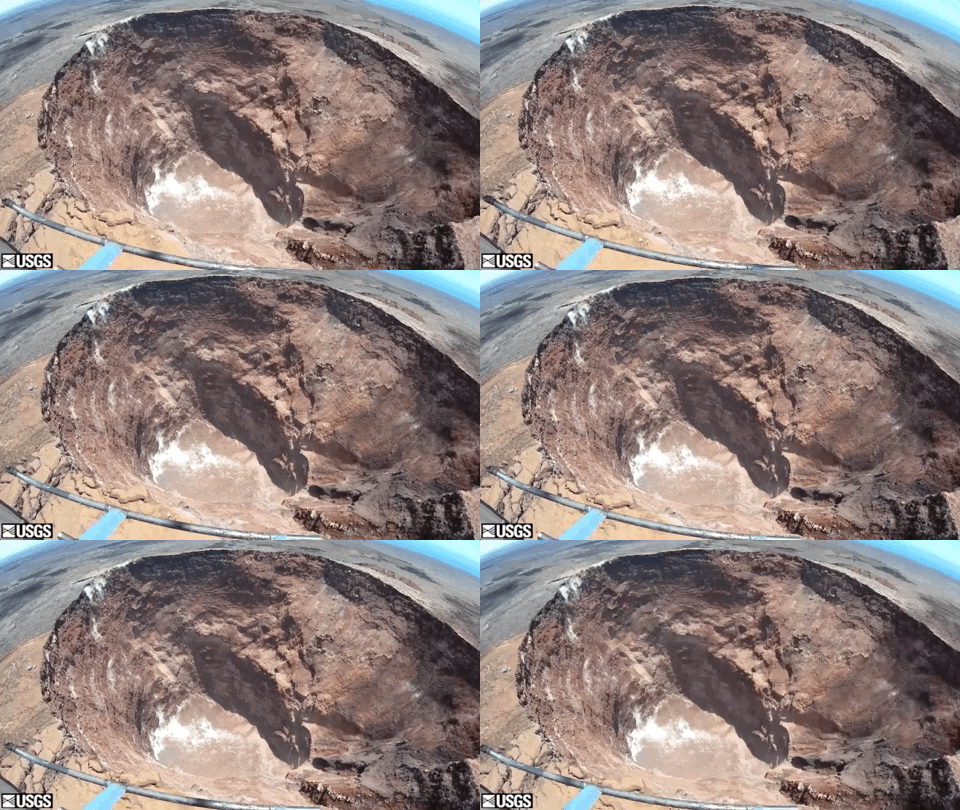
Pu‘u ‘Ō‘ō remains quiet. Clear weather during HVO's August 22 overflight provided good views into the drained crater. Rubble from crater wall collapses has filled in much of the deeper part of the crater, with the bottom now at about 250 meters (820 feet) below the east rim. The curvature of the horizon is caused by the wide-angle view of the camera.
Pu‘u ‘Ō‘ō remains quiet. Clear weather during HVO's August 22 overflight provided good views into the drained crater. Rubble from crater wall collapses has filled in much of the deeper part of the crater, with the bottom now at about 250 meters (820 feet) below the east rim. The curvature of the horizon is caused by the wide-angle view of the camera.

Clear weather afforded good views of the water pond in Halema‘uma‘u. No major changes were observed in the pond, but the water continues to slowly rise. The water surface was steaming, and its temperature was approximately 70 degrees Celsius (158 degrees Fahrenheit). For scale, the pond is about 70 meters (230 feet) long. USGS video by M. Patrick.
Clear weather afforded good views of the water pond in Halema‘uma‘u. No major changes were observed in the pond, but the water continues to slowly rise. The water surface was steaming, and its temperature was approximately 70 degrees Celsius (158 degrees Fahrenheit). For scale, the pond is about 70 meters (230 feet) long. USGS video by M. Patrick.
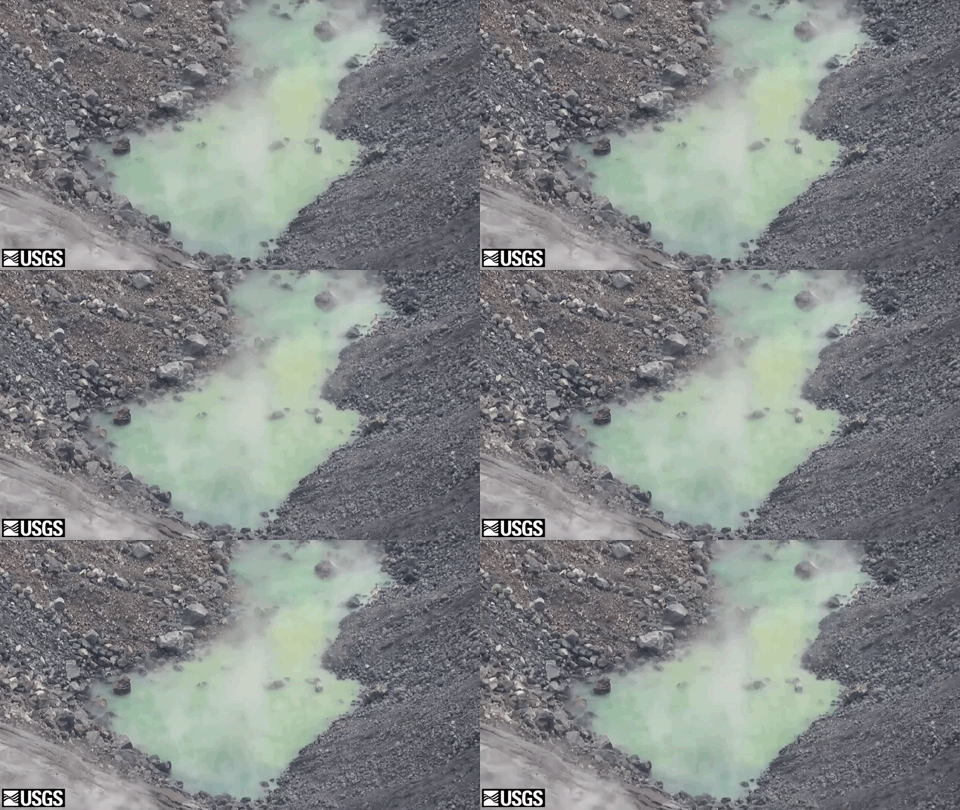
This video shows a close-up of the water pond at the bottom of Halema‘uma‘u on August 13, 2019. Steaming from the water surface shows the shifting winds over the pond.
This video shows a close-up of the water pond at the bottom of Halema‘uma‘u on August 13, 2019. Steaming from the water surface shows the shifting winds over the pond.

This video shows a close-up of the ponded water at the bottom of Halema'uma'u. Yesterday, the separate ponds joined into a single elongate pond. The water level has continued to slowly rise.
This video shows a close-up of the ponded water at the bottom of Halema'uma'u. Yesterday, the separate ponds joined into a single elongate pond. The water level has continued to slowly rise.
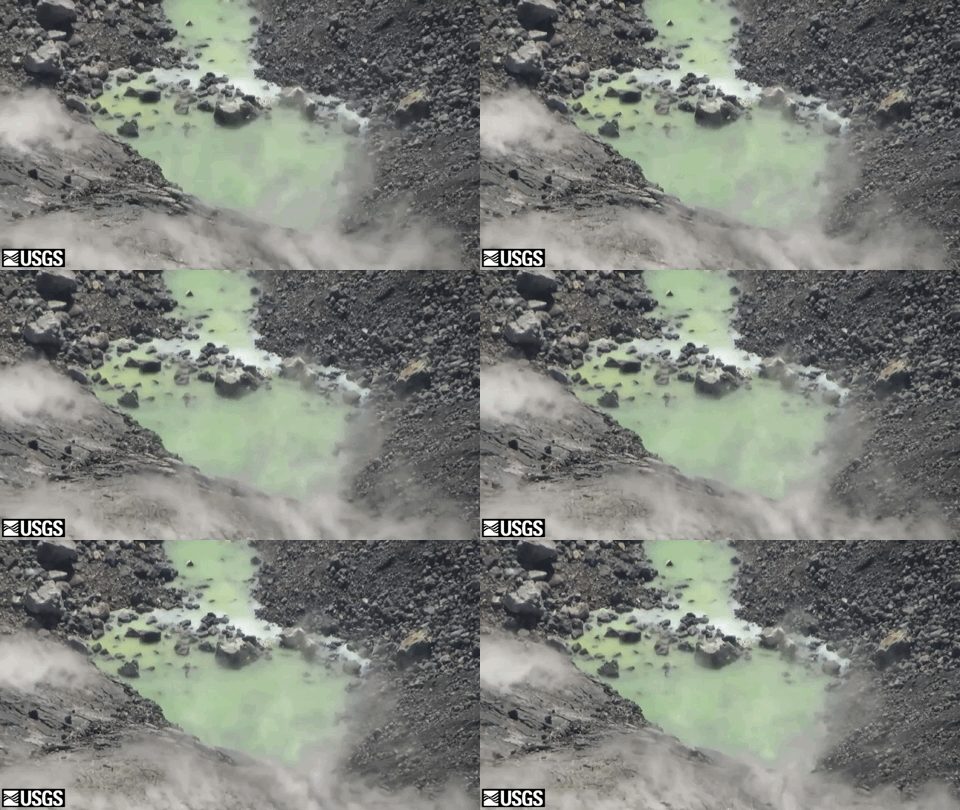
This video shows a close-up of the ponded water at the bottom of Halema‘uma‘u. USGS video by M. Patrick, 08-09-2019.
This video shows a close-up of the ponded water at the bottom of Halema‘uma‘u. USGS video by M. Patrick, 08-09-2019.
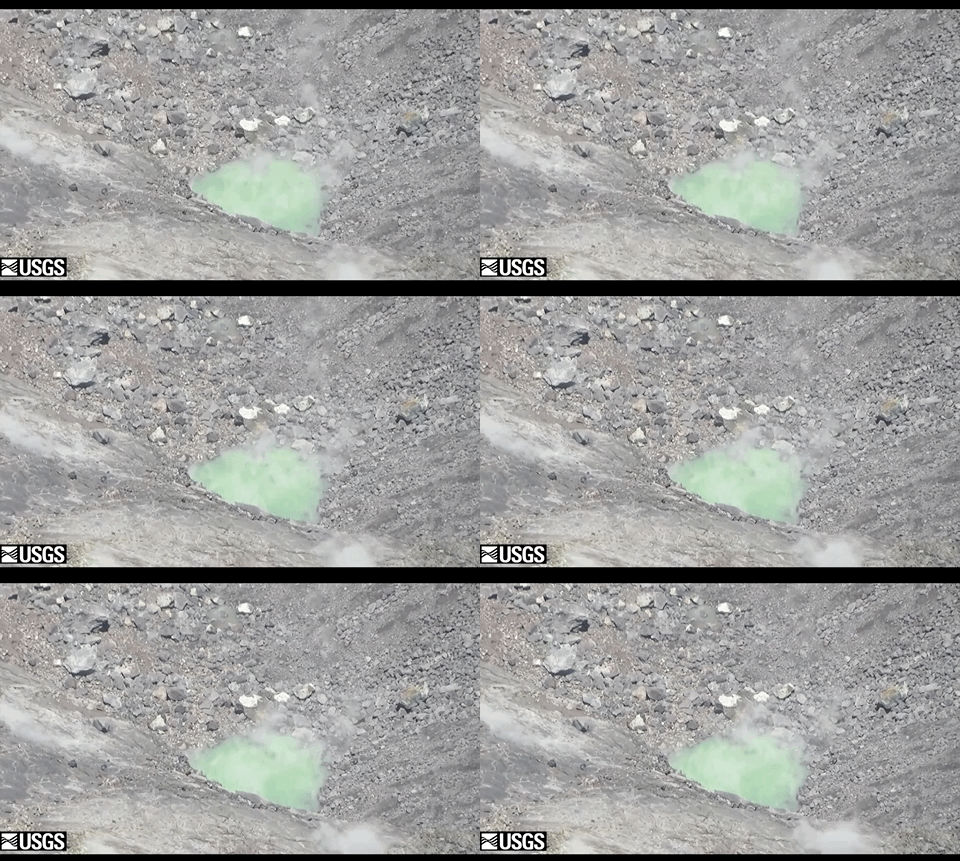
This video shows steaming from the main pond of water at the bottom of Halema‘uma‘u as captured on Sunday, August 4. Two smaller areas of ponded water were present a short distance east of this spot. Thermal images indicate that the water surface is roughly 70 degrees Celsius (158 degrees Fahrenheit). USGS video by M. Patrick, 08-04-2019.
This video shows steaming from the main pond of water at the bottom of Halema‘uma‘u as captured on Sunday, August 4. Two smaller areas of ponded water were present a short distance east of this spot. Thermal images indicate that the water surface is roughly 70 degrees Celsius (158 degrees Fahrenheit). USGS video by M. Patrick, 08-04-2019.

This video shows steaming from the main pond of water at the bottom of Halema‘uma‘u as captured on Sunday, August 4. Two smaller areas of ponded water were present a short distance east of this spot. Thermal images indicate that the water surface is roughly 70 degrees Celsius (158 degrees Fahrenheit). USGS video by M. Patrick, 08-04-2019.
This video shows steaming from the main pond of water at the bottom of Halema‘uma‘u as captured on Sunday, August 4. Two smaller areas of ponded water were present a short distance east of this spot. Thermal images indicate that the water surface is roughly 70 degrees Celsius (158 degrees Fahrenheit). USGS video by M. Patrick, 08-04-2019.