U.S. flag

An official website of the United States government

Videos

Volcano Hazard Program videos.

Filter Total Items: 841
PubTalk 8/2018 — What on Earth is going on at Kilauea Volcano?

Title: What on Earth is going on at Kilauea Volcano?

  • First significant summit explosions in nearly a century
  • Largest summit collapse volume since at least 1800
  • Voluminous fissure eruptions feeding channelized lava flow
  • Unparalleled new opportunities for understanding the volcanic system

Title: What on Earth is going on at Kilauea Volcano?

  • First significant summit explosions in nearly a century
  • Largest summit collapse volume since at least 1800
  • Voluminous fissure eruptions feeding channelized lava flow
  • Unparalleled new opportunities for understanding the volcanic system
Kīlauea Volcano's Summit

The Unmanned Aircraft Systems (UAS) team circumnavigates the crater rim at the summit of Kīlauea Volcano, collecting data for digital elevation models that document summit changes. The volume change, from early May 2018 to present, is over 825 million cubic meters (1 billion cubic yards). The vertical collapse of the crater floor is more than 500 m (1600 ft).

The Unmanned Aircraft Systems (UAS) team circumnavigates the crater rim at the summit of Kīlauea Volcano, collecting data for digital elevation models that document summit changes. The volume change, from early May 2018 to present, is over 825 million cubic meters (1 billion cubic yards). The vertical collapse of the crater floor is more than 500 m (1600 ft).

Kīlauea Volcano's summit

The Unmanned Aircraft Systems (UAS) team circumnavigates the crater rim at the summit of Kīlauea Volcano, collecting data for digital elevation models that document summit changes. The volume change, from early May 2018 to present, is over 825 million cubic meters (1 billion cubic yards). The vertical collapse of the crater floor is more than 500 m (1600 ft).

The Unmanned Aircraft Systems (UAS) team circumnavigates the crater rim at the summit of Kīlauea Volcano, collecting data for digital elevation models that document summit changes. The volume change, from early May 2018 to present, is over 825 million cubic meters (1 billion cubic yards). The vertical collapse of the crater floor is more than 500 m (1600 ft).

Kīlauea Volcano’s lower East Rift Zone

An Unmanned Aircraft Systems overflight of fissure 8 on August 21, 2018, showed no incandescence within the cinder cone. Minor amounts of gases, primarily steam, rose from the north wall of the cinder cone and from areas along the lower East Rift Zone. The interior walls of the fissure 8 cone and lava channel are slumping downward and inward.

An Unmanned Aircraft Systems overflight of fissure 8 on August 21, 2018, showed no incandescence within the cinder cone. Minor amounts of gases, primarily steam, rose from the north wall of the cinder cone and from areas along the lower East Rift Zone. The interior walls of the fissure 8 cone and lava channel are slumping downward and inward.

Kīlauea summit

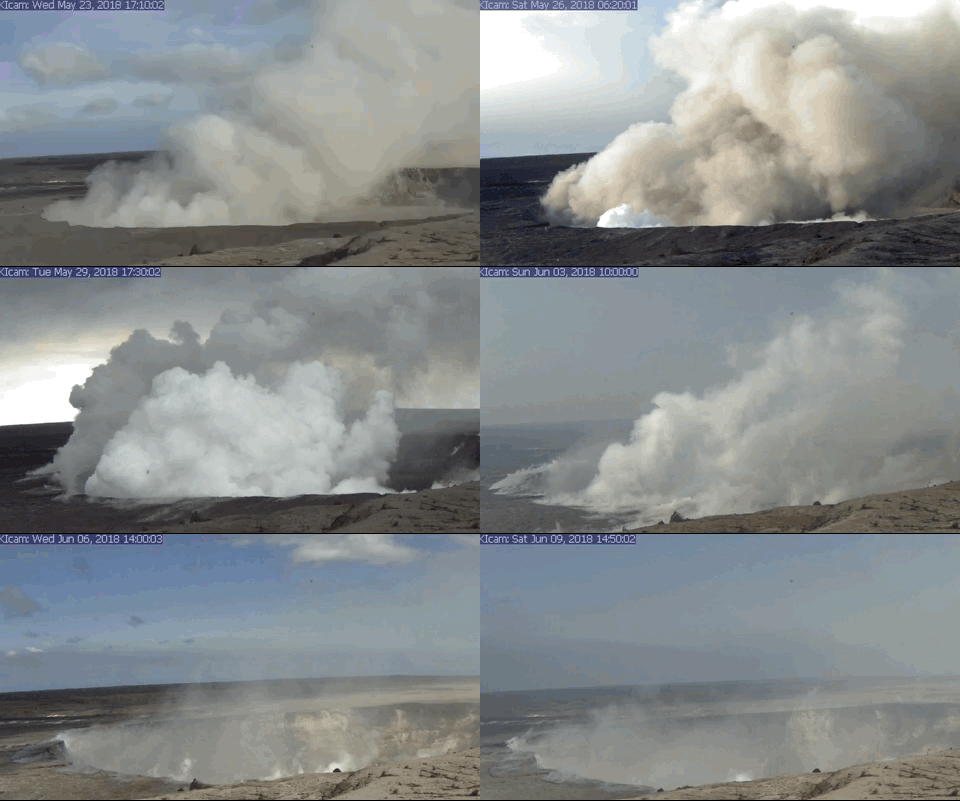
Changes at the summit of Kīlauea between April 14 and August 20, 2018, were captured by a USGS–Hawaiian Volcano Observatory camera. This time-lapse series includes roughly one image per day. The lava lake within Halema‘uma‘u is visible in April, with overflows onto the caldera floor on April 23.

Changes at the summit of Kīlauea between April 14 and August 20, 2018, were captured by a USGS–Hawaiian Volcano Observatory camera. This time-lapse series includes roughly one image per day. The lava lake within Halema‘uma‘u is visible in April, with overflows onto the caldera floor on April 23.

Kīlauea Volcano's Lower East Rift Zone

An Unmanned Aircraft Systems overflight of fissure 8 on August 21, 2018, showed no incandescence within the cinder cone. Minor amounts of gases, primarily steam, rose from the north wall of the cinder cone and from areas along the lower East Rift Zone.

An Unmanned Aircraft Systems overflight of fissure 8 on August 21, 2018, showed no incandescence within the cinder cone. Minor amounts of gases, primarily steam, rose from the north wall of the cinder cone and from areas along the lower East Rift Zone.

Changes Over Time at Kīlauea (April - August 2018)

Changes at the summit of Kīlauea between April 14 and August 20, 2018, were captured by a USGS–Hawaiian Volcano Observatory camera. This time-lapse series includes roughly one image per day. The lava lake within Halema‘uma‘u is visible in April, with overflows onto the caldera floor on April 23.

Changes at the summit of Kīlauea between April 14 and August 20, 2018, were captured by a USGS–Hawaiian Volcano Observatory camera. This time-lapse series includes roughly one image per day. The lava lake within Halema‘uma‘u is visible in April, with overflows onto the caldera floor on April 23.

View Into Fissure 8 Cinder Cone

The Unmanned Aircraft Systems (UAS) team assessed conditions at the fissure 8 cone and upper lava channel on August 17, 2018. At the time of the flight, the lava pond within the cone had crusted over with no observed incandescence.

The Unmanned Aircraft Systems (UAS) team assessed conditions at the fissure 8 cone and upper lava channel on August 17, 2018. At the time of the flight, the lava pond within the cone had crusted over with no observed incandescence.

3D Model of Fissure 8 Cone

This 3-dimensional computer model shows the structure of the fissure 8 cone on Kīlauea Volcano's lower East Rift Zone. The model was created from thermal images acquired during a helicopter overflight on August 15, 2018. The cone is currently about 30 m (100 ft) tall with a broad base.

This 3-dimensional computer model shows the structure of the fissure 8 cone on Kīlauea Volcano's lower East Rift Zone. The model was created from thermal images acquired during a helicopter overflight on August 15, 2018. The cone is currently about 30 m (100 ft) tall with a broad base.

Lava Entering Ocean Near Isaac Hale Beach Park

Lava continues to enter the ocean near the Isaac Hale Beach Park on Kīlauea Volcano's lower East Rift Zone. Although lava output from fissure 8 remains low, the ocean entry was still active during HVO's helicopter overflight on August 9, 2018.

Lava continues to enter the ocean near the Isaac Hale Beach Park on Kīlauea Volcano's lower East Rift Zone. Although lava output from fissure 8 remains low, the ocean entry was still active during HVO's helicopter overflight on August 9, 2018.

Lava Fountaining at Fissure 8

During this morning's overflight, HVO geologists observed low levels of lava fountaining within the fissure 8 spatter cone and crusted lava in the spillway and channel downstream. The significance of this change is not yet clear. Eruptions can wax and wane or pause for days to weeks before returning to high levels of lava discharge.

During this morning's overflight, HVO geologists observed low levels of lava fountaining within the fissure 8 spatter cone and crusted lava in the spillway and channel downstream. The significance of this change is not yet clear. Eruptions can wax and wane or pause for days to weeks before returning to high levels of lava discharge.

Overflight of Kīlauea Summit

Between mid-May and early August, 2018, the depth of Halema‘uma‘u more than tripled and its diameter more than doubled as magma from Kīlauea's shallow summit reservoir moved into the lower East Rift Zone. Evidence of subsidence is visible in this video, taken during an early morning helicopter overflight on August 6, 2018.

Between mid-May and early August, 2018, the depth of Halema‘uma‘u more than tripled and its diameter more than doubled as magma from Kīlauea's shallow summit reservoir moved into the lower East Rift Zone. Evidence of subsidence is visible in this video, taken during an early morning helicopter overflight on August 6, 2018.

Pāhoehoe Breakout
Pāhoehoe Breakout
Pāhoehoe Breakout

This lava, erupted from fissure 8 on Kīlauea Volcano's lower East Rift Zone, shows classic pāhoehoe behavior. Exposed to the air, the surface of the flow chills to form a thin crust that can be stretched or broken apart, forming pieces of crust that are "subducted" back into the molten interior.

This lava, erupted from fissure 8 on Kīlauea Volcano's lower East Rift Zone, shows classic pāhoehoe behavior. Exposed to the air, the surface of the flow chills to form a thin crust that can be stretched or broken apart, forming pieces of crust that are "subducted" back into the molten interior.

Collapse at Kīlauea (July 24, 2018)

A collapse event occurred at the summit of Kīlauea this morning (July 24, 2018) at 6:41 a.m. HST, releasing energy equivalent to a magnitude-5.3 earthquake, which is similar to that released by previous collapse events. In this video, watch as today's event unfolds from the perspective of HVO's live-stream camera.

A collapse event occurred at the summit of Kīlauea this morning (July 24, 2018) at 6:41 a.m. HST, releasing energy equivalent to a magnitude-5.3 earthquake, which is similar to that released by previous collapse events. In this video, watch as today's event unfolds from the perspective of HVO's live-stream camera.

Ocean Entry of Lava Near Ahalanui

During HVO's early morning helicopter overflight along the coastline, orange streams of lava were entering the ocean in the vicinity of Ahalanui. Strong trade winds were pushing the white laze plumes inland.

During HVO's early morning helicopter overflight along the coastline, orange streams of lava were entering the ocean in the vicinity of Ahalanui. Strong trade winds were pushing the white laze plumes inland.

July 14, 2018, Kīlauea fissure 8 video captured by UAS

In this July 14, 2018, video captured by the UAS (Unmanned Aircraft Systems) team, lava was erupting from within the 120-foot-high fissure 8 cinder cone built of chilled lava fragments. Lava emerging from the cone was traveling about 13-16 miles per hour, flowing freely over a small set of cascades (rapids) and into a perched

In this July 14, 2018, video captured by the UAS (Unmanned Aircraft Systems) team, lava was erupting from within the 120-foot-high fissure 8 cinder cone built of chilled lava fragments. Lava emerging from the cone was traveling about 13-16 miles per hour, flowing freely over a small set of cascades (rapids) and into a perched

Kīlauea Volcano's summit (DEM)

Since early May 2018, the floor of Halema‘uma‘u Crater has dropped 450 m (about 1480 ft). Extensive cracking and faulting around the crater, along with inward slumping of the crater rim, has more than doubled its diameter.

Since early May 2018, the floor of Halema‘uma‘u Crater has dropped 450 m (about 1480 ft). Extensive cracking and faulting around the crater, along with inward slumping of the crater rim, has more than doubled its diameter.

Timelapse video of Halema'uma'u and Kīlauea Caldera

This time-lapse video shows Halema‘uma‘u and Kīlauea Caldera as seen from the USGS Hawaiian Volcano Observatory. It includes roughly one image for every day between April 14, 2018, and July 11, 2018.

This time-lapse video shows Halema‘uma‘u and Kīlauea Caldera as seen from the USGS Hawaiian Volcano Observatory. It includes roughly one image for every day between April 14, 2018, and July 11, 2018.

Kīlauea Volcano's lower East Rift Zone compilation video

This compilation of video from HVO's early morning overflight of Kīlauea Volcano's lower East Rift Zone shows (1) lava from fissure 8 moving through a perched channel toward the northeast, (2) the diverted channelized ‘a‘ā flow west of Kapoho Crater, and (3) a vigorous ocean entry along the southern coastline in the vicinity of Ahalanui Beach Park (Warm Ponds).

This compilation of video from HVO's early morning overflight of Kīlauea Volcano's lower East Rift Zone shows (1) lava from fissure 8 moving through a perched channel toward the northeast, (2) the diverted channelized ‘a‘ā flow west of Kapoho Crater, and (3) a vigorous ocean entry along the southern coastline in the vicinity of Ahalanui Beach Park (Warm Ponds).

Rockfalls and Sounds

Listen to the sounds of rockfalls at Kīlauea Volcano's summit in this short video taken from the northeast rim of the caldera. At 2:42 p.m. HST on July 12, 2018, a collapse/explosion event at Kīlauea's summit released energy equivalent to a magnitude-5.3 earthquake.

Listen to the sounds of rockfalls at Kīlauea Volcano's summit in this short video taken from the northeast rim of the caldera. At 2:42 p.m. HST on July 12, 2018, a collapse/explosion event at Kīlauea's summit released energy equivalent to a magnitude-5.3 earthquake.

Kīlauea Volcano — Lava Oozing

Lava oozes from a small breakout near Bryson's cinder quarry on Kīlauea Volcano's lower East Rift Zone.

Was this page helpful?