



Technical Support for Partners
Technical Support for Partners
Explore our projects that are providing technical support to partners.
Filter Total Items: 806

Crafting Ecological Scenarios to Implement the Resist-Accept-Direct (RAD) Framework
As climate change progresses, profound environmental changes are becoming a widespread concern. A new management paradigm is developing to address this concern with a framework that encourages strategic decisions to resist, accept, or direct ecological trajectories. Effective use of the Resist-Accept-Direct (RAD) framework requires the scientific community to describe the range of...

Creating a Decision Support Tool for Setting Sustainable Raptor Take Limits in a Changing Climate
Raptor populations are already seeing the effects of climate change through impacts on migration biology and vital rates (i.e. changes in the size and composition of a population). However, the decision framework used by the U.S. Fish & Wildlife Service (FWS) to estimate population trends and set allowable take limits from commercial and recreational activities does not take into account...

Cross-Park RAD Project (CPRP): A Case Study in Four National Parks Investigating How Institutional Context and Emotions Shape Manager Decisions to Resist, Accept, or Direct Change in Transforming Ecosystems
Natural & cultural resource managers are facing a slew of new challenges for managing public lands stemming from climate change and human-driven stressors like invasive species, fragmentation, and new resource uses. In some cases, the very landscapes and species they are managing are changing in significant ways, transforming from one set of conditions to another. As a result, previously...

Cycles of Renewal: Returning Good Fire to the Chumash Homelands
Fire has always been a part of life in southern California. Climate change and current fire management practices have led to catastrophic losses and impacts to human health, infrastructure and ecosystems, as seen, for example, in the 2018 Montecito debris flow. Indigenous wisdom instructs that rather than suppressing fire, we should seek to be in good relationship with fire. This project...

Developing a Cave Conservation Management Toolbox by Exploring Cave Microclimates and Biodiversity Patterns
The Southeastern United States has vast underground ecosystems where temperatures vary little throughout the year and humidity is always near 100%. These cave and karst ecosystems provide many services to people, such as recreational opportunities, revenue from tourism, and groundwater storage. Caves also provide habitats for important and endangered species, like bats that eat...

Developing a Decision Making and Climate Adaptation Framework for National Wildlife Refuge System Managers in the Midwest
Climate change presents new and compounding challenges to natural resource management. With shifting climate patterns, managers are confronted with difficult decisions on how to minimize climate impacts to habitats, infrastructure, and wildlife populations. Further, managers lack the information needed to make proactive management decisions. To address this problem, this project will...

Developing a Decision Support Framework for Prioritizing Pinyon Juniper Forest Treatments on the Colorado Plateau
Across the western U.S., pinyon and juniper trees are expanding into sagebrush and grassland plant communities. This vegetation change has been perceived to have a significant impact on the economic value of these grasslands, which support activities such as livestock grazing and hunting, but expanding pinyon and juniper forests may also lead to increased risk of fire. Over the past...

Developing a Decision Support Tool to Inform Louisiana’s Climate Change Adaptation Strategy
In 2020, Governor Edwards of Louisiana issued two executive orders: establishing the Climate Initiatives Task Force to develop the state’s first ever Climate Action Plan to reach net zero greenhouse gas emissions by 2050 and to enhance coastal resilience in the state. Louisiana’s coastal wetlands and natural lands are of vital importance not just for hurricane protection, health and...

Developing a Pacific Mangrove Monitoring Network (PACMAN) in Response to Sea Level Rise
Continued sea-level rise from a changing climate is expected to result in the loss of many coastal mangrove trees, which, will strongly affect human populations on isolated Western Pacific islands as they rely heavily on mangrove forests for food (fish, shrimp, and crabs), building materials, and firewood. Mangroves also protect local communities from tsunamis and cyclones and are...

Developing and Comparing High-resolution Climate Change Projections for Downstream Climate Impact Analyses and Models to Better Support Climate Adaptation
Project Overview: Researchers supported by this Southeast CASC project aim to improve local and regional climate change projections by comparing different methods of downscaling (refining) coarse resolution Global Climate Model data. Project outcomes will provide adaptation decision-makers with higher-resolution information about extreme weather events like extreme rainfall and drought
Developing and Testing a Drought Early Warning Product in the South-Central United States
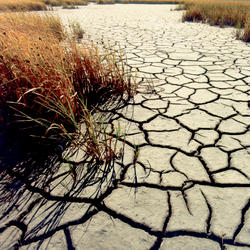
Drought is a common result of climate variability in the south-central United States. With increasing temperatures and more variable precipitation patterns expected in the future, drought will continue to stress water quantity and quality in this region. University of Oklahoma researchers have demonstrated that the Palmer Drought Severity Index (PDSI), a measure of long-term drought...

Developing Resources for Tribal Partnership Science
Tribal Partnership Science (TPS) is a rapidly growing field that brings together biophysical and social scientists, federally recognized tribes, and federal land management agencies. TPS is essential for addressing complex environmental challenges facing tribes and their homelands. In recent years, a proliferation of methods, frameworks, and guidance for TPS has emerged from diverse...