



Human Exposure
Human Exposure
Filter Total Items: 41

U.S. Geological Survey Microbiologist Selected as an American Society for Microbiology Distinguished Lecturer
Dale Warren Griffin, a U.S. Geological Survey (USGS) environmental public-health microbiologist, was selected as a Waksman Foundation Distinguished Lecturer for the 2020–22 American Society for Microbiology (ASM) Lecture Series.

How are Mercury Sources Determined?
USGS scientists use innovative isotopic identification methods to determine mercury sources in air, water, sediments, and wildlife.
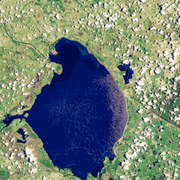
Satellite Data Used to Estimate and Rank Cyanobacterial Bloom Magnitude in Florida and Ohio Lakes—Developing Tools to Protect Human and Wildlife Health from Cyanotoxin Exposure
Cyanobacterial bloom magnitude during 2003–11 was quantified and ranked in Florida and Ohio lakes with a newly developed modelling tool that allows for the use of multiple satellite data sources and user-defined thresholds. This tool was designed to identify the magnitude of algal blooms, but one metric alone cannot adequately represent the severity of a bloom of interest in terms of toxicity. The...

Sublethal Effects of Contaminants in Aquatic Food Webs—Research Challenges and Considerations for Future Studies
U.S. Geological Survey (USGS) and academic scientists partnered to identify challenges and provide considerations for future scientific study designs to advance our understanding of the often subtle sublethal effects of contaminants on individuals, populations, communities, and entire aquatic food webs.

Roadmap to Understanding Factors Influencing Mercury Exposure and Adverse Health Effects
In a comprehensive overview, scientists explain that human and wildlife exposure and toxicological responses to mercury are dependent on factors that operate across global, individual, and molecular scales. They provide a roadmap for unified research to facilitate a better understanding of human and wildlife health risks from mercury exposure.

Novel Approach Improves Understanding of Virus Occurrence in Drinking Water
Waterborne viruses, one of the leading causes of gastrointestinal illnesses, were measured in United States drinking water sources and finished water. Scientists used a combination of measurement and statistical techniques to overcome limitations to quantifying these viruses, thus offering an enhanced method for virus monitoring.
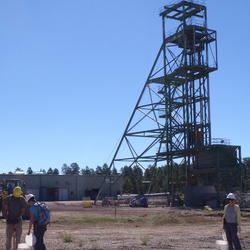
Is Uranium in Water Resources near the Grand Canyon a Health Hazard?
The public is concerned that uranium in natural geologic formations, mine tailings, dusts, water, and other geologic materials can pose a health hazard to humans and wildlife. Our specialized teams of hydrologists, chemists, and geologists working together at a field site in the Grand Canyon region of the United States have shown: Elevated uranium concentrations (above the drinking water standard)...

Can There be Unintended Benefits when Wastewater Treatment Infrastructure is Upgraded?
Science from the U.S. Geological Survey (USGS) and other entities has shown that a mixture of natural and synthetic estrogens and other similar chemicals are discharged from wastewater treatment plants (WWTPs) to streams and rivers.

Are Naturally Occurring Algal Toxins in Water Resources a Health Hazard?
A growing number of human gastrointestinal, respiratory, dermatologic, and neurologic effects, as well as dog and livestock illnesses and deaths, in the United States have been linked to exposures to algal blooms in recreational lakes and stock ponds. Some of the blooms contain cyanobacteria, which have the potential to produce cyanotoxins in freshwater systems. However, the connection between...

What is the Chemical and Microbial Content of Our Tap Waters?
Safe Drinking Water Act compliance addresses the safety of public-supply water systems. The composition of public-supply drinking water is generally only tested at the treatment facility, and not at the tap in homes and businesses after traveling through the water distribution system. Only lead and copper are tested at a subset of residential and other taps. Testing of water in private wells is...

Bioactive Chemicals Research Laboratory
The Bioactive Chemicals Research Laboratory applies a collaborative transdisciplinary approach to conduct research to minimize the risk to human and aquatic organism health from exposure to contaminants in water supplies.

Michigan Bacteriological Research Laboratory
Microbiologists at the Michigan Bacteriological Research Laboratory (MI-BaRL) use a wide array of traditional and modern molecular approaches to evaluate microbial pathogens and antimicrobial resistance pathways in the environment.