



Adaptive Management
Adaptive Management
Filter Total Items: 61

Grazing Effects on the Annual Grass Fire-Cycle after Post Fire Management
In order to break the annual grass fire-cycle in the sagebrush steppe, land managers use pre-emergent herbicides to reduce annual grass populations and seeding to increase fire-tolerant perennials. These tools must be applied to the same soils in ways that are not counterproductive, and their application must therefore be staggered in time, which we refer to as layering. Livestock grazing can also...

Systematic Review and Analysis of Seeding and Herbicide Treatment in the Sagebrush Steppe
Seeding and herbicide treatments are a key aspect of the strategy used to break the annual grass-fire cycle in sagebrush steppe. However, past studies report considerable variability in the effectiveness of seeding and herbicide treatments. To generate a more consistent interpretation of post-fire herbicide and seeding effects, we are compiling, reviewing, and synthesizing findings from past...

Hierarchical Units of Greater Sage-Grouse Populations Informing Wildlife Management
Wildlife management boundaries often lack biological context, including information on habitat resource availability and wildlife movements. To address this, we developed multiple levels of biologically relevant and hierarchically nested greater sage-grouse ( Centrocercus urophasianus) population units to facilitate the management and conservation of populations and habitats.

Long-term, Place-based, Science and Ecological Monitoring
For over 30 years we have monitored the ecosystem dynamics of the mesas and mountains of northern New Mexico, co-located with mangers. We use a place-based science approach, defined as “science that is founded on long-term, repeated, field data and observations, as well as traditional knowledges, and regularly engages local managers and community members.” This approach enables us to provide land...
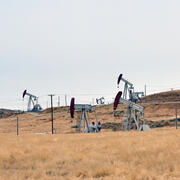
Science in Support of Energy and Minerals Development on Public Lands
America has abundant energy and natural resources, including oil, natural gas, and critical minerals. The USGS Ecosystems Mission Area supports planning, permitting, and leasing of energy and minerals by conducting research relevant to each stage of the Energy Resources Life Cycle. Bureaus and offices in the Department of the Interior responsible for managing energy and minerals resources need...

Ecosystems We Study: Mountains
Mountain ecosystems are highly sensitive to climate change, and USGS is conducting montane research across the West to help resource managers plan now for the future. Coordination with scientists around the world has led to mountain research networks to expand our understanding of how these ecosystems respond to climate change.

Ecosystems We Study: Grasslands
America’s grasslands are in the middle of the country where there is insufficient rain to support forests but too much to be a desert.

Ecosystems We Study: Alaska Bioregions and Arctic
Alaska is simultaneously a landscape of extremes requiring specialized adaptations by plants and animals to survive the winters and a landscape of abundance that supports breeding birds each summer from as far away as Africa. Terrestrial Alaska also supports iconic species such as caribou and muskoxen whose population dynamics, predator/prey relationships and habitat ecology are researched by USGS...

Optimization of Management Actions for Restoration Success and Wildlife Populations
USGS researchers, in collaboration with the Wyoming Landscape Conservation Initiative and other partners, are developing a statistically based prioritization tool that will aid agencies in their management decisions.

Biological Objectives for the Gulf Coast: Biological Planning Units & Target Species Population Objectives
The USGS partnered with the U.S. Fish and Wildlife Service and its conservation partners to develop 16 Biological Planning Units (BPU) and six Aquatic Extensions and compile population objectives for 166 species that are representative of habitats within each BPU.

Enhancing Cross-Jurisdictional Adaptive Management in the Gulf
Using an iterative qualitative coding process, WARC researchers are identifying objectives, stressors, and management priorities to support the implementation of adaptive management in restoration programs across the Gulf.

Gulf Coast Ecosystem Restoration Council Monitoring and Assessment Program Development
The National Oceanic and Atmospheric Administration (NOAA) and USGS will jointly lead the development of foundational components for region-wide monitoring.