



Collapsed snow bridges on crevasse field on the Hubbard Glacier between McArthur Peak and Mt. King George. Photo courtesy of Yukon Geological Survey.
Multimedia
Browse our photos and videos of landslide research and post-landslide investigations.
Images
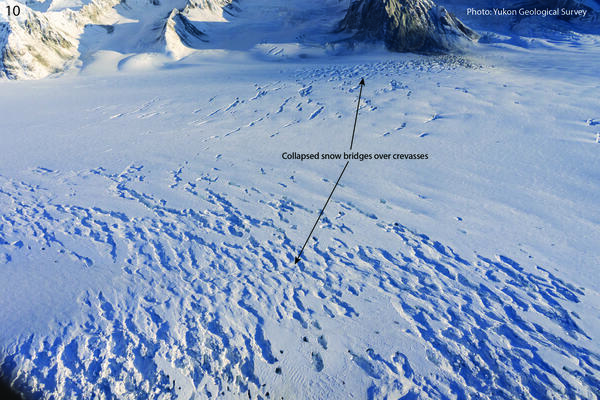
12-12-25 Hubbard Glacier Collapsed Snow Bridges
Collapsed snow bridges on crevasse field on the Hubbard Glacier between McArthur Peak and Mt. King George. Photo courtesy of Yukon Geological Survey.
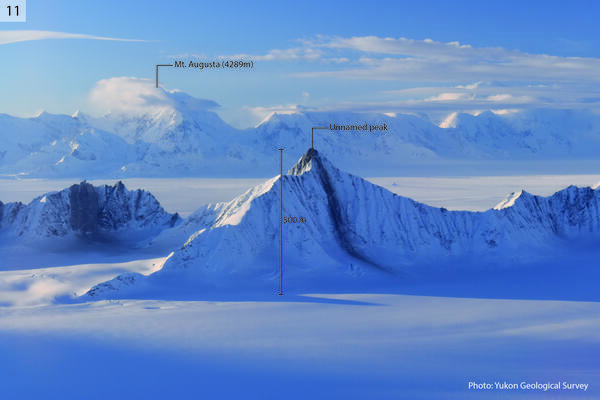
12-12-25 Mt. Vancouver and Mt. Logan Arete Landslides
12-12-25 Mt. Vancouver and Mt. Logan Arete LandslidesCollapsed snow bridges on crevasse field on the Hubbard Glacier between McArthur Peak and Mt. King George. Photo courtesy of Yukon Geological Survey.
12-12-25 Mt. Vancouver and Mt. Logan Arete Landslides
12-12-25 Mt. Vancouver and Mt. Logan Arete LandslidesCollapsed snow bridges on crevasse field on the Hubbard Glacier between McArthur Peak and Mt. King George. Photo courtesy of Yukon Geological Survey.
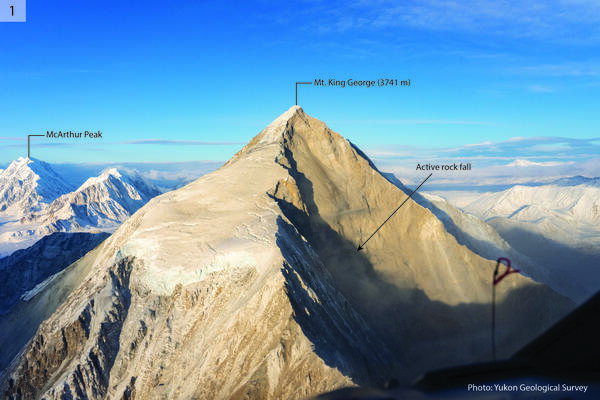
12-12-25 Mt. King George East Face Landslide
Recent landslide on the east face of Mt. King George (3741 m) with clouds of dust from ongoing rockfall. Debris descended over 1500 m to the glacier below. Photo courtesy of Yukon Geological Survey.
Recent landslide on the east face of Mt. King George (3741 m) with clouds of dust from ongoing rockfall. Debris descended over 1500 m to the glacier below. Photo courtesy of Yukon Geological Survey.
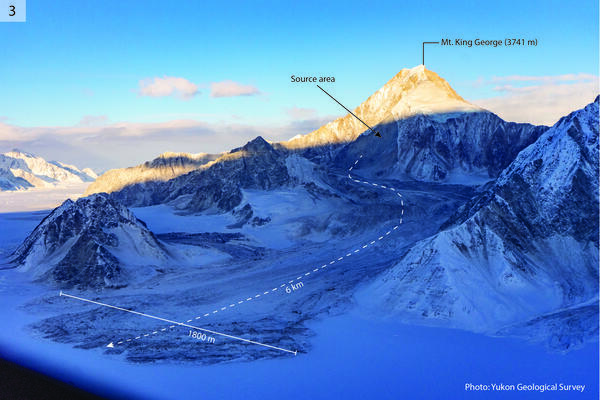
12-12-25 Mt. King George Landslide with Large Runout
12-12-25 Mt. King George Landslide with Large RunoutLarge landslide on the southwest side of Mt. King George. The main debris lobe is 1800 m wide, and material would have travelled approximately 6 km from the source area (triangular scar) in the background. Photo courtesy of Yukon Geological Survey.
12-12-25 Mt. King George Landslide with Large Runout
12-12-25 Mt. King George Landslide with Large RunoutLarge landslide on the southwest side of Mt. King George. The main debris lobe is 1800 m wide, and material would have travelled approximately 6 km from the source area (triangular scar) in the background. Photo courtesy of Yukon Geological Survey.
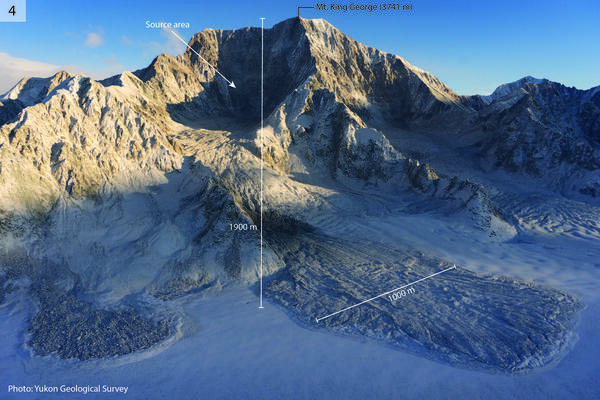
12-12-25 Mt. King George West Face Landslides
Large landslides on the southwest side of Mt. King George. The main debris lobe on the right is approximately 1000 m wide. The elevation difference between the peak and the glacier is approximately 1900 m. Photo courtesy of Yukon Geological Survey.
Large landslides on the southwest side of Mt. King George. The main debris lobe on the right is approximately 1000 m wide. The elevation difference between the peak and the glacier is approximately 1900 m. Photo courtesy of Yukon Geological Survey.
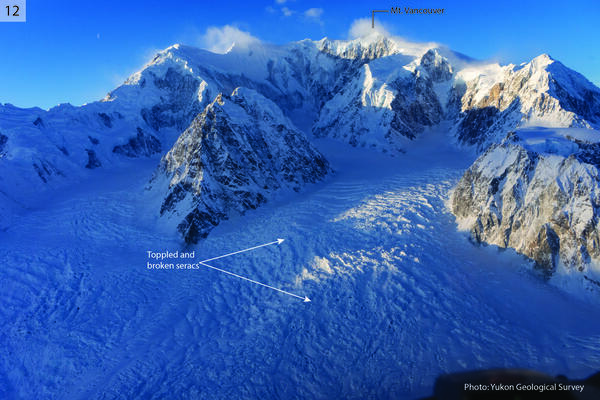
12-12-25 Mt. Vancouver Toppled Seracs
Seracs in an icefall on the east side of Mt. Vancouver (4812 m), toppled by shaking. Field of view is approximately 3.5 km wide. Photo courtesy of Yukon Geological Survey.
Seracs in an icefall on the east side of Mt. Vancouver (4812 m), toppled by shaking. Field of view is approximately 3.5 km wide. Photo courtesy of Yukon Geological Survey.
Videos
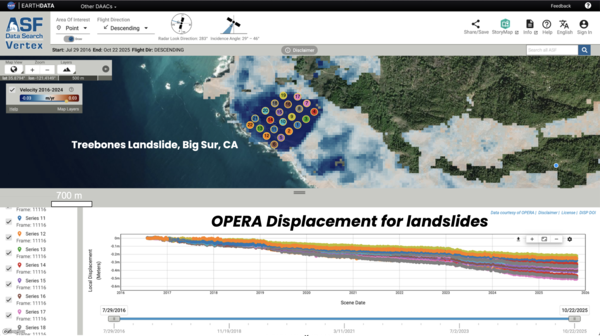
Landslide Detection, Monitoring, and Research Using OPERA Data
Landslide Detection, Monitoring, and Research Using OPERA DataThis presentation introduces NASA’s Observational Products for End-Users from Remote Sensing Analysis (OPERA) project and its suite of freely available satellite-derived products.
Landslide Detection, Monitoring, and Research Using OPERA Data
Landslide Detection, Monitoring, and Research Using OPERA DataThis presentation introduces NASA’s Observational Products for End-Users from Remote Sensing Analysis (OPERA) project and its suite of freely available satellite-derived products.

Multi-site evaluation of a postfire debris-flow runout forecast method
Multi-site evaluation of a postfire debris-flow runout forecast methodPostfire debris flows pose a hazard to human life, property, and infrastructure when they travel from steep source areas to urbanized alluvial fans or other developed areas.
Multi-site evaluation of a postfire debris-flow runout forecast method
Multi-site evaluation of a postfire debris-flow runout forecast methodPostfire debris flows pose a hazard to human life, property, and infrastructure when they travel from steep source areas to urbanized alluvial fans or other developed areas.
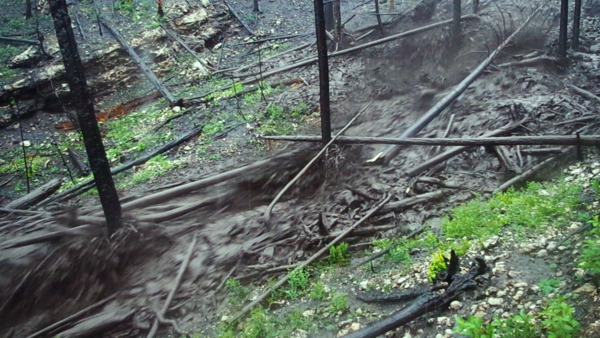
Postfire debris flow in the 2024 Elk Fire burn area
Postfire debris flow in the 2024 Elk Fire burn areaA debris flow recorded by a USGS Landslide Monitoring Station in the 2024 Elk Fire burn area near Dayton, Wyoming. The flow was triggered by intense rainfall during a thunderstorm on the evening of July 15, 2025.
Postfire debris flow in the 2024 Elk Fire burn area
Postfire debris flow in the 2024 Elk Fire burn areaA debris flow recorded by a USGS Landslide Monitoring Station in the 2024 Elk Fire burn area near Dayton, Wyoming. The flow was triggered by intense rainfall during a thunderstorm on the evening of July 15, 2025.

Geologic Controls on Deep-Seated Landslides
The frequency and scale of landslides in a region are determined by both external forcing and inherent, site-specific susceptibility.
The frequency and scale of landslides in a region are determined by both external forcing and inherent, site-specific susceptibility.

Understanding large rock slides in deglaciated valleys in the Central and Patagonian Andes
Understanding large rock slides in deglaciated valleys in the Central and Patagonian AndesThe effects of deglaciation on the slope stability of glacial valleys have increasing importance in the context of climate change, with a role on the susceptibility to large-volume rock slides or rock avalanches and catastrophic cascading geohazards.
Understanding large rock slides in deglaciated valleys in the Central and Patagonian Andes
Understanding large rock slides in deglaciated valleys in the Central and Patagonian AndesThe effects of deglaciation on the slope stability of glacial valleys have increasing importance in the context of climate change, with a role on the susceptibility to large-volume rock slides or rock avalanches and catastrophic cascading geohazards.

Controls on post-fire debris flows in Oregon
Wildfire often amplifies the likelihood and magnitude of debris flows in steep terrain. In arid climates (e.g. US Mountain West and Southwest), post-fire debris flows typically occur during the first rains following fire, suggesting that rainfall-driven erosion is a strong control on in-channel preconditioning and triggering of these hazards.
Wildfire often amplifies the likelihood and magnitude of debris flows in steep terrain. In arid climates (e.g. US Mountain West and Southwest), post-fire debris flows typically occur during the first rains following fire, suggesting that rainfall-driven erosion is a strong control on in-channel preconditioning and triggering of these hazards.