



Geology, Geophysics, and Geochemistry Science Center
Welcome to the Geology, Geophysics, and Geochemistry Science Center (GGGSC) located in Lakewood, Colorado on the Denver Federal Center. At GGGSC, we apply expertise in geology, geophysics, and geochemistry to interdisciplinary efforts in support of the USGS mission to address the Nation’s important earth science issues, with an emphasis on rare earth mineral resources.
Laboratories
Laboratories

Our center has several laboratories, ranging from geophysics to geochemistry to spectroscopy to scanning electron microscopes.
Science Branches
Science Branches
Our strong science portfolio integrates regional and economic geology with a broad range of geophysical, geochemical, analytical expertise. Our center has four scientific branches:
News
Department of the Interior launches effort to recover critical minerals from mine waste
Department of the Interior launches effort to recover critical minerals from mine waste
Low-Level Flights to Image Geology Over Parts of Louisiana, Mississippi, and Illinois
Low-Level Flights to Image Geology Over Parts of Louisiana, Mississippi, and Illinois
Recently completed geophysical survey will help protect critical infrastructure from geomagnetic storms and space weather
Recently completed geophysical survey will help protect critical infrastructure from geomagnetic storms and space weather
Publications
Niobium-bearing minerals from the Sheep Creek carbonatite-related deposits of southwest Montana, USA Niobium-bearing minerals from the Sheep Creek carbonatite-related deposits of southwest Montana, USA
The Sheep Creek area in southwest Montana contains a number of small, tabular, carbonatite-related deposits that are rich in Nb and REE minerals. Nb-rich minerals from Sheep Creek and nearby Woods Creek are herein described in detail. The carbonatite veins contain a mix of calcite and Fe-bearing dolomite, with locally abundant apatite, baryte, celsian, actinolite, phlogopite, monazite-...
Trace element heterogeneity and crystallization history of the Plesovice zircon: Implications for its use as a U–Pb LA-ICP-MS reference material Trace element heterogeneity and crystallization history of the Plesovice zircon: Implications for its use as a U–Pb LA-ICP-MS reference material
Zircon crystals from Plešovice hyperpotassic granulite (HPG) have been widely used as a reference material for LA-ICP-MS dating. Detailed cathodoluminescence (CL) imaging and trace element analysis reveal a complex internal structure of Plešovice zircon linked to extreme chemical heterogeneity, which allows us to distinguish different zircon domains formed during its crystallization: (i)...
A methods framework for evaluating measurement consistency across spectrometers for multispectral uncrewed aerial system vegetation mapping applications A methods framework for evaluating measurement consistency across spectrometers for multispectral uncrewed aerial system vegetation mapping applications
The U.S. Geological Survey collects remote sensing data to support national scientific assessments of natural resources, hazards, and landscape change. Spectrometers and spectroradiometers are essential for gathering point-based spectral measurements used in applications such as uncrewed aerial systems (UAS) multispectral image calibration, validation, and analysis. Evaluating how...
Science
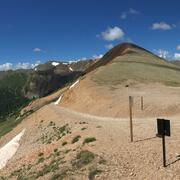
Geophysical and Geological Characterization of Mineral Deposit Localization in the Colorado Mineral Belt and Surrounding Lithosphere: Isotope Geochemistry & Geochronology
Isotope geochemistry and geochronology are critical tools in Earth sciences. Sophisticated analytical measurements allow us to understand when and how rocks and minerals formed, helping build models of how tectonic forces built the Earth’s crust through magmatism, when critical mineral deposits formed and how geological processes concentrated metals in the Earth at concentrations economically...
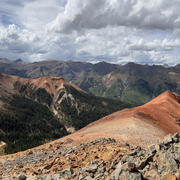
Geophysical and Geological Characterization of Mineral Deposit Localization in the Colorado Mineral Belt and Surrounding Lithosphere: Data Integration, Synthesis, and Visualization
The Colorado Mineral Belt and surrounding region are exceptionally rich in new and legacy data, presenting new opportunities to address the relationship between lithospheric evolution and mineral deposit formation through novel data synthesis, visualization, and mineral resources.

Geophysical and Geological Characterization of Mineral Deposit Localization in the Colorado Mineral Belt and Surrounding Lithosphere: Geophysical Data Analyses and Interpretations
Many of the questions about the origin of the Colorado Mineral Belt (CMB) extend underground. What path did ore-bearing fluids take to their final locations? How did they interact with preexisting structures like faults and fractures? Geophysical methods that allow us to "see" beneath the surface are powerful tools for answering these questions. We plan to use existing seismic data as well as the...