U.S. flag

An official website of the United States government

Images

Multimedia related to the Species Management Research Program are shown below. Click on an image to see a larger view and additional details.

Filter Total Items: 58
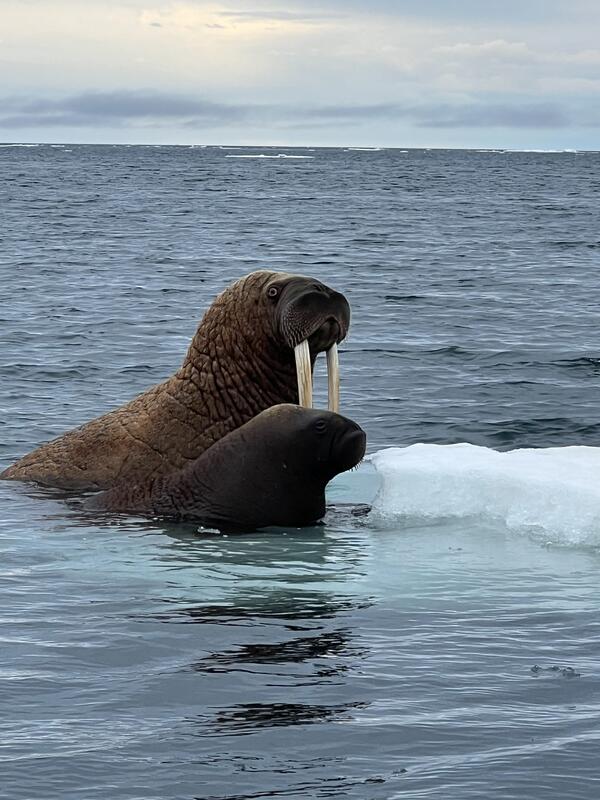
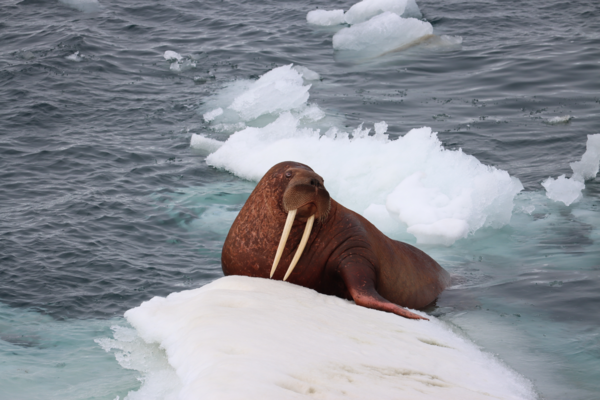
Walrus with large white tusks laying on ice flow.
Adult female Pacific walrus sliding into the water

An adult female Pacific walrus slides into the water as she assesses her surroundings.  The female is 15 years or older based on the length of the tusks.  USGS and the U.S.
An adult female Pacific walrus slides into the water as she assesses her surroundings.  The female is 15 years or older based on the length of the tusks.  USGS and the U.S.
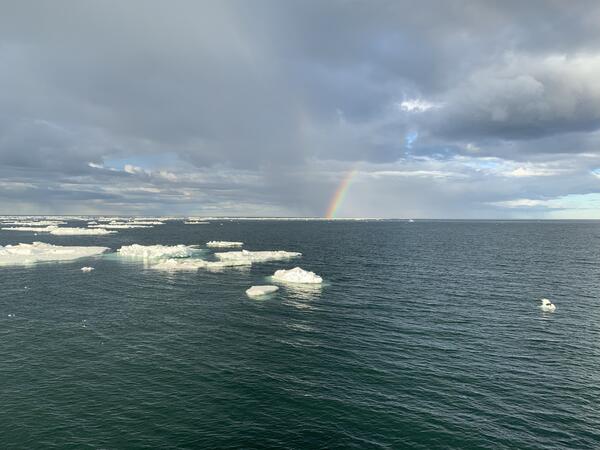
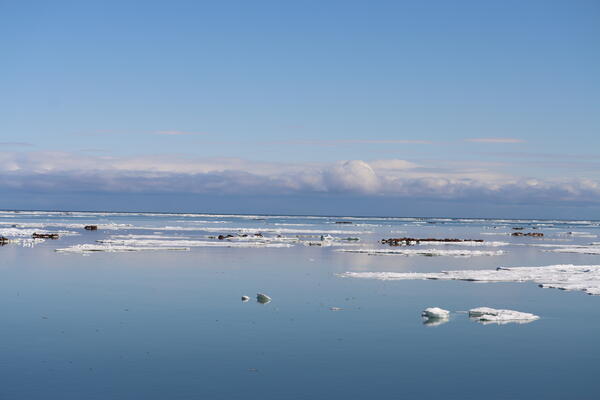
Walrus on ice flows with dark clouds in the background.
Walruses everywhere
Walruses everywhere
Walruses everywhere

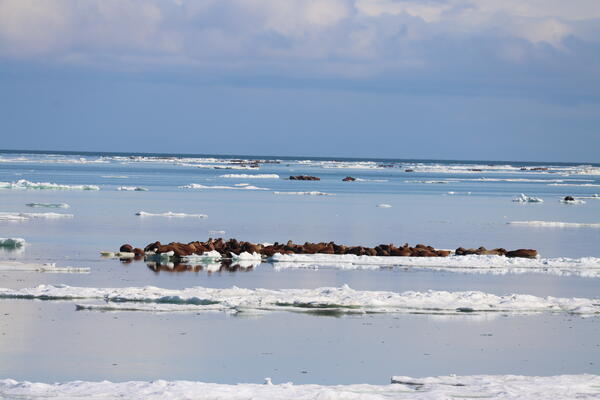
Walrus groups hauled on sea ice as far as the eye can see in the Chukchi Sea.  USGS and the U.S.

Walrus groups hauled on sea ice as far as the eye can see in the Chukchi Sea.  USGS and the U.S.

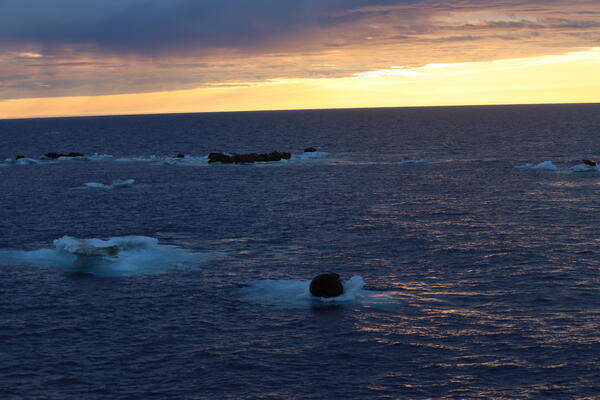
Walrus resting on sea ice and the sun rising in the background.
Arctic sunrise over resting walruses

A dim light shines during the summer Arctic morning in the Chukchi Sea as groups of Pacific walruses rest.  USGS and the U.S.

A dim light shines during the summer Arctic morning in the Chukchi Sea as groups of Pacific walruses rest.  USGS and the U.S.

person in shilouette walking away from the camera in the shallows along a shoreline
Walking the shallows of Lake Abert, Oregon
many avocets flying with mountains in the background
Avocets flying above Farmington Bay Wildlife Management Area, Utah

The Saline Lake Ecosystems IWAA Waterbird Movement Project began tagging American Avocets in March 2023 to track their movements across the landscape. Tracking data from these birds will help scientists better understand why these birds choose to use the terminal lake and wetland habitats they do in the Great Basin.

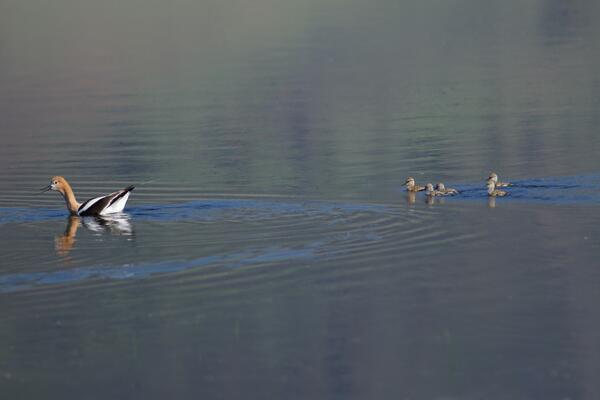
American Avocet birds swimming in a lake. There is an adult followed by five chicks
American Avocet trailed by chicks
a silhouette of a goose standing on the shore of a lake at sunrise
Lone goose at sunrise at Summer Lake Wildlife Area
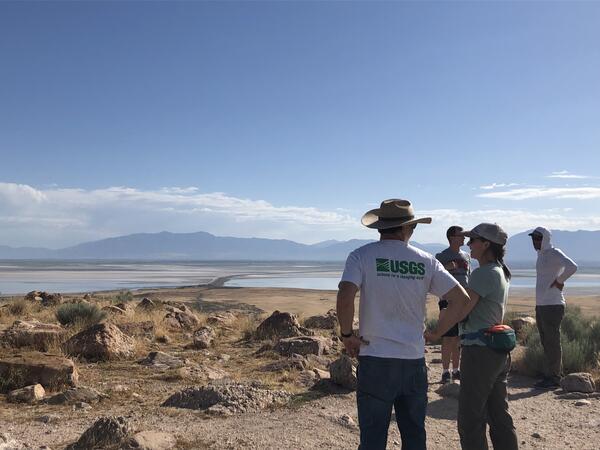
Four scientist looking out over the Great Salt Lake from Antelope Island. There are mountains behind them and clouds
Scientist looking out onto the GSL from Antelope Island

These scientists are working on The Great Salt Lake to determine the amount of water and qualities of it. This will help them in developing better management techniques that will work to support the migratory birds that frequent the area. 

Passive acoustic bat recording device deployed on a boulder in Montana.
Bat passive acoustic recording device

This passive acoustic recording device has been deployed in Montana (MT) as part of the North American Bat Monitoring Programs (NABat) summertime survey efforts. It has an ultrasonic microphone placed at the top of a 10ft pole that records echolocating bats fro

This passive acoustic recording device has been deployed in Montana (MT) as part of the North American Bat Monitoring Programs (NABat) summertime survey efforts. It has an ultrasonic microphone placed at the top of a 10ft pole that records echolocating bats fro

Three scientists with backpacks in low shrubs searing for landbird nests in Denali National Park. Mountains in background.
Searching for landbird nests in Denali National Park and Preserve

USGS biologists Steve Matsuoka, Lauren Hitt, and Rachel Richardson search for landbird nests in Denali National Park and Preserve.

Who's who?  Front and back print casts of grizzly (top) and black bear (bottom).
Who's who? Print casts of grizzly (top) and black bear (bottom).

Who's who?  These are print casts of front and back paw prints of a grizzly bear (top) and black bear (bottom). The casts on the right are the front paws of each species; the casts on the left are the back.  How do you tell? 

Who's who?  These are print casts of front and back paw prints of a grizzly bear (top) and black bear (bottom). The casts on the right are the front paws of each species; the casts on the left are the back.  How do you tell? 

A spotted lizard shaped animal with red, frilly gills at the base of its head is in shallow water
Gulf Coast Waterdog - Necturus beyeri

Source: USGS National Wetlands Research Center. Photographer: Brad M. Glorioso. St. Tammany Parish, Louisiana

Necturus beyeri - Gulf Coast Waterdog

Source: USGS National Wetlands Research Center. Photographer: Brad M. Glorioso. St. Tammany Parish, Louisiana

Necturus beyeri - Gulf Coast Waterdog

Bat, bird, and insect activity can be monitored with pairs of thermal-imaging cameras mounted on the wind turbines (a), and automatically recorded to a computer inside the base of the turbine (b). (From Cryan et al., Animals 2022, 12(1)
Wind_turbines_thermal_cams_UV_lights_P_Cryan.JPG

Bat, bird, and insect activity can be monitored with pairs of thermal-imaging cameras mounted on the wind turbines, and automatically recorded to a computer inside the base of the turbine. 

Bat, bird, and insect activity can be monitored with pairs of thermal-imaging cameras mounted on the wind turbines, and automatically recorded to a computer inside the base of the turbine. 

A clipboard and a small telescope on a cliff along the ocean shore
Shore Counts, Annual California Sea Otter Census

Equipment used during a shore-counted portion of the annual range-wide sea otter census.  On the clipboard is a paper map, with sea otter locations, numbers, behavior and habitat recorded, as well as some other environmental variables.  The spotting scope is used to view sea otters that are far away, and binoculars are used to scan areas for otters.

Equipment used during a shore-counted portion of the annual range-wide sea otter census.  On the clipboard is a paper map, with sea otter locations, numbers, behavior and habitat recorded, as well as some other environmental variables.  The spotting scope is used to view sea otters that are far away, and binoculars are used to scan areas for otters.

Was this page helpful?