



Fish and Wildlife Disease
Fish and Wildlife Disease
Chronic wasting disease and cervid health—2025 highlights
White-Nose Syndrome and Bat Health: 2025 Year in Review
Batrachochytrium salamandrivorans (Bsal) Surveillance
Tackling avian influenza with automated detection for an early warning system
Distribution of CWD Expanding
Chronic Wasting Disease continues to spread across North America
Chronic Wasting Disease continues to spread across North America
What is Avian Influenza (AI)?
USGS is the lead Federal agency for free-ranging wildlife disease research and surveillance. Our capabilities enhance the understanding of wildlife disease ecology and epidemiology as well as inform the development of decision-support and control tools. USGS wildlife disease experts provide technical assistance as needed to manage wildlife disease and conduct cause-of-death investigations.

Filter Total Items: 171
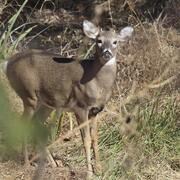
Understanding and Containing Chronic Wasting Disease
Chronic wasting disease (CWD) is a contagious and fatal neurodegenerative disease affecting cervids (deer, elk, caribou, and moose) that is threatening the health and sustainability of cervid populations across North America. CWD is caused by misfolded proteins known as prions, which can be transmitted by direct contact or environmental exposure. The USGS National Wildlife Health Center conducts...
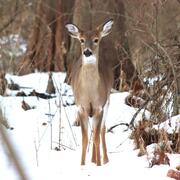
Tracking Chronic Wasting Disease Strains to Understand Transmission and Detect Emerging Threats
At least ten distinct chronic wasting disease (CWD) prion strains with unique biochemical properties affect disease transmission and host range, prompting development and validation of biochemical assays to surveil and track these strains in endemic regions like Wisconsin, with ongoing efforts to standardize these methods for epidemiological tracking and management of CWD variants .

White-nose syndrome: Uncovering fungal mechanisms and unique bat adaptations
White-nose syndrome (WNS) has killed millions of hibernating bats across North America, causing severe population declines and even local extinctions. Caused by the cold-loving fungus Pseudogymnoascus destructans, this disease behaves unlike typical wildlife pathogens, making it especially hard to control. Researchers at the USGS National Wildlife Health Center, with partners at the University of...
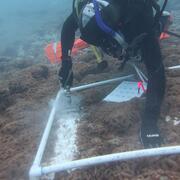
Fighting an Invasive Marine Threat to Coral Reefs
USGS scientists are developing and testing new tools to control an invasive species threatening coral reefs at Joint Base Pearl Harbor-Hickam and across the Hawaiian Islands.
The National Wildlife Disease Database
The National Wildlife Disease Database (NWDD) is a congressionally funded USGS tool that integrates multi-jurisdictional wildlife disease data with advanced artificial intelligence capabilities to provide situational awareness, detect unusual disease events, and support early warning and data-driven decision-making.
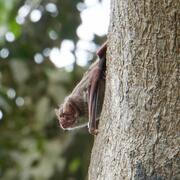
Dynamics of Rabies Transmission in Vampire Bats and Potential for Control Through Vaccination
Vampire bats are the primary spreader of rabies, a lethal disease that harms livestock and people across Latin America. Growth of the livestock industry and environmental changes in this region are leading to the expansion of vampire bats’ habitat range, and it is considered likely this species will move into the southern United States.

Assessing the Ability of Incineration to Inactivate CWD Prions from Carcasses
Chronic wasting disease (CWD), a fatal neurologic disease of cervids, presents a monumental management challenge, in part because the etiologic agent, an infectious prion, can be transmitted directly or indirectly and is extremely difficult to inactivate. As CWD expands geographically and increases in prevalence, additional disposal options are desired to safely dispose of CWD-contaminated tissues...

Application of a systems approach for management of chronic wasting disease
The USGS National Wildlife Health Center, Montana Cooperative Wildlife Research Unit, Ventana Systems, Inc., and the Wisconsin Department of Natural Resources (WIDNR) are applying a systems approach to map and model the complex relationships among ecological, epidemiological, social, and political processes affecting CWD. Through a participatory modeling process, we gathered subject matter...

Advancing the Use of RT-QuIC for Applications in CWD Management
Chronic wasting disease (CWD) is an emerging infectious disease that is fatal to free-ranging and captive animals in Cervidae, the deer family. The development of the real-time quaking-induced conversion (RT-QuIC) assay has the potential to transform laboratory research of prions and provide new opportunities for improved surveillance and management.

White-nose Syndrome Vaccine Updates
Since its emergence in 2006, white-nose syndrome (WNS) continues to spread in North America and has substantially impacted hibernating bat populations, contributing to declines of over 90% in northern long-eared ( Myotis septentrionalis), little brown ( Myotis lucifugus), and tri-colored bat ( Perimyotis subflavus) populations. We are developing tools and management strategies to protect bat...
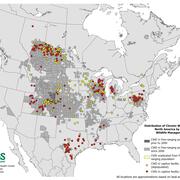
Expanding Distribution of Chronic Wasting Disease
Chronic wasting disease (CWD) has been detected in 37 US states and five Canadian provinces in free-ranging cervids and/or captive cervid facilities.

Harmful Algal Bloom Toxins in Alaska Seabirds
Elevated ocean temperatures are linked to the development of harmful algal blooms (HABs). Toxins from these blooms may pose health threats to marine organisms, including seabirds. Since 2015, the USGS has worked with a variety of stakeholders to develop testing methods and research projects to better understand the geographic extent, timing and impacts of algal toxins in Alaska marine ecosystems...