
Testing Coal-Tar Sealcoats for Toxic PAH Emissions
Testing Coal-Tar Sealcoats for Toxic PAH EmissionsA USGS scientist adjusts an air pump used to measure emission of polycyclic aromatic carbons (PAHs) into the air.
An official website of the United States government
Here's how you know
Official websites use .gov
A .gov website belongs to an official government organization in the United States.
Secure .gov websites use HTTPS
A lock () or https:// means you’ve safely connected to the .gov website. Share sensitive information only on official, secure websites.
Images
A USGS scientist adjusts an air pump used to measure emission of polycyclic aromatic carbons (PAHs) into the air.
USGS scientists prepare a sampler used to measure emission of polycyclic aromatic carbons (PAHs) into the air.
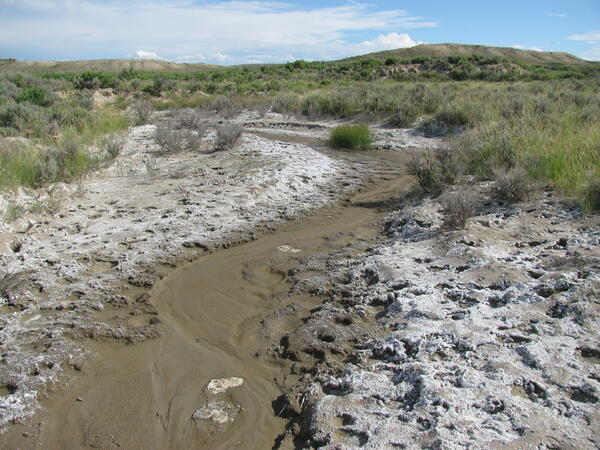
White crusts of natural salts along a tributary to Muddy Creek, Wyoming. Natural salts are present in soils from drier climates, and rain and snowmelt can percolate into the soil and carry the salts to streams.
New section of a landfill under construction
USGS scientist sampling groundwater from a well for contaminants of emerging concern, Minnesota.
Scientists study tree swallows (Tachycineta bicolor) in the Great Lakes region to determine chemical exposure, physiological response, and reproductive success.
Wetland habitats, such as the Great Salt Lake wetlands, provide critical feeding areas for many fish and wildlife species.
A typical tree swallow (Tachycineta bicolor) in the Great Lakes area. Tree swallows were studied by the scientists for contaminants in the eggs.
A typical tree swallow (Tachycineta bicolor) studied by the scientists.
Organic Chemistry Research Laboratory — Sacramento, California. USGS chemist working with samples in a laboratory hood
Organic Chemistry Research Laboratory — Sacramento, California. USGS chemist homogenizes a tissue sample into a mortar and pestle
A U.S. Geological Survey (USGS) scientist collecting a liver tissue sample from a wild-caught white sucker (Catostomus commersonii) from a river in the Great Lakes area.
A lip tumor diagnosed as a papilloma on a white sucker (Catostomus commersonii) collected from the Milwaukee River.
Body surface tumor diagnosed as a squamous cell carcinoma on a white sucker fish
Dairy cows in an animal feeding operation in New York
Remnants of a spruce forest complex following a severe wildfire in the Yukon Flats National Wildlife Refuge, Alaska. Wildfires are the dominant landscape-scale disturbance operating at annual time scales in Alaska, and fires play a major role in the rate and extent of vegetation growth and productivity of a site.
Cedar Creek in Congaree National Park, SC, showing old growth bottomland hardwood forest
Photograph showing white-faced ibis nesting at Bear River Migratory Bird Refuge, Great Salt Lake, Utah. U.S.
USGS scientists measured the concentrations of select endocrine disrupting chemicals (EDCs) in Spirit Creek, Georgia, as part of an assessment of the effects of the closure of a wastewater treatment plant. Sprit Creek is typical of a stream in coastal environments.
U.S. Geological Survey (USGS) hydrologist making field notes during winter water quality sampling from a stream in north central Iowa.
Picture of the freshwater snail (Lymnaea stagnalis) used in the laboratory exposure tests to understand metal uptake and bioavailability.