



A Water Boatmen or Corixidae viewed through a microscope. They have a thin bubble of air trapped against their body, allowing them to stay underwater for long periods of time.
Images
If you are not able to access a product, contact salinelakesiwaas@usgs.gov
Filter Total Items: 87

Water Boatmen Back
A Water Boatmen or Corixidae viewed through a microscope. They have a thin bubble of air trapped against their body, allowing them to stay underwater for long periods of time.
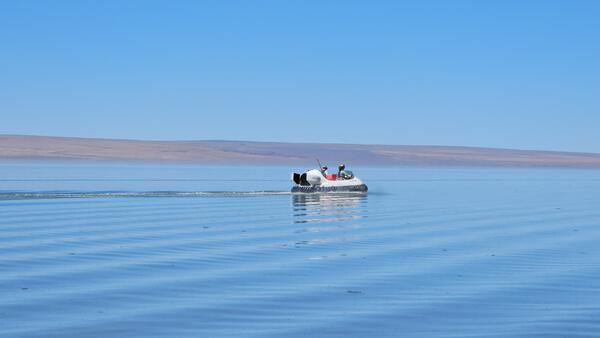
Researchers on a hovercraft at Lake Abert
Hovercrafts allow researchers to get to hard to enter places that may be difficult to get to by a normal boat.
Hovercrafts allow researchers to get to hard to enter places that may be difficult to get to by a normal boat.
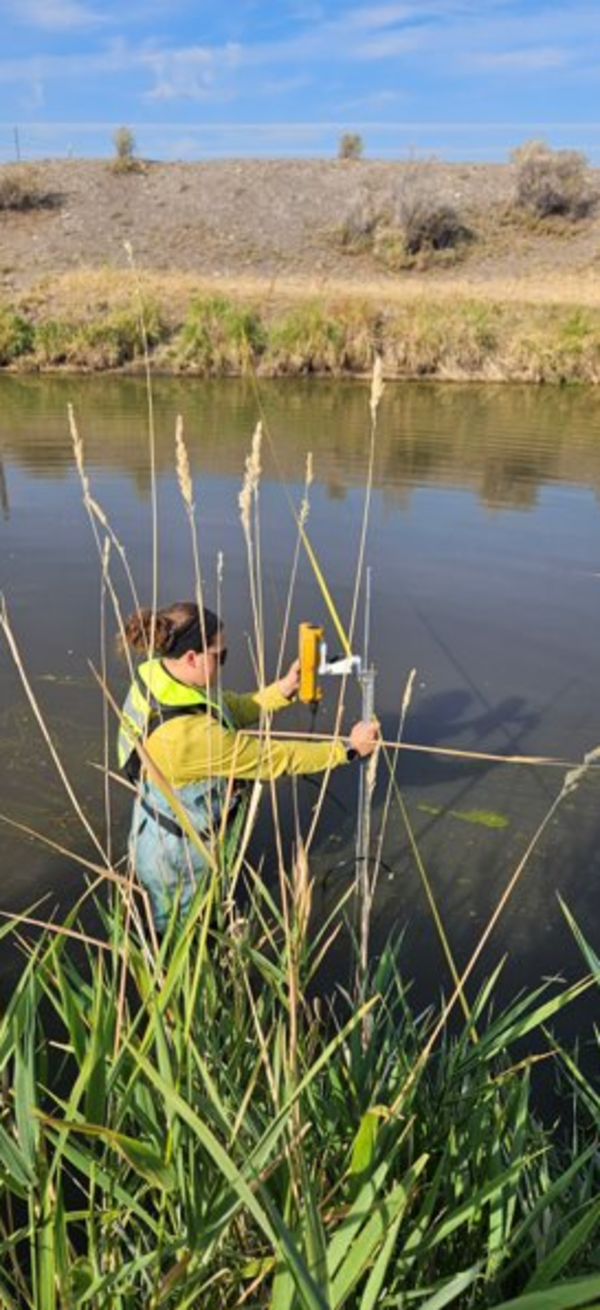
Researcher taking water quality measurement
Researchers at Lake Abert use pressure transducers in piezometers and in staff gauges to be able to gain pressure data. Along with temperature probes they use this data to determine exchange between surface and groundwater.
Researchers at Lake Abert use pressure transducers in piezometers and in staff gauges to be able to gain pressure data. Along with temperature probes they use this data to determine exchange between surface and groundwater.

Cinnamon teal wearing a tracking backpack
Cinnamon teal with a GPS tracking backpack that weighs 10 grams, making it much more successful in staying on longer than heavier tracking devices.
Cinnamon teal with a GPS tracking backpack that weighs 10 grams, making it much more successful in staying on longer than heavier tracking devices.
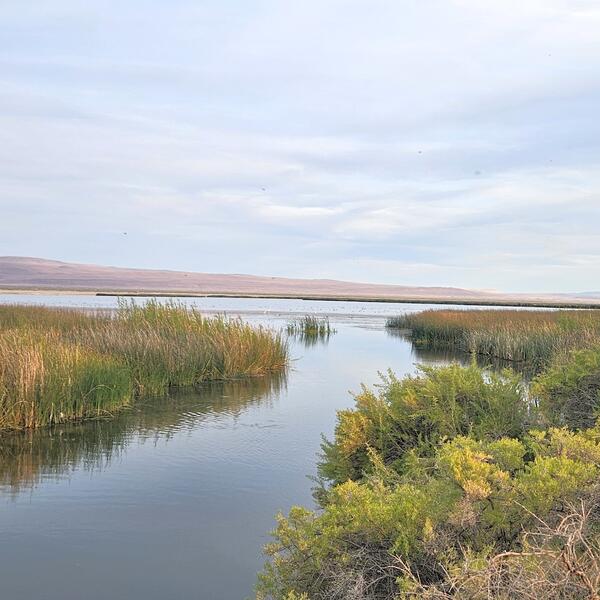
Impoundment near Summer Lake, OR
An artificial impoundment and freshwater channel within the Summer Lake Wildlife Area.
An artificial impoundment and freshwater channel within the Summer Lake Wildlife Area.

Sunset over Lake Abert
Sunset over Lake Abert in Oregon. It is the sixth largest lake in Oregon. It is so salty that fish cannot live in it, but it does support many shorebirds.
Sunset over Lake Abert in Oregon. It is the sixth largest lake in Oregon. It is so salty that fish cannot live in it, but it does support many shorebirds.
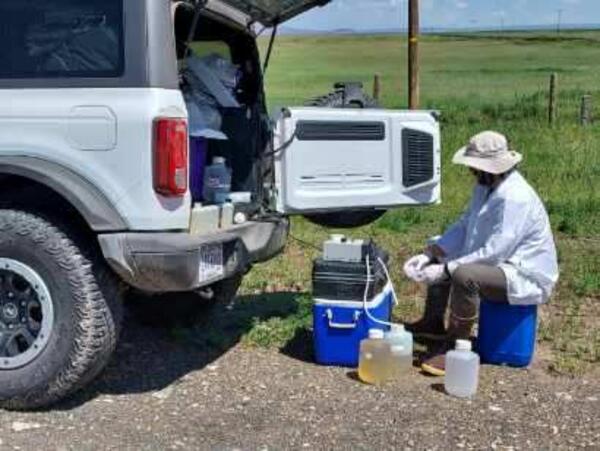
Water quality sampling near Hart Lake
USGS scientist processing water quality samples near Hart Lake. Water quality can have huge impacts on hydrologic processes, food web characteristics, and prey availability.
USGS scientist processing water quality samples near Hart Lake. Water quality can have huge impacts on hydrologic processes, food web characteristics, and prey availability.

Macroinvertebrate processing on Malheur Lake
Macroinvertebrates are largely important to the life cycle of migratory birds in the Saline Lakes. Researchers work to understand what food is available to them, and how changes can impact bird habitat and populations.
Macroinvertebrates are largely important to the life cycle of migratory birds in the Saline Lakes. Researchers work to understand what food is available to them, and how changes can impact bird habitat and populations.

Macroinvertebrate sampling supplies
To get and process bugs, scientists use these supplies at Saline Lakes to gather macroinvertebrate data. These help them to better understand the lakes habitat and know how many birds that can be supported.
To get and process bugs, scientists use these supplies at Saline Lakes to gather macroinvertebrate data. These help them to better understand the lakes habitat and know how many birds that can be supported.
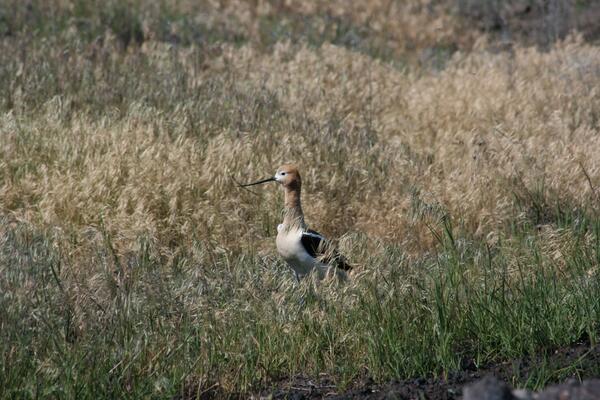
American Avocet looking out
American avocets are able to walk, stand, and dive after just a day old. They have tan heads with white bodies, black wings, and a long black beak
American avocets are able to walk, stand, and dive after just a day old. They have tan heads with white bodies, black wings, and a long black beak

Shore of Lake Abert, Oregon
Lake Abert, Oregon is one of the 20 terminal lakes identified by USGS partners as priority ecosystems for study by the Saline Lakes Ecosystems IWAA.
By
Ecosystems Mission Area, Water Resources Mission Area, Forest and Rangeland Ecosystem Science Center, Fort Collins Science Center, Nevada Water Science Center, Oregon Water Science Center, Utah Water Science Center, Western Ecological Research Center (WERC), Saline Lake Ecosystems Integrated Water Availability Assessment
Lake Abert, Oregon is one of the 20 terminal lakes identified by USGS partners as priority ecosystems for study by the Saline Lakes Ecosystems IWAA.
By
Ecosystems Mission Area, Water Resources Mission Area, Forest and Rangeland Ecosystem Science Center, Fort Collins Science Center, Nevada Water Science Center, Oregon Water Science Center, Utah Water Science Center, Western Ecological Research Center (WERC), Saline Lake Ecosystems Integrated Water Availability Assessment

Goose Lake, Oregon-California
Goose Lake, on the Oregon-California border, is one of the 20 terminal lakes identified by USGS partners as priority ecosystems for study by the Saline Lakes Ecosystems IWAA.
By
Ecosystems Mission Area, Water Resources Mission Area, Species Management Research Program, Water Resources Research Act Program, Forest and Rangeland Ecosystem Science Center, Fort Collins Science Center, Nevada Water Science Center, Oregon Water Science Center, Utah Water Science Center, Western Ecological Research Center (WERC), Saline Lake Ecosystems Integrated Water Availability Assessment
Goose Lake, on the Oregon-California border, is one of the 20 terminal lakes identified by USGS partners as priority ecosystems for study by the Saline Lakes Ecosystems IWAA.
By
Ecosystems Mission Area, Water Resources Mission Area, Species Management Research Program, Water Resources Research Act Program, Forest and Rangeland Ecosystem Science Center, Fort Collins Science Center, Nevada Water Science Center, Oregon Water Science Center, Utah Water Science Center, Western Ecological Research Center (WERC), Saline Lake Ecosystems Integrated Water Availability Assessment
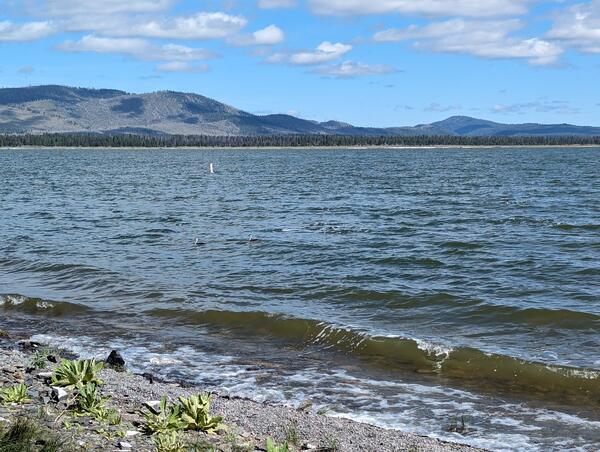
Eagle Lake, California
Eagle Lake, located in northeastern California approximately 16 miles north of Susanville in Lassen County, sits at an elevation of 5,100 feet above sea level. It is the second largest natural freshwater lake entirely within California. Eagle Lake is within the Great Basin, with all incoming waters remaining in the lake without outflow.
Eagle Lake, located in northeastern California approximately 16 miles north of Susanville in Lassen County, sits at an elevation of 5,100 feet above sea level. It is the second largest natural freshwater lake entirely within California. Eagle Lake is within the Great Basin, with all incoming waters remaining in the lake without outflow.

A hovercraft glides over the surface of Summer Lake, Oregon
A hovercraft glides over the surface of Summer Lake, OregonSummer Lake, Oregon is one of the 20 terminal lakes identified by USGS partners as priority ecosystems for study by the Saline Lakes Ecosystems IWAA.
By
Ecosystems Mission Area, Water Resources Mission Area, Species Management Research Program, Water Availability and Use Science Program, Forest and Rangeland Ecosystem Science Center, Fort Collins Science Center, Nevada Water Science Center, Oregon Water Science Center, Utah Water Science Center, Western Ecological Research Center (WERC), Saline Lake Ecosystems Integrated Water Availability Assessment
A hovercraft glides over the surface of Summer Lake, Oregon
A hovercraft glides over the surface of Summer Lake, OregonSummer Lake, Oregon is one of the 20 terminal lakes identified by USGS partners as priority ecosystems for study by the Saline Lakes Ecosystems IWAA.
By
Ecosystems Mission Area, Water Resources Mission Area, Species Management Research Program, Water Availability and Use Science Program, Forest and Rangeland Ecosystem Science Center, Fort Collins Science Center, Nevada Water Science Center, Oregon Water Science Center, Utah Water Science Center, Western Ecological Research Center (WERC), Saline Lake Ecosystems Integrated Water Availability Assessment
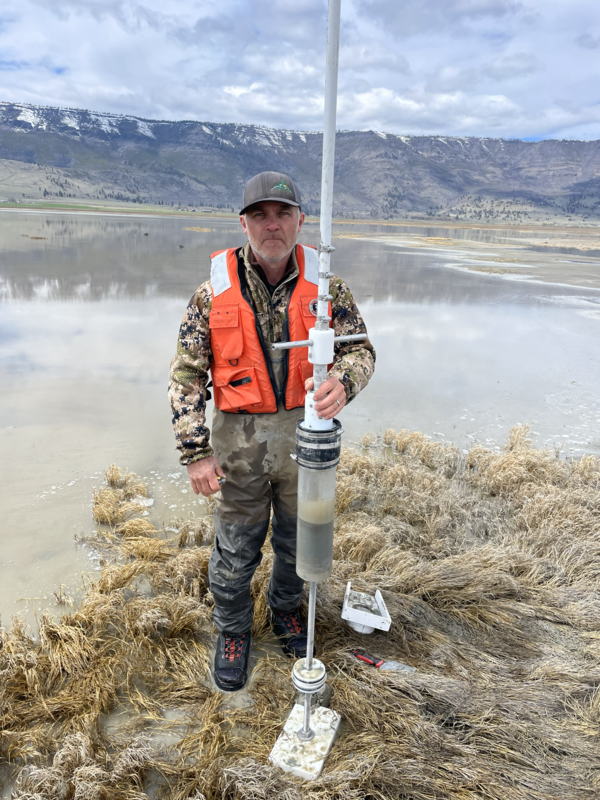
Collecting samples at Summer Lake
Scientist using a core sampler to collect aquatic invertebrates from lakebed sediments in shallow water where shorebirds feed, Summer Lake, Oregon.
Scientist using a core sampler to collect aquatic invertebrates from lakebed sediments in shallow water where shorebirds feed, Summer Lake, Oregon.
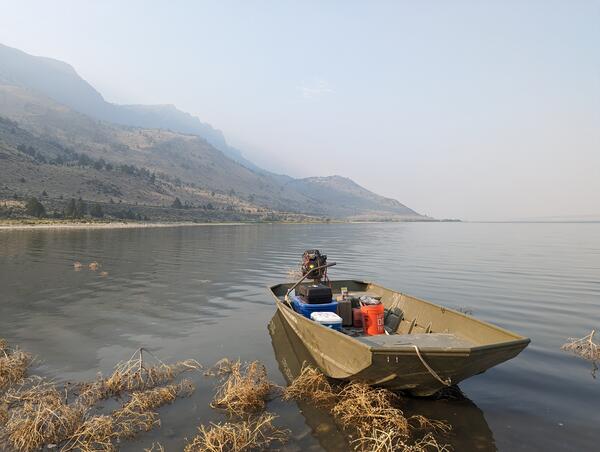
Water quality sampling at Lake Abert
USGS scientists use boats to assist in their water quality surveys. This allows them to access deeper portions of the lake that would be hard to get to on foot.
USGS scientists use boats to assist in their water quality surveys. This allows them to access deeper portions of the lake that would be hard to get to on foot.
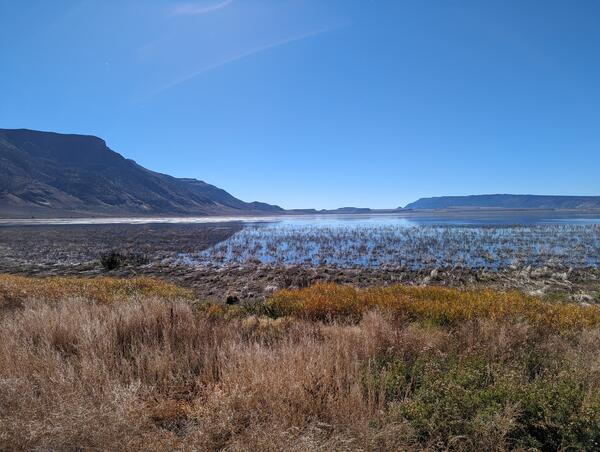
Hart Lake, Oregon
Around Hart Lake, hundreds of bird species either reside or stop during migration. Nesting species include sandhill cranes, American white pelicans, double-crested cormorants, willets, Wilson's phalaropes, gadwalls, northern shovelers, American coots, western grebes, Clark's grebes, black-crowned night herons, Canada geese, mallards, and various ducks and terns.
Around Hart Lake, hundreds of bird species either reside or stop during migration. Nesting species include sandhill cranes, American white pelicans, double-crested cormorants, willets, Wilson's phalaropes, gadwalls, northern shovelers, American coots, western grebes, Clark's grebes, black-crowned night herons, Canada geese, mallards, and various ducks and terns.

Wilson's Phalarope
A female Wilson’s phalarope with 2-gram Sunbird PTT transmitter. Wilson's phalaropes spin around in the water to stir up invertebrates to snack on. Large flocks gather on terminal lakes in the American west before migrating as far as southern most South America.
A female Wilson’s phalarope with 2-gram Sunbird PTT transmitter. Wilson's phalaropes spin around in the water to stir up invertebrates to snack on. Large flocks gather on terminal lakes in the American west before migrating as far as southern most South America.

Banding station at Lake Abert
Research in the field means making the most of your surroundings! Scientist Andrea Mott set up this work station on the dry lake bed of Lake Abert to get the birds banded with GPS trackers close to where they were captured.
Research in the field means making the most of your surroundings! Scientist Andrea Mott set up this work station on the dry lake bed of Lake Abert to get the birds banded with GPS trackers close to where they were captured.
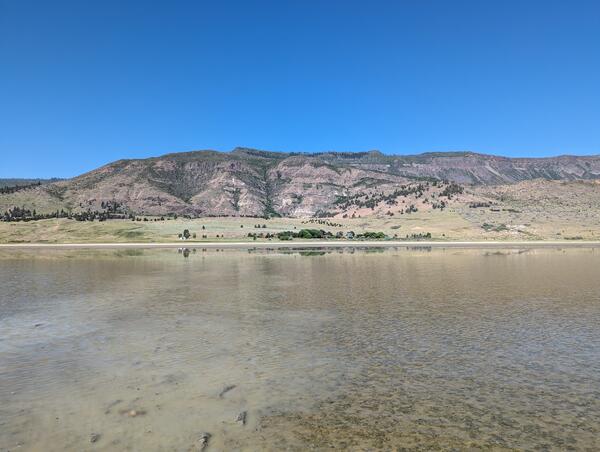
Summer Lake, Oregon
Summer Lake is expansive and shallow, stretching approximately 15 miles in length and five miles in width at high stages, with an area spanning about 38,000 acres at an elevation of 4149-4151 feet. Despite its size, its maximum depth reaches only five to seven feet, though this level has seldom been reached in recent times.
Summer Lake is expansive and shallow, stretching approximately 15 miles in length and five miles in width at high stages, with an area spanning about 38,000 acres at an elevation of 4149-4151 feet. Despite its size, its maximum depth reaches only five to seven feet, though this level has seldom been reached in recent times.
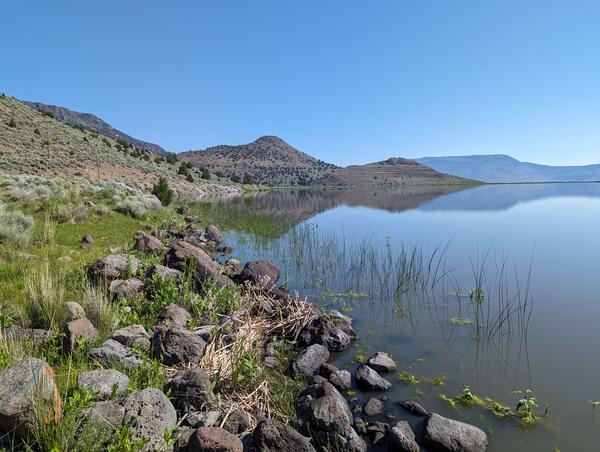
Crump Lake, Oregon
Crump Lake is part of a 40-mile chain of lakes in the Warner Valley of south-central Oregon. This valley is a large fault-block basin, characterized by a series of marshes, shallow lakes, and drained meadows. The area around Crump Lake is home to many types of bird species, either residing there or stopping during migration.
Crump Lake is part of a 40-mile chain of lakes in the Warner Valley of south-central Oregon. This valley is a large fault-block basin, characterized by a series of marshes, shallow lakes, and drained meadows. The area around Crump Lake is home to many types of bird species, either residing there or stopping during migration.