



Brine shrimp are an integral part of Lake Abert's ecosystem, contributing to its biodiversity and supporting many birds and other species. Brine shrimp have a high tolerance for salinity and are able to withstand freezing temperatures and are the lake's only winter residents.
Images
If you are not able to access a product, contact salinelakesiwaas@usgs.gov
Filter Total Items: 87

Brine shrimp in Lake Abert
Brine shrimp are an integral part of Lake Abert's ecosystem, contributing to its biodiversity and supporting many birds and other species. Brine shrimp have a high tolerance for salinity and are able to withstand freezing temperatures and are the lake's only winter residents.

Avocets flying above Farmington Bay Wildlife Management Area, Utah
Avocets flying above Farmington Bay Wildlife Management Area, UtahThe Saline Lake Ecosystems IWAA Waterbird Movement Project began tagging American Avocets in March 2023 to track their movements across the landscape. Tracking data from these birds will help scientists better understand why these birds choose to use the terminal lake and wetland habitats they do in the Great Basin.
By
Ecosystems Mission Area, Water Resources Mission Area, Species Management Research Program, Water Resources Research Act Program, Forest and Rangeland Ecosystem Science Center, Fort Collins Science Center, Nevada Water Science Center, Oregon Water Science Center, Utah Water Science Center, Western Ecological Research Center (WERC), Saline Lake Ecosystems Integrated Water Availability Assessment
Avocets flying above Farmington Bay Wildlife Management Area, Utah
Avocets flying above Farmington Bay Wildlife Management Area, UtahThe Saline Lake Ecosystems IWAA Waterbird Movement Project began tagging American Avocets in March 2023 to track their movements across the landscape. Tracking data from these birds will help scientists better understand why these birds choose to use the terminal lake and wetland habitats they do in the Great Basin.
By
Ecosystems Mission Area, Water Resources Mission Area, Species Management Research Program, Water Resources Research Act Program, Forest and Rangeland Ecosystem Science Center, Fort Collins Science Center, Nevada Water Science Center, Oregon Water Science Center, Utah Water Science Center, Western Ecological Research Center (WERC), Saline Lake Ecosystems Integrated Water Availability Assessment

Walking the shallows of Lake Abert, Oregon
Lake Abert, Oregon is one of the 20 terminal lakes identified by USGS partners as priority ecosystems for study by the Saline Lakes Ecosystems IWAA.
By
Ecosystems Mission Area, Water Resources Mission Area, Species Management Research Program, Water Availability and Use Science Program, Forest and Rangeland Ecosystem Science Center, Fort Collins Science Center, Nevada Water Science Center, Oregon Water Science Center, Utah Water Science Center, Western Ecological Research Center (WERC), Saline Lake Ecosystems Integrated Water Availability Assessment
Lake Abert, Oregon is one of the 20 terminal lakes identified by USGS partners as priority ecosystems for study by the Saline Lakes Ecosystems IWAA.
By
Ecosystems Mission Area, Water Resources Mission Area, Species Management Research Program, Water Availability and Use Science Program, Forest and Rangeland Ecosystem Science Center, Fort Collins Science Center, Nevada Water Science Center, Oregon Water Science Center, Utah Water Science Center, Western Ecological Research Center (WERC), Saline Lake Ecosystems Integrated Water Availability Assessment
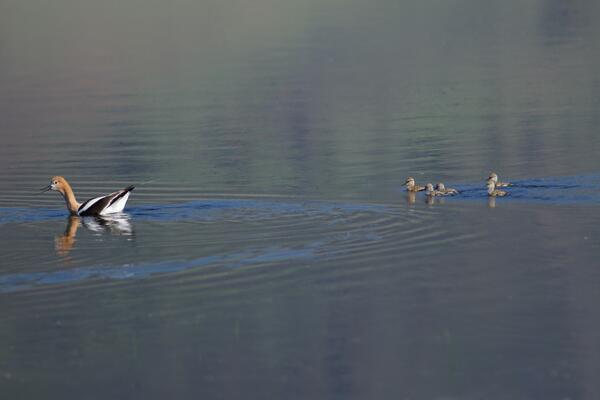
American Avocet trailed by chicks
American Avocet are a bird that relies heavily on the Saline Lakes ecosystem during their spring migration periods. Over 50% of these birds exist here. Part of their use includes using the terminal lakes there to breed.
By
Ecosystems Mission Area, Water Resources Mission Area, Species Management Research Program, Forest and Rangeland Ecosystem Science Center, Fort Collins Science Center, Nevada Water Science Center, Oregon Water Science Center, Utah Water Science Center, Western Ecological Research Center (WERC), Saline Lake Ecosystems Integrated Water Availability Assessment
American Avocet are a bird that relies heavily on the Saline Lakes ecosystem during their spring migration periods. Over 50% of these birds exist here. Part of their use includes using the terminal lakes there to breed.
By
Ecosystems Mission Area, Water Resources Mission Area, Species Management Research Program, Forest and Rangeland Ecosystem Science Center, Fort Collins Science Center, Nevada Water Science Center, Oregon Water Science Center, Utah Water Science Center, Western Ecological Research Center (WERC), Saline Lake Ecosystems Integrated Water Availability Assessment

Yellow-headed blackbird
Yellow-headed blackbirds can be found in the spring and summer in the marshes of terminal lakes and wetlands. Common sightings occur in the Klamath, Summer, Malheur and Harney lake basins.
Yellow-headed blackbirds can be found in the spring and summer in the marshes of terminal lakes and wetlands. Common sightings occur in the Klamath, Summer, Malheur and Harney lake basins.
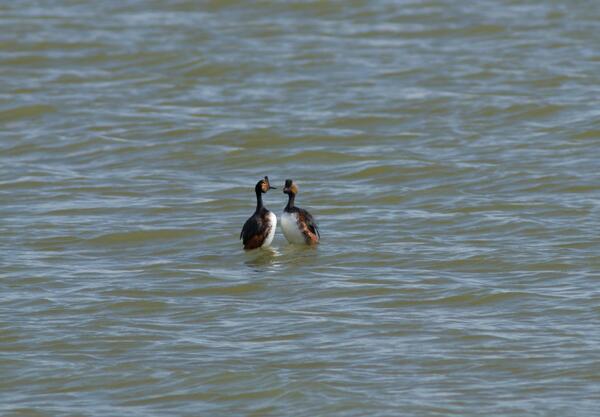
Eared grebes engaged in a courtship behavior
Eared grebes in a courtship behavior in the Great Salt Lake. They are one of many migratory birds in the Great Basin that rely on terminal lakes and wetlands in the area to stop rest and feed.
By
Ecosystems Mission Area, Water Resources Mission Area, Species Management Research Program, Forest and Rangeland Ecosystem Science Center, Fort Collins Science Center, Oregon Water Science Center, Utah Water Science Center, Western Ecological Research Center (WERC), Saline Lake Ecosystems Integrated Water Availability Assessment
Eared grebes in a courtship behavior in the Great Salt Lake. They are one of many migratory birds in the Great Basin that rely on terminal lakes and wetlands in the area to stop rest and feed.
By
Ecosystems Mission Area, Water Resources Mission Area, Species Management Research Program, Forest and Rangeland Ecosystem Science Center, Fort Collins Science Center, Oregon Water Science Center, Utah Water Science Center, Western Ecological Research Center (WERC), Saline Lake Ecosystems Integrated Water Availability Assessment
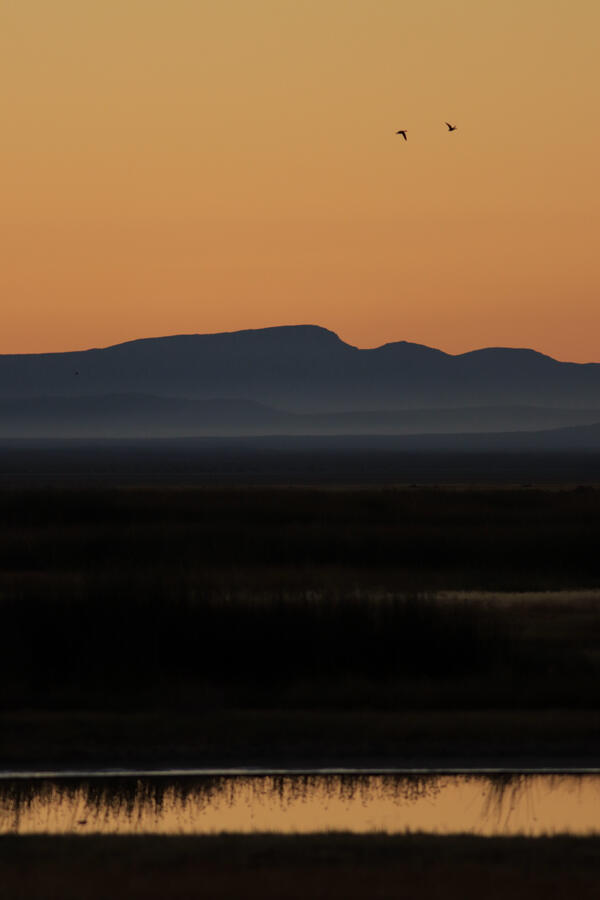
Summer Lake Wildlife Area
Photograph of Summer Lake Wildlife Area, an important stopping spot for migratory birds on their spring and fall migration flights.
By
Ecosystems Mission Area, Water Resources Mission Area, Species Management Research Program, Forest and Rangeland Ecosystem Science Center, Fort Collins Science Center, Nevada Water Science Center, Utah Water Science Center, Western Ecological Research Center (WERC), Saline Lake Ecosystems Integrated Water Availability Assessment
Photograph of Summer Lake Wildlife Area, an important stopping spot for migratory birds on their spring and fall migration flights.
By
Ecosystems Mission Area, Water Resources Mission Area, Species Management Research Program, Forest and Rangeland Ecosystem Science Center, Fort Collins Science Center, Nevada Water Science Center, Utah Water Science Center, Western Ecological Research Center (WERC), Saline Lake Ecosystems Integrated Water Availability Assessment

Walker Lake
Walker Lake is part of the Great Basin in western Nevada. Walker lake is a rest stop for many migratory birds including Common Loon, Snow Geese, White Pelicans, several types of Grebe, Brants and Harlequin ducks.
Walker Lake is part of the Great Basin in western Nevada. Walker lake is a rest stop for many migratory birds including Common Loon, Snow Geese, White Pelicans, several types of Grebe, Brants and Harlequin ducks.

Word Cloud: Key Mechanisms that Interconnect the Great Basin Landscape
Word Cloud: Key Mechanisms that Interconnect the Great Basin LandscapeThis word cloud displays answers to the question: what are the key mechanisms that interconnect the Great Basin landscape? The exercise was conducted at a stakeholder workshop in 2022. Answers that were selected by many participants have the largest text size and are more central in the cloud. The most popular answers were: climate, water, birds, fire and drought.
Word Cloud: Key Mechanisms that Interconnect the Great Basin Landscape
Word Cloud: Key Mechanisms that Interconnect the Great Basin LandscapeThis word cloud displays answers to the question: what are the key mechanisms that interconnect the Great Basin landscape? The exercise was conducted at a stakeholder workshop in 2022. Answers that were selected by many participants have the largest text size and are more central in the cloud. The most popular answers were: climate, water, birds, fire and drought.

Saline Lakes Project Primary Thematic Questions
The Saline Lakes Team identified five primary thematic questions around environmental data collection activities or management needs: 1) How much water is there and how is it used throughout the watershed? 2) What are the hydrologic vulnerabilities of each saline lake? 3) What are the primary resources being utilized by representative taxa at each lake?
The Saline Lakes Team identified five primary thematic questions around environmental data collection activities or management needs: 1) How much water is there and how is it used throughout the watershed? 2) What are the hydrologic vulnerabilities of each saline lake? 3) What are the primary resources being utilized by representative taxa at each lake?

Study Saline Lakes of the Great Basin Desert Area
A map of the Great Basin, including parts of Nevada, Utah, Idaho, Oregon, and California.
A map of the Great Basin, including parts of Nevada, Utah, Idaho, Oregon, and California.

Lone goose at sunrise at Summer Lake Wildlife Area
Lone goose at sunrise at Summer Lake Wildlife AreaLooking east on Bullgate Pond at sunrise with lone tule white-fronted goose (Anser albifrons elgasi) in upper right, Summer Lake Wildlife Area, near Summer Lake, Oregon.
By
Ecosystems Mission Area, Water Resources Mission Area, Species Management Research Program, Water Availability and Use Science Program, Forest and Rangeland Ecosystem Science Center, Fort Collins Science Center, Nevada Water Science Center, Oregon Water Science Center, Utah Water Science Center, Western Ecological Research Center (WERC), Saline Lake Ecosystems Integrated Water Availability Assessment
Lone goose at sunrise at Summer Lake Wildlife Area
Lone goose at sunrise at Summer Lake Wildlife AreaLooking east on Bullgate Pond at sunrise with lone tule white-fronted goose (Anser albifrons elgasi) in upper right, Summer Lake Wildlife Area, near Summer Lake, Oregon.
By
Ecosystems Mission Area, Water Resources Mission Area, Species Management Research Program, Water Availability and Use Science Program, Forest and Rangeland Ecosystem Science Center, Fort Collins Science Center, Nevada Water Science Center, Oregon Water Science Center, Utah Water Science Center, Western Ecological Research Center (WERC), Saline Lake Ecosystems Integrated Water Availability Assessment

Sora at Summer Lake
This Sora is likely looking to munch on some seeds from the wetland plants or a small aquatic critter. Sora's have huge migratory ranges and rely on terminal lakes of the Great Basin as they go between breeding and wintering habitats.
This Sora is likely looking to munch on some seeds from the wetland plants or a small aquatic critter. Sora's have huge migratory ranges and rely on terminal lakes of the Great Basin as they go between breeding and wintering habitats.

Saline Lakes Ecosystems Project Integrated Science Themes
Saline Lakes Ecosystems Project Integrated Science ThemesA diagram showing the connection between water availability, water quality, saline lake habitats, and bird usage. Water availability drives water quality, which affects saline lake habitats that birds use. Water budget, water use, timing, vulnerability, and water depth are factors in water availability.
Saline Lakes Ecosystems Project Integrated Science Themes
Saline Lakes Ecosystems Project Integrated Science ThemesA diagram showing the connection between water availability, water quality, saline lake habitats, and bird usage. Water availability drives water quality, which affects saline lake habitats that birds use. Water budget, water use, timing, vulnerability, and water depth are factors in water availability.

Great Salt Lake Water Dashboard
Map from the Great Salt Lake Water Dashboard from July 27th, 2022 showing the extent of the Great Salt Lake watershed. Markers are stream flow gages colored by flow status with warmer colors indicating below normal flow status, green as normal, and blue to black as above normal.
Map from the Great Salt Lake Water Dashboard from July 27th, 2022 showing the extent of the Great Salt Lake watershed. Markers are stream flow gages colored by flow status with warmer colors indicating below normal flow status, green as normal, and blue to black as above normal.
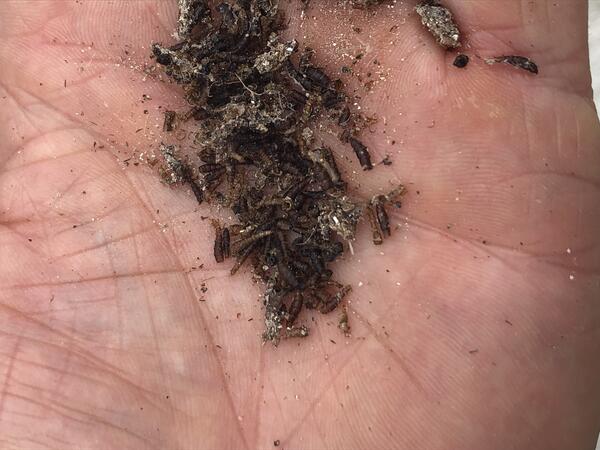
Brine fly pile
These brine flies are an important fuel source for migratory birds, giving them energy for long flights.
By
Ecosystems Mission Area, Water Resources Mission Area, Species Management Research Program, Forest and Rangeland Ecosystem Science Center, Nevada Water Science Center, Oregon Water Science Center, Utah Water Science Center, Western Ecological Research Center (WERC), Saline Lake Ecosystems Integrated Water Availability Assessment
These brine flies are an important fuel source for migratory birds, giving them energy for long flights.
By
Ecosystems Mission Area, Water Resources Mission Area, Species Management Research Program, Forest and Rangeland Ecosystem Science Center, Nevada Water Science Center, Oregon Water Science Center, Utah Water Science Center, Western Ecological Research Center (WERC), Saline Lake Ecosystems Integrated Water Availability Assessment
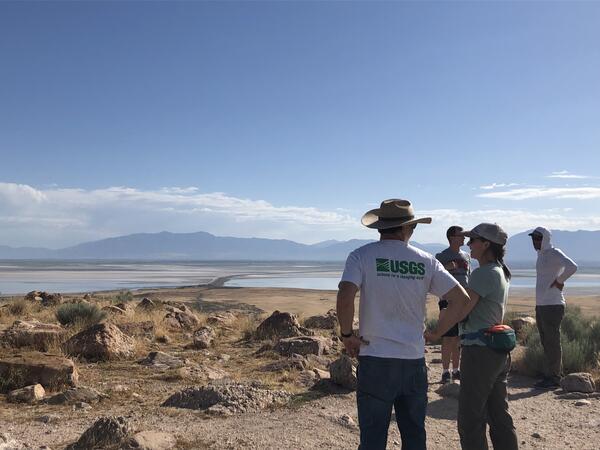
Scientist looking out onto the GSL from Antelope Island
Scientist looking out onto the GSL from Antelope IslandThese scientists are working on The Great Salt Lake to determine the amount of water and qualities of it. This will help them in developing better management techniques that will work to support the migratory birds that frequent the area.
By
Ecosystems Mission Area, Water Resources Mission Area, Species Management Research Program, Forest and Rangeland Ecosystem Science Center, Fort Collins Science Center, Nevada Water Science Center, Oregon Water Science Center, Utah Water Science Center, Western Ecological Research Center (WERC), Saline Lake Ecosystems Integrated Water Availability Assessment
Scientist looking out onto the GSL from Antelope Island
Scientist looking out onto the GSL from Antelope IslandThese scientists are working on The Great Salt Lake to determine the amount of water and qualities of it. This will help them in developing better management techniques that will work to support the migratory birds that frequent the area.
By
Ecosystems Mission Area, Water Resources Mission Area, Species Management Research Program, Forest and Rangeland Ecosystem Science Center, Fort Collins Science Center, Nevada Water Science Center, Oregon Water Science Center, Utah Water Science Center, Western Ecological Research Center (WERC), Saline Lake Ecosystems Integrated Water Availability Assessment

Field research on White Faced Ibis
Andrea a USGS researcher measures the birds bill or "culmen". The culmen is measured from the tip of the upper mandible to the end where the culmen meets the forehead.
Andrea a USGS researcher measures the birds bill or "culmen". The culmen is measured from the tip of the upper mandible to the end where the culmen meets the forehead.

Water table contour map (2018), Harney Basin, Oregon.
Water table contour map (2018), Harney Basin, Oregon.Water table contour map (2018) of the Harney Basin, Oregon. Image is from a new groundwater basin study study by the Oregon Water Resources Department and U.S. Geological Survey for Harney Basin in southeast Oregon.
Water table contour map (2018), Harney Basin, Oregon.
Water table contour map (2018), Harney Basin, Oregon.Water table contour map (2018) of the Harney Basin, Oregon. Image is from a new groundwater basin study study by the Oregon Water Resources Department and U.S. Geological Survey for Harney Basin in southeast Oregon.

White-faced Ibis temporarily captured for research
White-faced Ibis temporarily captured for researchWhite-faced Ibis breed in colonies that shift locations from year to year with changes in water levels. The birds usually nest in dense marsh growth such as bulrush or cattails.
White-faced Ibis temporarily captured for research
White-faced Ibis temporarily captured for researchWhite-faced Ibis breed in colonies that shift locations from year to year with changes in water levels. The birds usually nest in dense marsh growth such as bulrush or cattails.

Malheur Lake, Oregon
Malheur Lake, a saline lake in eastern Oregon, photographed from a USGS airboat. USGS has been monitoring water quality parameters including temperature, turbidity, and pH in the lake since 2017.
Malheur Lake, a saline lake in eastern Oregon, photographed from a USGS airboat. USGS has been monitoring water quality parameters including temperature, turbidity, and pH in the lake since 2017.