



Brian Pellerin
Brian Pellerin is the Program Manager for the Next Generation Water Observing Systems (NGWOS) and Water Hazards Programs.
Science and Products
Filter Total Items: 13

Surge, Wave, and Tide Hydrodynamics (SWaTH) Network
During large coastal storms, the storm surge and waves are the main cause of destruction and landscape change, transporting saline water, sediment, and debris inland. The USGS, in collaboration with stakeholders, has constructed a national Surge, Wave, and Tide Hydrodynamics (SWaTH) Network for the Atlantic, Eastern Pacific, and Central Pacific. SWaTH monitors and documents the height, extent, and...
Providing Major Storm and Short-Term Flood Event Data
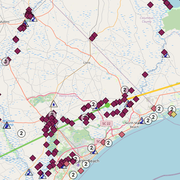
During major storms or other short-term events, the USGS collects streamflow and additional data to help document high-water events. This data is uploaded to the Short-Term Network (STN) for long-term archival and served out to the public through the Flood Event Viewer (FEV) which provides convenient, map-based access to downloadable event-based data.

Historical Flooding
The USGS provides practical, unbiased information about the Nation's rivers and streams that is crucial in mitigating hazards associated with floods. This site provides information about the USGS activities, data, and services provided during regional high-flow events, such as hurricanes or multi-state flooding events. The USGS response to these events is typically managed by the National Flood...

Assessing the role of winter flooding on baseline greenhouse gas fluxes from corn fields in the Sacramento – San Joaquin Bay Delta
Understanding the magnitude and variability of baseline greenhouse gas (GHG) emissions from the Sacramento – San Joaquin Bay Delta is critical for current and future land management. For example, strategies that maximize carbon sequestration in soils and plants while minimizing unintended consequences such as GHG emissions are likely to produce both economic and environmental benefits for the...

Flood Inundation Mapping (FIM) Program
Floods are the leading cause of natural-disaster losses in the U.S. More than 75 percent of declared Federal disasters are related to floods, and annual flood losses average almost $8 billion with over 90 fatalities per year. Although the amount of fatalities has declined due to improved early warning systems, economic losses continue to rise with increased urbanization in flood-hazard areas.

Improved Monitoring of Water Quality and Pelagic Organism Decline in the Delta with Continuous In Situ Sensor Measurements
Newly-developed, commercially-available sensors permit real-time collection of water quality data that may help identify ecosystem processes that affect the health of pelagic food webs in the Sacramento – San Joaquin Delta. In particular, the simultaneous measurement of nutrients, organic matter and algal abundance along with the basic water quality variables such as temperature and salinity -...
Science and Products
Filter Total Items: 13
Surge, Wave, and Tide Hydrodynamics (SWaTH) Network
During large coastal storms, the storm surge and waves are the main cause of destruction and landscape change, transporting saline water, sediment, and debris inland. The USGS, in collaboration with stakeholders, has constructed a national Surge, Wave, and Tide Hydrodynamics (SWaTH) Network for the Atlantic, Eastern Pacific, and Central Pacific. SWaTH monitors and documents the height, extent, and...
Providing Major Storm and Short-Term Flood Event Data
During major storms or other short-term events, the USGS collects streamflow and additional data to help document high-water events. This data is uploaded to the Short-Term Network (STN) for long-term archival and served out to the public through the Flood Event Viewer (FEV) which provides convenient, map-based access to downloadable event-based data.
Historical Flooding
The USGS provides practical, unbiased information about the Nation's rivers and streams that is crucial in mitigating hazards associated with floods. This site provides information about the USGS activities, data, and services provided during regional high-flow events, such as hurricanes or multi-state flooding events. The USGS response to these events is typically managed by the National Flood...
Assessing the role of winter flooding on baseline greenhouse gas fluxes from corn fields in the Sacramento – San Joaquin Bay Delta
Understanding the magnitude and variability of baseline greenhouse gas (GHG) emissions from the Sacramento – San Joaquin Bay Delta is critical for current and future land management. For example, strategies that maximize carbon sequestration in soils and plants while minimizing unintended consequences such as GHG emissions are likely to produce both economic and environmental benefits for the...
Flood Inundation Mapping (FIM) Program
Floods are the leading cause of natural-disaster losses in the U.S. More than 75 percent of declared Federal disasters are related to floods, and annual flood losses average almost $8 billion with over 90 fatalities per year. Although the amount of fatalities has declined due to improved early warning systems, economic losses continue to rise with increased urbanization in flood-hazard areas.
Improved Monitoring of Water Quality and Pelagic Organism Decline in the Delta with Continuous In Situ Sensor Measurements
Newly-developed, commercially-available sensors permit real-time collection of water quality data that may help identify ecosystem processes that affect the health of pelagic food webs in the Sacramento – San Joaquin Delta. In particular, the simultaneous measurement of nutrients, organic matter and algal abundance along with the basic water quality variables such as temperature and salinity -...