
Northeast Region Photo Contest Winner | October 2018 | People
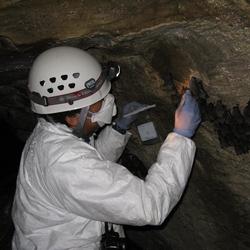
Salamander sampling crew
Evan Grant, Ph.D.
Evan Grant the principle investigator of the US Geological Survey’s Amphibian Research and Monitoring Initiative (ARMI), northeast region.
Evan's research focuses on questions relating to amphibian populations, specifically with respect to their landscape-scale ecology. Evan also uses decision science to aid resource managers.
Education:
- PhD, 2009, University of Maryland College Park, Program of Marine, Estuarine and Environmental Sciences and Department of Entomology
- BS, 2001, Cornell University, Natural Resources, with Distinction in Research
Science and Products
Filter Total Items: 21
EESC Makes an Impact: Reducing Management Costs and Increasing Efficiency
Decision analysis is widely used in business applications to improve cost saving and increase efficiency under uncertainty. Scientists at the U.S. Geological Survey Eastern Ecological Science Center (EESC) include world-renowned experts who use data, mathematics, statistics, and computer science to help frame and solve decision problems to support U.S. national security, public health, wildlife...
Collaborative Project to Understand Red-backed Salamander Population Dynamics and Adaptation
In 2013, the Salamander Population and Adaptation Research Network started as a partnership between researchers at Penn State University and the USGS Northeast Amphibian and Research Monitoring Initiative with the intention of creating a research network to address adaptation and population dynamics across multiple scales. Our goals are to understand impacts of land use and weather conditions on...
Northeast Amphibian Research and Monitoring Initiative
The U.S. Geological Survey’s Eastern Ecological Science Center is home to the Northeast Amphibian Research and Monitoring Initiative (NEARMI), one of 7 ARMI regions across the United States. NEARMI works on public lands in thirteen states from Maine to Virginia, including many National Parks and National Wildlife Refuges.
Assessing amphibian communities in the National Capital Region
The National Capital Region Network (NCRN) has identified amphibians as a priority taxonomic group for its Inventory and Monitoring program. Amphibian monitoring was initiated in 2005, and is currently concentrated in Antietam National Battlefield (ANTI), Catoctin Mountain Park (CATO), Chesapeake and Ohio Canal National Historical Park (CHOH), George Washington Memorial Parkway (GWMP), Harpers...
Monitoring Vernal Pool Amphibians in the Northeast
In 2004, the Northeast Amphibian Research Monitoring Initiative (NE ARMI) in collaboration with National Park Service and US Fish and Wildlife Service initiated a region-wide study on the distribution of vernal pools and estimate the proportion of pools that were occupied by pool-associated amphibians (specifically, wood frogs, Lithobates sylvaticus, and spotted salamanders, Ambystoma maculatum).
Disease Decision Analysis and Research
The Disease Decision Analysis and Research group is a multi-disciplinary team based out of the Eastern Ecological Science Center whose strengths are in ecology, decision sciences and quantitative modeling.
Filter Total Items: 28
Salamander species in headwater streams on state and federal public lands in the eastern United States Salamander species in headwater streams on state and federal public lands in the eastern United States
This dataset includes stream and species data collected in headwater streams on public lands throughout the eastern United States. Data were collected to inform updated species range maps and provide data for large-scale modeling of species ranges using multiple data types. All salamander species encountered are included in the dataset.
Stream salamanders in abandoned mine habitats of New River Gorge National Park and Preserve Stream salamanders in abandoned mine habitats of New River Gorge National Park and Preserve
Stream-like habitats in abandoned mine areas of New River Gorge National Park and Preserve were surveyed for stream salamanders in fall 2024. Methods included visual encounter surveys of transects up to 25m within stream-like mine water discharges in the Nuttallburg, Fayette Station, Hawks Nest Connector, and New River Gorge Bridge areas of the park. All stream salamander species...
Bsal Not Detected After Pet Release in Western Massachusetts Pond Bsal Not Detected After Pet Release in Western Massachusetts Pond
These data have been collected by the United States Geological Survey’s Northeast Amphibian Research and Monitoring Initiative (USGS NEARMI) scientists. We collected these data to examine if Bsal was introduced to a site where there was a known pet release in Western, Massachusetts.
Capture records of Desmognathus salamanders in Shenandoah National Park, 2007-2013 Capture records of Desmognathus salamanders in Shenandoah National Park, 2007-2013
Mark-recapture records of salamanders in the genus Desmognathus within stream habitat at Shenandoah National Park, Virginia from 2007-2013
Observed occurrence of Eastern red-spotted newts (Notophthalmus viridescens) in the Northeastern United States Observed occurrence of Eastern red-spotted newts (Notophthalmus viridescens) in the Northeastern United States
This dataset includes surveys for the Eastern red-spotted newt (Notophrhalamus viridescens viridescen). The survey data includes 264 survey sites, landscape level covariates including human interference index, and landcover type, and survey level covariates including survey date and detection method.
Code for quantitative support for the benefits of proactive management for wildlife disease control Code for quantitative support for the benefits of proactive management for wildlife disease control
This software release contains the input data, R scripts, and Rmarkdown visualization scripts. This includes (i) aggregation code of expert elicited parameter estimates, (ii) simulation code using our develop dynamic multi-state occupancy model for no management, proactive management, and reactive management, (iii) code for probabilistic decision trees, and (iv) Rmarkdown scripts...
Cave Salamander sampling crew
Northeast Region Photo Contest Winner | October 2018 | People
Salamander sampling crew
Filter Total Items: 148
The value of reducing uncertainties to support the management of a high‐elevation endemic salamander The value of reducing uncertainties to support the management of a high‐elevation endemic salamander
Many salamander populations are declining, and methods to determine how best to allocate limited resources to slow or reverse these declines could support land managers in their decision‐making processes. Multiple types of uncertainty may delay management decisions, including when (1) knowledge of a species' ecology is incomplete, (2) climate change effects on environmental covariates...
Authors
Evan H. Campbell Grant, Jo A. Werba, Riley Olivia Mummah, Adrianne Brand
An analysis of the linked decisions in the confiscation of illegally traded turtles An analysis of the linked decisions in the confiscation of illegally traded turtles
Over the last few decades, freshwater turtles have become more common in the illegal wildlife trade because of growing global demand. Illegally traded turtles may be intercepted by several different agencies with separate jurisdictions. When turtles are confiscated, uncertainties may make releasing them back to the wild difficult. We used tools from decision analysis to achieve the...
Authors
Desireé Smith, Graziella V. DiRenzo, Jillian Elizabeth Fleming, Margaret C. McEachran, Evan H. Campbell Grant
Quantifying the relative importance of survival threats to a long-lived reptile using expert elicitation Quantifying the relative importance of survival threats to a long-lived reptile using expert elicitation
Long-term survival of a conservation-reliant species requires understanding the impact of threats on population growth rate and the management actions that can help mitigate these threats. We used a threat assessment with expert-elicited estimates to determine the relative effect of each stage-specific threat on the population growth rate of the wood turtle Glyptemys insculpta. In...
Authors
Jennifer F. Moore, J. Hardin Waddle, Fred Johnson, Julien Martin, Evan H. Campbell Grant, Jillian E. Fleming, Thomas S. Akre, Donald J. Brown, Yu Man Lee, Jonathon Drescher-Lehman, John Kleopfer, Jessica R. Meck, Kevin J. Oxenrider, Jeff Tamplin, Anthony Tur, Lisabeth L. Willey
Fomites could determine severity of SARS-CoV-2 outbreaks in low-density white-tailed deer (Odocoileus virginianus) populations Fomites could determine severity of SARS-CoV-2 outbreaks in low-density white-tailed deer (Odocoileus virginianus) populations
The establishment of a reservoir species for zoonotic diseases is concerning for both animal and human health. Severe acute respiratory syndrome coronavirus (SARS-CoV)-2, the coronavirus responsible for the COVID-19 pandemic, has been detected in white-tailed deer (Odocoileus virginianus) in the United States. Since its initial detection, various studies have documented circulation and...
Authors
Elias Rosenblatt, Jonathan D. Cook, Graziella Vittoria DiRenzo, Evan H. Campbell Grant, Michael C. Runge, Brittany Mosher
Independent and interactive effects of disease and methylmercury on demographic rates across multiple amphibian populations Independent and interactive effects of disease and methylmercury on demographic rates across multiple amphibian populations
Disease, alone or combined with other stressors such as habitat loss and contaminants, affects wildlife populations worldwide. However, interactions among stressors and how they affect demography and populations remain poorly understood. The amphibian chytrid fungus (Batrachochytrium dendrobatidis; Bd) is a sometimes-lethal pathogen linked with population declines and extirpations of...
Authors
Morgan P. Kain, Blake R. Hossack, Kelly Smalling, Brian J. Halstead, Daniel A. Grear, David A. Miller, Michael J. Adams, Adam R. Backlin, William Barichivich, Collin A. Eagles-Smith, Colleen Emery, Jillian Elizabeth Fleming, Robert N. Fisher, Elizabeth Gallegos, Duoa J. Lor, Patrick M. Kleeman, Erin L. Muths, Ty Pan, Christopher Pearl, Charles W. Robinson, Caitlin Teresa Rumrill, Brian J. Tornabene, J. Hardin Waddle, Susan Walls, Evan H. Campbell Grant
Pan-amphibia distribution of the fungal parasite Batrachochytrium dendrobatidis varies with species and temperature Pan-amphibia distribution of the fungal parasite Batrachochytrium dendrobatidis varies with species and temperature
Batrachochytrium dendrobatidis (Bd) is a globally distributed fungal pathogen of amphibians that has contributed to one of the largest disease-related biodiversity losses in wildlife. Bd is regularly viewed through the lens of a global wildlife epizootic because the spread of highly virulent genetic lineages has resulted in well-documented declines and extinctions of multiple amphibian...
Authors
Daniel A. Grear, Michael J. Adams, Adam R. Backlin, William Barichivich, Adrianne Brand, Gary M. Bucciarelli, Daniel L. Calhoun, Tara Chestnut, Jon D Davenport, Andrew E Dietrich, Graziella V. DiRenzo, Robert N. Fisher, Brad Glorioso, Evan H. Campbell Grant, Brian J. Halstead, Marc P Hayes, Blake R. Hossack, Morgan Kain, Patrick M. Kleeman, Jeffrey M. Lorch, Brome McCreary, David A.W. Miller, Brittany A. Mosher, Erin L. Muths, Christopher Pearl, Charles H. Robinson, Mark Roth, Jennifer Rowe, Walter Sadinski, Brent H. Sigafus, Iga Stasiak, Samuel Sweet, Hardin Waddle, Susan Walls, Gregory J Watkins-Colwell, Lori A Williams, Megan Winzeler
Code for Fomites could determine severity of SARS-CoV-2 outbreaks in low-density white-tailed deer Odocoileus virginianus populations Code for Fomites could determine severity of SARS-CoV-2 outbreaks in low-density white-tailed deer Odocoileus virginianus populations
This software release contains 1 RMarkdown file (Indirect_SARS_analysis.RMD) and necessary input data and functions that support the analysis presented in referenced manuscript (IP-166277). This RMarkdown file that steps through the estimation of parameters that allow: Compile estimated and derived parameters for both indirect and direct transmission pathways for SARS-CoV-2 in white...
Code for quantitative support for the benefits of proactive management for wildlife disease control Code for quantitative support for the benefits of proactive management for wildlife disease control
This software release contains the input data, R scripts, and Rmarkdown visualization scripts. This includes (i) aggregation code of expert elicited parameter estimates, (ii) simulation code using our develop dynamic multi-state occupancy model for no management, proactive management, and reactive management, (iii) code for probabilistic decision trees, and (iv) Rmarkdown scripts...
Code for: Small enzootic survival costs mask the potential for long-term population size suppression Code for: Small enzootic survival costs mask the potential for long-term population size suppression
This repository contains all of the scripts to reproduce the analyses, figures, and tables associated with the manuscript Glorioso et al. in review. The scripts are organized into folders, and the folders are numbered in the order in which they should be executed. Briefly, there are six folders that do the following: (1) format the data, (2) fit the model, (3) run the population...
whitetailedSIRS: A package to project SARS-CoV-2 outbreak dynamics in white-tailed deer whitetailedSIRS: A package to project SARS-CoV-2 outbreak dynamics in white-tailed deer
This software release contains several R scripts that generate epidemic projections of SARS-CoV-2 in white tailed deer populations using a Susceptible-Infected-Recovered-Susceptible (SIRS) modeling framework. We provide a workflow of vignettes used in Rosenblatt et al. In Prep and Cook et al. In Prep. Users are able to specify transmission parameters for human-deer and deer-deer...
Inferring pathogen presence when sample misclassification and partial observation occur Inferring pathogen presence when sample misclassification and partial observation occur
This software contains four separate R scripts and one Matlab script that comprise an analysis to estimate the posterior probability of pathogen presence when sample misclassification and partial observations occur. We develop a Bayesian hierarchal framework that accommodates false negative, false positive, and uncertain detections and apply this framework to a case study of the fungal...
Applying Simulated Treatments to Bat Populations Experiencing Severe White-nose Syndrome Mortality Applying Simulated Treatments to Bat Populations Experiencing Severe White-nose Syndrome Mortality
We developed a model allowing for the application of treatment strategies to bat populations at risk of severe mortality from WNS. The model allows the bat population to exist within a network of hibernacula and updates survival, reproduction, movement, treatment applications, and treatment related disturbance annually. For simplicity, the effects of WNS are experienced across all...
Filter Total Items: 15
Science and Products
Filter Total Items: 21
EESC Makes an Impact: Reducing Management Costs and Increasing Efficiency
Decision analysis is widely used in business applications to improve cost saving and increase efficiency under uncertainty. Scientists at the U.S. Geological Survey Eastern Ecological Science Center (EESC) include world-renowned experts who use data, mathematics, statistics, and computer science to help frame and solve decision problems to support U.S. national security, public health, wildlife...
Collaborative Project to Understand Red-backed Salamander Population Dynamics and Adaptation
In 2013, the Salamander Population and Adaptation Research Network started as a partnership between researchers at Penn State University and the USGS Northeast Amphibian and Research Monitoring Initiative with the intention of creating a research network to address adaptation and population dynamics across multiple scales. Our goals are to understand impacts of land use and weather conditions on...
Northeast Amphibian Research and Monitoring Initiative
The U.S. Geological Survey’s Eastern Ecological Science Center is home to the Northeast Amphibian Research and Monitoring Initiative (NEARMI), one of 7 ARMI regions across the United States. NEARMI works on public lands in thirteen states from Maine to Virginia, including many National Parks and National Wildlife Refuges.
Assessing amphibian communities in the National Capital Region
The National Capital Region Network (NCRN) has identified amphibians as a priority taxonomic group for its Inventory and Monitoring program. Amphibian monitoring was initiated in 2005, and is currently concentrated in Antietam National Battlefield (ANTI), Catoctin Mountain Park (CATO), Chesapeake and Ohio Canal National Historical Park (CHOH), George Washington Memorial Parkway (GWMP), Harpers...
Monitoring Vernal Pool Amphibians in the Northeast
In 2004, the Northeast Amphibian Research Monitoring Initiative (NE ARMI) in collaboration with National Park Service and US Fish and Wildlife Service initiated a region-wide study on the distribution of vernal pools and estimate the proportion of pools that were occupied by pool-associated amphibians (specifically, wood frogs, Lithobates sylvaticus, and spotted salamanders, Ambystoma maculatum).
Disease Decision Analysis and Research
The Disease Decision Analysis and Research group is a multi-disciplinary team based out of the Eastern Ecological Science Center whose strengths are in ecology, decision sciences and quantitative modeling.
Filter Total Items: 28
Salamander species in headwater streams on state and federal public lands in the eastern United States Salamander species in headwater streams on state and federal public lands in the eastern United States
This dataset includes stream and species data collected in headwater streams on public lands throughout the eastern United States. Data were collected to inform updated species range maps and provide data for large-scale modeling of species ranges using multiple data types. All salamander species encountered are included in the dataset.
Stream salamanders in abandoned mine habitats of New River Gorge National Park and Preserve Stream salamanders in abandoned mine habitats of New River Gorge National Park and Preserve
Stream-like habitats in abandoned mine areas of New River Gorge National Park and Preserve were surveyed for stream salamanders in fall 2024. Methods included visual encounter surveys of transects up to 25m within stream-like mine water discharges in the Nuttallburg, Fayette Station, Hawks Nest Connector, and New River Gorge Bridge areas of the park. All stream salamander species...
Bsal Not Detected After Pet Release in Western Massachusetts Pond Bsal Not Detected After Pet Release in Western Massachusetts Pond
These data have been collected by the United States Geological Survey’s Northeast Amphibian Research and Monitoring Initiative (USGS NEARMI) scientists. We collected these data to examine if Bsal was introduced to a site where there was a known pet release in Western, Massachusetts.
Capture records of Desmognathus salamanders in Shenandoah National Park, 2007-2013 Capture records of Desmognathus salamanders in Shenandoah National Park, 2007-2013
Mark-recapture records of salamanders in the genus Desmognathus within stream habitat at Shenandoah National Park, Virginia from 2007-2013
Observed occurrence of Eastern red-spotted newts (Notophthalmus viridescens) in the Northeastern United States Observed occurrence of Eastern red-spotted newts (Notophthalmus viridescens) in the Northeastern United States
This dataset includes surveys for the Eastern red-spotted newt (Notophrhalamus viridescens viridescen). The survey data includes 264 survey sites, landscape level covariates including human interference index, and landcover type, and survey level covariates including survey date and detection method.
Code for quantitative support for the benefits of proactive management for wildlife disease control Code for quantitative support for the benefits of proactive management for wildlife disease control
This software release contains the input data, R scripts, and Rmarkdown visualization scripts. This includes (i) aggregation code of expert elicited parameter estimates, (ii) simulation code using our develop dynamic multi-state occupancy model for no management, proactive management, and reactive management, (iii) code for probabilistic decision trees, and (iv) Rmarkdown scripts...
Cave Salamander sampling crew
Northeast Region Photo Contest Winner | October 2018 | People
Salamander sampling crew
Northeast Region Photo Contest Winner | October 2018 | People
Salamander sampling crew
Filter Total Items: 148
The value of reducing uncertainties to support the management of a high‐elevation endemic salamander The value of reducing uncertainties to support the management of a high‐elevation endemic salamander
Many salamander populations are declining, and methods to determine how best to allocate limited resources to slow or reverse these declines could support land managers in their decision‐making processes. Multiple types of uncertainty may delay management decisions, including when (1) knowledge of a species' ecology is incomplete, (2) climate change effects on environmental covariates...
Authors
Evan H. Campbell Grant, Jo A. Werba, Riley Olivia Mummah, Adrianne Brand
An analysis of the linked decisions in the confiscation of illegally traded turtles An analysis of the linked decisions in the confiscation of illegally traded turtles
Over the last few decades, freshwater turtles have become more common in the illegal wildlife trade because of growing global demand. Illegally traded turtles may be intercepted by several different agencies with separate jurisdictions. When turtles are confiscated, uncertainties may make releasing them back to the wild difficult. We used tools from decision analysis to achieve the...
Authors
Desireé Smith, Graziella V. DiRenzo, Jillian Elizabeth Fleming, Margaret C. McEachran, Evan H. Campbell Grant
Quantifying the relative importance of survival threats to a long-lived reptile using expert elicitation Quantifying the relative importance of survival threats to a long-lived reptile using expert elicitation
Long-term survival of a conservation-reliant species requires understanding the impact of threats on population growth rate and the management actions that can help mitigate these threats. We used a threat assessment with expert-elicited estimates to determine the relative effect of each stage-specific threat on the population growth rate of the wood turtle Glyptemys insculpta. In...
Authors
Jennifer F. Moore, J. Hardin Waddle, Fred Johnson, Julien Martin, Evan H. Campbell Grant, Jillian E. Fleming, Thomas S. Akre, Donald J. Brown, Yu Man Lee, Jonathon Drescher-Lehman, John Kleopfer, Jessica R. Meck, Kevin J. Oxenrider, Jeff Tamplin, Anthony Tur, Lisabeth L. Willey
Fomites could determine severity of SARS-CoV-2 outbreaks in low-density white-tailed deer (Odocoileus virginianus) populations Fomites could determine severity of SARS-CoV-2 outbreaks in low-density white-tailed deer (Odocoileus virginianus) populations
The establishment of a reservoir species for zoonotic diseases is concerning for both animal and human health. Severe acute respiratory syndrome coronavirus (SARS-CoV)-2, the coronavirus responsible for the COVID-19 pandemic, has been detected in white-tailed deer (Odocoileus virginianus) in the United States. Since its initial detection, various studies have documented circulation and...
Authors
Elias Rosenblatt, Jonathan D. Cook, Graziella Vittoria DiRenzo, Evan H. Campbell Grant, Michael C. Runge, Brittany Mosher
Independent and interactive effects of disease and methylmercury on demographic rates across multiple amphibian populations Independent and interactive effects of disease and methylmercury on demographic rates across multiple amphibian populations
Disease, alone or combined with other stressors such as habitat loss and contaminants, affects wildlife populations worldwide. However, interactions among stressors and how they affect demography and populations remain poorly understood. The amphibian chytrid fungus (Batrachochytrium dendrobatidis; Bd) is a sometimes-lethal pathogen linked with population declines and extirpations of...
Authors
Morgan P. Kain, Blake R. Hossack, Kelly Smalling, Brian J. Halstead, Daniel A. Grear, David A. Miller, Michael J. Adams, Adam R. Backlin, William Barichivich, Collin A. Eagles-Smith, Colleen Emery, Jillian Elizabeth Fleming, Robert N. Fisher, Elizabeth Gallegos, Duoa J. Lor, Patrick M. Kleeman, Erin L. Muths, Ty Pan, Christopher Pearl, Charles W. Robinson, Caitlin Teresa Rumrill, Brian J. Tornabene, J. Hardin Waddle, Susan Walls, Evan H. Campbell Grant
Pan-amphibia distribution of the fungal parasite Batrachochytrium dendrobatidis varies with species and temperature Pan-amphibia distribution of the fungal parasite Batrachochytrium dendrobatidis varies with species and temperature
Batrachochytrium dendrobatidis (Bd) is a globally distributed fungal pathogen of amphibians that has contributed to one of the largest disease-related biodiversity losses in wildlife. Bd is regularly viewed through the lens of a global wildlife epizootic because the spread of highly virulent genetic lineages has resulted in well-documented declines and extinctions of multiple amphibian...
Authors
Daniel A. Grear, Michael J. Adams, Adam R. Backlin, William Barichivich, Adrianne Brand, Gary M. Bucciarelli, Daniel L. Calhoun, Tara Chestnut, Jon D Davenport, Andrew E Dietrich, Graziella V. DiRenzo, Robert N. Fisher, Brad Glorioso, Evan H. Campbell Grant, Brian J. Halstead, Marc P Hayes, Blake R. Hossack, Morgan Kain, Patrick M. Kleeman, Jeffrey M. Lorch, Brome McCreary, David A.W. Miller, Brittany A. Mosher, Erin L. Muths, Christopher Pearl, Charles H. Robinson, Mark Roth, Jennifer Rowe, Walter Sadinski, Brent H. Sigafus, Iga Stasiak, Samuel Sweet, Hardin Waddle, Susan Walls, Gregory J Watkins-Colwell, Lori A Williams, Megan Winzeler
Code for Fomites could determine severity of SARS-CoV-2 outbreaks in low-density white-tailed deer Odocoileus virginianus populations Code for Fomites could determine severity of SARS-CoV-2 outbreaks in low-density white-tailed deer Odocoileus virginianus populations
This software release contains 1 RMarkdown file (Indirect_SARS_analysis.RMD) and necessary input data and functions that support the analysis presented in referenced manuscript (IP-166277). This RMarkdown file that steps through the estimation of parameters that allow: Compile estimated and derived parameters for both indirect and direct transmission pathways for SARS-CoV-2 in white...
Code for quantitative support for the benefits of proactive management for wildlife disease control Code for quantitative support for the benefits of proactive management for wildlife disease control
This software release contains the input data, R scripts, and Rmarkdown visualization scripts. This includes (i) aggregation code of expert elicited parameter estimates, (ii) simulation code using our develop dynamic multi-state occupancy model for no management, proactive management, and reactive management, (iii) code for probabilistic decision trees, and (iv) Rmarkdown scripts...
Code for: Small enzootic survival costs mask the potential for long-term population size suppression Code for: Small enzootic survival costs mask the potential for long-term population size suppression
This repository contains all of the scripts to reproduce the analyses, figures, and tables associated with the manuscript Glorioso et al. in review. The scripts are organized into folders, and the folders are numbered in the order in which they should be executed. Briefly, there are six folders that do the following: (1) format the data, (2) fit the model, (3) run the population...
whitetailedSIRS: A package to project SARS-CoV-2 outbreak dynamics in white-tailed deer whitetailedSIRS: A package to project SARS-CoV-2 outbreak dynamics in white-tailed deer
This software release contains several R scripts that generate epidemic projections of SARS-CoV-2 in white tailed deer populations using a Susceptible-Infected-Recovered-Susceptible (SIRS) modeling framework. We provide a workflow of vignettes used in Rosenblatt et al. In Prep and Cook et al. In Prep. Users are able to specify transmission parameters for human-deer and deer-deer...
Inferring pathogen presence when sample misclassification and partial observation occur Inferring pathogen presence when sample misclassification and partial observation occur
This software contains four separate R scripts and one Matlab script that comprise an analysis to estimate the posterior probability of pathogen presence when sample misclassification and partial observations occur. We develop a Bayesian hierarchal framework that accommodates false negative, false positive, and uncertain detections and apply this framework to a case study of the fungal...
Applying Simulated Treatments to Bat Populations Experiencing Severe White-nose Syndrome Mortality Applying Simulated Treatments to Bat Populations Experiencing Severe White-nose Syndrome Mortality
We developed a model allowing for the application of treatment strategies to bat populations at risk of severe mortality from WNS. The model allows the bat population to exist within a network of hibernacula and updates survival, reproduction, movement, treatment applications, and treatment related disturbance annually. For simplicity, the effects of WNS are experienced across all...
Filter Total Items: 15