





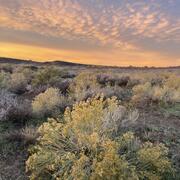
USGS Image Drylands of Southern Utah - April 28, 2014
John B Bradford, Ph.D.
John Bradford is a Research Ecologist with the USGS Northwest Climate Adaptation Science Center. John studies dryland ecosystems in the context of global change and works with resource managers to identify adaptive strategies for sustaining these ecosystems in a changing world.
John focuses on understanding how changing climate, disturbances, and land use influence dryland vegetation, plant communities, and ecosystem services. He is currently engaged in the broad topics of ecohydrology and dryland sustainability in the western U.S. and has projects examining a) the potential influence of changing climatic conditions on the distribution and regeneration potential of trees and shrubs in the intermountain western U.S., b) strategies for understanding and enhancing dryland ecosystem resilience to changing climate and drought patterns, and c) ecosystem water balance and patterns of plant-available soil water in dryland regions.
Science and Products
Filter Total Items: 31
Enhancing Rangeland Recovery by Forecasting Seed Establishment
This project is synthesizing information about plant establishment and building a tool to deliver forecasts of restoration success, helping to maximize the chances that restoration efforts will be successful.

Supporting energy and mineral development through successful reclamation
Federal lands of the US contain important reserves of oil, gas and other resources important for Unleashing American Energy (SO 3418). After development of these resources is complete, successfully reclaiming disturbed lands is a necessary step towards restoring wildlife habitat, forage production, and maintaining natural resources for future use. To improve reclamation outcomes on these lands and...

RAMPS: Restoration Assessment & Monitoring Program for the Southwest
The Restoration Assessment and Monitoring Program for the Southwest (RAMPS) seeks to assist U.S. Department of the Interior (DOI) and other land management agencies in developing successful techniques for improving land condition in dryland ecosystems of the southwestern United States. Invasion by non-native species, wildfire, drought, and other disturbances are growing rapidly in extent and...

Influence of future climate scenarios on habitat and population dynamics of greater sage-grouse
Sagebrush ecosystems and sagebrush-dependent wildlife species are likely to experience more frequent extreme drought and temperature conditions with changing climate. Greater sage-grouse ( Centrocercus urophasianus), an indicator species in sagebrush ecosystems, may experience habitat and population losses that are increasingly exacerbated by current and future climate change. However, the direct...

Climate-Smart Vegetation Treatments - Using 15 Years of SageSTEP Data to Inform Management of Resilient Ecosystems
Land managers require clear, forward-looking information about where and how vegetation treatments may make the greatest difference for drought resilience in sagebrush and woodland ecosystems. We are using soil moisture and vegetation data from SageSTEP-- a long-term ecological study on fuel treatments in the Great Basin-- to analyze soil moisture dynamics and vegetation responses after common...

Informing seed transfer guidelines and native plant materials development
As restoration needs for natural landscapes grow due to higher frequency and/or intensity disturbances, pressure from invasive species, and impacts resulting from changing climates, considerable time and resources are being invested to guide the development and deployment of native plant materials (NPMs). Across lower elevations of the Colorado Plateau, a region composed primarily of public land...

Drylands of Southern Utah
USGS Image Drylands of Southern Utah - April 28, 2014
Science and Products
Filter Total Items: 31
Enhancing Rangeland Recovery by Forecasting Seed Establishment
This project is synthesizing information about plant establishment and building a tool to deliver forecasts of restoration success, helping to maximize the chances that restoration efforts will be successful.
Supporting energy and mineral development through successful reclamation
Federal lands of the US contain important reserves of oil, gas and other resources important for Unleashing American Energy (SO 3418). After development of these resources is complete, successfully reclaiming disturbed lands is a necessary step towards restoring wildlife habitat, forage production, and maintaining natural resources for future use. To improve reclamation outcomes on these lands and...
RAMPS: Restoration Assessment & Monitoring Program for the Southwest
The Restoration Assessment and Monitoring Program for the Southwest (RAMPS) seeks to assist U.S. Department of the Interior (DOI) and other land management agencies in developing successful techniques for improving land condition in dryland ecosystems of the southwestern United States. Invasion by non-native species, wildfire, drought, and other disturbances are growing rapidly in extent and...
Influence of future climate scenarios on habitat and population dynamics of greater sage-grouse
Sagebrush ecosystems and sagebrush-dependent wildlife species are likely to experience more frequent extreme drought and temperature conditions with changing climate. Greater sage-grouse ( Centrocercus urophasianus), an indicator species in sagebrush ecosystems, may experience habitat and population losses that are increasingly exacerbated by current and future climate change. However, the direct...
Climate-Smart Vegetation Treatments - Using 15 Years of SageSTEP Data to Inform Management of Resilient Ecosystems
Land managers require clear, forward-looking information about where and how vegetation treatments may make the greatest difference for drought resilience in sagebrush and woodland ecosystems. We are using soil moisture and vegetation data from SageSTEP-- a long-term ecological study on fuel treatments in the Great Basin-- to analyze soil moisture dynamics and vegetation responses after common...
Informing seed transfer guidelines and native plant materials development
As restoration needs for natural landscapes grow due to higher frequency and/or intensity disturbances, pressure from invasive species, and impacts resulting from changing climates, considerable time and resources are being invested to guide the development and deployment of native plant materials (NPMs). Across lower elevations of the Colorado Plateau, a region composed primarily of public land...
Drylands of Southern Utah
USGS Image Drylands of Southern Utah - April 28, 2014
USGS Image Drylands of Southern Utah - April 28, 2014