



This is B-roll video of Anatok Creek, Kobuk Valley National Park, Alaska from August 19, 2025.
Michael P Carey, Ph.D.
Community ecology of fish, Food web dynamics, Disturbance ecology, Invasive species, Metal toxicity
My research program seeks to better understand the role of ecological processes in shaping fish distribution and population characteristics, habitat requirements of fish, and evolutionary adaptations of aquatic organisms in response to environmental gradients. Specifically, I focus on three drivers of fish communities and populations: (1) aquatic thermal regimes, (2) Arctic landscapes dynamics, and (3) invasive species.
Currently, we lack a robust understanding of how these processes influence fish communities in high-latitude ecosystems for which information is critical to inform management and policy decisions due to a rapidly changing landscape from natural and human pressures. To understand processes that influence fish communities in Arctic and Subarctic ecosystems, my research program combines field monitoring, large-scale comparative studies, simulation modeling, and experiments at multiple spatial and temporal scales and results of these studies are used to guide conservation, protection, and management of fish and fish habitats throughout the North Pacific Rim and Alaska.
Science and Products

Tracing Mercury Through Lake Food Webs
Mercury concentrations in fish likely reflect different energy sources in lake food webs. Species, populations, or individuals may contain higher and variable concentrations of mercury, which may relate directly to prey mercury content, diets of fish, and fish foraging strategies.

Fish and Aquatic Ecology
Fish and aquatic habitats in Alaska support important commercial, sport, and subsistence fisheries and provide forage fish that support wildlife populations. The USGS Alaska Science Center conducts interdisciplinary research to inform local, state, federal, and international policy makers regarding conservation of fish, aquatic species, and their habitats. We work collaboratively with hydrologists...

The Rusting of Arctic Rivers: Freshwater Ecosystems Respond to Rapidly Uptaking Metals
The water quality of streams and rivers in the Arctic is sensitive to rapid climate change and altered disturbance regimes.

Heat Stress in Alaska's Pacific Salmon
Alaska's freshwater spans a wide range of summer water temperatures, from ice-cold glacier water to warm rivers that routinely reach stressful levels for salmon, exceeding 18°C/64°F and even surpassing 21°C/70°F. Pacific salmon population trends are also varied and include declines in many Chinook salmon populations. Salmon declines are kitchen table issues because salmon fishing is key to the...

Hydro-Ecology of Arctic Thawing (HEAT): Ecology
Permafrost thaw is leading to a myriad of changes in physical and chemical conditions throughout the Arctic.

Hydro-Ecology of Arctic Thawing (HEAT): Hydrology
The Arctic is warming at higher rates than much of the rest of the world. For Alaska, this results in changes in hydrology and ecosystems – permafrost is thawing, changing landscapes and releasing nutrients to soils and streams.
Filter Total Items: 87
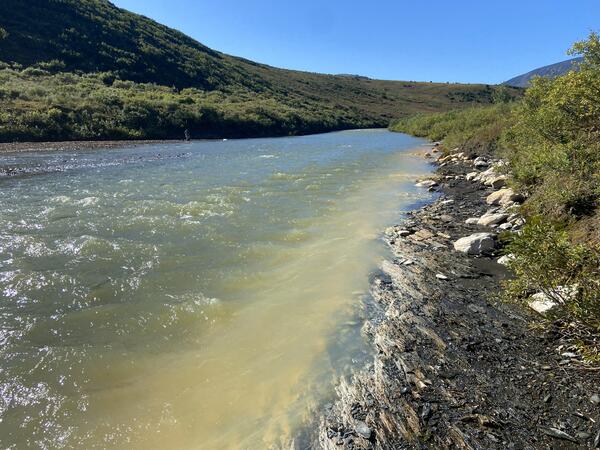
Rusting Rivers B-Roll: Anatok Creek, Alaska
This is B-roll video of Anatok Creek, Kobuk Valley National Park, Alaska from August 19, 2025.
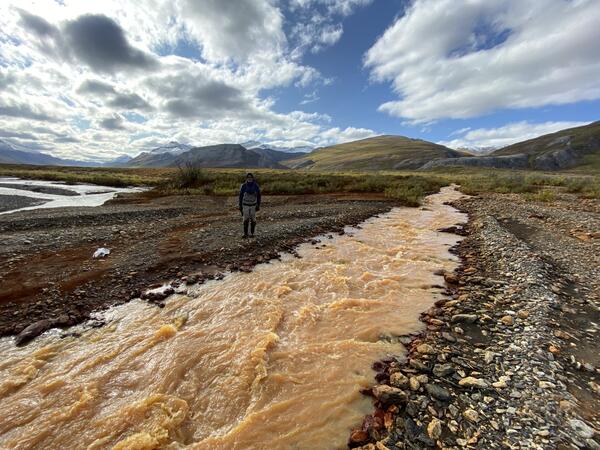
Rusting Rivers B-Roll: Igning River, Alaska
This is B-roll video of the Igning River, Gates of the Arctic National Park and Preserve, Alaska from August 26, 2024.
This is B-roll video of the Igning River, Gates of the Arctic National Park and Preserve, Alaska from August 26, 2024.

Rusting Rivers B-Roll: Kugururok River, Alaska
This is B-roll video of the Kugururok River, Noatak National Preserve, Alaska from August 30, 2025.
This is B-roll video of the Kugururok River, Noatak National Preserve, Alaska from August 30, 2025.
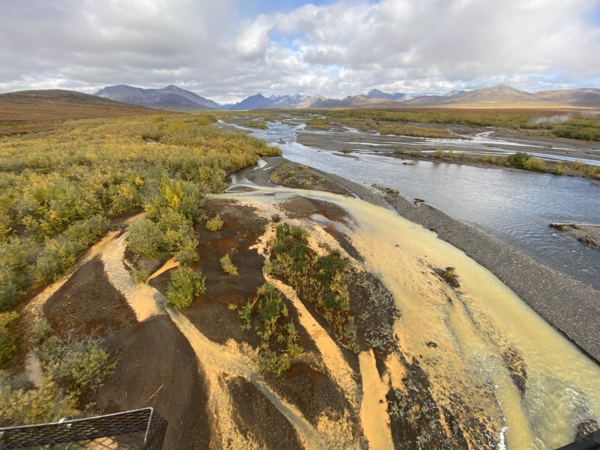
Rusting Rivers: Heavy Metals and Visible Color Changes
Rusting Rivers: Heavy Metals and Visible Color ChangesRusting rivers are increasingly common in the Brooks Range of northern Alaska. The orange stream color reflects oxidized iron (hence the appearance of rusting), but orange color also indicates elevated heavy metal concentrations and impaired water quality.
Rusting Rivers: Heavy Metals and Visible Color Changes
Rusting Rivers: Heavy Metals and Visible Color ChangesRusting rivers are increasingly common in the Brooks Range of northern Alaska. The orange stream color reflects oxidized iron (hence the appearance of rusting), but orange color also indicates elevated heavy metal concentrations and impaired water quality.
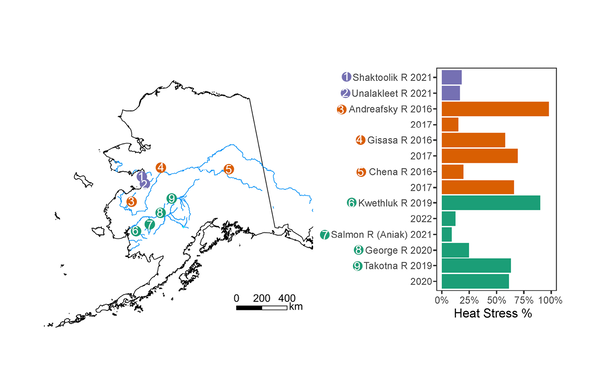
Bar plot showing the percentage of Chinook salmon with evidence of heat stress across Alaska
Bar plot showing the percentage of Chinook salmon with evidence of heat stress across AlaskaBar plot showing the percentage of Chinook salmon with evidence of heat stress in each group based on the heat shock protein 70 (HSP70) protein concentration data. Map indicates sample collection locations. Sample groups are arranged by region from north to south: Norton Sound (purple), Yukon (orange), and Kuskokwim (green).
Bar plot showing the percentage of Chinook salmon with evidence of heat stress across Alaska
Bar plot showing the percentage of Chinook salmon with evidence of heat stress across AlaskaBar plot showing the percentage of Chinook salmon with evidence of heat stress in each group based on the heat shock protein 70 (HSP70) protein concentration data. Map indicates sample collection locations. Sample groups are arranged by region from north to south: Norton Sound (purple), Yukon (orange), and Kuskokwim (green).
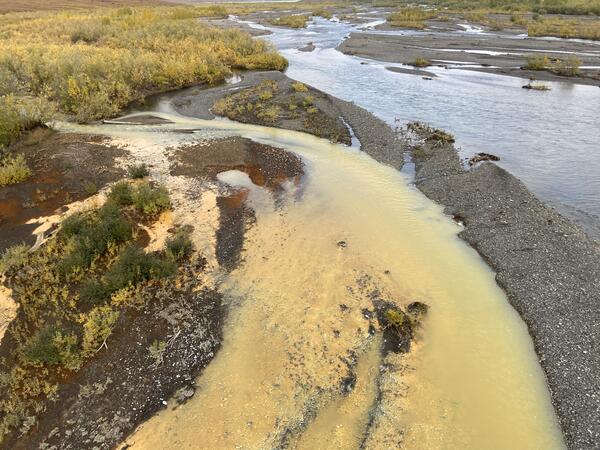
An orange tributary of the Kugururok River in Alaska's Noatak National Preserve
An orange tributary of the Kugururok River in Alaska's Noatak National PreserveOrange streams are increasingly common in the Brooks Range of northern Alaska. The orange stream color reflects oxidized iron, but also often indicates elevated heavy metal concentrations. Our ongoing study aims to document these occurrences and the timing of their onset.
An orange tributary of the Kugururok River in Alaska's Noatak National Preserve
An orange tributary of the Kugururok River in Alaska's Noatak National PreserveOrange streams are increasingly common in the Brooks Range of northern Alaska. The orange stream color reflects oxidized iron, but also often indicates elevated heavy metal concentrations. Our ongoing study aims to document these occurrences and the timing of their onset.
An orange tributary of the Kugururok River in Noatak National Preserve, Alaska
An orange tributary of the Kugururok River in Noatak National Preserve, AlaskaOrange streams are increasingly common in the Brooks Range of northern Alaska. The orange stream color reflects oxidized iron, but also often indicates elevated heavy metal concentrations. Our ongoing study aims to document these occurrences and the timing of their onset.
An orange tributary of the Kugururok River in Noatak National Preserve, Alaska
An orange tributary of the Kugururok River in Noatak National Preserve, AlaskaOrange streams are increasingly common in the Brooks Range of northern Alaska. The orange stream color reflects oxidized iron, but also often indicates elevated heavy metal concentrations. Our ongoing study aims to document these occurrences and the timing of their onset.
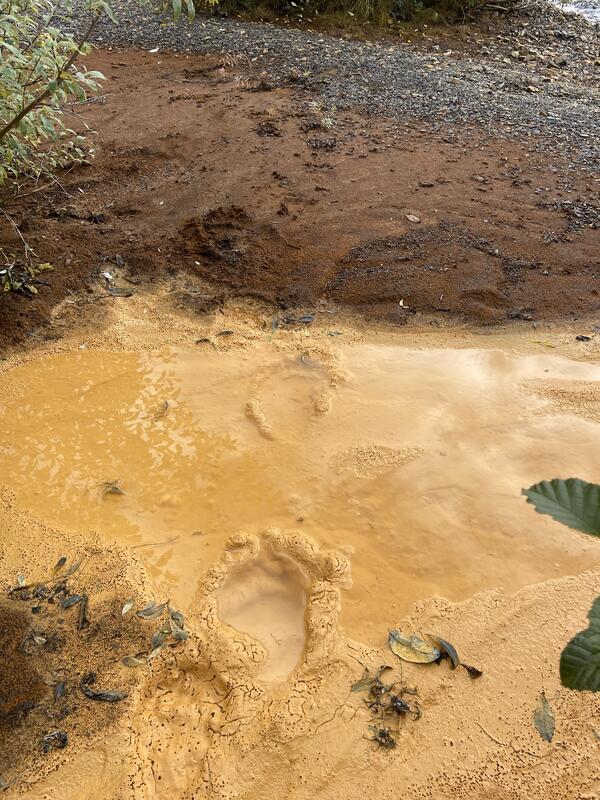
Bear tracks in an orange tributary of the Kugururok River, Noatak National Preserve, Alaska
Bear tracks in an orange tributary of the Kugururok River, Noatak National Preserve, AlaskaOrange streams are increasingly common in the Brooks Range of northern Alaska. The orange stream color reflects oxidized iron, but also often indicates elevated heavy metal concentrations. Our ongoing study aims to document these occurrences and the timing of their onset.
Bear tracks in an orange tributary of the Kugururok River, Noatak National Preserve, Alaska
Bear tracks in an orange tributary of the Kugururok River, Noatak National Preserve, AlaskaOrange streams are increasingly common in the Brooks Range of northern Alaska. The orange stream color reflects oxidized iron, but also often indicates elevated heavy metal concentrations. Our ongoing study aims to document these occurrences and the timing of their onset.
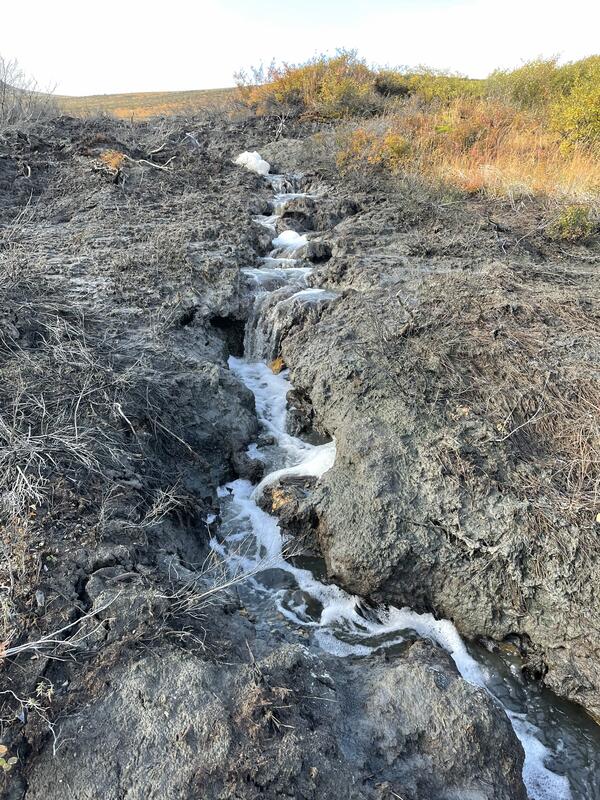
Acidic waters kill and blacken vegetation as they plunge downhill towards the Nakolikurok Creek
Acidic waters kill and blacken vegetation as they plunge downhill towards the Nakolikurok CreekOrange streams are increasingly common in the Brooks Range of northern Alaska. The orange stream color reflects oxidized iron, but also often indicates elevated heavy metal concentrations. Our ongoing study aims to document these occurrences and the timing of their onset.
Acidic waters kill and blacken vegetation as they plunge downhill towards the Nakolikurok Creek
Acidic waters kill and blacken vegetation as they plunge downhill towards the Nakolikurok CreekOrange streams are increasingly common in the Brooks Range of northern Alaska. The orange stream color reflects oxidized iron, but also often indicates elevated heavy metal concentrations. Our ongoing study aims to document these occurrences and the timing of their onset.
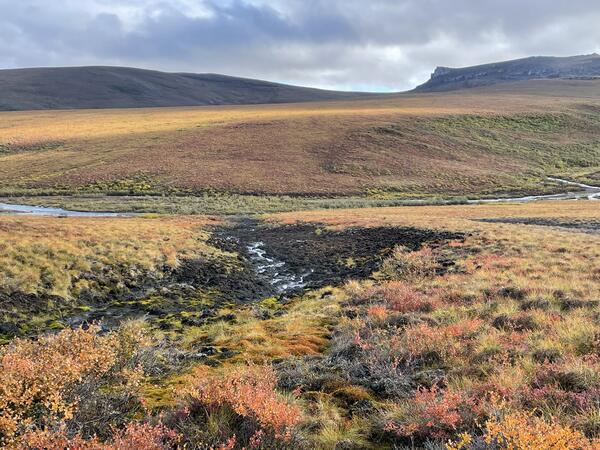
An acid seep on the Nakolikurok Creek
Orange streams are increasingly common in the Brooks Range of northern Alaska. The orange stream color reflects oxidized iron, but also often indicates elevated heavy metal concentrations. Our ongoing study aims to document these occurrences and the timing of their onset.
Orange streams are increasingly common in the Brooks Range of northern Alaska. The orange stream color reflects oxidized iron, but also often indicates elevated heavy metal concentrations. Our ongoing study aims to document these occurrences and the timing of their onset.
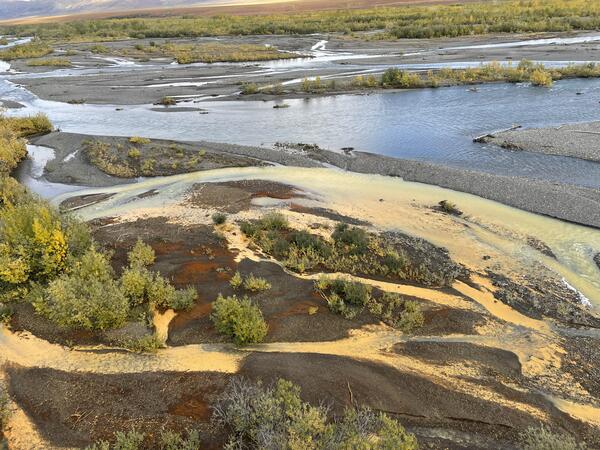
Orange waters mixing in to the mainstem of the Kugururok River
Orange waters mixing in to the mainstem of the Kugururok RiverOrange streams are increasingly common in the Brooks Range of northern Alaska. The orange stream color reflects oxidized iron, but also often indicates elevated heavy metal concentrations. Our ongoing study aims to document these occurrences and the timing of their onset.
Orange waters mixing in to the mainstem of the Kugururok River
Orange waters mixing in to the mainstem of the Kugururok RiverOrange streams are increasingly common in the Brooks Range of northern Alaska. The orange stream color reflects oxidized iron, but also often indicates elevated heavy metal concentrations. Our ongoing study aims to document these occurrences and the timing of their onset.
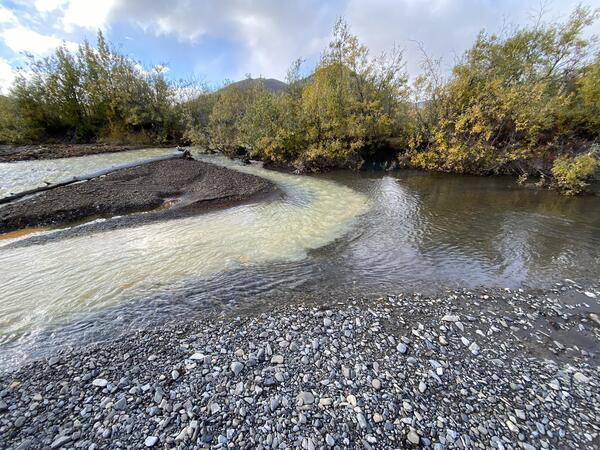
Mixing of an orange tributary and Kugururok River, Noatak National Preserve, Alaska
Mixing of an orange tributary and Kugururok River, Noatak National Preserve, AlaskaOrange streams are increasingly common in the Brooks Range of northern Alaska. The orange stream color reflects oxidized iron, but also often indicates elevated heavy metal concentrations. Our ongoing study aims to document these occurrences and the timing of their onset.
Mixing of an orange tributary and Kugururok River, Noatak National Preserve, Alaska
Mixing of an orange tributary and Kugururok River, Noatak National Preserve, AlaskaOrange streams are increasingly common in the Brooks Range of northern Alaska. The orange stream color reflects oxidized iron, but also often indicates elevated heavy metal concentrations. Our ongoing study aims to document these occurrences and the timing of their onset.
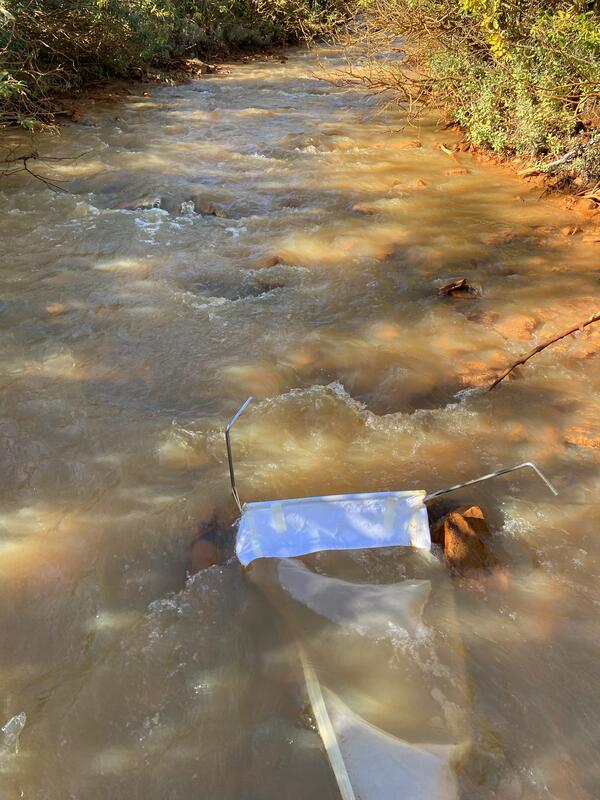
Drift net collecting samples in orange tributary of Anatok Creek, Kobuk Valley National Park, Alaska
Drift net collecting samples in orange tributary of Anatok Creek, Kobuk Valley National Park, AlaskaOrange streams are increasingly common in the Brooks Range of northern Alaska. The orange stream color reflects oxidized iron, but also often indicates elevated heavy metal concentrations. Our ongoing study aims to document these occurrences and the timing of their onset.
Drift net collecting samples in orange tributary of Anatok Creek, Kobuk Valley National Park, Alaska
Drift net collecting samples in orange tributary of Anatok Creek, Kobuk Valley National Park, AlaskaOrange streams are increasingly common in the Brooks Range of northern Alaska. The orange stream color reflects oxidized iron, but also often indicates elevated heavy metal concentrations. Our ongoing study aims to document these occurrences and the timing of their onset.
Anatok Creek, Kobuk Valley National Park, Alaska
Orange streams are increasingly common in the Brooks Range of northern Alaska. The orange stream color reflects oxidized iron, but also often indicates elevated heavy metal concentrations. Our ongoing study aims to document these occurrences and the timing of their onset.
Orange streams are increasingly common in the Brooks Range of northern Alaska. The orange stream color reflects oxidized iron, but also often indicates elevated heavy metal concentrations. Our ongoing study aims to document these occurrences and the timing of their onset.
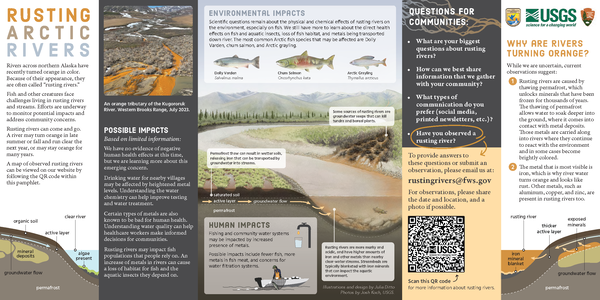
Rusting Arctic Rivers Pamphlet
Rivers across northern Alaska have recently turned orange in color. Because of their appearance, they are often called “rusting rivers.”
Rivers across northern Alaska have recently turned orange in color. Because of their appearance, they are often called “rusting rivers.”

Rusting Arctic Rivers Pamphlet
Rivers across northern Alaska have recently turned orange in color. Because of their appearance, they are often called “rusting rivers.”
Click HERE to download the pamphlet as a PDF
Rivers across northern Alaska have recently turned orange in color. Because of their appearance, they are often called “rusting rivers.”
Click HERE to download the pamphlet as a PDF
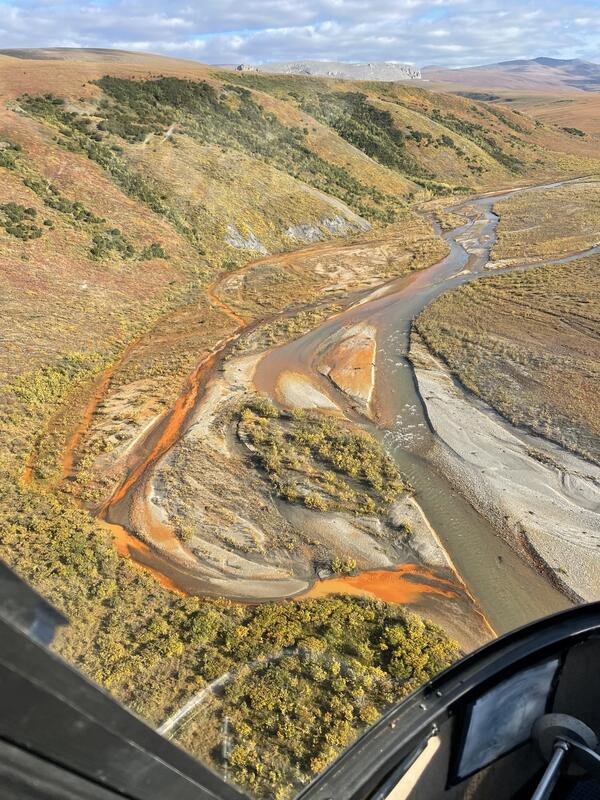
Orange staining in a side channel of the Nakolikurok Creek
Orange staining in a side channel of the Nakolikurok CreekOrange streams are increasingly common in the Brooks Range of northern Alaska. The orange stream color reflects oxidized iron, but also often indicates elevated heavy metal concentrations. Our ongoing study aims to document these occurrences and the timing of their onset.
Orange staining in a side channel of the Nakolikurok Creek
Orange staining in a side channel of the Nakolikurok CreekOrange streams are increasingly common in the Brooks Range of northern Alaska. The orange stream color reflects oxidized iron, but also often indicates elevated heavy metal concentrations. Our ongoing study aims to document these occurrences and the timing of their onset.
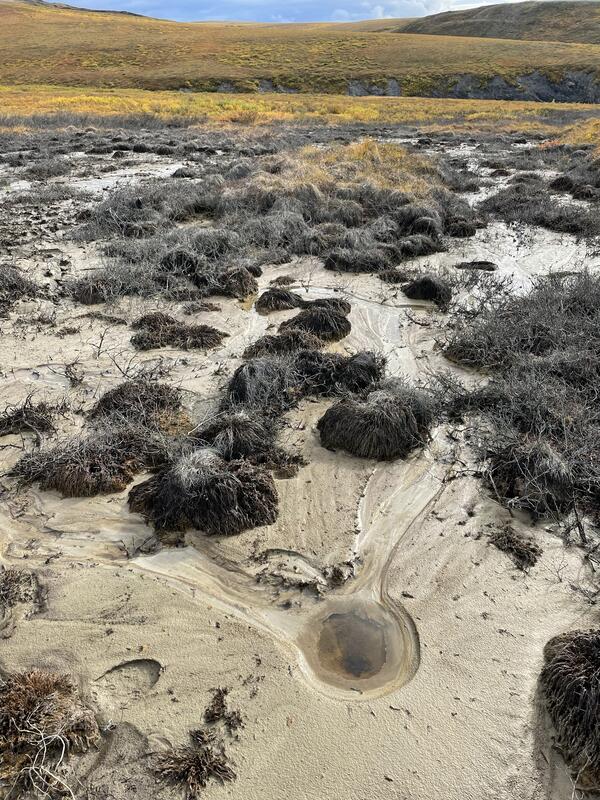
Emergence of acidic waters from a seep in the Agashashok River Watershed
Emergence of acidic waters from a seep in the Agashashok River WatershedOrange streams are increasingly common in the Brooks Range of northern Alaska. The orange stream color reflects oxidized iron, but also often indicates elevated heavy metal concentrations. Our ongoing study aims to document these occurrences and the timing of their onset.
Emergence of acidic waters from a seep in the Agashashok River Watershed
Emergence of acidic waters from a seep in the Agashashok River WatershedOrange streams are increasingly common in the Brooks Range of northern Alaska. The orange stream color reflects oxidized iron, but also often indicates elevated heavy metal concentrations. Our ongoing study aims to document these occurrences and the timing of their onset.
An orange tributary of the Igning River, Gates of the Arctic National Park and Preserve, Alaska
An orange tributary of the Igning River, Gates of the Arctic National Park and Preserve, AlaskaOrange streams are increasingly common in the Brooks Range of northern Alaska. The orange stream color reflects oxidized iron, but also often indicates elevated heavy metal concentrations. Our ongoing study aims to document these occurrences and the timing of their onset.
An orange tributary of the Igning River, Gates of the Arctic National Park and Preserve, Alaska
An orange tributary of the Igning River, Gates of the Arctic National Park and Preserve, AlaskaOrange streams are increasingly common in the Brooks Range of northern Alaska. The orange stream color reflects oxidized iron, but also often indicates elevated heavy metal concentrations. Our ongoing study aims to document these occurrences and the timing of their onset.
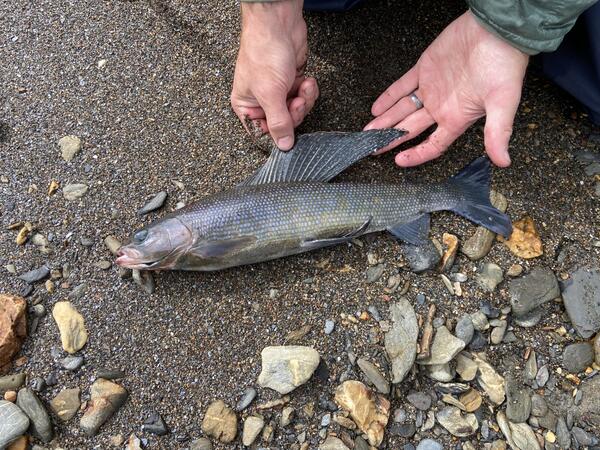
Arctic Grayling (Thymallus arctus) caught in the Nakolikuruk River near an orange tributary, Noatak National Preserve, Alaska
Arctic Grayling (Thymallus arctus) caught in the Nakolikuruk River near an orange tributary, Noatak National Preserve, AlaskaOrange streams are increasingly common in the Brooks Range of northern Alaska. The orange stream color reflects oxidized iron, but also often indicates elevated heavy metal concentrations. Our ongoing study aims to document these occurrences and the timing of their onset.
Arctic Grayling (Thymallus arctus) caught in the Nakolikuruk River near an orange tributary, Noatak National Preserve, Alaska
Arctic Grayling (Thymallus arctus) caught in the Nakolikuruk River near an orange tributary, Noatak National Preserve, AlaskaOrange streams are increasingly common in the Brooks Range of northern Alaska. The orange stream color reflects oxidized iron, but also often indicates elevated heavy metal concentrations. Our ongoing study aims to document these occurrences and the timing of their onset.
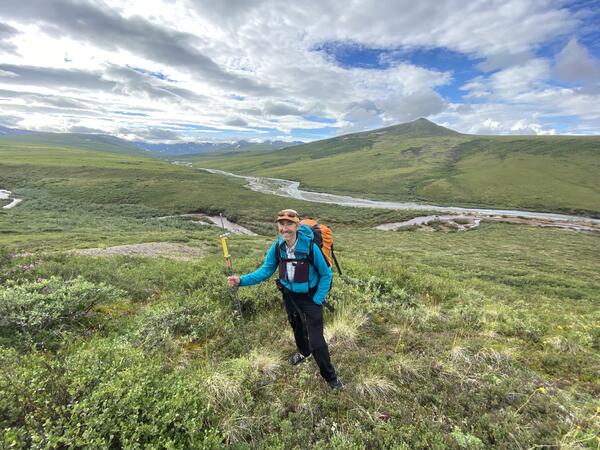
Surveying for "rusting rivers" in the Nakolikurok Creek watershed, Noatak National Preserve, Alaska
Surveying for "rusting rivers" in the Nakolikurok Creek watershed, Noatak National Preserve, AlaskaOrange streams are increasingly common in the Brooks Range of northern Alaska. The orange stream color reflects oxidized iron, but also often indicates elevated heavy metal concentrations. Our ongoing study aims to document these occurrences and the timing of their onset.
Surveying for "rusting rivers" in the Nakolikurok Creek watershed, Noatak National Preserve, Alaska
Surveying for "rusting rivers" in the Nakolikurok Creek watershed, Noatak National Preserve, AlaskaOrange streams are increasingly common in the Brooks Range of northern Alaska. The orange stream color reflects oxidized iron, but also often indicates elevated heavy metal concentrations. Our ongoing study aims to document these occurrences and the timing of their onset.
Science and Products
Tracing Mercury Through Lake Food Webs
Mercury concentrations in fish likely reflect different energy sources in lake food webs. Species, populations, or individuals may contain higher and variable concentrations of mercury, which may relate directly to prey mercury content, diets of fish, and fish foraging strategies.
Fish and Aquatic Ecology
Fish and aquatic habitats in Alaska support important commercial, sport, and subsistence fisheries and provide forage fish that support wildlife populations. The USGS Alaska Science Center conducts interdisciplinary research to inform local, state, federal, and international policy makers regarding conservation of fish, aquatic species, and their habitats. We work collaboratively with hydrologists...
The Rusting of Arctic Rivers: Freshwater Ecosystems Respond to Rapidly Uptaking Metals
The water quality of streams and rivers in the Arctic is sensitive to rapid climate change and altered disturbance regimes.
Heat Stress in Alaska's Pacific Salmon
Alaska's freshwater spans a wide range of summer water temperatures, from ice-cold glacier water to warm rivers that routinely reach stressful levels for salmon, exceeding 18°C/64°F and even surpassing 21°C/70°F. Pacific salmon population trends are also varied and include declines in many Chinook salmon populations. Salmon declines are kitchen table issues because salmon fishing is key to the...
Hydro-Ecology of Arctic Thawing (HEAT): Ecology
Permafrost thaw is leading to a myriad of changes in physical and chemical conditions throughout the Arctic.
Hydro-Ecology of Arctic Thawing (HEAT): Hydrology
The Arctic is warming at higher rates than much of the rest of the world. For Alaska, this results in changes in hydrology and ecosystems – permafrost is thawing, changing landscapes and releasing nutrients to soils and streams.
Filter Total Items: 87
Rusting Rivers B-Roll: Anatok Creek, Alaska
This is B-roll video of Anatok Creek, Kobuk Valley National Park, Alaska from August 19, 2025.
This is B-roll video of Anatok Creek, Kobuk Valley National Park, Alaska from August 19, 2025.
Rusting Rivers B-Roll: Igning River, Alaska
This is B-roll video of the Igning River, Gates of the Arctic National Park and Preserve, Alaska from August 26, 2024.
This is B-roll video of the Igning River, Gates of the Arctic National Park and Preserve, Alaska from August 26, 2024.
Rusting Rivers B-Roll: Kugururok River, Alaska
This is B-roll video of the Kugururok River, Noatak National Preserve, Alaska from August 30, 2025.
This is B-roll video of the Kugururok River, Noatak National Preserve, Alaska from August 30, 2025.
Rusting Rivers: Heavy Metals and Visible Color Changes
Rusting Rivers: Heavy Metals and Visible Color ChangesRusting rivers are increasingly common in the Brooks Range of northern Alaska. The orange stream color reflects oxidized iron (hence the appearance of rusting), but orange color also indicates elevated heavy metal concentrations and impaired water quality.
Rusting Rivers: Heavy Metals and Visible Color Changes
Rusting Rivers: Heavy Metals and Visible Color ChangesRusting rivers are increasingly common in the Brooks Range of northern Alaska. The orange stream color reflects oxidized iron (hence the appearance of rusting), but orange color also indicates elevated heavy metal concentrations and impaired water quality.
Bar plot showing the percentage of Chinook salmon with evidence of heat stress across Alaska
Bar plot showing the percentage of Chinook salmon with evidence of heat stress across AlaskaBar plot showing the percentage of Chinook salmon with evidence of heat stress in each group based on the heat shock protein 70 (HSP70) protein concentration data. Map indicates sample collection locations. Sample groups are arranged by region from north to south: Norton Sound (purple), Yukon (orange), and Kuskokwim (green).
Bar plot showing the percentage of Chinook salmon with evidence of heat stress across Alaska
Bar plot showing the percentage of Chinook salmon with evidence of heat stress across AlaskaBar plot showing the percentage of Chinook salmon with evidence of heat stress in each group based on the heat shock protein 70 (HSP70) protein concentration data. Map indicates sample collection locations. Sample groups are arranged by region from north to south: Norton Sound (purple), Yukon (orange), and Kuskokwim (green).
An orange tributary of the Kugururok River in Alaska's Noatak National Preserve
An orange tributary of the Kugururok River in Alaska's Noatak National PreserveOrange streams are increasingly common in the Brooks Range of northern Alaska. The orange stream color reflects oxidized iron, but also often indicates elevated heavy metal concentrations. Our ongoing study aims to document these occurrences and the timing of their onset.
An orange tributary of the Kugururok River in Alaska's Noatak National Preserve
An orange tributary of the Kugururok River in Alaska's Noatak National PreserveOrange streams are increasingly common in the Brooks Range of northern Alaska. The orange stream color reflects oxidized iron, but also often indicates elevated heavy metal concentrations. Our ongoing study aims to document these occurrences and the timing of their onset.
An orange tributary of the Kugururok River in Noatak National Preserve, Alaska
An orange tributary of the Kugururok River in Noatak National Preserve, AlaskaOrange streams are increasingly common in the Brooks Range of northern Alaska. The orange stream color reflects oxidized iron, but also often indicates elevated heavy metal concentrations. Our ongoing study aims to document these occurrences and the timing of their onset.
An orange tributary of the Kugururok River in Noatak National Preserve, Alaska
An orange tributary of the Kugururok River in Noatak National Preserve, AlaskaOrange streams are increasingly common in the Brooks Range of northern Alaska. The orange stream color reflects oxidized iron, but also often indicates elevated heavy metal concentrations. Our ongoing study aims to document these occurrences and the timing of their onset.
Bear tracks in an orange tributary of the Kugururok River, Noatak National Preserve, Alaska
Bear tracks in an orange tributary of the Kugururok River, Noatak National Preserve, AlaskaOrange streams are increasingly common in the Brooks Range of northern Alaska. The orange stream color reflects oxidized iron, but also often indicates elevated heavy metal concentrations. Our ongoing study aims to document these occurrences and the timing of their onset.
Bear tracks in an orange tributary of the Kugururok River, Noatak National Preserve, Alaska
Bear tracks in an orange tributary of the Kugururok River, Noatak National Preserve, AlaskaOrange streams are increasingly common in the Brooks Range of northern Alaska. The orange stream color reflects oxidized iron, but also often indicates elevated heavy metal concentrations. Our ongoing study aims to document these occurrences and the timing of their onset.
Acidic waters kill and blacken vegetation as they plunge downhill towards the Nakolikurok Creek
Acidic waters kill and blacken vegetation as they plunge downhill towards the Nakolikurok CreekOrange streams are increasingly common in the Brooks Range of northern Alaska. The orange stream color reflects oxidized iron, but also often indicates elevated heavy metal concentrations. Our ongoing study aims to document these occurrences and the timing of their onset.
Acidic waters kill and blacken vegetation as they plunge downhill towards the Nakolikurok Creek
Acidic waters kill and blacken vegetation as they plunge downhill towards the Nakolikurok CreekOrange streams are increasingly common in the Brooks Range of northern Alaska. The orange stream color reflects oxidized iron, but also often indicates elevated heavy metal concentrations. Our ongoing study aims to document these occurrences and the timing of their onset.
An acid seep on the Nakolikurok Creek
Orange streams are increasingly common in the Brooks Range of northern Alaska. The orange stream color reflects oxidized iron, but also often indicates elevated heavy metal concentrations. Our ongoing study aims to document these occurrences and the timing of their onset.
Orange streams are increasingly common in the Brooks Range of northern Alaska. The orange stream color reflects oxidized iron, but also often indicates elevated heavy metal concentrations. Our ongoing study aims to document these occurrences and the timing of their onset.
Orange waters mixing in to the mainstem of the Kugururok River
Orange waters mixing in to the mainstem of the Kugururok RiverOrange streams are increasingly common in the Brooks Range of northern Alaska. The orange stream color reflects oxidized iron, but also often indicates elevated heavy metal concentrations. Our ongoing study aims to document these occurrences and the timing of their onset.
Orange waters mixing in to the mainstem of the Kugururok River
Orange waters mixing in to the mainstem of the Kugururok RiverOrange streams are increasingly common in the Brooks Range of northern Alaska. The orange stream color reflects oxidized iron, but also often indicates elevated heavy metal concentrations. Our ongoing study aims to document these occurrences and the timing of their onset.
Mixing of an orange tributary and Kugururok River, Noatak National Preserve, Alaska
Mixing of an orange tributary and Kugururok River, Noatak National Preserve, AlaskaOrange streams are increasingly common in the Brooks Range of northern Alaska. The orange stream color reflects oxidized iron, but also often indicates elevated heavy metal concentrations. Our ongoing study aims to document these occurrences and the timing of their onset.
Mixing of an orange tributary and Kugururok River, Noatak National Preserve, Alaska
Mixing of an orange tributary and Kugururok River, Noatak National Preserve, AlaskaOrange streams are increasingly common in the Brooks Range of northern Alaska. The orange stream color reflects oxidized iron, but also often indicates elevated heavy metal concentrations. Our ongoing study aims to document these occurrences and the timing of their onset.
Drift net collecting samples in orange tributary of Anatok Creek, Kobuk Valley National Park, Alaska
Drift net collecting samples in orange tributary of Anatok Creek, Kobuk Valley National Park, AlaskaOrange streams are increasingly common in the Brooks Range of northern Alaska. The orange stream color reflects oxidized iron, but also often indicates elevated heavy metal concentrations. Our ongoing study aims to document these occurrences and the timing of their onset.
Drift net collecting samples in orange tributary of Anatok Creek, Kobuk Valley National Park, Alaska
Drift net collecting samples in orange tributary of Anatok Creek, Kobuk Valley National Park, AlaskaOrange streams are increasingly common in the Brooks Range of northern Alaska. The orange stream color reflects oxidized iron, but also often indicates elevated heavy metal concentrations. Our ongoing study aims to document these occurrences and the timing of their onset.
Anatok Creek, Kobuk Valley National Park, Alaska
Orange streams are increasingly common in the Brooks Range of northern Alaska. The orange stream color reflects oxidized iron, but also often indicates elevated heavy metal concentrations. Our ongoing study aims to document these occurrences and the timing of their onset.
Orange streams are increasingly common in the Brooks Range of northern Alaska. The orange stream color reflects oxidized iron, but also often indicates elevated heavy metal concentrations. Our ongoing study aims to document these occurrences and the timing of their onset.
Rusting Arctic Rivers Pamphlet
Rivers across northern Alaska have recently turned orange in color. Because of their appearance, they are often called “rusting rivers.”
Rivers across northern Alaska have recently turned orange in color. Because of their appearance, they are often called “rusting rivers.”
Rusting Arctic Rivers Pamphlet
Rivers across northern Alaska have recently turned orange in color. Because of their appearance, they are often called “rusting rivers.”
Click HERE to download the pamphlet as a PDF
Rivers across northern Alaska have recently turned orange in color. Because of their appearance, they are often called “rusting rivers.”
Click HERE to download the pamphlet as a PDF
Orange staining in a side channel of the Nakolikurok Creek
Orange staining in a side channel of the Nakolikurok CreekOrange streams are increasingly common in the Brooks Range of northern Alaska. The orange stream color reflects oxidized iron, but also often indicates elevated heavy metal concentrations. Our ongoing study aims to document these occurrences and the timing of their onset.
Orange staining in a side channel of the Nakolikurok Creek
Orange staining in a side channel of the Nakolikurok CreekOrange streams are increasingly common in the Brooks Range of northern Alaska. The orange stream color reflects oxidized iron, but also often indicates elevated heavy metal concentrations. Our ongoing study aims to document these occurrences and the timing of their onset.
Emergence of acidic waters from a seep in the Agashashok River Watershed
Emergence of acidic waters from a seep in the Agashashok River WatershedOrange streams are increasingly common in the Brooks Range of northern Alaska. The orange stream color reflects oxidized iron, but also often indicates elevated heavy metal concentrations. Our ongoing study aims to document these occurrences and the timing of their onset.
Emergence of acidic waters from a seep in the Agashashok River Watershed
Emergence of acidic waters from a seep in the Agashashok River WatershedOrange streams are increasingly common in the Brooks Range of northern Alaska. The orange stream color reflects oxidized iron, but also often indicates elevated heavy metal concentrations. Our ongoing study aims to document these occurrences and the timing of their onset.
An orange tributary of the Igning River, Gates of the Arctic National Park and Preserve, Alaska
An orange tributary of the Igning River, Gates of the Arctic National Park and Preserve, AlaskaOrange streams are increasingly common in the Brooks Range of northern Alaska. The orange stream color reflects oxidized iron, but also often indicates elevated heavy metal concentrations. Our ongoing study aims to document these occurrences and the timing of their onset.
An orange tributary of the Igning River, Gates of the Arctic National Park and Preserve, Alaska
An orange tributary of the Igning River, Gates of the Arctic National Park and Preserve, AlaskaOrange streams are increasingly common in the Brooks Range of northern Alaska. The orange stream color reflects oxidized iron, but also often indicates elevated heavy metal concentrations. Our ongoing study aims to document these occurrences and the timing of their onset.
Arctic Grayling (Thymallus arctus) caught in the Nakolikuruk River near an orange tributary, Noatak National Preserve, Alaska
Arctic Grayling (Thymallus arctus) caught in the Nakolikuruk River near an orange tributary, Noatak National Preserve, AlaskaOrange streams are increasingly common in the Brooks Range of northern Alaska. The orange stream color reflects oxidized iron, but also often indicates elevated heavy metal concentrations. Our ongoing study aims to document these occurrences and the timing of their onset.
Arctic Grayling (Thymallus arctus) caught in the Nakolikuruk River near an orange tributary, Noatak National Preserve, Alaska
Arctic Grayling (Thymallus arctus) caught in the Nakolikuruk River near an orange tributary, Noatak National Preserve, AlaskaOrange streams are increasingly common in the Brooks Range of northern Alaska. The orange stream color reflects oxidized iron, but also often indicates elevated heavy metal concentrations. Our ongoing study aims to document these occurrences and the timing of their onset.
Surveying for "rusting rivers" in the Nakolikurok Creek watershed, Noatak National Preserve, Alaska
Surveying for "rusting rivers" in the Nakolikurok Creek watershed, Noatak National Preserve, AlaskaOrange streams are increasingly common in the Brooks Range of northern Alaska. The orange stream color reflects oxidized iron, but also often indicates elevated heavy metal concentrations. Our ongoing study aims to document these occurrences and the timing of their onset.
Surveying for "rusting rivers" in the Nakolikurok Creek watershed, Noatak National Preserve, Alaska
Surveying for "rusting rivers" in the Nakolikurok Creek watershed, Noatak National Preserve, AlaskaOrange streams are increasingly common in the Brooks Range of northern Alaska. The orange stream color reflects oxidized iron, but also often indicates elevated heavy metal concentrations. Our ongoing study aims to document these occurrences and the timing of their onset.
*Disclaimer: Listing outside positions with professional scientific organizations on this Staff Profile are for informational purposes only and do not constitute an endorsement of those professional scientific organizations or their activities by the USGS, Department of the Interior, or U.S. Government