



Mining activities have the potential to release harmful substances into the soil, air and water. Extraction and processing produce tailings piles that can contain radioactive elements, mercury, and heavy metals; leach ponds of cyanide and brine solutions; metallic dust; and waste rock. Environmental contamination at mine sites can be particularly challenging to evaluate due to the variety of substances present and their potential to move from terrestrial to aquatic habitats as well as into plants, animals and the atmosphere. USGS has capabilities and expertise that can aid with site characterization, injury determination, and restoration.
To learn more about how USGS science supports the NRDAR program contact Jo Ellen Hinck, the USGS NRDAR Coordinator.
Return to USGS Science for DOI Natural Resource Damage Assessment and Restoration (NRDAR) Program
Browse USGS publications related to NRDA mining cases.
Examples of assessment and restoration activities are listed below.
Assessment Projects
- Mercury Fluxes from Mercury Mines and Natural Sources to Wetlands and Their Impact on Biota
Principal Investigator - Josh Ackerman

- In-situ Toxicity Testing of Crayfish
Principal Investigators - Danielle Cleveland
- Effects of Methylmercury on Birds and Toxicity Benchmarks for Injury
Principal Investigator - Josh Ackerman
- Chemical Characterization and Histological and Biochemical Effects of Lead Exposure on Breeding Songbirds
Principal Investigators - Danielle Cleveland, Julia Lankton, Barnett Rattner, and Natalie Karouna-Renier
- Sediment Metal Concentrations and Substrate Characteristics in a Lead Mining District
Principal Investigators - Danielle Cleveland

- Mussel Injury from Metals in a Lead Mining District
Principal Investigators - John Besser and Danielle Cleveland
Restoration Projects

- UAS Data Collection for Restoration at the Questa Mine (New Mexico)
Principal Investigator - Matt Struckhoff
- Native Vegetation Restoration of a Former Chat Pile
Principal Investigator - Matt Struckhoff
- Vegetation surveys to support Restoration at St. Francois County Bonehole Restoration Site
Principal Investigator - Matt Struckhoff
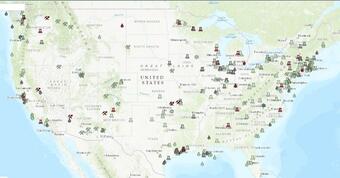
Explore the NRDAR Case Map and Document Library to learn more about individual cases.
Return to USGS Science for DOI Natural Resource Damage Assessment and Restoration (NRDAR) Program
Mining activities have the potential to release harmful substances into the soil, air and water. Extraction and processing produce tailings piles that can contain radioactive elements, mercury, and heavy metals; leach ponds of cyanide and brine solutions; metallic dust; and waste rock. Environmental contamination at mine sites can be particularly challenging to evaluate due to the variety of substances present and their potential to move from terrestrial to aquatic habitats as well as into plants, animals and the atmosphere. USGS has capabilities and expertise that can aid with site characterization, injury determination, and restoration.
To learn more about how USGS science supports the NRDAR program contact Jo Ellen Hinck, the USGS NRDAR Coordinator.
Return to USGS Science for DOI Natural Resource Damage Assessment and Restoration (NRDAR) Program
Browse USGS publications related to NRDA mining cases.
Examples of assessment and restoration activities are listed below.
Assessment Projects
- Mercury Fluxes from Mercury Mines and Natural Sources to Wetlands and Their Impact on Biota
Principal Investigator - Josh Ackerman
- In-situ Toxicity Testing of Crayfish
Principal Investigators - Danielle Cleveland
- Effects of Methylmercury on Birds and Toxicity Benchmarks for Injury
Principal Investigator - Josh Ackerman
- Chemical Characterization and Histological and Biochemical Effects of Lead Exposure on Breeding Songbirds
Principal Investigators - Danielle Cleveland, Julia Lankton, Barnett Rattner, and Natalie Karouna-Renier
- Sediment Metal Concentrations and Substrate Characteristics in a Lead Mining District
Principal Investigators - Danielle Cleveland
- Mussel Injury from Metals in a Lead Mining District
Principal Investigators - John Besser and Danielle Cleveland
Restoration Projects
- UAS Data Collection for Restoration at the Questa Mine (New Mexico)
Principal Investigator - Matt Struckhoff
- Native Vegetation Restoration of a Former Chat Pile
Principal Investigator - Matt Struckhoff
- Vegetation surveys to support Restoration at St. Francois County Bonehole Restoration Site
Principal Investigator - Matt Struckhoff
Explore the NRDAR Case Map and Document Library to learn more about individual cases.
Return to USGS Science for DOI Natural Resource Damage Assessment and Restoration (NRDAR) Program