



Decision Science and Quantitative Methods
Decision Science and Quantitative Methods
At the Eastern Ecological Science Center (EESC), we strive to provide world-class science to inform natural resource decisions that preserve and enhance our quality of life.
EESC Makes an Impact
EESC Makes an Impact
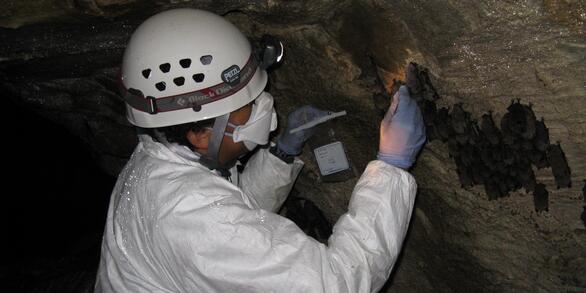
How does EESC decision science and quantitative methods help reduce management costs and increase efficiency?
EESC Makes an Impact
EESC Makes an Impact

How does EESC decision science and quantitative methods help preserve our hunting resources?

Filter Total Items: 68

Quantitative Turtle Analysis Project: Machine learning with turtles
The Quantitative Turtle Analysis Project (QTAP) was created in 2019 with the goal of investigating how machine learning can be used to study wildlife populations using capture-recapture methods. QTAP has specifically been researching how digital images of the eastern box turtle (Terrapene carolina carolina) can be used by automated programs to recognize unique individual turtles, in place of a...

Use of Structured Decision Making to Optimize Salt Marsh Management Decisions at Northeastern National Wildlife Refuges
US Fish and Wildlife Service completed a regional assessment of salt marsh integrity (SMI) on 15 National Wildlife Refuges/Refuge Complexes in the northeastern US. Developed within a structured decision making (SDM) framework, the SMI assessment provides essential baseline data on salt marsh condition relative to regional management objectives. These data now provide the basis for applying the SDM...

Forest Structure Resulting from ‘Wildlife Forestry Silviculture’
Wildlife forestry is management of forest resources, within sites and across landscapes, to provide sustainable, desirable habitat conditions for all forest-dependent (silvicolous) fauna while concurrently yielding economically viable, quality timber products. In practice, however, management decisions associated with wildlife forestry often reflect a desire to provide suitable habitat for rare...

Adaptive Management of Black Rails
The Black Rail ( Laterallus jamaicensis) is the most secretive of the secretive marsh birds and few aspects of its life history and ecology are well understood. The Eastern Black Rail subspecies ( L. j. jamaicensis) is listed as endangered in five states along the Atlantic Coast and has been proposed as Threatened under the Endangered Species Act and is under review for federal listing. Historical...

The response of coastal wetlands to sea-level rise: Understanding how macroscale drivers influence local processes and feedbacks
The purpose of this work is to advance our understanding of how coastal wetland responses to SLR within the conterminous United States are likely to vary as a function of local, regional, and macroscale drivers, including climate. Based on our interactions with managers and decision makers, as well as our knowledge of the current state of the science, we propose to (a) conduct a national synoptic...

Seagrass Vulnerability to Environmental Conditions Under Changing Temperature Regimes
Seagrasses are among the most productive ecosystems on the planet. Water quality degradation and direct human disturbance have caused loss of nearly a third of the seagrass habitat worldwide. These threats are exacerbated by stresses associated with a changing global climate. Predicting how seagrass distribution, abundance, and species composition will change in response to increased temperature...

Spatio-Temporal Statistical Models for Forecasting Climate Change Effects on Bird Distribution
Ecological indicators of climate change are needed to measure concurrent changes in ecological systems, inform management decisions, and forecast the consequences of climate change. We seek to develop robust bird-based, climate-change indicators using North American Breeding Bird Survey data.

Conservation Genetics and Genomics of the Narrowly Endemic Island Marble Butterfly Euchloe ausonides insulanus
The island marble butterfly ( Euchloe ausonides insulanus) was first discovered on Vancouver Island, Canada in 1861. Based on morphological characteristics, it has been described as a subspecies of Euchloe ausonides. After a collection was made in 1908 on Gabriola Island, Canada, the island marble was not seen again until 1998 on San Juan Island, Washington, USA. Recent surveys have determined...

Novel approach using flocculation to concentrate edna to search for early invasions of specific aquatic invasive species
Early detection systems for aquatic nuisance species have been improved by the advancement of polymerase chain reactions that amplify DNA sequences for decoding.

Climate change forecasts for eastern salmonids
Small streams in forests are likely to see dramatic shifts as global climate change influences air temperature and rain patterns. We have already seen warmer stream temperatures as air temperatures increase in summer in the Northeastern US. The intensity and duration of floods and droughts are also expected to magnify as future rain patterns shift. This project will evaluate how stream temperature...

Metabarcoding of stomach contents from the Round Goby (Negobius melanostromus) in Pennsylvania
The Round Goby, Neogobius melanostomus, is a small benthic fish native to the Sea of Azov, the Caspian Sea, the Black Sea and the Sea of Marmara.

Development of fine-scale temperature models in the Delaware River: Application to predictive temperature modeling, decision support tools, and ecosystem services
Temperature is a primary driver of biological and ecological processes, and in rivers and streams influences distribution, reproduction, and behavior of aquatic species. USGS Northern Appalachian Laboratory (NARL) researchers are working with resource managers in the Delaware River Basin and collaborators at USGS Fort Collins Science Center to predict and model riverine temperature, particularly...